Repair & Restore Your Artic Angel Necklace: Expert Fixes
Is your artic angel necklace damaged? Learn expert troubleshooting for bent wings, loose stones, and broken clasps to restore your winter pendant.

The Anatomy and Vulnerabilities of the Artic Angel Necklace
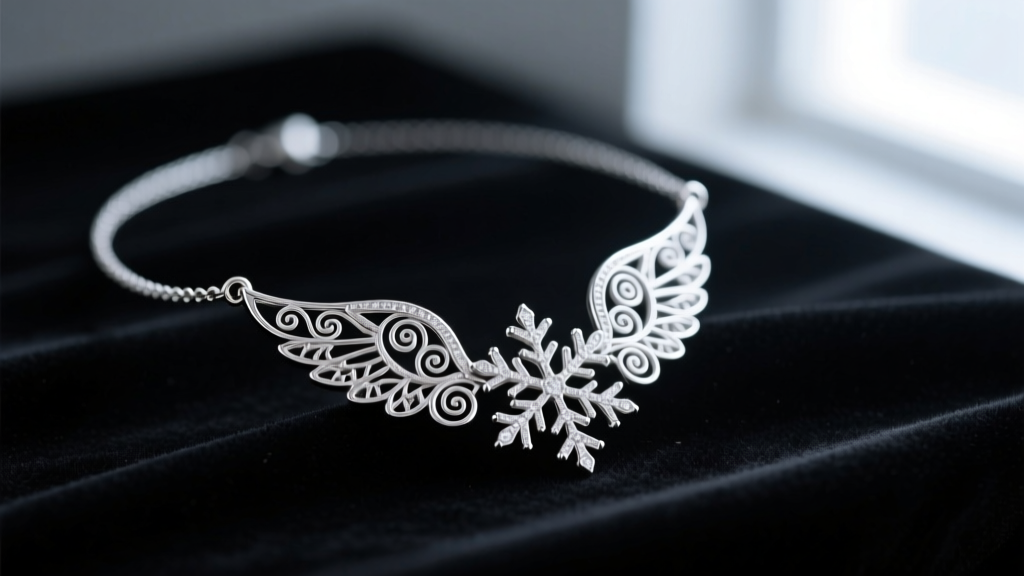
The artic angel necklace is a beloved staple in winter-inspired and celestial jewelry collections, characterized by its delicate wing motifs, icy gemstone halos, and intricate filigree work. However, the very features that make this pendant visually stunning also render it highly susceptible to everyday wear and tear. Because these necklaces prioritize a lightweight, ethereal aesthetic, they often utilize thin chain gauges (typically 0.8mm to 1.0mm) and shallow prong settings. Whether your piece is crafted from 925 sterling silver, 10k white gold, or 14k white gold, understanding the metallurgical and structural vulnerabilities of your jewelry is the first step toward effective troubleshooting.
In this comprehensive repair guide, we will bypass generic jewelry care advice and dive deep into the bench-jeweler techniques required to diagnose, stabilize, and restore your artic angel necklace. From reshaping bent sterling silver wings without inducing metal fatigue to tightening micro-prongs on cubic zirconia or diamond accents, these actionable frameworks will help you salvage your favorite pendant.
Troubleshooting Bent Wings and Filigree Distortion
The most common issue reported with the artic angel necklace is the bending or warping of the angel wings. This usually occurs when the pendant is snagged on heavy winter clothing or stored improperly. The repair strategy depends entirely on the metal's Vickers hardness (HV).
Reshaping 925 Sterling Silver vs. White Gold
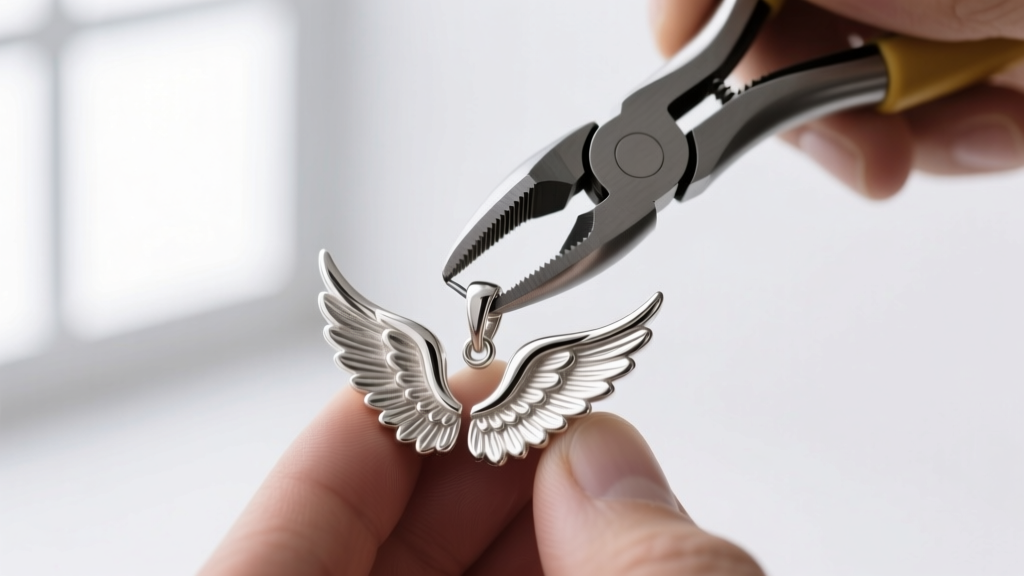
Standard 925 sterling silver has a relatively low Vickers hardness of approximately 60-70 HV, making it highly malleable but prone to work hardening. If you attempt to bend a warped silver wing back into shape using standard steel-jaw pliers, you will not only mar the high-polish finish but also risk snapping the metal at the solder joints due to work hardening.
The Fix: Always use nylon-jaw pliers for silver reshaping. Place the pendant on a rawhide bench block to absorb shock. Gently apply pressure to the warped wing, working in millimeter increments. If the silver has become brittle (work-hardened), it must be annealed with a micro-torch to 1100°F (593°C) and quenched in water to restore its malleability before further bending. Conversely, 14k white gold (approx. 120-130 HV) is much stiffer. Attempting to cold-bend white gold wings without proper annealing will almost certainly result in a fractured shank or broken solder seam. For white gold, seek a professional bench jeweler.
Securing Loose 'Icy' Gemstones in the Halo
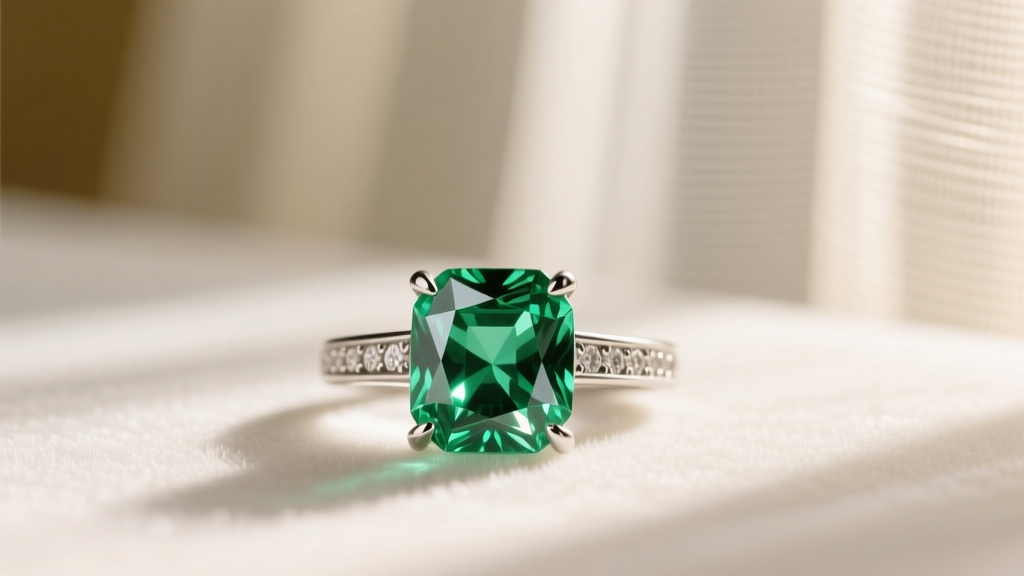
The 'icy' aesthetic of the artic angel necklace is typically achieved through micro-pavé or shared-prong settings featuring round-cut cubic zirconia (CZ), white sapphires, or diamonds. Over time, the microscopic prongs (often just 0.8mm wide) can lift away from the stone's girdle, leading to stone loss.
Diagnostic Inspection and Prong Tightening
Before attempting any repair, you must accurately diagnose the setting failure. According to gemological standards outlined by the Gemological Institute of America (GIA), a loose stone will often exhibit 'light leakage' or a subtle clicking sound when tapped with a wooden pegwood stick.
- Inspect with a 10x Triplet Loupe: Examine the prong tips. If the prong is worn flat or lifted away from the stone's table facet, it requires retipping or tightening.
- Clean the Setting: Use a soft fiberglass scratch brush to remove skin oils and debris from the prong gallery. A clean surface ensures proper tool grip.
- Push, Don't Squeeze: Using a polished bezel pusher, apply downward and inward pressure on the lifted prong. Never use chain-nose pliers to squeeze prongs together, as this will distort the setting's circular geometry and potentially crack the gemstone's pavilion.
Note: If your artic angel necklace features fracture-filled diamonds or glass-filled CZ, avoid using ultrasonic cleaners during the repair process, as the high-frequency vibrations can shatter the stones.
Chain Slippage and Clasp Failures
A frequent frustration with lightweight pendants is the chain slipping through the clasp or the lobster clasp failing to close securely. The artic angel necklace usually ships with a 0.8mm or 0.9mm cable or box chain. The jump ring connecting the chain to the lobster clasp is often the weakest point.
Upgrading the Clasp Mechanism
Standard cast lobster clasps contain a tiny internal steel spring that is highly susceptible to corrosion from sweat and cosmetics. When the spring fatigues, the clasp lever fails to return to the closed position. Rather than constantly replacing the clasp, upgrade the hardware. Solder a 5mm solid 14k white gold or sterling silver jump ring to the chain end, and attach a magnetic neodymium clasp. Magnetic clasps eliminate the mechanical spring failure point entirely and are significantly easier to fasten when wearing gloves in cold weather. For added security against chain slippage, thread a 2mm clear silicone necklace stopper bead onto the chain behind the clasp to act as a physical barrier.
Diagnostic Troubleshooting Matrix
Use the following matrix to quickly identify the root cause of your necklace's issue and determine whether a DIY approach is safe or if professional intervention is required. The Jewelers of America recommends professional bench work for any structural soldering or gemstone retipping.
| Symptom | Root Cause | Required Tools | Recommended Action |
|---|---|---|---|
| Wing bent at solder joint | Metal fatigue / Snagging | Nylon-jaw pliers, rawhide block | DIY for Silver; Pro Jeweler for Gold |
| Stone rattling in halo | Lifted micro-prong | 10x Loupe, bezel pusher | DIY tightening (Proceed with caution) |
| Clasp won't snap shut | Internal spring corrosion | Wire cutters, jump rings | Replace with magnetic clasp |
| Chain snapping at neck | Link distortion / Thin gauge | Laser welder | Pro Jeweler (Laser soldering required) |
| White gold turning yellow | Rhodium plating wear | Electroplating tank | Pro Jeweler (Rhodium re-flash) |
Managing Rhodium Plating and Silver Tarnish
The brilliant, icy white finish of a white gold artic angel necklace is not the natural color of the metal; it is achieved through a micro-thin layer of rhodium plating (typically 0.1 to 0.5 microns thick). Over time, friction from clothing and the acidic pH of the wearer's skin will wear this plating away, revealing the naturally yellowish hue of the white gold alloy underneath.
Do not attempt to polish the yellowing metal. Polishing will only remove more of the rhodium and the underlying gold. The only viable troubleshooting step is to have the pendant professionally ultrasonically cleaned and re-plated via an electrolytic rhodium bath. For 925 sterling silver variants, the issue is silver sulfide tarnish. Remove tarnish using a chemical dip (thiourea-based) or a gentle baking soda and aluminum foil galvanic reaction bath, but never use abrasive silver polish cloths on the intricate filigree of the angel wings, as the abrasive compounds will become permanently trapped in the crevices, dulling the design.
When to Seek Professional Bench Jeweler Help
While minor reshaping and clasp upgrades can be performed at home, certain failures require the precision of a master bench jeweler. If your artic angel necklace suffers from a cracked gemstone, a completely severed chain link, or a broken bail (the loop connecting the pendant to the chain), do not attempt to use superglue or epoxy. Cyanoacrylate adhesives will cloud the gemstones and create a brittle bond that will fail under the tension of the chain. A professional jeweler will use a laser welder to fuse the metal at a microscopic level without transferring heat to the delicate icy stones, ensuring your necklace remains a pristine, winter-ready statement piece for years to come.


