Anatomy of Chunky Beaded Necklaces: Stringing, Weight & Clasps
Discover the technical engineering behind chunky beaded necklaces, from high-tensile stringing wires to weight-bearing clasp mechanisms.

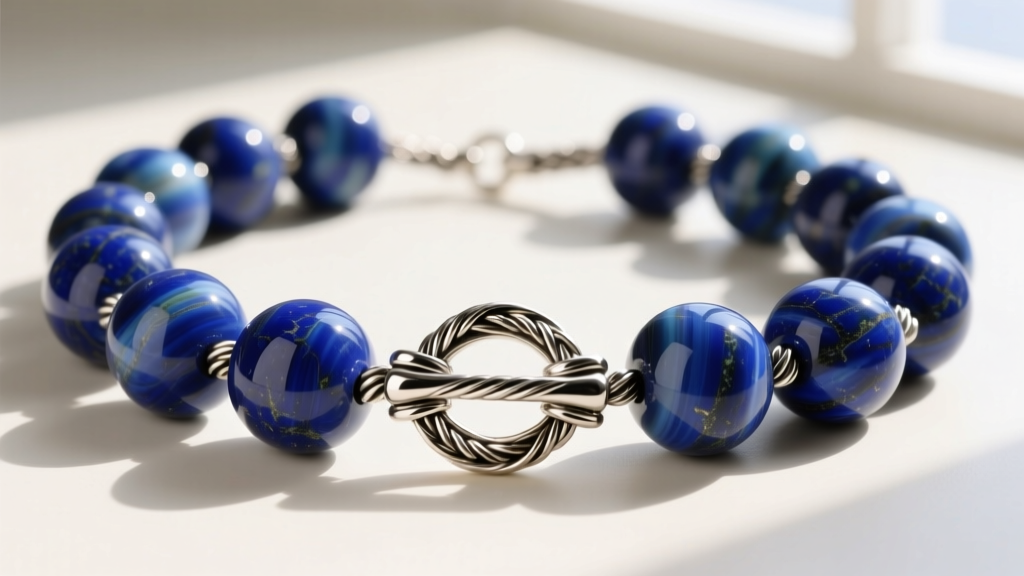
When discussing statement jewelry, few pieces command attention quite like chunky beaded necklaces. Characterized by oversized beads (typically 12mm to 25mm in diameter) and substantial overall mass, these pieces are triumphs of bold aesthetic design. However, from a jewelry engineering perspective, a heavy beaded necklace is a dynamic load-bearing structure. When a necklace exceeds 150 grams, the forces exerted on the stringing material, the crimps, and the clasp during normal human movement—walking, bending, and turning—can easily cause catastrophic structural failure if the piece is not engineered correctly.
In this technical deep dive, we examine the material science, physics, and mechanical engineering required to construct, evaluate, and maintain high-quality chunky beaded necklaces that endure decades of wear.
The Physics of Heavy Beadwork: Why Standard Stringing Fails
The primary point of failure in heavy beadwork is the nape of the neck and the clasp connection points. As the wearer moves, the necklace acts as a pendulum. A 200-gram necklace swinging during a brisk walk generates dynamic shear stress that can momentarily spike the load on the stringing wire by 40% to 60% above its static resting weight. Standard nylon beading threads (like Size D or Nymo), which possess a tensile strength of roughly 8 to 12 pounds, will suffer from micro-abrasions against the sharp inner edges of stone beads and eventually snap under this dynamic torque.
Furthermore, heavy beads create a 'guillotine effect' at the crimp site. If the stringing material lacks a protective wire guard or if the crimp is improperly compressed, the sheer weight of the beads pulls the wire taut, causing it to slice through the soft metal of the crimp bead or fray against the clasp jump ring.
Stringing Materials: Tensile Strength & Abrasion Resistance
Selecting the correct core material is the most critical decision in constructing chunky beaded necklaces. The core must possess high tensile strength, extreme abrasion resistance, and enough flexibility to drape naturally without kinking. According to the Fire Mountain Gems Encyclopedia, modern beading wires are categorized by their strand count, which directly dictates their flexibility and drape.
| Material Type | Composition | Tensile Strength | Abrasion Resistance | Best Application |
|---|---|---|---|---|
| 49-Strand Micro Wire | Stainless steel strands in nylon jacket | 30-40 lbs | Exceptional | Heavy gemstone beads (15mm+), high-value chunky pieces |
| 19-Strand Wire | Stainless steel strands in nylon jacket | 20-30 lbs | High | Medium-weight glass or resin chunky beads |
| Braided Polyethylene | Fused polyethylene fibers (e.g., FireLine) | 6-15 lbs (varies) | Moderate | Chunky beads with very small, sharp drill holes |
| Hardwire (Piano Wire) | Single-strand tempered steel | 40+ lbs | Exceptional | Rigid collars; poor drape for standard necklaces |
For genuine chunky stone necklaces, a 49-strand stainless steel beading wire (typically 0.018 or 0.024 inches in diameter) is the industry gold standard. The high strand count ensures the wire behaves like a fluid textile, allowing heavy beads to lay flat against the clavicle rather than jutting outward awkwardly.
Crimping Mechanics: Securing the Core
A 40-pound test wire is useless if the termination fails. For heavy necklaces, round crimp beads are insufficient; they tend to roll and fail to grip all 49 micro-strands evenly. Instead, expert jewelers use 2x3mm or 2x4mm tube crimps made of sterling silver or 14k gold-filled metal. Base metal crimps should be avoided, as their softer alloys deform and lose tension over time.
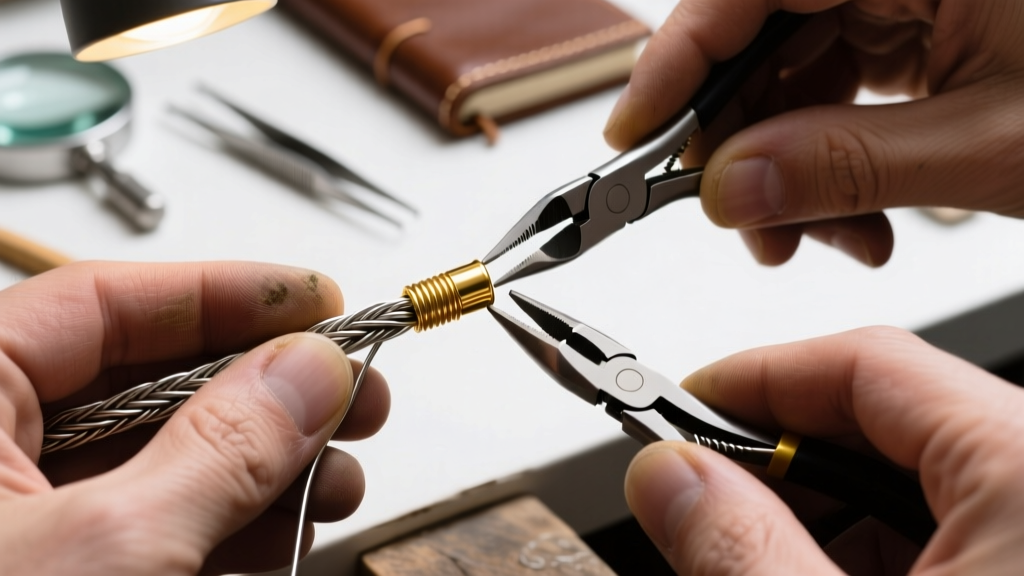
The crimping process requires a specialized micro-crimping plier. The first notch folds the tube into a 'U' shape, forcing the wire strands into the center cavity. The second notch rounds the 'U' back into a tight, secure cylinder. This mechanical deformation creates immense friction, locking the wire in place without severing the internal nylon jacket.
Weight Distribution & Clasp Engineering
The clasp on a chunky beaded necklace must withstand both static dead-weight and lateral torque. Standard lobster claws and spring-ring clasps are entirely unsuited for necklaces exceeding 100 grams; the lever mechanisms will bend, and the internal springs will fatigue and fail.
The Toggle vs. Magnetic vs. Screw Clasp Debate
- Toggle Clasps: A classic choice, but heavily dependent on geometry. To prevent the T-bar from slipping through the ring during dynamic movement, the bar must be at least 1.5 times longer than the ring's inner diameter. For a chunky necklace with a 20mm inner ring, the bar must be a minimum of 30mm.
- Neodymium Magnetic Clasps: Highly effective for heavy pieces, provided they use N52-grade rare earth magnets. However, the magnets must be encased in structural steel cups with soldered jump rings. Glued-in magnets will inevitably pop out under the sheer weight of chunky beads.
- Screw Clasps: These offer the highest security against lateral torque, as the threading physically locks the two halves together. The drawback is user error; cross-threading a screw clasp will strip the internal grooves, rendering the piece unwearable.
Bead Material Density: Calculating Necklace Load
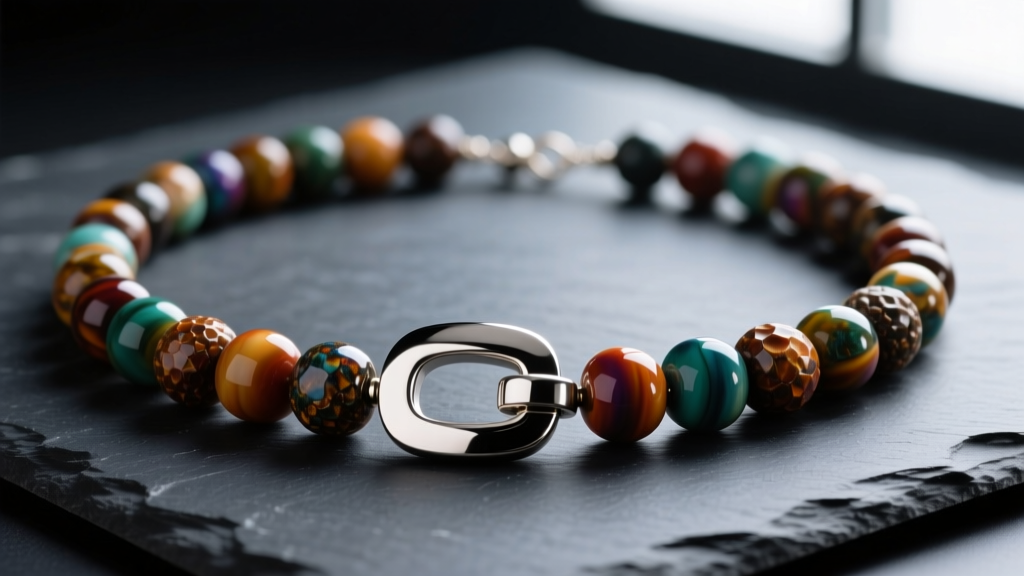
Not all chunky beads weigh the same. A 16-inch necklace made of 20mm acrylic beads might weigh a mere 60 grams, while the exact same design crafted from hematite or tungsten carbide can exceed 400 grams. Understanding the Specific Gravity (SG) of bead materials is crucial for predicting structural strain. The GIA Gem Encyclopedia provides exhaustive data on the density of natural gemstones, which directly translates to jewelry engineering.
Expert Insight: When designing with high-SG materials like Hematite (SG 5.1) or Cubic Zirconia (SG 5.6-6.0), you must reduce the bead diameter or incorporate lightweight spacer beads (like sterling silver hollow beads or wood) to keep the total necklace mass under the 250-gram threshold, which is the maximum comfortable load for the human cervical spine over an 8-hour wearing period.
Density Comparison Chart
| Material | Specific Gravity (SG) | Estimated Weight (16-inch, 15mm beads) | Engineering Requirement |
|---|---|---|---|
| Acrylic / Resin | 1.1 - 1.2 | ~55 grams | Standard 19-strand wire, lobster clasp |
| Soda-Lime Glass | 2.4 - 2.6 | ~130 grams | 49-strand wire, medium toggle |
| Agate / Jasper | 2.6 - 2.7 | ~145 grams | 0.024" 49-strand wire, heavy toggle |
| Hematite | 5.0 - 5.2 | ~280 grams | Dual-strand 49-strand wire, N52 magnetic clasp |
Maintenance & Structural Audits
Even the most perfectly engineered chunky beaded necklaces require routine structural audits. The nylon jacketing on steel beading wires degrades over time due to UV exposure, skin oils, and friction against the bead holes.
Perform a 'flex test' every 12 months. Gently bend the wire near the clasp and crimp areas at a 90-degree angle. If you feel any rigid kinks, or if the wire holds the bent shape rather than springing back, the internal steel strands have suffered metal fatigue and snapped. According to the Beadalon technical guides, a kinked wire has lost up to 70% of its tensile strength and must be replaced immediately. For high-value gemstone necklaces, professional re-stringing every 3 to 5 years is a non-negotiable maintenance standard to prevent catastrophic loss of materials.


