Antique Turquoise Necklace Trends: 2026 Style & Buyer Guide
Discover 2026 trends for the antique turquoise necklace. Learn to identify Fred Harvey era pieces, decode matrix patterns, and master modern layering.

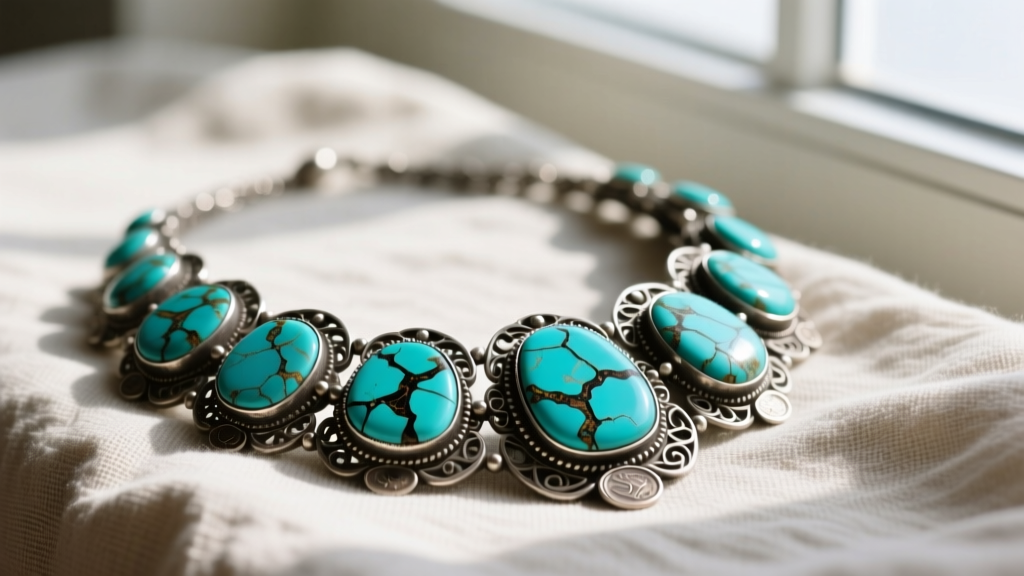
The 2026 Resurgence: Heritage Southwestern Meets Quiet Luxury
The jewelry landscape of 2026 has seen a definitive pivot away from mass-produced minimalism toward heritage pieces with profound historical weight. At the forefront of this shift is the antique turquoise necklace. Once relegated to vintage costume boxes or highly specific regional aesthetics, antique turquoise is now being reclaimed by high-fashion stylists and serious collectors alike. The modern wearer is no longer treating these pieces as thematic accessories for a festival; instead, they are integrating them into 'quiet luxury' wardrobes, contrasting the organic, untamed matrix of vintage stones against the sharp tailoring of contemporary menswear and womenswear.
This surge in demand has fundamentally altered the secondary market. According to recent auction data, early 20th-century Native American squash blossom necklaces and Fred Harvey era tourist-trade pieces have appreciated by over 35% in the last three years. But as prices climb, so does the proliferation of sophisticated fakes. Navigating the 2026 market requires a gemological understanding of turquoise treatments, a historical grasp of Southwestern silversmithing, and a nuanced approach to modern styling.
Decoding the Eras: Fred Harvey vs. Native American Vintage
When collectors refer to an antique turquoise necklace, they are generally categorizing pieces into two distinct historical buckets. Understanding the difference is critical for both authentication and accurate pricing.
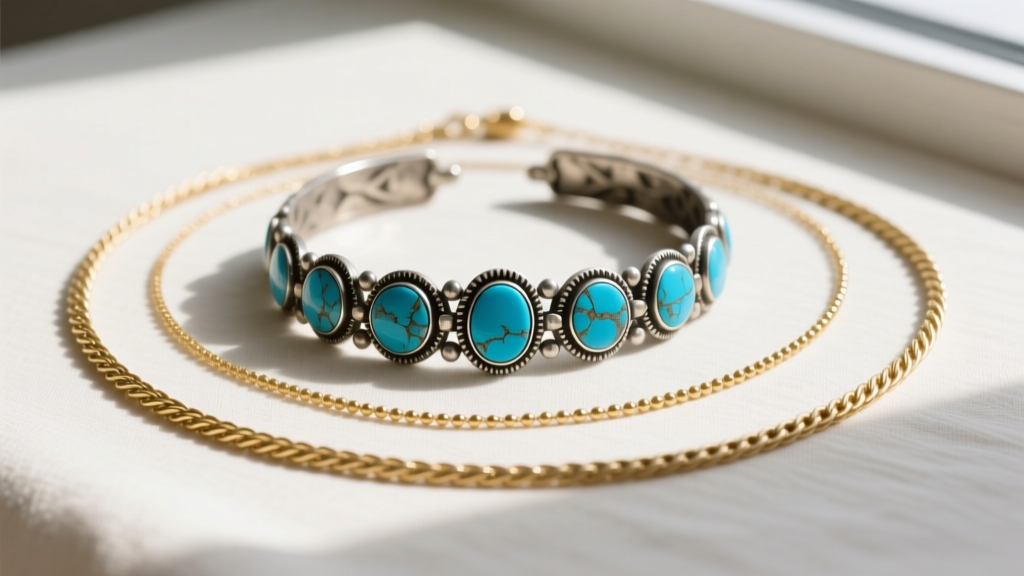
The Fred Harvey Era (1900–1950s)
The Fred Harvey Company revolutionized Southwestern tourism, and their jewelry concessions demanded lightweight, affordable, and visually striking pieces. These necklaces were typically crafted from coin silver (pre-1930s) or early commercial sterling silver. The turquoise stones were often small, machine-cut, and set in stamped, soldered bezels. While they lack the heavy, hand-forged gravity of traditional Native American pieces, Fred Harvey necklaces are highly prized in 2026 for their delicate, layering-friendly proportions.
Traditional Native American Vintage (1930s–1970s)
Pieces crafted by Navajo, Zuni, and Hopi silversmiths during the mid-20th century represent the pinnacle of collectible Southwestern jewelry. These necklaces feature heavy sandcast or tufa-cast silver, hand-cut cabochons, and intricate stamp work. The Zuni needlepoint and petit point styles, characterized by tiny, precisely cut turquoise clusters, remain some of the most technically impressive and highly valued antique turquoise necklaces on the market.
| Era & Style | Silver Grade | Stone Cut & Setting | 2026 Market Value Range |
|---|---|---|---|
| Fred Harvey (Tourist Trade) | Coin Silver / Early 925 | Machine-cut, lightweight bezel | $250 – $800 |
| Navajo Squash Blossom (1940s-60s) | Heavy Sterling 925 | Hand-cut, sandcast, heavy bezel | $3,500 – $15,000+ |
| Zuni Petit Point (1950s-70s) | Sterling 925 | Micro hand-cut, cluster settings | $1,200 – $4,500 |
| Hopi Overlay (1940s-60s) | Sterling 925 | Oxidized cut-out over silver | $800 – $3,000 |
Authentication & Matrix: A Gemologist’s Guide to Buying
Turquoise is a porous copper aluminum phosphate mineral, ranking between 5 and 6 on the Mohs hardness scale. Because of its porosity, natural, untreated antique turquoise is incredibly rare. When evaluating an antique turquoise necklace, you must be able to distinguish between natural patina, historical stabilization, and modern fraudulent dyeing.
Reading the Matrix: Mine Origins
The 'matrix'—the host rock trapped within the turquoise—is the fingerprint of the stone. In 2026, provenance dictates price. The Gemological Institute of America (GIA) notes that identifying the specific mine can exponentially increase a piece's value.
- Bisbee (Arizona): Famous for its deep, robin's-egg blue color and distinct, chocolate-brown limonite matrix. True antique Bisbee is exceptionally rare today, as the mine was largely depleted by the 1980s.
- Kingman (Arizona): Known for its brilliant blue stones with golden or black pyrite webbing. Kingman turquoise was heavily used in mid-century Native American jewelry.
- Lander Blue (Nevada): The holy grail of turquoise. Characterized by a tight, black spiderweb matrix over a deep blue base. Authentic antique Lander Blue necklaces command premium auction prices, often exceeding $20,000.
Spotting Treatments and Fakes
While the Heard Museum and other cultural institutions emphasize the historical integrity of Native American metalsmithing, the stones themselves require scrutiny. In the 1950s and 60s, the 'Zachery treatment' was occasionally used to enhance the color and hardness of turquoise without introducing foreign polymers. However, modern fakes often use dyed howlite or magnesite.
Pro-Tip: Use a jeweler's loupe to examine the matrix lines. In natural turquoise, the matrix is recessed or flush with the stone. In dyed howlite, the 'matrix' is often painted on, sitting on top of the surface, and will show pooled dye in the micro-fissures of the host rock.
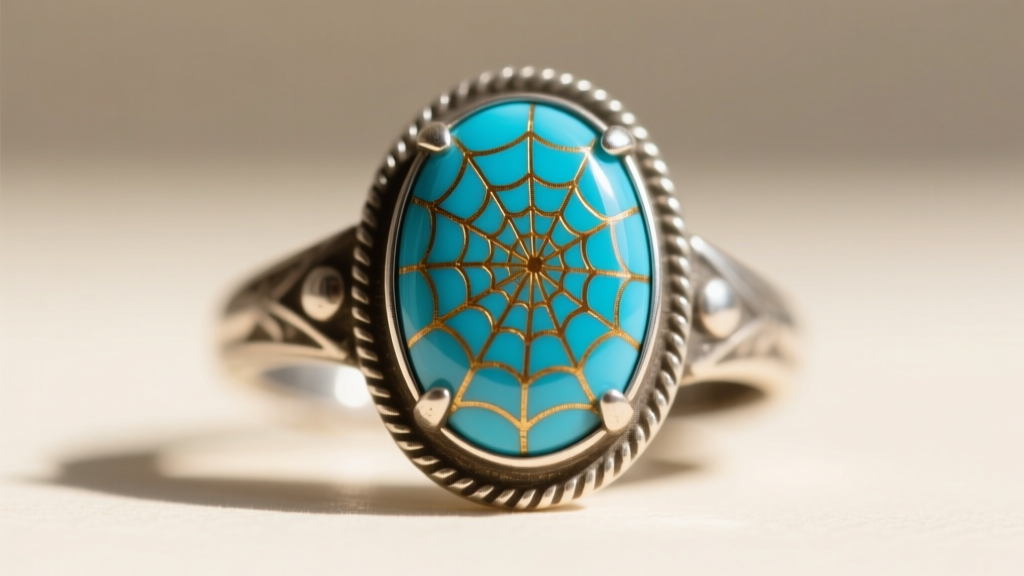
2026 Styling: Layering Antique Turquoise with Modern Metals
The most critical style rule for 2026 is contrast. Wearing an antique turquoise necklace with head-to-toe denim or suede fringe pushes the look into costume territory. The contemporary approach relies on juxtaposing the rustic, oxidized silver and organic stones against refined, modern textiles and precious metals.
The Mixed-Metal Layering Framework
Do not confine your antique turquoise to an all-silver ecosystem. The warmth of 18k yellow gold or the icy brilliance of platinum creates a striking visual tension against the weathered patina of vintage coin silver.
- The Base Layer: Start with a 16-inch modern 14k or 18k gold cable chain. This provides a bright, clean framing device near the collarbone.
- The Anchor: Add your antique turquoise necklace (typically 18 to 24 inches). If it is a heavy squash blossom, let it stand alone as the anchor. If it is a delicate Fred Harvey choker, it can sit flush against the gold base.
- The Pendant Drop: Finish with a 28-inch minimalist platinum or white gold lariat or single diamond solitaire pendant to draw the eye vertically and elongate the torso.
Neckline Pairings
Antique turquoise demands breathing room. Pair heavy vintage pieces with deep V-neck silk slip dresses, structured wool blazers with wide lapels, or crisp, oversized white poplin button-downs. The rigid geometry of a tailored blazer perfectly offsets the organic, asymmetrical nature of hand-cut turquoise cabochons.
Market Pricing & Investment Value
As we move through 2026, the investment thesis for antique turquoise necklaces remains incredibly strong. The scarcity of high-grade, untreated natural turquoise from closed American mines means that the raw materials alone in a vintage 1950s necklace often exceed the retail price of newly manufactured jewelry.
When purchasing for investment, prioritize condition over polish. A heavy, dark oxidation on the silver stamp-work is highly desirable and proves the piece's age; polishing an antique Native American necklace to a high shine can strip away decades of patina and reduce its collector value by up to 30%. Store your pieces in anti-tarnish cloth bags, away from extreme humidity, and never ultrasonic-clean an antique turquoise stone, as the high-frequency vibrations can fracture the natural, untreated cabochon along its matrix fault lines.


