Material & Craft Guide: Choosing the Best AOT Key Necklace
Discover how to evaluate an AOT key necklace. We break down metal grades, chain gauges, and casting methods to help you find premium anime jewelry.

The Anatomy of the Basement Key: Design & Dimensions
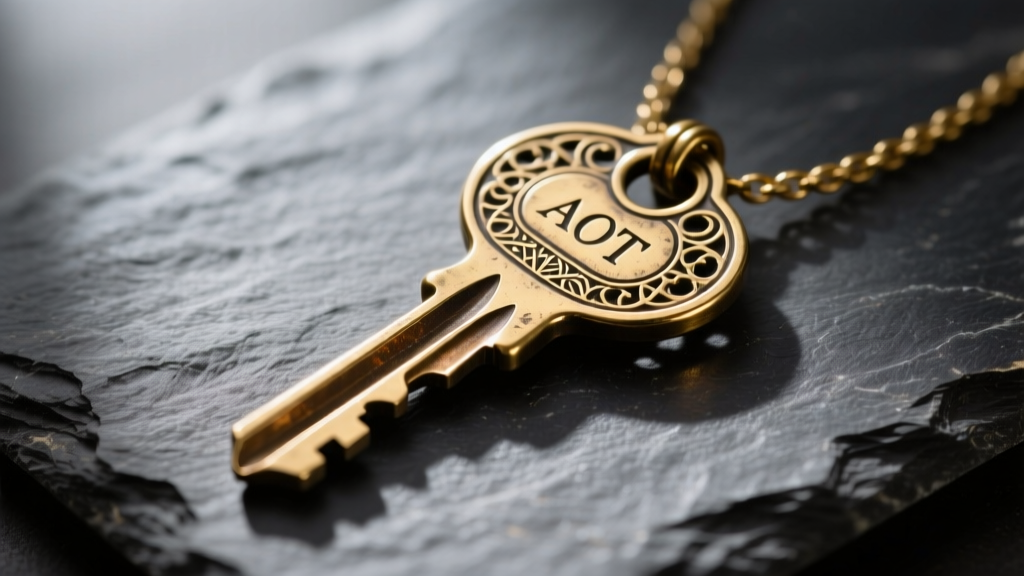
For collectors and fans of Shingeki no Kyojin (Attack on Titan), the basement key is more than a plot device; it is a symbol of truth, legacy, and the relentless pursuit of freedom. When translating this iconic artifact into wearable jewelry, precision in design and material integrity are paramount. The market in 2026 is saturated with anime merchandise, but finding a premium aot key necklace requires looking past flashy product photos and examining the metallurgical and structural realities of the piece.
Authentic, high-tier replicas typically adhere to specific dimensional constraints to maintain the visual weight seen in the anime. The ideal pendant measures between 45mm and 55mm in total length, with a bow (the head of the key) diameter of roughly 15mm to 18mm. The shaft must feature the distinct cylindrical ridges and the complex, asymmetrical warding (the teeth) that characterize Grisha Yeager’s original design. Furthermore, the integration of the Survey Corps 'Wings of Freedom' motif into the bow requires deep, sharp CNC milling or high-resolution 3D resin masters for lost-wax casting, ensuring the feathers remain distinct even after antiquing.
Metallurgy & Casting: Zinc Alloy vs. Solid Brass vs. Sterling Silver
The longevity, weight, and skin-safety of your necklace are dictated entirely by its base metal. According to the International Gem Society's comprehensive metal guide, understanding alloy composition is the first step in evaluating jewelry quality. Here is how the three most common metals used for anime pendants compare in real-world wear.
Zinc Alloy (Zamak)
The vast majority of budget-friendly anime necklaces are die-cast from Zamak (zinc, aluminum, magnesium, and copper). While Zamak allows for highly detailed, low-cost mass production, it is inherently porous. To make it look like aged iron or silver, manufacturers electroplate it with a thin layer of nickel or silver, followed by an acrylic wash. The failure mode: Once the microscopic plating wears away from friction against the skin, the zinc core reacts with sweat and moisture, creating 'white rust' (zinc oxide), which is chalky, stains clothing, and can cause contact dermatitis.
Solid Brass
Brass is the gold standard for mid-tier, screen-accurate replicas. It casts beautifully, capturing the sharpest details of the key's runic engravings. Brass also possesses a natural golden hue that, when treated with chemical patinas, mimics the weathered, centuries-old iron look of the basement key perfectly. However, raw brass contains copper, which will oxidize and turn the wearer's skin green if not properly sealed with a jewelry-grade lacquer or Renaissance Wax.
Sterling Silver (925)
For the ultimate collector's piece, 925 sterling silver cast via the lost-wax method offers unparalleled prestige. Silver is hypoallergenic, possesses a premium heft, and responds flawlessly to oxidizing agents. As noted by Rio Grande jewelry supply experts, silver's ability to hold a deep, permanent oxidation in its recesses makes it the superior choice for achieving the 'grunge' aesthetic without compromising the structural integrity of the metal.
Chain Mechanics: Selecting the Right Gauge and Clasp
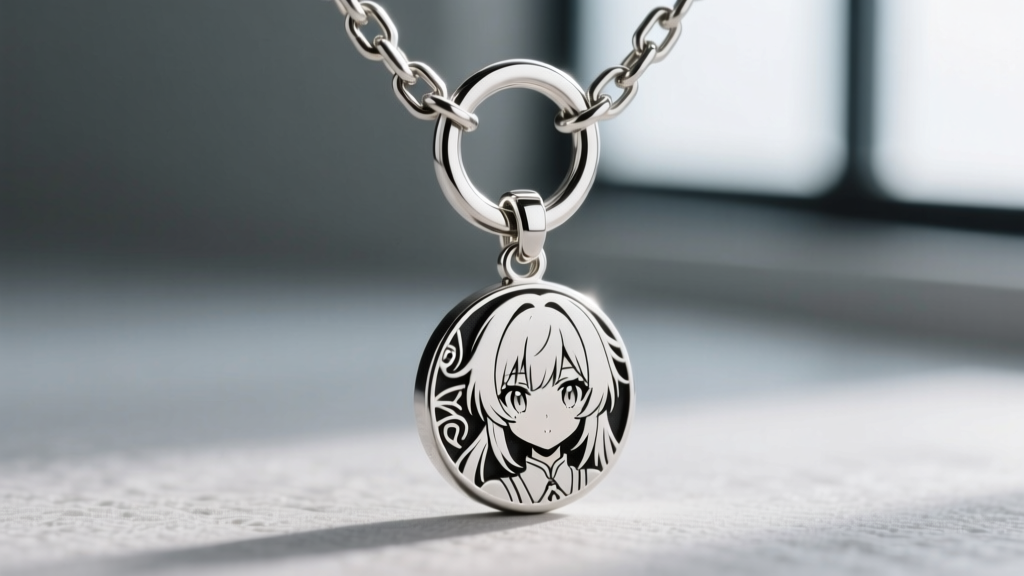
A heavy, solid-metal key pendant will easily snap a flimsy chain. The structural weakest point of any necklace is the connection between the chain and the pendant. When evaluating an aot key necklace, scrutinize the chain gauge, link profile, and clasp mechanism.
Chain Link Profiles and Gauge
For a key pendant weighing between 15 and 30 grams, you need a chain with a minimum wire thickness (gauge) of 1.2mm, though 1.5mm to 2.0mm is ideal for a masculine, utilitarian aesthetic that matches the Attack on Titan universe.
- Cable Chain (1.5mm): The classic choice. Uniform oval links provide a traditional look, but the solder points on budget chains can snap under the pendulum stress of a heavy key.
- Curb Chain (2.0mm): Interlocking, flattened links that lay flat against the chest. Curb chains offer superior tensile strength and resist kinking, making them the best functional choice for heavy pendants.
- Box Chain (1.2mm): Visually striking and reminiscent of mechanical linkages, but prone to catastrophic failure if a single link is bent or crushed.
Clasp and Jump Ring Integrity
Never accept a standard spring-ring clasp for a heavy pendant; the internal spring mechanism degrades over time, leading to accidental loss. Insist on a lobster clasp with a minimum length of 12mm. Furthermore, the jump ring connecting the key's bow to the chain must be soldered shut or be a heavy-gauge split ring. An unsoldered, thin wire jump ring will inevitably pull apart under the dynamic weight of the key.
Patina and Antiquing Techniques for Authentic Weathering
The basement key is not a shiny, polished trinket; it is an ancient, weathered artifact. Achieving this look requires specific chemical treatments depending on the base metal.
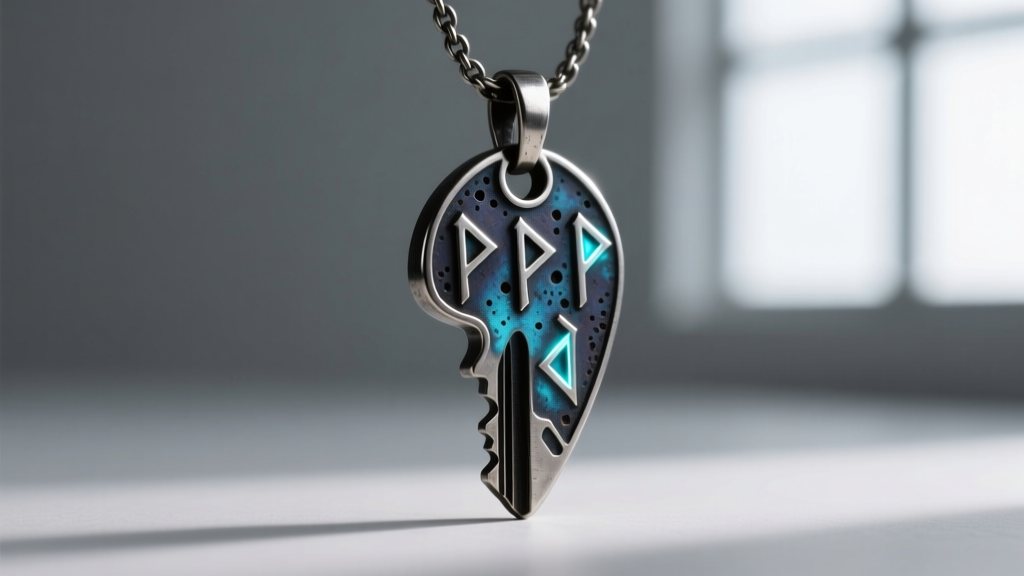
For sterling silver and brass, jewelers use Liver of Sulfur (potassium sulfide). When heated and applied to the metal, it creates a controlled layer of silver sulfide or copper sulfide, turning the surface deep black or rich brown. The jeweler then uses a polishing cloth to remove the dark oxidation from the high spots (the edges of the key, the tips of the wings), leaving the dark patina trapped in the deep grooves and engravings. This creates a striking 3D contrast that highlights the intricate details.
Pro-Tip for Collectors: Avoid necklaces that use black acrylic paint to simulate antiquing on zinc alloys. Paint sits on the surface, chips easily, and looks flat and artificial compared to true chemical oxidation.
Material Comparison Chart: 2026 Market Standards
Use this framework to evaluate listings and determine if the price aligns with the material reality of the necklace.
| Material | Avg. Price Range | Casting Method | Durability & Skin Safety | Best For |
|---|---|---|---|---|
| Zinc Alloy (Plated) | $10 - $25 | Die Casting | Low (Prone to chipping, potential allergies) | Cosplay props, budget gifts |
| Solid Brass | $35 - $75 | Sand or Silicone Mold | High (Requires lacquer seal to prevent skin staining) | Screen-accurate replicas, daily wear |
| 316L Stainless Steel | $25 - $50 | CNC Machining / Casting | Very High (Hypoallergenic, waterproof, no patina) | Shower/swim wear, low maintenance |
| 925 Sterling Silver | $85 - $200+ | Lost-Wax Investment | Exceptional (Hypoallergenic, takes permanent oxidation) | Premium collectors, fine jewelry |
Licensing, Bootlegs, and the Collector's Market
As the Attack on Titan franchise has concluded, the secondary market for high-quality, officially licensed merchandise has shifted. Licensed partners (such as those operating via major anime distributors) typically use 316L stainless steel or brass for their premium lines, ensuring the merchandise meets international safety standards for nickel and lead content. Bootleg manufacturers, often found on unvetted marketplace drop-shipping sites, bypass these regulations, occasionally using hazardous levels of lead in their cheap solder or base alloys to lower melting points and speed up mass production. Always check for a manufacturer's stamp (e.g., '925' for silver) and buy from reputable jewelers or licensed anime storefronts.
Care and Maintenance for Oxidized Anime Jewelry
Preserving the weathered aesthetic of your aot key necklace requires specific care routines that differ from standard fine jewelry.
- Never use ultrasonic cleaners: The high-frequency vibrations will strip the deliberate chemical patina right out of the engraved grooves, leaving you with a flat, uniformly dark or unnaturally bright key.
- Avoid liquid silver dips: These harsh acids will dissolve the oxidation instantly and can cause micro-pitting in brass or zinc alloys.
- Targeted Polishing: Use a dry, treated jeweler's cloth (like a Sunshine cloth) and gently rub only the raised edges and high-relief areas of the Wings of Freedom. This maintains the dark, gritty recesses while giving the key a realistic 'worn by handling' gleam.
- Storage: Store the necklace flat in a low-humidity environment. While you want the key to look old, leaving brass or silver in high humidity can cause unchecked, powdery corrosion that degrades the metal over time rather than just coloring it.
By prioritizing metallurgical integrity, proper chain mechanics, and authentic chemical weathering, you can secure an AOT key necklace that serves not just as a piece of fandom merchandise, but as a genuinely well-crafted artifact of jewelry design.


