Advanced Statement Necklace Storage: Archival Methods
Protect bold jewelry with technical, archival-grade statement necklace storage methods to prevent tarnish, tangling, and structural damage.

The Physics of Heavy Jewelry: Why Standard Boxes Fail
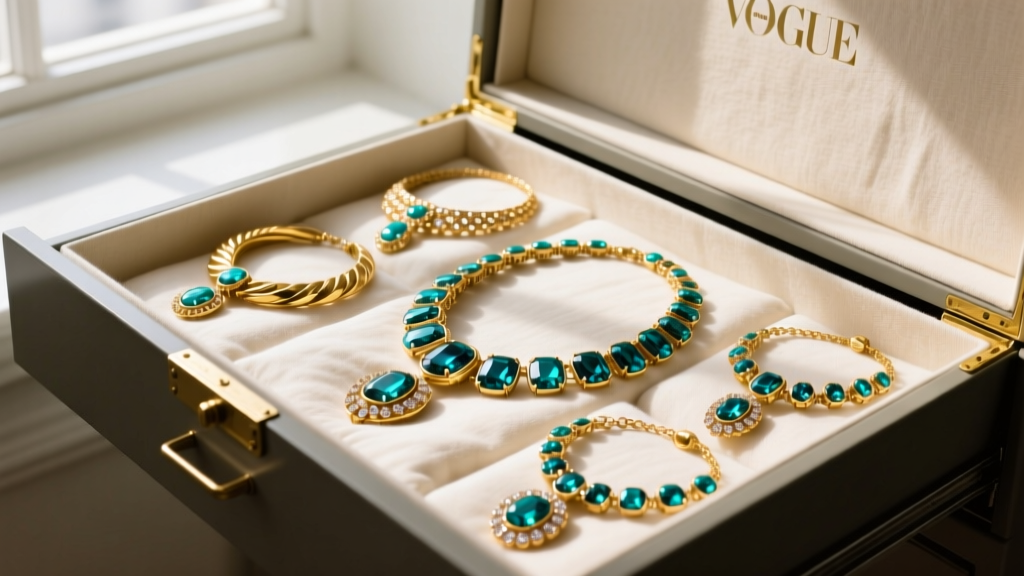
Standard jewelry boxes are engineered for delicate chains weighing under 50 grams. When applied to statement necklaces—which frequently exceed 150 to 300 grams due to dense gemstone clusters, heavy metalwork, and multi-tiered architectures—conventional storage solutions actively cause mechanical degradation. The primary enemy of heavy jewelry in storage is 'creep,' a metallurgical term for the slow, permanent deformation of a material under sustained mechanical stress. When a 250-gram collar necklace is hung on a standard velvet hook, the gravitational load places continuous tension on the weakest links, typically those adjacent to the clasp or the central bale. Over months or years, this results in permanent chain elongation, weakened jump rings, and eventual structural failure.
Furthermore, standard compartmentalized boxes force bulky, rigid statement pieces into unnatural curves. Necklaces with articulated metal bibs or stiff wire-wrapped collars cannot bend to fit standard ring rolls or shallow drawers without stressing the solder points. To preserve the structural integrity and aesthetic brilliance of high-mass necklaces, collectors and archivists must abandon retail jewelry boxes in favor of museum-grade, flat-file storage systems that distribute weight evenly and neutralize environmental threats.
Material Compatibility Matrix: Plastics and Fabrics
The chemical environment inside a storage container is just as critical as its physical dimensions. Many commercial storage solutions utilize Polyvinyl Chloride (PVC) or low-grade synthetic velvets that off-gas harmful plasticizers and acids. According to conservation guidelines published by the American Institute for Conservation, porous gemstones like turquoise, lapis lazuli, and pearls are highly susceptible to chemical etching from acidic off-gassing. Below is a technical compatibility matrix for archival statement necklace storage materials.
| Storage Material | Archival Rating | Chemical Properties & Risks | Best Use Case |
|---|---|---|---|
| Polyethylene (PE) | Excellent | Chemically inert; does not off-gas acids or sulfur compounds. | Ziplock-style archival bags, rigid dividers. |
| Polypropylene (PP) | Excellent | Highly stable; resistant to moisture and chemical leaching. | Flat-file storage bins, structural supports. |
| Polyvinyl Chloride (PVC) | Hazardous | Emits hydrochloric acid and plasticizers over time; destroys porous gems. | Never use for fine or statement jewelry. |
| Unbleached Cotton Muslin | Good | Breathable and neutral, but holds moisture if ambient humidity fluctuates. | Wrapping metal-heavy pieces without porous stones. |
| Acid-Free Tissue (Buffered) | Excellent | Contains calcium carbonate to neutralize acidic environments. | Padding and interleaving between layered metal tiers. |
Archival-Grade Storage Frameworks
To properly store statement necklaces, you must implement a system that addresses both physical support and chemical isolation. Museum conservators rely on two primary frameworks for heavy, complex jewelry.
Flat-File Archival Drawers with Custom Ethafoam Carving
For rigid collars, heavy beaded bibs, and multi-strand pearl statement pieces, flat storage is non-negotiable. Archival flat-file drawers (often used for textile and map preservation) provide wide, shallow spaces. The gold standard for internal support is Ethafoam (closed-cell polyethylene foam). Conservators carve custom depressions into the Ethafoam that perfectly match the exact curvature of the necklace. This ensures the piece rests entirely flat, with zero tension on the clasps or stringing materials. The carved foam is then lined with washed, unbleached cotton muslin or Tyvek to provide a soft, chemically inert barrier between the foam and the jewelry.
Suspended Tension Mounts for Articulated Pieces
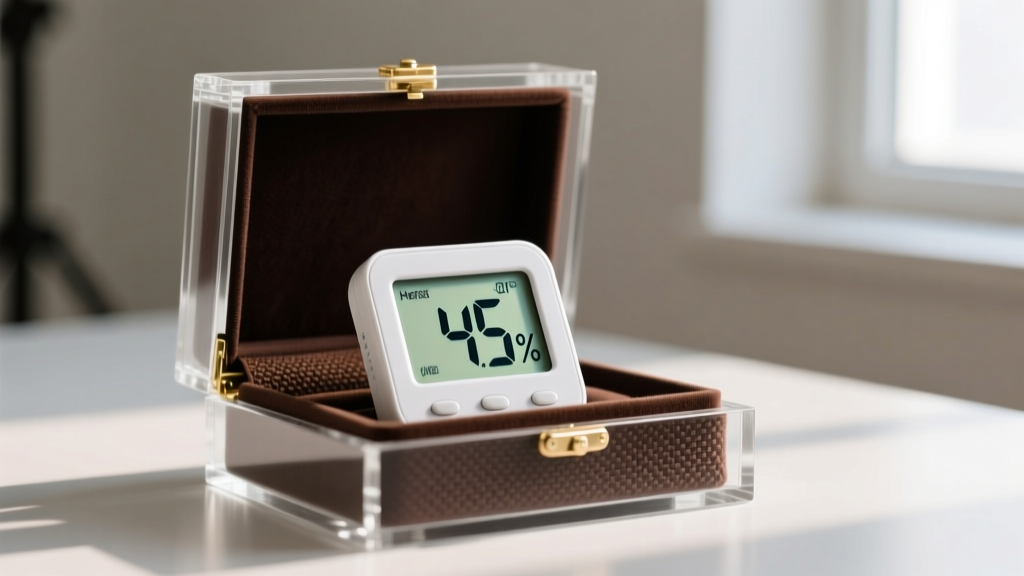
Some statement necklaces, particularly those with complex articulated metalwork or cascading fringe elements, can suffer from crushing if stacked or laid flat under their own weight. For these, suspended tension mounts are utilized. The necklace is secured at two or three structural nodes (never by the chain itself) using Teflon-coated wire or inert polyester thread, allowing the piece to hang freely inside a deep, sealed acrylic vitrine. This prevents the fringe or articulated drops from bending out of their natural alignment while keeping the metalwork completely untethered from abrasive surfaces.
Climate Control and Anti-Tarnish Chemistry
Silver and copper alloys, heavily featured in artisan and designer statement necklaces, are prone to rapid oxidation and sulfide tarnishing. The Gemological Institute of America (GIA) notes that silver sulfide formation is accelerated by high humidity and airborne sulfur compounds. Effective archival storage requires strict climate control and active chemical scavengers.
- Relative Humidity (RH): Maintain storage environments between 45% and 55% RH. Levels above 60% accelerate electrochemical corrosion, while levels below 30% can cause organic elements (like wood, bone, or tortoiseshell inlays) to desiccate and crack.
- Activated Charcoal vs. Silica Gel: While silica gel is excellent for buffering moisture, it does not absorb airborne pollutants. Activated charcoal or specialized molecular sieves (like 3M Anti-Tarnish strips) are required to bind with hydrogen sulfide gas, actively preventing the blackening of sterling silver components.
- Pacific Silvercloth: For wrapping individual statement pieces, Pacific Silvercloth is the industry benchmark. This specialized cotton flannel is embedded with microscopic silver and zinc nanoparticles that sacrifice themselves to sulfur and moisture, keeping the enclosed jewelry pristine for up to a decade without needing replacement.
Step-by-Step Encapsulation Protocol
When preparing a high-value statement necklace for long-term storage, follow this precise encapsulation protocol to ensure maximum preservation:
- Surface Preparation: Gently clean the piece using a microfiber cloth and a pH-neutral jewelry cleaner. Ensure the necklace is 100% dry; trapping moisture inside an encapsulation bag will cause rapid localized corrosion.
- Clasp Securing: Fasten all lobster clasps and bolt rings. If the necklace features a tension-dependent box clasp, insert a small piece of acid-free tissue paper into the mechanism to prevent the internal springs from remaining under constant compression.
- Internal Padding: Stuff any hollow metal forms or large porous cabochons with crumpled acid-free tissue to provide internal structural support and prevent crushing.
- Primary Wrapping: Wrap the necklace entirely in Pacific Silvercloth or unbleached cotton muslin. Never use rubber bands, as the sulfur in vulcanized rubber will cause immediate, severe tarnishing of adjacent metals.
- Secondary Encapsulation: Place the wrapped piece into a 3-mil or 4-mil Polyethylene (PE) or Polypropylene (PP) archival bag. Add a fresh 3M Anti-Tarnish strip to the corner of the bag, ensuring it does not directly touch the gemstones.
- Sealing and Labeling: Expel excess air and heat-seal or zip-lock the bag. Label the exterior with the piece's ID, the date of encapsulation, and the date the anti-tarnish strip will require replacement (typically 6 to 12 months).
Troubleshooting Common Storage Failures
Failure Mode: Silk thread stretching or snapping in heavy beaded statement collars.
Diagnosis: The necklace was stored hanging vertically, or laid flat without proper support, allowing the heavy beads to pull against the silk knotting.
Solution: Immediately restring the collar using multi-strand, gel-spun polyethylene beading thread (such as WildFire), which offers vastly superior tensile strength and zero stretch compared to traditional silk. Store exclusively flat in custom-carved Ethafoam.
Failure Mode: Cloudy, white residue forming on turquoise or malachite cabochons.
Diagnosis: Chemical etching caused by off-gassing from PVC plastic organizers or acidic cardboard boxes.
Solution: The damage to the porous stone is often permanent and requires professional lapidary repolishing. Transfer the piece immediately to a Polyethylene (PE) environment and wrap in buffered, acid-free tissue to halt further degradation.
Mastering advanced statement necklace storage requires shifting your perspective from simple organization to active environmental conservation. By understanding the physical stress points of heavy metalwork and the chemical vulnerabilities of mixed-media gemstones, you can ensure that your boldest, most intricate pieces remain structurally sound and visually spectacular for generations.


