Stop Tangles: Choosing the Right Wall Hanging Necklace Holder
Stop jewelry tangles and tarnish. Learn how to choose, install, and troubleshoot a wall hanging necklace holder for heavy chains.

The Hidden Costs of Poor Necklace Storage
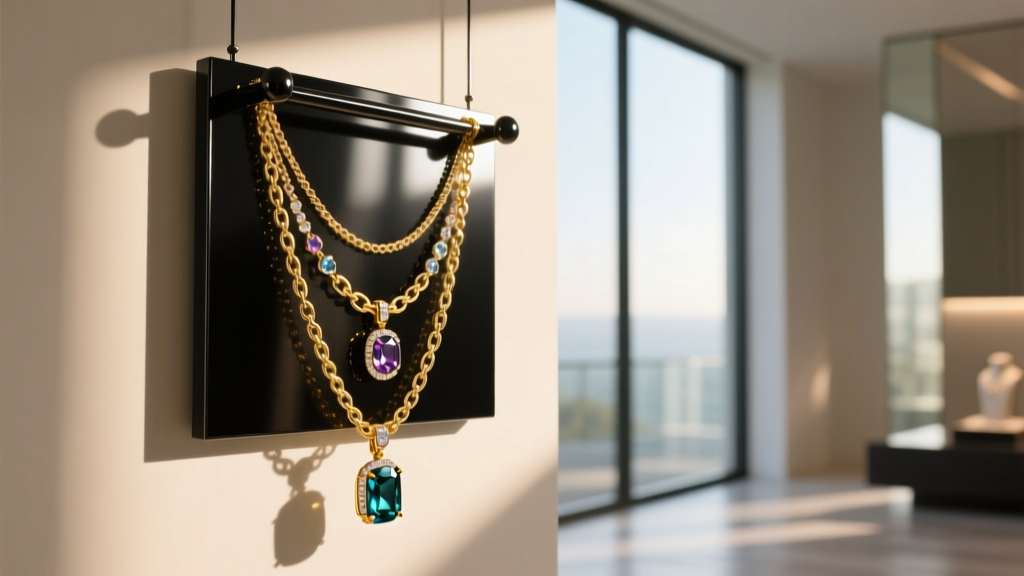
There is nothing more frustrating than reaching for your favorite 18-inch gold rope chain, only to find it hopelessly knotted with three other pieces. While jewelry boxes seem like the logical solution, laying chains flat often leads to overlapping clasps and severe tangling. Gravity is actually your best friend for chain storage, provided you use the right hardware. However, a poorly chosen or improperly installed wall hanging necklace holder can lead to catastrophic failures: ripped drywall, permanently kinked herringbone chains, and accelerated silver tarnish.
According to the Gemological Institute of America (GIA), improper storage is a leading cause of premature wear and surface damage in fine jewelry. In this comprehensive troubleshooting guide, we will diagnose the most common failures associated with wall-mounted jewelry organizers and provide exact, actionable solutions to protect your collection and your walls.
Troubleshooting Common Wall Holder Failures
Before you buy another acrylic rack or wooden pegboard, you need to understand why your current setup might be failing. Here are the three most frequent issues and how to fix them.
Problem 1: Heavy Pendants Pulling Out Drywall Anchors
A solid oak necklace board weighing 3 lbs, loaded with 15 statement necklaces averaging 60 grams each, creates a static load of nearly 5 lbs. However, the dynamic load—the sudden downward yank when you unhook a clasp—can spike the shear force to over 15 lbs. Standard plastic ribbed drywall anchors are rated for roughly 10 lbs in standard 1/2-inch drywall and will eventually pull out, taking a chunk of your wall with them.
- The Fix: Ditch the plastic expansion anchors. Use strap toggle bolts or butterfly toggle anchors (rated for 50+ lbs in 1/2-inch drywall). If your holder is wider than 16 inches, ensure at least one side is screwed directly into a wooden wall stud using a 2-inch wood screw.
Problem 2: Delicate Chains Snagging on Wooden Pegs
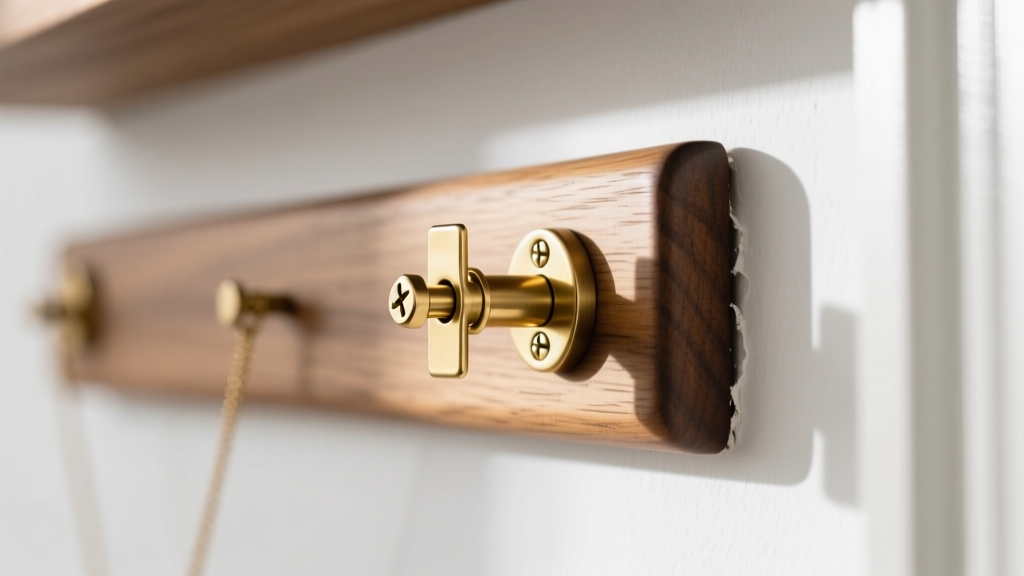
If your fine 0.9mm cable chains or delicate box chains are catching, fraying, or snapping, the culprit is likely microscopic wood splinters. Even commercially sanded wooden dowels have a roughness that acts like a saw blade against soft gold or silver links.
- The Fix: Sand all wooden pegs progressively from 220-grit up to 400-grit sandpaper. Finish by rubbing the pegs with a microcrystalline wax or a water-based polyurethane sealant. Never use oil-based finishes, as they can oxidize and transfer stains to porous gemstones like turquoise or pearls.
Problem 3: Silver Tarnishing on Open-Air Racks
Many budget-friendly wall organizers are made from MDF (Medium-Density Fiberboard). MDF is manufactured using urea-formaldehyde resins that continuously off-gas trace amounts of formaldehyde and acetic acid. These acidic vapors react rapidly with copper alloys in sterling silver, causing severe, stubborn tarnish.
- The Fix: Avoid raw MDF entirely. If you already own an MDF holder, seal it completely with a shellac-based primer (such as Zinsser B-I-N) to trap the off-gassing chemicals. Additionally, tuck 3M Anti-Tarnish Strips behind the holder to absorb ambient sulfur compounds.
Peg Diameter vs. Chain Anatomy: Preventing Permanent Kinks
Not all chains react to gravity the same way. The diameter of the pegs on your wall hanging necklace holder dictates which chains can safely be hung. Hanging a rigid chain on a peg that is too narrow will cause irreversible structural damage.
| Chain Type | Structural Vulnerability | Minimum Peg Diameter Required | Storage Verdict |
|---|---|---|---|
| Herringbone | Highly prone to kinking; bent links cannot be repaired. | 0.75 inches (19mm) | Hang only on thick, padded hooks. |
| Omega | Internal nylon core can snap if folded sharply. | 1.0 inches (25mm) | Best stored flat; if hung, use wide barrel pegs. |
| Snake | Smooth surface dents easily if pinched by tight clasps. | 0.5 inches (12mm) | Safe to hang; ensure clasps do not rest on the peg. |
| Rope / Box / Cable | Highly flexible; resistant to gravity-induced kinking. | 0.25 inches (6mm) | Safe for standard thin metal or wood hooks. |
Step-by-Step Installation for Heavy Statement Pieces
If you are mounting a large, multi-tiered metal wall hanging necklace holder designed for heavy vintage or artisan pieces, follow this heavy-duty installation protocol to guarantee it stays level and secure.
- Locate the Studs: Use a magnetic stud finder to locate the wooden framing behind your drywall. Mark the center of the studs with a pencil.
- Map the Hardware: Hold the organizer against the wall and use a torpedo level to ensure it is perfectly horizontal. Mark the drilling points through the mounting holes.
- Drill Pilot Holes: For stud mounts, drill a 3/32-inch pilot hole. For drywall toggle bolts, drill a 1/2-inch hole to allow the toggle wings to pass through.
- Secure and Tighten: Insert the toggle bolts, pull the collar tight against the drywall, and snap off the excess plastic zip-tie. Drive your screws in until snug, but do not overtighten, which can crush the drywall paper and compromise the hold.
Pro-Tip: If your wall holder lacks a felt or cork backing, apply a strip of adhesive cork tape to the back corners before mounting. This prevents the metal or wood from grinding into your wall paint and leaving permanent scuff marks when you pull on necklaces.
The 'Pendulum Swing' Rule: Optimizing Hook Spacing
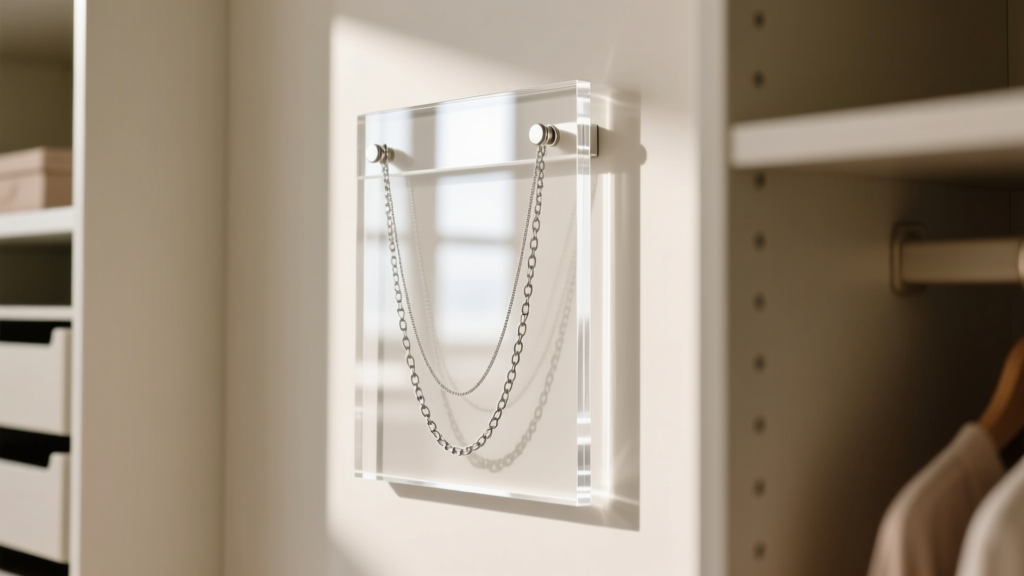
Tangles don't just happen in drawers; they happen on walls when hooks are placed too close together. When you lift a necklace off its peg, it swings outward like a pendulum. If the adjacent hook is too close, the swinging pendant will catch on the neighboring chain.
To calculate the ideal spacing for your specific collection, use the Pendulum Clearance Formula:
- Standard Pendants (under 1 inch wide): Maintain a minimum of 3.5 inches center-to-center between hooks.
- Wide Collars & Statement Pieces: Measure the widest point of your largest pendant, divide by two, and add 2 inches. For example, a 4-inch wide turquoise collar requires at least 4 inches of horizontal clearance from the next hook.
- Vertical Tiering: If using a multi-row holder, ensure there is a minimum of 12 inches of vertical drop between the top row's pegs and the bottom row's pegs to accommodate standard 18-inch to 20-inch chains without overlapping.
Final Thoughts on Jewelry Preservation
Upgrading to a high-quality wall hanging necklace holder is an investment in the longevity of your jewelry. By matching the peg diameter to your chain anatomy, utilizing heavy-duty toggle anchors, and mitigating the off-gassing risks of cheap composite woods, you transform a frustrating daily chore into a seamless, visually stunning display. For more detailed guidance on preserving specific gemstones and metals, consult the care guidelines provided by Jewelers of America. Treat your storage hardware with the same respect you give your jewelry, and your pieces will remain pristine for decades.


