Pretzel Necklace Oktoberfest Care: Cleaning & Maintenance Tips
Discover expert cleaning and maintenance tips for your pretzel necklace. Oktoberfest jewelry care guide for metal, enamel, and resin styles.

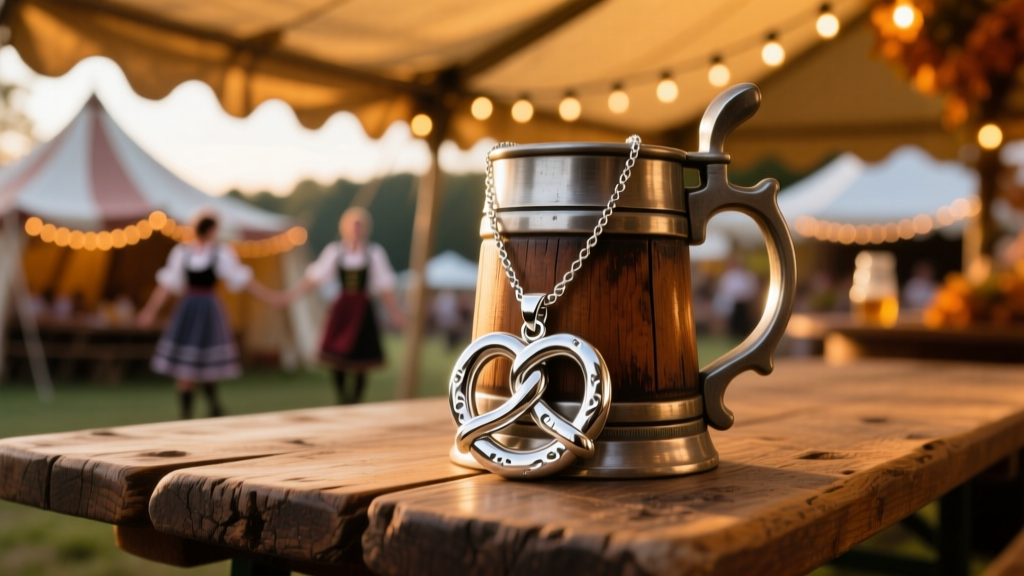
Wearing a pretzel necklace to Oktoberfest is a beloved tradition, blending Bavarian culture with playful fashion. However, the festival environment is notoriously harsh on jewelry. Between accidental spills of acidic Helles beer, the abrasive crunch of coarse pretzel salt, and hours of body sweat, your favorite Oktoberfest accessory faces a gauntlet of chemical and physical stressors. Whether your piece is a solid sterling silver casting, a vintage pewter pendant, or a novelty resin-coated real pretzel, proper maintenance is critical to ensure it survives the festival grounds and remains a wearable keepsake for years to come.
In this comprehensive guide, we break down the material science behind festival jewelry and provide actionable, deep-cleaning protocols to restore your pretzel necklace to its pre-festival glory.
Material Identification: The First Step in Oktoberfest Jewelry Care
Before applying any cleaning solution, you must accurately identify the material of your pretzel pendant. The wrong chemical agent can permanently ruin specific alloys and coatings. According to the Gemological Institute of America (GIA), understanding your jewelry's composition is the golden rule of maintenance. Below is a breakdown of common pretzel necklace materials and their specific vulnerabilities.
| Material | Composition & Hardness | Festival Vulnerability | Safe Cleaning Agent |
|---|---|---|---|
| Sterling Silver (925) | 92.5% Silver, 7.5% Copper (Mohs 2.5-3) | Tarnishes rapidly when exposed to sulfur and acidic beer spills. | Mild dish soap, silver polishing cloth |
| Cast Pewter | 85-99% Tin, Antimony, Copper (Mohs 2-3) | Highly susceptible to scratching and acidic corrosion. | Warm water, pH-neutral soap only |
| Enameled Brass | Copper/Zinc alloy with glass-powder enamel | Thermal shock can crack enamel; brass turns skin green if exposed. | Soft microfiber, no ultrasonic cleaners |
| Resin-Coated Novelty | Baked dough sealed in polyurethane/epoxy | UV degradation, moisture seepage if the resin seal cracks. | Damp cloth, avoid submerging in water |
Immediate Triage: Handling Beer Spills and Pretzel Salt
Beer is surprisingly corrosive to jewelry. With a pH ranging from 3.8 to 4.5, the carbonic and hop acids in a spilled Maß can accelerate the oxidation of copper alloys (like brass) and strip the protective patina off vintage pewter. Furthermore, coarse Bavarian salt crystals are highly abrasive and can cause micro-scratches on polished metal surfaces.
The 5-Minute Festival Ground Protocol
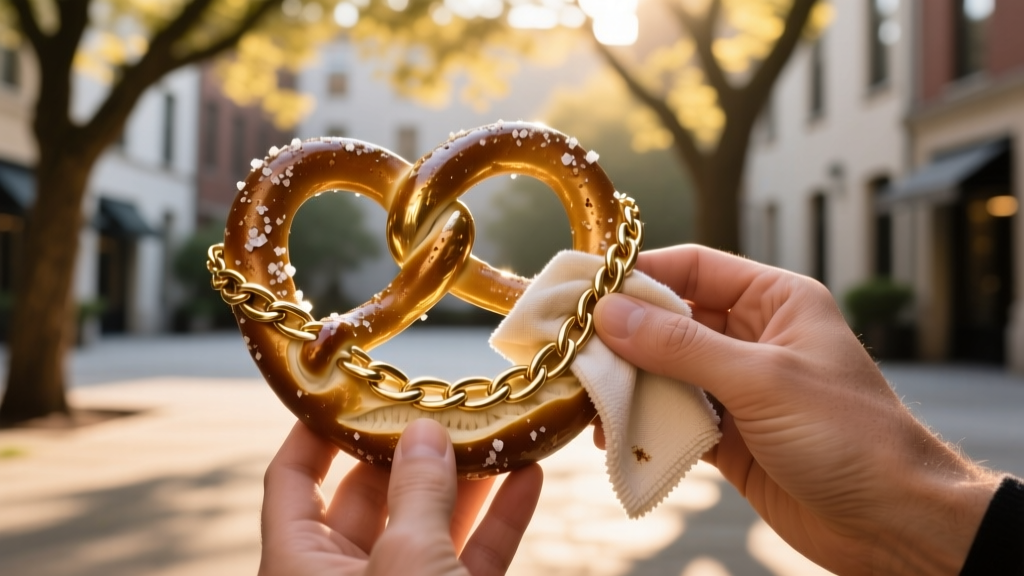
- Blot, Don't Rub: If beer spills on your necklace, immediately blot the liquid with a soft, lint-free cloth or napkin. Rubbing will grind any suspended salt crystals into the metal, causing permanent micro-abrasions.
- Rinse with Bottled Water: If you are wearing a sterling silver or pewter piece, pour a small amount of bottled drinking water over the pendant to dilute and wash away the acidic beer residue and salt.
- Dry Thoroughly: Moisture trapped in the crevices of a braided pretzel design will lead to rapid tarnishing. Use a dry cotton swab to absorb moisture from the deep grooves of the pendant.
Deep Cleaning Protocols by Material Type
Once you are home and the festival season has ended, it is time for a deep clean. The Jewelers of America recommends tailoring your cleaning solutions to the specific metallurgical properties of your jewelry. Here is how to tackle the most common pretzel necklace materials.
Sterling Silver & Gold-Vermeil Pretzel Pendants
Sterling silver pretzel pendants often feature intricate, woven textures that trap dead skin cells, sunscreen, and festival grime.
- Create a cleaning bath using warm distilled water and a few drops of pH-neutral dish soap (like Dawn).
- Soak the pendant (detached from the chain, if possible) for 5 to 10 minutes.
- Use an extra-soft baby toothbrush to gently agitate the grooves of the pretzel design. Never use medium or hard bristles, as silver is easily scratched.
- For stubborn tarnish, utilize an electrochemical bath: line a glass bowl with aluminum foil, add boiling water, a tablespoon of baking soda, and a pinch of salt. Drop the silver pendant in for 60 seconds. The redox reaction will transfer the silver sulfide (tarnish) from the necklace to the foil without removing any base metal.
Pewter and Brass Castings
Pewter is a soft, low-melting-point alloy. Never use boiling water or harsh commercial silver dips on pewter, as the chemicals can cause irreversible pitting and clouding. Instead, wash pewter pretzel pendants in lukewarm water with a gentle castile soap. Dry immediately with a microfiber cloth. If the pewter has a matte or satin finish, avoid polishing cloths entirely, as they will buff the matte texture into an uneven shine.
Enamel and Resin-Coated Novelty Pieces
Enamel is essentially fused glass. While it is resistant to chemical corrosion from beer, it is highly vulnerable to thermal shock. Never run hot water over a cold enameled pretzel pendant, as the enamel can craze or chip away from the brass backing. Clean enamel with a damp, soapy cloth and dry immediately. For real pretzels coated in jewelry-grade epoxy resin, avoid all liquid submersion. Simply wipe with a slightly damp cloth and apply a light coat of UV-protectant spray annually to prevent the resin from yellowing.
Chain Maintenance: Don't Forget the Links
The pendant may be the star of the show, but the chain bears the brunt of the physical wear. Oktoberfest pretzel necklaces are typically suspended on 18-inch to 24-inch cable or rope chains, ranging from 1.2mm to 2.5mm in gauge. Thinner chains (under 1.5mm) are particularly prone to accumulating a hardened paste of sebum, dead skin, and lotion between the links.
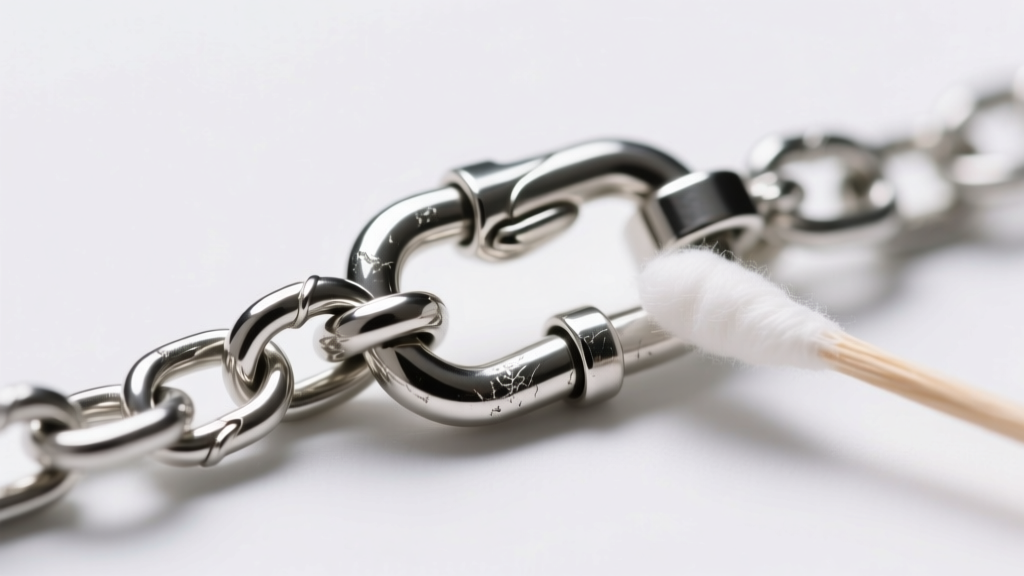
To clean the chain, lay it flat on a paper towel. Dip a cotton swab in rubbing alcohol (isopropyl 70% or higher) and run it along the length of the chain. The alcohol will cut through the oils and evaporate quickly, preventing water spots. Pay special attention to the clasp mechanism. Lobster clasps and spring rings have tiny internal springs that can seize up when clogged with festival dust. Apply a microscopic drop of mineral oil to the clasp hinge using a toothpick, work the lever back and forth, and wipe away the excess.
Off-Season Storage: Preserving Your Festival Keepsakes
How you store your pretzel necklace for the remaining 11 months of the year dictates its lifespan. Tossing it into a crowded jewelry box guarantees tangles and scratches.
- Anti-Tarnish Environments: For silver and brass pieces, store the necklace in an airtight polyethylene zip-lock bag alongside a 3M anti-tarnish strip. These strips absorb atmospheric sulfur and hydrogen sulfide, keeping the metal bright for up to a year.
- Humidity Control: Keep the storage environment below 50% relative humidity. High humidity accelerates the oxidation of copper alloys.
- Physical Protection: If your pretzel necklace features delicate enamel or protruding gemstone accents (like small Bavarian blue sapphires or cubic zirconia), wrap the pendant in acid-free tissue paper before placing it in a soft flannel pouch to prevent the metal from scratching the stones.
By treating your pretzel necklace with the same care and respect as fine jewelry, you ensure that this iconic Oktoberfest accessory remains a vibrant, wearable piece of your festival memories for every season to come.


