Arctic Angel Necklace: The Ultimate 2026 Winter Gift Guide
Discover the perfect arctic angel necklace for every winter occasion. Our 2026 gift guide covers materials, pricing, and styling tips for icy pendants.

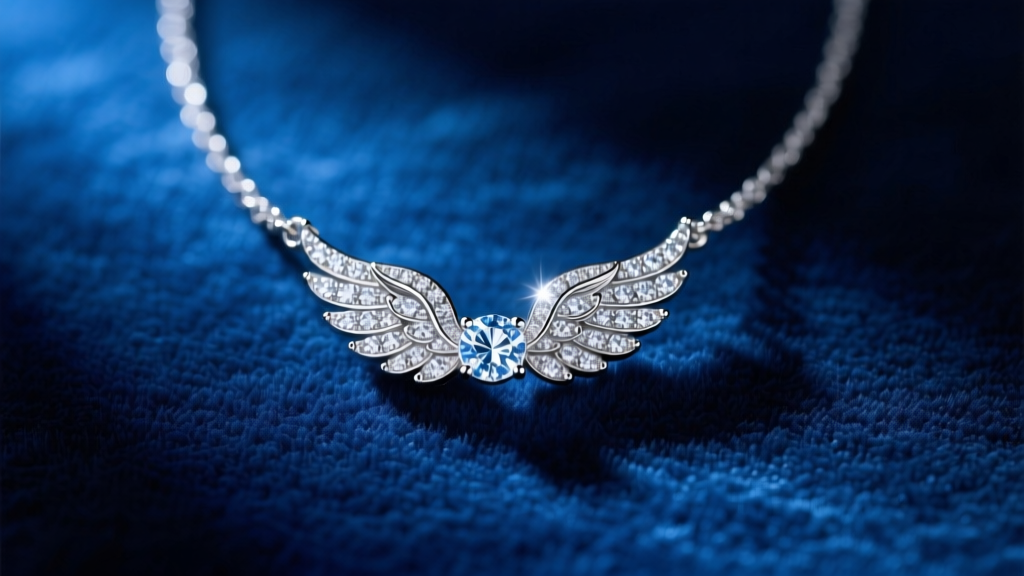
The winter gifting season demands jewelry that captures the ethereal, crisp beauty of the season. In 2026, no piece embodies this aesthetic quite like the arctic angel necklace. Characterized by frost-textured metals, delicate wing motifs, and icy blue or brilliant white gemstones, this pendant style has evolved from a niche holiday trend into a sophisticated, year-round staple for lovers of celestial and winter-inspired jewelry. Whether you are shopping for a December birthday, a winter anniversary, or a milestone holiday gift, selecting the right arctic angel necklace requires an understanding of metal grades, gemstone durability, and chain mechanics.
This comprehensive guide breaks down the anatomy of the arctic angel pendant, matches specific variations to gifting occasions, and provides the technical specifications you need to make an informed, high-value purchase.
What Defines an Arctic Angel Necklace?
An authentic arctic angel necklace is not merely a standard wing pendant. It is defined by a specific interplay of texture, color, and light designed to mimic the appearance of frost and ice. The hallmark features include:
- Frost-Textured Metalwork: The wings or halo are often cast with a matte, granulated, or sandblasted finish to simulate the look of crystallized frost, contrasting with high-polish edges.
- Icy Gemstones: The center stone or pavé accents typically feature cool-toned gems. AAA-grade aquamarine, blue topaz, or D-E color moissanite are the industry standards for this design.
- White Metal Alloys: To maintain the "arctic" illusion, these pieces are almost exclusively crafted in 14k or 18k white gold, or PT950 platinum, heavily plated with rhodium for a stark, bright-white finish.
Occasion Matching: When to Gift the Arctic Angel
Matching the specific material and gemstone combination to the recipient's lifestyle and the gifting occasion is critical for maximizing the emotional and practical value of the piece. Below is our 2026 occasion-matching matrix.
| Occasion | Recommended Metal | Center Stone | Budget Range | Why It Works |
|---|---|---|---|---|
| December Birthday | 14k White Gold | Blue Topaz or Tanzanite | $350 - $800 | Aligns with winter birthstones; offers high visual impact for a moderate price point. |
| Winter Anniversary | PT950 Platinum | Natural Diamond (F-G Color) | $1,800 - $4,500+ | Platinum ensures longevity for a milestone piece; diamonds signify enduring commitment. |
| Holiday / Christmas | Sterling Silver (Rhodium) | Moissanite or White Sapphire | $120 - $300 | Budget-friendly but visually indistinguishable from high-end pieces under indoor lighting. |
| Push Present (Winter) | 18k White Gold | AAA Aquamarine & Diamond Halo | $1,200 - $3,000 | The large, icy aquamarine serves as a striking, unique centerpiece for a major life event. |
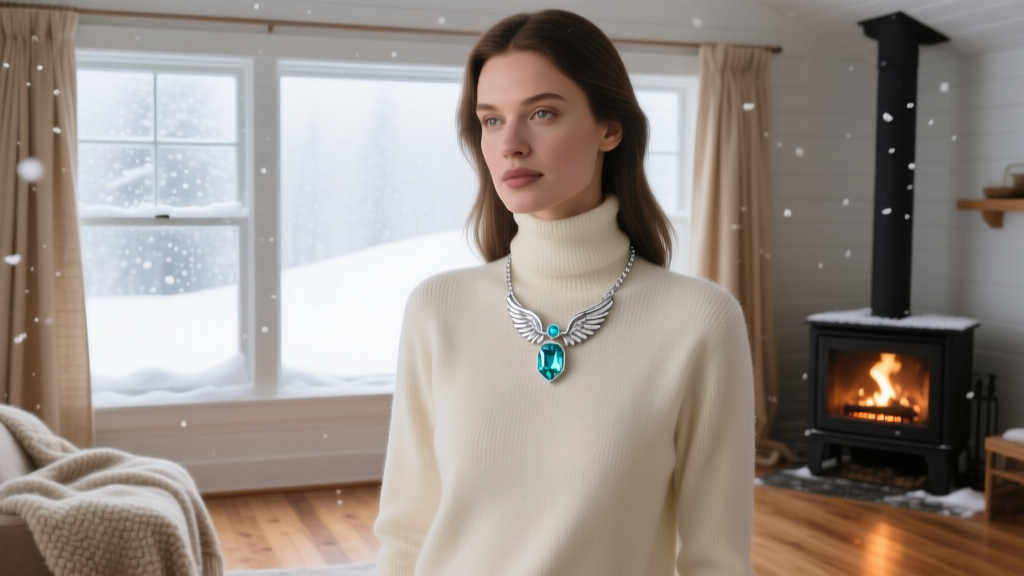
Material & Gemstone Specifications: The Buyer’s Blueprint
To avoid buyer's remorse, you must look past the marketing terminology and examine the physical specifications of the necklace. The "arctic" aesthetic relies heavily on optical illusions created by metal plating and gemstone cutting.
The Rhodium Plating Factor
White gold is naturally slightly yellowish or grayish. To achieve the blinding white "arctic" finish, jewelers plate the metal with rhodium, a platinum-group metal. When purchasing an arctic angel necklace in 14k or 18k white gold, inquire about the plating thickness. A standard commercial flash plating is merely 0.1 to 0.25 microns thick and will wear off in months, exposing the yellowish alloy beneath and ruining the frost aesthetic. For a piece intended for daily or frequent winter wear, demand a heavy rhodium plating of 0.75 to 1.5 microns. According to the Jewelers of America, proper rhodium thickness is the primary determinant of white gold's long-term color stability.
Gemstone Durability: Aquamarine vs. Topaz
While both aquamarine and blue topaz provide that signature icy blue hue, their structural integrity differs vastly. Aquamarine (a beryl variety) ranks 7.5 to 8 on the Mohs hardness scale, making it highly resistant to scratching and suitable for daily wear. Blue topaz ranks an 8, but it has perfect basal cleavage, meaning a hard knock against a winter coat zipper or a steering wheel can cause the stone to split or chip. If the recipient is active or clumsy, always opt for aquamarine or a lab-grown sapphire alternative. For a deeper dive into beryl durability and grading, refer to the Gemological Institute of America (GIA) quality factors guide.
Chain Gauges and Clasp Mechanics
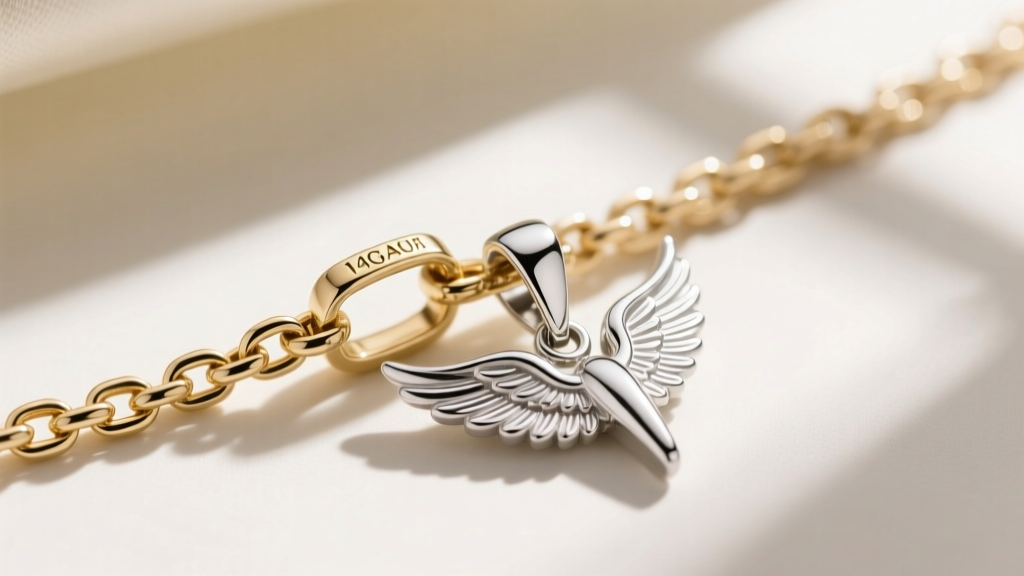
The delicate nature of an angel wing pendant requires a chain that balances visual subtlety with tensile strength. Avoid chains thinner than 0.8mm, as the weight of a gemstone-set wing will cause them to snap under winter clothing layers.
- Optimal Gauge: 0.9mm to 1.2mm. This thickness supports pendants weighing up to 8 grams without stretching.
- Chain Style: A box chain is highly recommended for arctic angel pendants. The geometric, square links reflect light in a way that complements the frost-textured metal of the wings, whereas a standard cable chain can look too rustic.
- Clasp Security: Ensure the necklace features a 5x9mm or 6x12mm lobster clasp. Spring-ring clasps are notoriously difficult to operate with cold fingers and lack the internal spring tension required to hold heavier pendants securely.
Price Tiers & Market Expectations in 2026
Navigating the pricing landscape requires understanding what you are actually paying for. Here is a realistic breakdown of the current market for arctic angel necklaces:
Entry-Level ($120 – $350)
At this tier, you are looking at 925 sterling silver bases with heavy rhodium plating. The "diamonds" will be cubic zirconia (CZ) or low-grade white sapphire, and the blue stones will be treated colorless topaz. These are excellent for occasional holiday wear but will require re-plating every 12 to 18 months.
Mid-Range ($400 – $1,500)
This is the sweet spot for serious gifting. Pieces in this range feature solid 14k white gold, genuine AAA aquamarine or high-quality DEF color moissanite, and precision-set pavé accents. The metalwork will feature genuine sandblasted frost textures rather than molded imitations.
Luxury & Bespoke ($1,800 – $5,000+)
Luxury arctic angel necklaces are cast in PT950 platinum, eliminating the need for rhodium plating entirely. They feature natural, untreated diamonds (VS clarity or better) and custom-cut aquamarines. The wing motifs are often hand-engraved by master jewelers to create unique, asymmetrical frost patterns.
"When inspecting the prongs on an angel wing motif, look for 'tipped' or 'bead' prongs on the outer feathers. Standard V-prongs can catch on knitwear, which is a major hazard for winter jewelry. A well-crafted arctic angel piece will have seamlessly integrated, low-profile prongs that protect the stone without snagging wool or cashmere."
— Master Bench Jeweler & CAD Designer
Care & Maintenance for Frost-Finish Metals
The very texture that gives the arctic angel necklace its namesake—the frosty, matte finish on the wings—is also its greatest vulnerability. Dirt, lotions, and cosmetic powders easily become trapped in the microscopic grooves of the sandblasted metal.
Do not use ultrasonic cleaners on arctic angel necklaces featuring treated blue topaz or fracture-filled gems, as the high-frequency vibrations and heat can shatter the stones or strip the color treatments. Instead, use a mild, phosphate-free dish soap and a soft-bristled baby toothbrush to gently agitate the frost-textured areas. Rinse with lukewarm water and dry immediately with a microfiber cloth to prevent water spots from dulling the rhodium finish.
By prioritizing heavy rhodium plating, appropriate chain gauges, and durable gemstones, you can gift an arctic angel necklace that not only captures the magic of the winter season but stands the test of time as a cherished, wearable heirloom.


