The Engineering of a Twine Necklace: Materials, Knots, and Durability
Discover the material science and structural engineering behind a durable twine necklace. Explore cord grades, knot mechanics, and hardware integration.

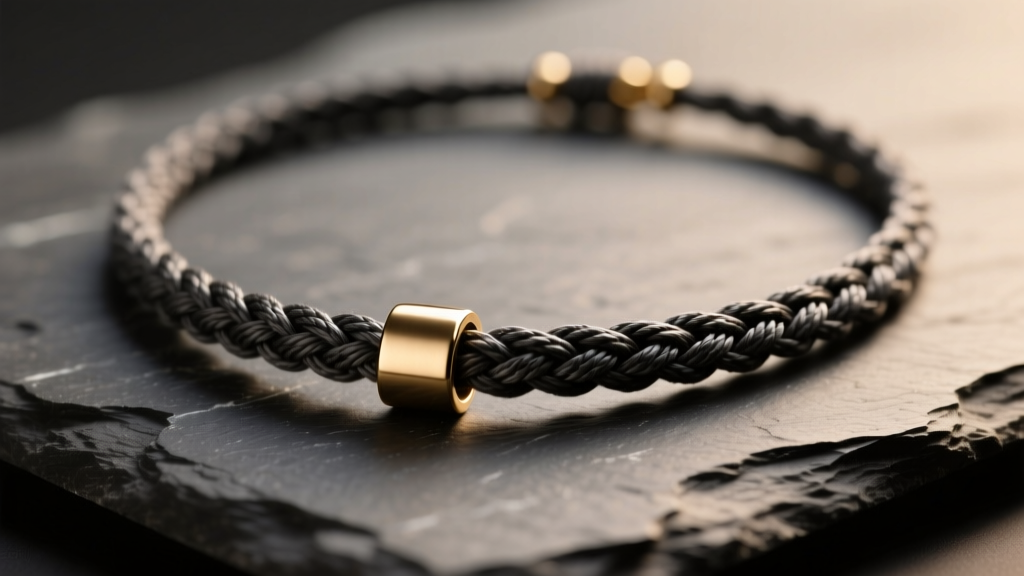
Beyond Craft String: The Material Science of Jewelry Twine
When evaluating a twine necklace, the untrained eye sees a simple bohemian accessory. The jewelry engineer, however, sees a complex fibrous suspension system subjected to constant tensile loads, friction, and environmental degradation. The longevity of any fibrous cord necklace depends entirely on the molecular structure of the fiber, its denier (thickness), and its protective coatings. According to standards outlined by the International Cordage Institute, the tensile strength and abrasion resistance of cordage vary wildly based on whether the fiber is natural, synthetic, or a blended composite.
Natural fibers like hemp and linen offer an organic aesthetic and excellent initial knot-holding friction. Hemp, derived from the Cannabis sativa stalk, boasts a high initial tensile strength but suffers from poor elastic recovery. Linen, spun from flax, provides superior wet strength compared to hemp, making it slightly more resilient against perspiration. However, natural fibers are inherently porous. They absorb ambient moisture and skin oils, which eventually leads to bacterial breakdown and fiber rot.
Synthetic alternatives, specifically bonded nylons like S-Lon or C-Lon, represent the pinnacle of twine necklace engineering. These cords are composed of multi-filament nylon fibers that are tightly twisted and bonded with a specialized resin. This resin prevents the fibers from fraying under the shear stress of sliding knots and provides near-total immunity to moisture and sebum degradation. For high-end artisanal pieces where a natural look is required but synthetic durability is needed, waxed cotton or waxed linen cords serve as the optimal middle ground.
Tensile Strength and Environmental Failure Modes
Selecting the right cord requires understanding the specific failure modes associated with daily wear. A standard 1mm cord must support not only the static weight of a pendant but also the dynamic shock loads caused by the wearer's movement. Below is a technical comparison of common twine materials used in fine and artisanal jewelry.
| Material | Avg. Tensile Strength (1mm) | Moisture Resistance | UV Degradation Rate | Primary Failure Mode |
|---|---|---|---|---|
| Hemp (Unwaxed) | 20-25 lbs | Poor | Moderate | Sebum absorption, fiber rot, friction burn |
| Linen (Waxed) | 25-30 lbs | Moderate | Low | Wax degradation, core snapping at hardware |
| Bonded Nylon (S-Lon) | 12-15 lbs | Excellent | High (over years) | UV embrittlement, melting from friction heat |
| Silk (Griffin) | 8-10 lbs | Poor | High | Abrasion wear, stretching, water staining |
The most common point of catastrophic failure in a twine necklace is not the cord snapping in the middle of the neck, but rather the degradation of the fiber at the clasp integration point or the pendant bail. Repeated micro-bending at the clasp loop causes internal fiber fatigue, a phenomenon well-documented in textile engineering by The Textile Institute. Furthermore, human sebum is highly acidic and lipid-rich; over 12 to 18 months, unwaxed natural fibers will absorb these oils, leading to a 40% reduction in tensile strength.
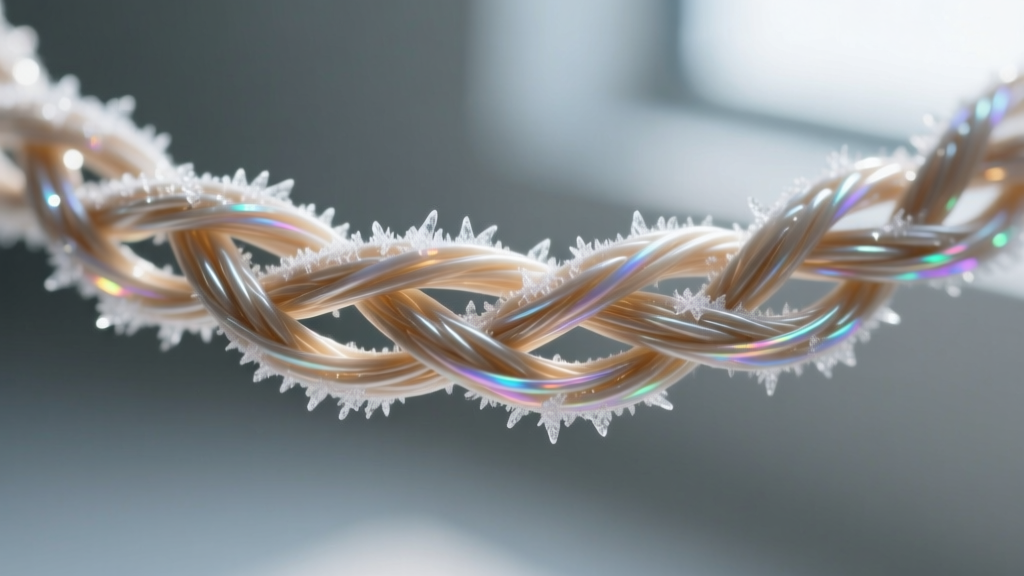
Structural Knot Mechanics and Friction Management
The structural integrity of a knotless or adjustable twine necklace relies heavily on the physics of the sliding square knot (often used in macrame). In this configuration, the outer working cords wrap around the inner core cords. When tension is applied to adjust the necklace length, the friction between the outer and inner cords generates significant heat and shear force.
The Sliding Square Knot and Core Protection
If the inner core cords are unwaxed or lack a smooth resin coating, the sliding knot will act like a microscopic saw, slowly severing the core fibers each time the wearer adjusts the length. To mitigate this, expert jewelers pre-treat the core cords with a microcrystalline wax (such as Renaissance Wax). Unlike organic beeswax, which can turn rancid, attract dust, and become brittle in cold temperatures, microcrystalline wax remains stable, provides a high-lubricity surface for the sliding knot, and seals the fibers against moisture.
Pendant Load Distribution
Attaching a heavy stone or metal pendant to a twine necklace requires more than a simple lark's head knot. A heavy pendant resting on a single 1mm cord creates a severe stress concentration point. The sharp edge of a stone drill hole or a metal bail can easily slice through the cord under dynamic load. The engineering solution is to use a wire-wrapped bail or a specialized leather cord end that distributes the pendant's weight across a wider surface area of the twine, or to line the pendant hole with a protective metal tube (grommet) to prevent direct fiber-to-stone abrasion.
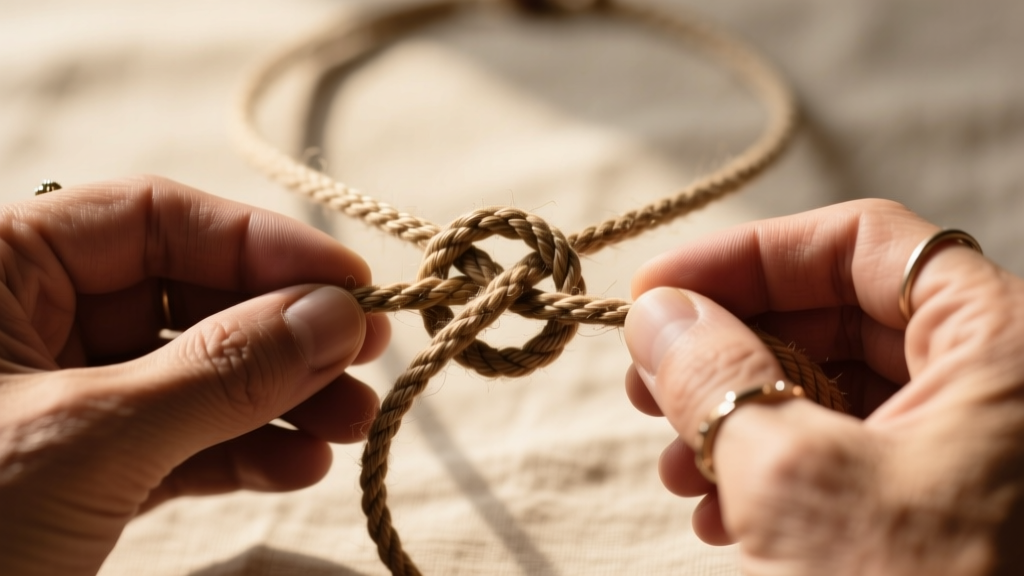
Hardware Integration: Securing the Clasp Without Shearing
A critical mistake made by novice jewelry makers is attempting to secure a twine necklace using standard metal crimp tubes and crimping pliers. Metal crimps are designed for flexible beading wire (like Soft Flex), which is made of braided steel. When a metal crimp is compressed over fibrous twine, the sharp inner edges of the metal tube shear the fibers, creating a structural weak point that will inevitably fail.
Proper hardware integration for fibrous cords requires one of three engineered approaches:
- Wire Wrapping: Using 24-gauge or 26-gauge dead-soft sterling silver or gold-filled wire to bind the end of the twine. The wire is wrapped tightly around the cord, creating a secure, non-shearing collar that terminates in a wrapped loop for the clasp.
- Cord Ends with Cyanoacrylate: Metal ribbon clamps or coil cord ends can be used, but the adhesive choice is critical. Flexible glues like E6000 are too thick and fail to penetrate the fibers. Instead, jewelers use low-viscosity cyanoacrylate (CA glue), which wicks deep into the capillary structure of the twine, creating a hardened, unified composite material inside the metal finding.
- Thermal Fusing (Synthetics Only): For bonded nylon cords, the ends can be trimmed and carefully melted with a precision thread burner to create a hardened plastic bead that seats inside a bead tip or calotte. This method is entirely ineffective for natural fibers like hemp or linen, which will simply burn and turn to ash.
Maintenance, Conditioning, and Lifespan Extension
Even the most expertly engineered twine necklace requires specific maintenance protocols to maximize its lifespan. The Gemological Institute of America (GIA) notes that while much attention is paid to gemstone care, the organic and fibrous components of jewelry are often neglected until they fail.
"Fibrous jewelry cords should never be subjected to ultrasonic cleaners or harsh chemical solvents. Spot cleaning with a mild, neutral-pH surfactant and allowing the cord to dry completely away from direct heat is the only safe method for natural fibers."
For natural fiber twine necklaces, periodic re-waxing is essential. Applying a micro-thin layer of synthetic microcrystalline wax every 12 to 18 months restores the cord's moisture barrier and maintains the necessary lubricity for adjustable knots. Storage is equally important; twine necklaces should be hung vertically or laid completely flat. Coiling them tightly in a jewelry box induces memory-set in the fibers, leading to permanent kinks that weaken the structural integrity of the cord over time. By treating the twine not merely as string, but as a critical load-bearing textile component, jewelers and collectors can ensure these pieces endure for decades.


