Pearl and Crystal Necklace Guide: Materials, Care & Styling
Discover the gemological differences, stringing techniques, and care routines required to maintain a stunning pearl and crystal necklace.

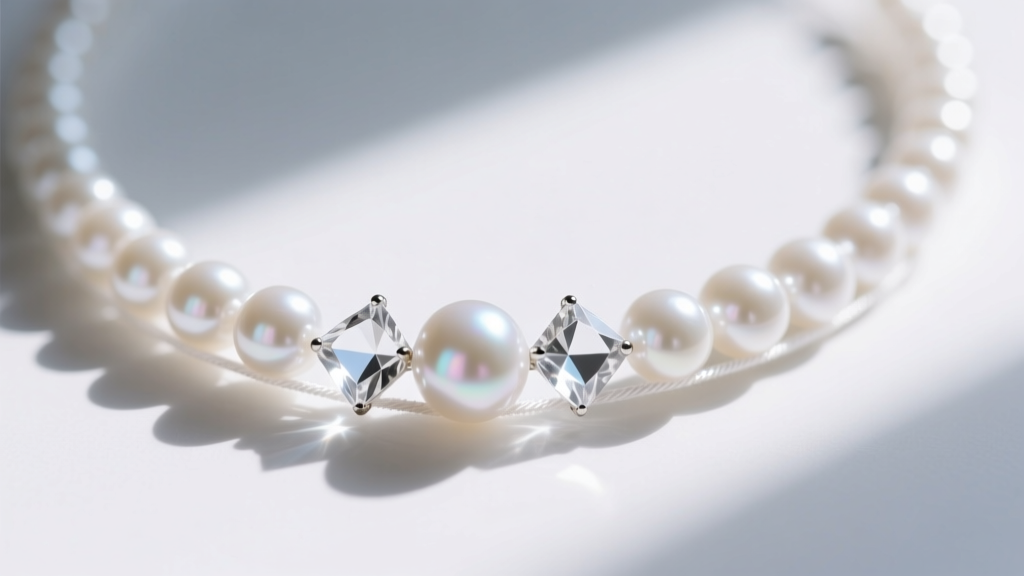
The Mineral vs. Organic Divide: Understanding Your Materials
When designing or purchasing a pearl and crystal necklace, you are combining two fundamentally opposed materials: one born from biological processes and the other from geological or high-temperature manufacturing. Understanding this gemological divide is the first step in ensuring your jewelry lasts a lifetime. According to the Gemological Institute of America (GIA), pearls are organic gems formed when a mollusk secretes nacre (calcium carbonate) around an irritant. They are inherently soft, porous, and vulnerable to acids. Crystals, whether natural quartz or precision-cut lead-free glass like Swarovski, are silica-based structures defined by their rigid crystalline lattices and high refractive indices.
This contrast creates a unique aesthetic tension. Pearls offer a soft, luminous diffusion of light known as "orient," while crystals provide sharp, spectral refraction. However, combining them in a single necklace introduces severe structural challenges that mass-market jewelers often ignore, leading to premature degradation of the organic components.
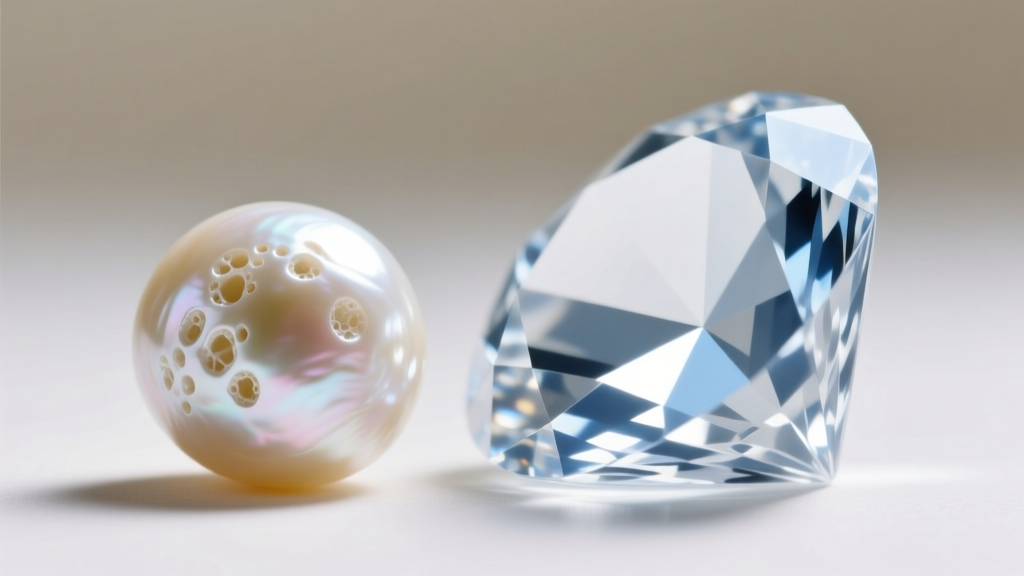
Material Properties Comparison Chart
To engineer a durable pearl and crystal necklace, a jeweler must account for the drastic differences in hardness and chemical stability. Below is a technical comparison of the most common materials used in these hybrid designs.
| Property | Akoya / Freshwater Pearl | Natural Quartz Crystal | Swarovski Advanced Crystal |
|---|---|---|---|
| Mohs Hardness | 2.5 - 4.5 | 7.0 | 6.0 - 7.0 |
| Chemical Composition | Calcium Carbonate (CaCO3) | Silicon Dioxide (SiO2) | Lead-Free Silica Glass |
| Refractive Index | 1.53 - 1.68 (Diffusive) | 1.54 - 1.55 (Refractive) | ~1.70 (Highly Refractive) |
| Porosity | High (Absorbs oils/chemicals) | None | None |
| Vulnerability | Acids, perfumes, abrasion | Hard impacts (cleavage planes) | Hard impacts, scratching |
Engineering the Perfect Pearl and Crystal Necklace
The most common point of failure in hybrid necklaces occurs at the stringing level. Because of the Mohs hardness disparity, improper stringing turns the crystal into a destructive tool.
The "Lapidary Saw" Effect
If a jeweler strings a Mohs 7 quartz crystal directly adjacent to a Mohs 2.5 pearl on a flexible beading wire without spacing, a destructive phenomenon occurs. Every time the necklace bends against the wearer's collarbone, the sharp, faceted edges of the crystal act like a lapidary saw against the soft nacre of the pearl. Over a few months of daily wear, the crystal will literally drill through the pearl's drill hole, causing the nacre to flake, chip, and eventually crack the gem in half.
Stringing Solutions and Hardware
To prevent this, expert jewelers employ specific stringing methodologies:
- Traditional Silk Knotting: Using Griffin silk cord (typically size #3 or #4 for 6mm-8mm gems), the jeweler ties a hand-knot between every single pearl and crystal. This prevents bead-on-bead friction and ensures that if the strand breaks, only one gem falls.
- Micro-Spacing on Beading Wire: If the design requires the flexibility of Soft Flex wire (0.018" diameter), the jeweler must use 1.5mm 14k gold-filled or sterling silver round micro-beads as buffers between the crystal and the pearl.
- Clasp Protection: The transition from the soft silk to the metal clasp must be protected by French wire (also known as gimp). This tiny coiled metal spring prevents the silk from fraying against the metal jump ring, a critical failure point in heavy crystal-and-pearl designs.
Real-World Failure Modes and How to Prevent Them
Beyond physical abrasion, chemical degradation is the silent killer of hybrid necklaces. Because pearls and crystals react entirely differently to environmental factors, a necklace can quickly become visually unbalanced.
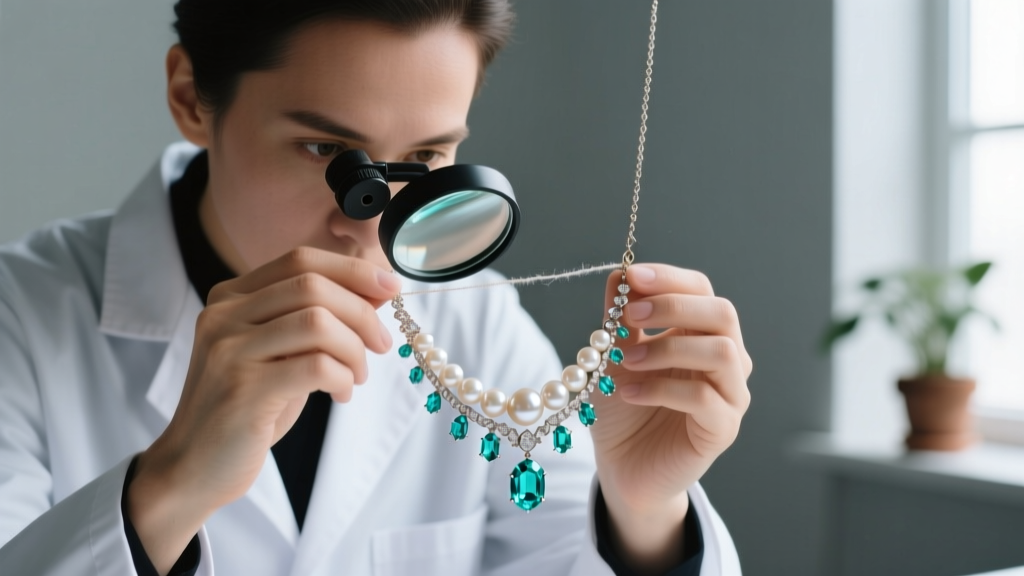
Chemical Degradation from Cosmetics
Pearls are highly sensitive to the alcohol and synthetic oils found in perfumes, hairsprays, and lotions. These chemicals dissolve the conchiolin (the organic "glue" holding the nacre layers together), causing the pearl to lose its luster and eventually peel. Crystals, being non-porous silica, are completely immune to these chemicals. If you spray perfume on your neck before putting on your necklace, the crystals will remain brilliantly clear while the pearls will slowly turn dull and chalky. Always adhere to the golden rule: "Pearls are the last thing you put on, and the first thing you take off."
Sweat and Acidic pH
Human sweat is slightly acidic (pH 4.5 to 7.0). Prolonged contact with acidic sweat will etch the surface of a pearl, leaving permanent microscopic pits. After wearing your necklace against the skin, always wipe the pearls gently with a damp, lint-free microfiber cloth before storing them. Never use ultrasonic cleaners or steamers; the high-frequency vibrations will shatter the crystals and strip the pearl nacre.
Pricing Tiers and Authenticity Markers
The market for pearl and crystal necklaces ranges from fast-fashion costume jewelry to high-end artisan pieces. Understanding pricing tiers helps you identify true value and avoid counterfeit materials.
The Tooth Test: To verify if the pearls in your hybrid necklace are real, gently rub them against the biting edge of your front teeth. Real nacre feels distinctly gritty or sandy due to its microscopic aragonite platelets. Glass or plastic imitation pearls, as well as the crystals, will feel perfectly smooth.
Market Pricing Breakdown (2026 Estimates)
- Tier 1: Costume / Fashion ($30 - $90)
Features low-grade freshwater "rice" pearls and standard glass crystals strung on unknotted nylon. High risk of rapid degradation. - Tier 2: Fine Commercial ($150 - $450)
Features AAA-grade round freshwater pearls paired with Swarovski Advanced Crystal, hand-knotted on silk with a sterling silver clasp. - Tier 3: Luxury / Artisan ($800 - $2,500+)
Features Hanadama-certified Akoya or South Sea pearls with thick nacre (>0.8mm), paired with precision-cut natural quartz or beryl crystals, finished with 18k gold hardware.
Expert Styling: Refractive vs. Luminous Pairing
Styling a pearl and crystal necklace requires an understanding of how light interacts with your wardrobe. Because crystals refract light (bending it into sharp, sparkly flashes) and pearls diffuse light (scattering it into a soft, glowing halo), they serve different visual purposes.
For evening wear or low-light environments, position the necklace so the crystals rest near the center of the décolletage to catch ambient light and draw the eye inward. For professional or daytime settings, a longer "opera" length (28 to 34 inches) allows the soft luminosity of the pearls to rest against darker fabrics like navy silk or charcoal wool, while the crystals provide subtle, sophisticated accents. Avoid wearing highly reflective sequined garments with hybrid necklaces, as the competing light refraction will overwhelm the soft orient of the pearls, rendering them visually flat.
By respecting the distinct gemological properties of both organic pearls and mineral crystals, you can select, maintain, and style a hybrid necklace that remains structurally sound and visually breathtaking for decades.


