Vintage Jet Necklace Buying Guide: What to Look For
Discover how to authenticate, value, and buy a genuine vintage jet necklace. Learn to spot Whitby jet vs. imitations like French jet and vulcanite.

The Allure of Victorian Mourning Jewelry
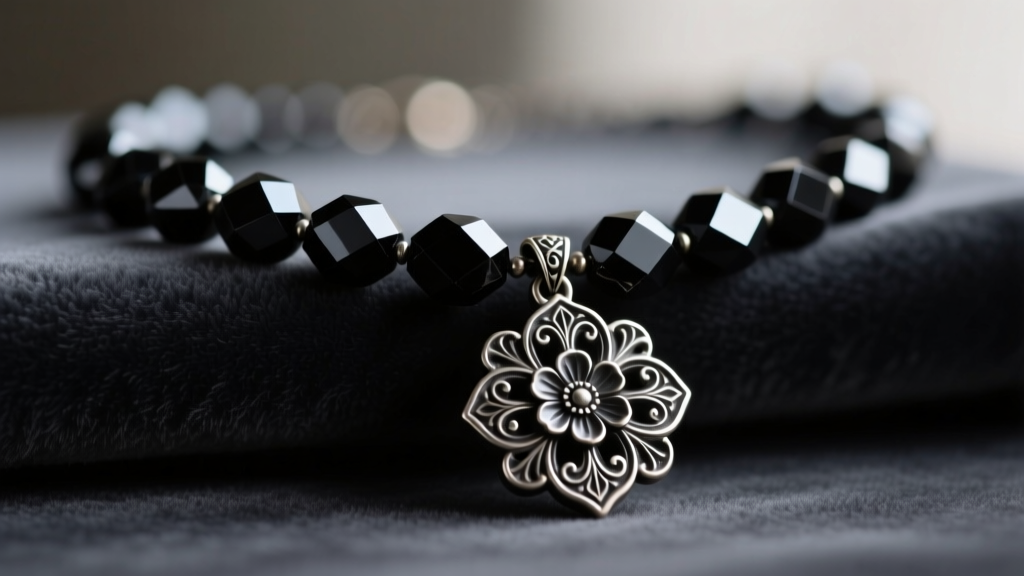
When Queen Victoria entered a prolonged period of mourning following the death of Prince Albert in 1861, she inadvertently sparked a massive trend that would define late 19th-century adornment. The demand for black mourning jewelry skyrocketed, and no material was more coveted than genuine jet. Today, collecting a vintage jet necklace is a pursuit of both historical artistry and organic gemology. However, the 2026 antique market is saturated with clever imitations, from Victorian-era French jet (glass) to early plastics like Bakelite and vulcanite. This comprehensive buying guide will equip you with the gemological frameworks needed to authenticate, evaluate, and preserve genuine fossilized lignite.
Whitby Jet vs. Imitations: A Material Breakdown
True jet is not a stone; it is a fossilized wood (lignite) formed under high pressure over millions of years. The most prized variety is Whitby Jet, sourced from the Yorkshire coast of England, known for its deep, velvety black hue and exceptional carving properties. Spanish jet (from Asturias) is also genuine but tends to be softer and more prone to crazing (surface cracking) over time. Understanding the physical properties of these materials is your first line of defense against misidentified pieces.
| Material | Specific Gravity | Mohs Hardness | Origin / Composition | Key Identifier |
|---|---|---|---|---|
| Whitby Jet | 1.30 - 1.34 | 2.5 - 4.0 | Yorkshire, UK (Fossilized Wood) | Leaves brown streak; warm to touch |
| Spanish Jet | 1.25 - 1.30 | 2.5 - 3.0 | Asturias, Spain (Fossilized Wood) | Softer; prone to micro-crazing |
| French Jet | 2.40 - 2.60 | 5.5 - 6.0 | Bohemia / France (Black Glass) | Heavy; cold to touch; no streak |
| Vulcanite | 1.20 | 2.0 | Vulcanized Rubber | Smells like rubber when heated |
| Bog Oak | 1.10 - 1.20 | 2.0 - 2.5 | Fossilized Peat/Bog Wood | Visible wood grain to naked eye |
For a deeper dive into the historical context of these materials, the Victoria and Albert Museum offers an exceptional archive on the socio-cultural impact of Victorian mourning jewelry and the regional dominance of the Whitby jet carving industry.
5 Non-Destructive Authentication Tests for Buyers
Historically, collectors used the "hot pin test" to identify jet—genuine jet will not melt and smells like burning coal, while plastics melt and smell acrid. Never perform a hot pin test on a vintage necklace. It causes irreversible thermal damage and drastically reduces the piece's value. Instead, rely on these non-destructive methodologies.
1. The Unglazed Porcelain Streak Test
Gently rub an inconspicuous area of the bead or pendant (such as the back of a carved cameo or the rim of a drill hole) against an unglazed porcelain tile. Genuine jet will leave a distinct, matte brown streak, similar to the color of strong coffee. Glass (French jet) will leave no streak or a faint white scratch, while vulcanite will leave a pale grey mark.
2. Thermal Conductivity and Weight
Because jet is an organic material with a low specific gravity (~1.32), it is remarkably lightweight compared to glass. A multi-strand Victorian jet necklace will feel surprisingly airy on the neck. Furthermore, jet is a thermal insulator. When touched to the lips or the inside of the wrist, it feels room-temperature or slightly warm, whereas glass and onyx will feel distinctly cold.
3. UV Fluorescence
Under long-wave ultraviolet (UV) light, genuine jet is generally inert, showing no fluorescence. In contrast, early plastics like Bakelite or celluloid may exhibit a milky or yellowish glow, and some dyed hardwoods will fluoresce brightly. This is a rapid way to rule out 20th-century synthetic imitations.
4. Magnification of Drill Holes
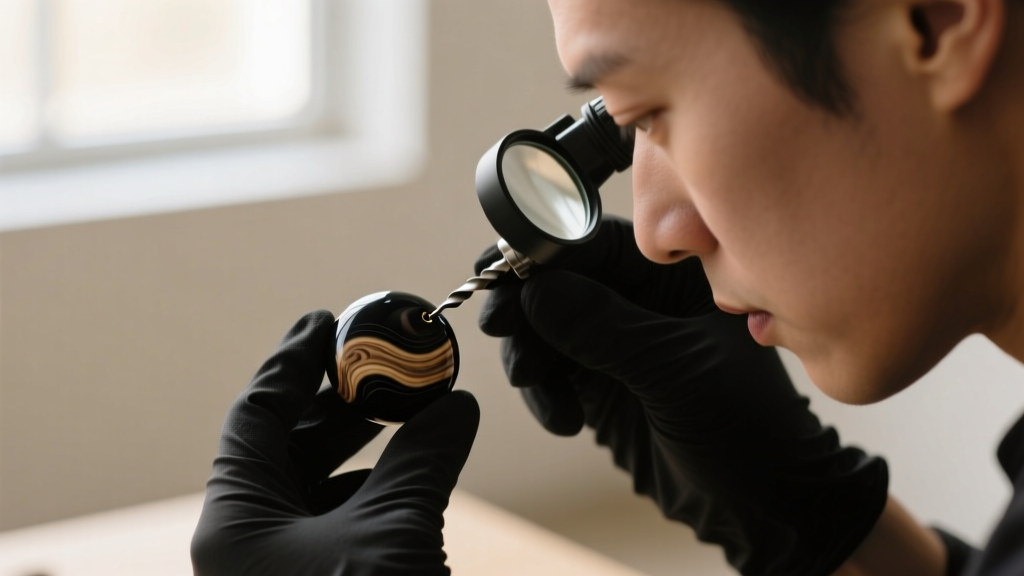
Using a 10x or 20x jeweler's loupe, examine the drill holes of the beads. Antique jet beads were often hand-drilled, resulting in slightly uneven, conical holes. More importantly, look inside the hole for the cellular structure of wood. Mindat.org notes that under high magnification, the compressed xylem and phloem structures of the original Araucaria wood can sometimes be observed in high-grade Whitby jet.
5. The Acoustic Tap Test
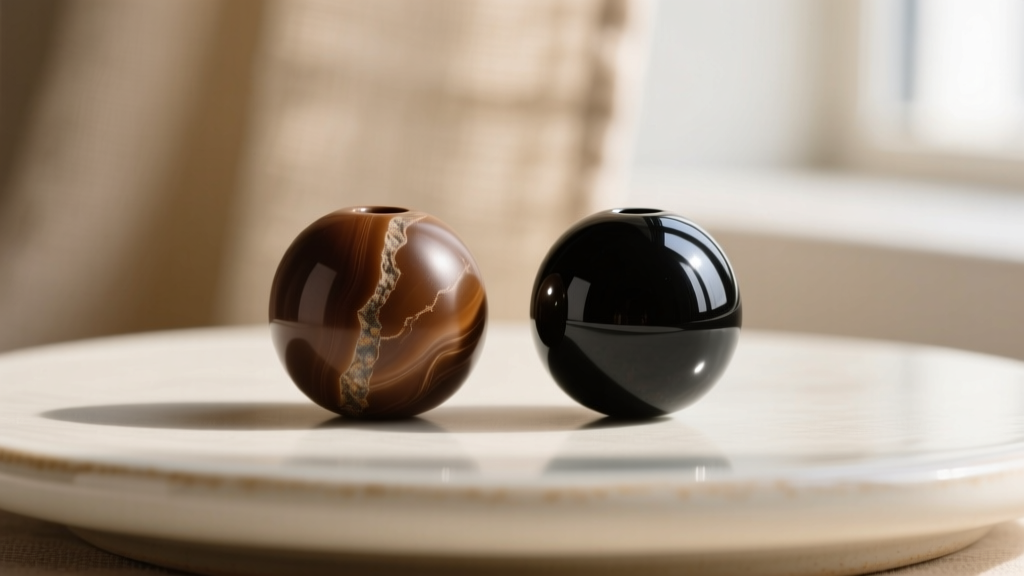
Gently tap two jet beads together. Genuine jet produces a dull, soft "clack" or thud. Glass beads will produce a sharp, high-pitched "clink," while vulcanite yields a muted, rubbery sound.
Evaluating Craftsmanship, Clasps, and Hallmarks
Authentication extends beyond the material; the construction of the necklace provides vital clues regarding its age and origin. Hand-carved Whitby jet features deep undercuts, sharp edges, and a deliberate contrast between matte backgrounds and highly polished high points. Molded glass imitations, however, suffer from soft, rounded edges and visible mold lines.
Pay close attention to the clasp. Early Victorian (1840s-1860s) jet necklaces were often strung on black silk ribbon and tied, or secured with simple carved barrel clasps. By the 1880s, push-in tube clasps and early dog-clip clasps became standard. If a purported 1870s jet necklace features a modern lobster claw clasp or a stamped "925" sterling silver jump ring, it has likely been restrung or is a modern pastiche, which severely limits its collector value. For comprehensive visual guides on antique findings, Lang Antiques University is an indispensable resource.
2026 Market Pricing and Valuation Metrics
The market for antique mourning jewelry has stabilized, but high-quality, authenticated Whitby jet continues to appreciate. When evaluating a vintage jet necklace, condition and provenance dictate the price.
- Simple Bead Strands ($150 - $350): Graduated or uniform faceted jet beads in good condition, with minor surface wear.
- Carved Pendants & Cameos ($400 - $900): Necklaces featuring intricate hand-carved floral motifs, weeping willows, or classical cameos. Deep undercuts and crisp details command the premium.
- Faceted Link & Chain Necklaces ($800 - $1,500): Complex, articulated necklaces where the jet is carved into interlocking geometric links, mimicking metal chainwork.
- Complete Parures ($2,000+): Matched sets including a necklace, earrings, brooch, and bracelets, ideally in their original fitted velvet cases.
Beware of "Spanish Jet" sold at Whitby prices. While genuine, Spanish jet is historically less durable and less detailed in its carving, typically trading at 30% to 40% less than English Whitby jet of comparable design.
Preservation: Caring for Fossilized Lignite
Jet is an organic gemstone that requires specialized care to prevent desiccation and structural failure. Never clean a vintage jet necklace in an ultrasonic cleaner; the high-frequency vibrations can shatter the fossilized wood along microscopic fault lines. Avoid all commercial jewelry dips, ammonia, and alcohol, which will strip the natural oils and leave the jet with a dull, chalky finish.
To clean, wipe gently with a soft, lint-free cloth slightly dampened with distilled water. Once or twice a year, apply a microscopic amount of pure mineral oil or specialized museum-grade microcrystalline wax to the surface to maintain its luster and prevent the material from drying out and crazing. Store the necklace flat in a humidity-controlled environment (ideally 45-55% relative humidity), away from direct sunlight and extreme temperature fluctuations, ensuring your piece of Victorian history survives for the next century.