Expert Care & Cleaning Guide for an Army Tag Necklace Chain
Learn expert care, maintenance, and cleaning tips for your army tag necklace chain. Discover how to restore engravings and prevent rust.

Material Science: Know Your Tag and Chain Alloy
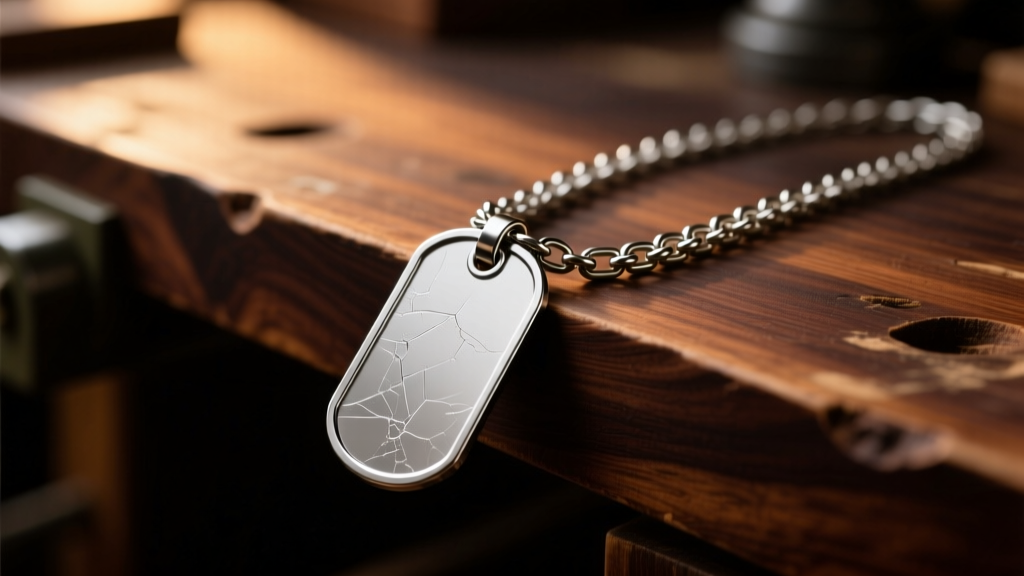
When maintaining an army tag necklace chain, the first step is identifying the base metal. Military-style jewelry is typically stamped from 304 or 316L stainless steel, though vintage or fashion pieces may use brass, aluminum, or sterling silver. Understanding the metallurgy dictates your cleaning protocol.
304 stainless steel (18/8 stainless) contains 18% chromium and 8% nickel. While durable, it is highly susceptible to chloride pitting. If you wear your tags in the ocean or sweat heavily during workouts, the chlorides will breach the passive chromium oxide layer, resulting in microscopic rust spots. 316L surgical steel, conversely, contains 2-3% molybdenum, which dramatically increases chloride resistance. According to the British Stainless Steel Association, the molybdenum addition is what makes 316L the standard for marine and surgical environments. If your tags are magnetic and prone to rust, you likely have a lower-grade 400-series steel or a zinc alloy with a thin flash plating.
The Ball Chain Dilemma: Deep Cleaning Trapped Grime
The most iconic army tag necklace chain is the ball chain (or bead chain), typically manufactured in 2.4mm or 3.2mm diameters. The structural design of a ball chain—small metal spheres connected by short wire links—creates hundreds of tiny crescent gaps. These gaps act as traps for sebum, dead skin cells, and environmental dust, eventually forming a hardened, dark grime that a simple wipe cannot remove.

Step-by-Step Ball Chain Deep Clean
- Ultrasonic Degreasing: For solid stainless steel chains, an ultrasonic cleaner operating at 40kHz is the most effective method. Fill the tank with warm water and a few drops of a high-quality degreasing dish soap. Run the cycle for 3 minutes. The cavitation bubbles will physically implode against the grime in the wire link gaps, dislodging it without scratching the steel.
- Manual Agitation: If you lack an ultrasonic machine, soak the chain in a 50/50 mixture of warm water and ammonia-free glass cleaner for 10 minutes. Then, use a baby toothbrush (which has ultra-soft bristles that won't scratch polished steel) to gently scrub along the chain's axis.
- The Baking Soda Warning: Never use baking soda paste on a ball chain. The microscopic abrasive particles will lodge between the wire links and the beads, acting like lapping compound and eventually grinding through the connecting wire.
Restoring Stamped Engravings Without Erasing Patina
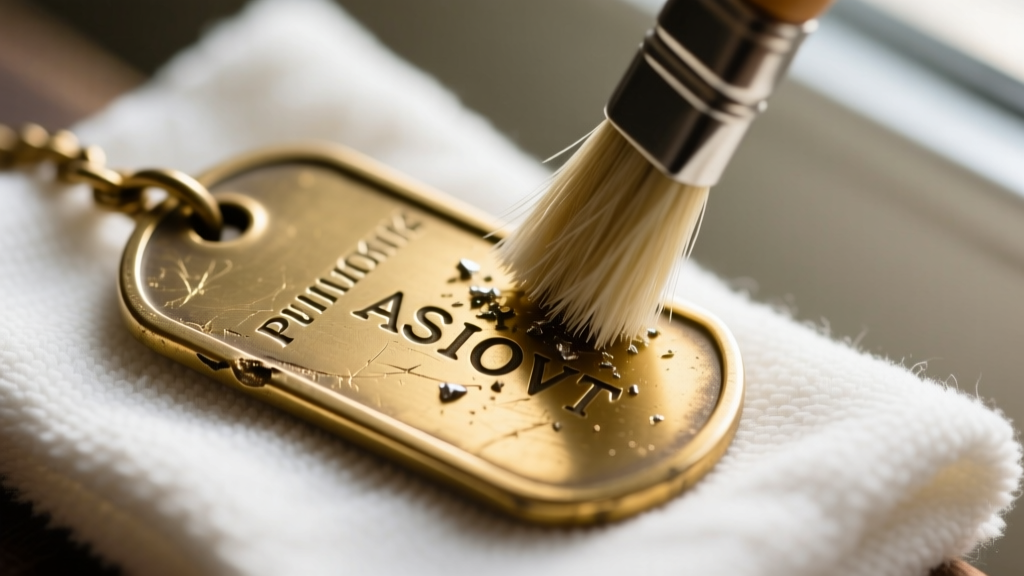
Authentic military tags are stamped using high-tonnage hydraulic presses, creating deep physical valleys in the metal. Over time, these valleys fill with oxidized polish, dirt, and skin oils, which actually provides a desirable contrast that makes the text legible. Aggressive polishing is the enemy of stamped engravings.
According to jewelry fabrication experts at Rio Grande, using a motorized Dremel tool or a harsh jeweler's rouge on stamped text will round the sharp edges of the lettering, destroying the crispness of the font and erasing the natural patina. Instead, use a fiberglass scratch brush. These pens contain bundled fiberglass strands that act as a micro-abrasive. By gently brushing only the raised, flat surfaces of the tag, you can restore the high-polish shine while leaving the dark, oxidized grime safely packed inside the stamped grooves. For stubborn debris in the grooves, a simple wooden toothpick is the safest tool, as wood is softer than steel and will not mar the surface.
Material Grade & Cleaning Agent Compatibility Chart
| Material / Grade | Primary Vulnerability | Recommended Cleaner | Strictly Avoid |
|---|---|---|---|
| 316L Stainless Steel | Heavy impact dents | Ultrasonic with mild degreaser | Abrasive polishing wheels |
| 304 Stainless Steel | Chloride pitting (rust) | Warm soapy water, immediate drying | Bleach, pool water, sea salt |
| Sterling Silver (925) | Sulfur tarnish | Silver dip or baking soda foil bath | Rubber bands, wool, latex |
| Brass (C260) | Verdigris oxidation | Lemon juice and coarse salt paste | Ammonia, harsh alkaline soaps |
Preventing Tarnish, Rust, and Connector Failure
Maintenance goes beyond cleaning; it requires proactive protection and mechanical awareness. The weakest point of any army tag necklace chain is the C-clip connector that joins the two ends of a ball chain. This small, folded piece of metal relies on friction and a slight crimp to hold the terminal bead.
Expert Tip: Ball chains fail when subjected to lateral shear. If your chain snags on clothing, the C-clip will pop open rather than the steel wire breaking. To secure a loose C-clip, use smooth-jawed chain-nose pliers to gently squeeze the clip closed. Never pull the chain at a sharp 45-degree angle to test its strength.
For brass or carbon steel tags that are prone to rapid oxidation, apply a micro-thin layer of Renaissance Wax. Originally developed by the British Museum to protect antique metals, this microcrystalline wax creates a breathable, moisture-resistant barrier that prevents oxygen and sulfur from reaching the metal surface. Apply a small dab with a microfiber cloth, let it haze for five minutes, and buff it to a matte finish. Reapply every three months for daily-wear items.
For long-term storage, never toss your tags into a jewelry box lined with felt or velvet, as these fabrics often contain sulfur compounds that accelerate silver tarnish and brass oxidation. Instead, store your army tag necklace chain in an airtight polyethylene bag alongside a 3M anti-tarnish strip, which actively absorbs atmospheric sulfur and chlorides.
Expert Troubleshooting: Common Army Tag Chain Issues
- Issue: The chain leaves a gray or black mark on the skin.
Diagnosis: This is rarely a metal allergy. It is usually caused by microscopic metal dust from the friction of the beads rubbing against the wire links, mixed with sweat. Clean the chain ultrasonically and coat the inside of the chain lightly with Renaissance Wax to reduce friction. - Issue: The tag edges feel sharp and catch on shirts.
Diagnosis: Poor deburring during the stamping process. Take a fine-grit (600+) sanding sponge and lightly run it along the perimeter edge of the tag at a 45-degree angle to create a micro-chamfer. Do not sand the flat faces. - Issue: The chain is permanently kinked.
Diagnosis: The wire links inside the beads have been bent past their yield point. Unfortunately, ball chain links cannot be reliably straightened without weakening the metal. If a kink persists after gentle manipulation with nylon-jaw pliers, the chain must be replaced to prevent sudden snapping.
By understanding the specific metallurgy and mechanical design of your military-style jewelry, you can ensure your pieces remain legible, hygienic, and structurally sound for decades. For more foundational knowledge on metal properties, refer to the Gemological Institute of America's jewelry care guidelines.


