Flat Chain Necklace Buying Guide: Metals, Links & Durability
Discover what to look for in a flat chain necklace. Our expert buying guide covers link styles, metal grades, clasp types, and durability tips.

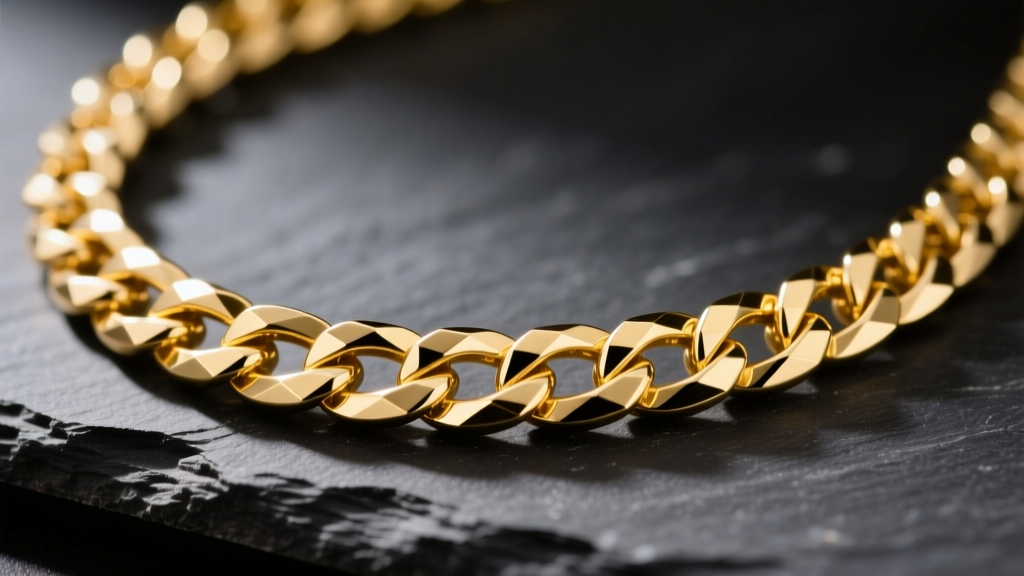
A flat chain necklace is a masterclass in light manipulation. Unlike rounded or rope chains that scatter light in multiple directions, flat chains—such as curb, Cuban, and Figaro styles—feature links that have been passed through a rolling mill. This process creates broad, planar facets that act like mirrors, delivering a continuous, liquid-metal gleam. However, this very manufacturing process introduces unique structural vulnerabilities that buyers must understand before investing in fine jewelry.
Whether you are shopping for a delicate 18-inch sterling silver piece or a heavy 50-gram solid gold statement chain, selecting the right flat chain necklace requires looking far beyond the surface shine. This comprehensive buying guide breaks down the metallurgy, link architecture, and hardware mechanics you need to evaluate to ensure your necklace withstands daily wear without stretching, snapping, or losing its signature facets.
Why Link Architecture Dictates Chain Longevity
To understand how to buy a durable flat chain necklace, you must first understand how they are made. Flat chains begin as standard round-wire chains. Once the links are woven and soldered, the entire chain is pulled through a rolling mill. This compresses the wire, flattening the top and bottom of each link while slightly widening the sides.
The Work-Hardening Effect and Cross-Sectional Weakness
The compression process work-hardens the metal, increasing its tensile strength and making it more resistant to pulling forces. However, it also reduces the vertical cross-section of the wire. If a manufacturer starts with a wire gauge that is too thin, the flattened links will be incredibly wide but paper-thin. When subjected to lateral torque—such as getting caught on a sweater or sleeping in the chain—these thin facets will warp or buckle.
Expert Rule of Thumb: For a flat chain necklace to maintain its structural integrity over a decade of daily wear, the wire thickness (depth) should be at least 40% of the link's total width. A 5mm wide Cuban link, for instance, should have a minimum depth of 2mm.
Decoding Flat Chain Styles: Curb, Cuban, and Figaro
Not all flat chains are created equal. The geometry of the interlocking links drastically alters how the chain drapes, how it catches light, and how it handles friction. Below is a structural comparison of the most common flat chain profiles available on the market today.
| Chain Style | Link Geometry | Durability Score | Best Use Case |
|---|---|---|---|
| Classic Curb | Uniform, tightly interlocking oval links with flat tops and bottoms. | 9/10 | Everyday wear, pendant layering, minimal snagging. |
| Cuban Link | Thicker, rounder profile with a flattened top; links are densely packed. | 10/10 | Heavy statement pieces, standalone wear, high-impact durability. |
| Figaro | Patterned (usually 3 short links, 1 long link) with flattened facets. | 7/10 | Textured visual interest, occasional wear, lighter pendants. |
| Flat Rolo | Circular links compressed into flat, coin-like rings. | 6/10 | Delicate layering, lightweight charms, low-tension environments. |
Metal Purity and Alloy Compositions for Flat Chains
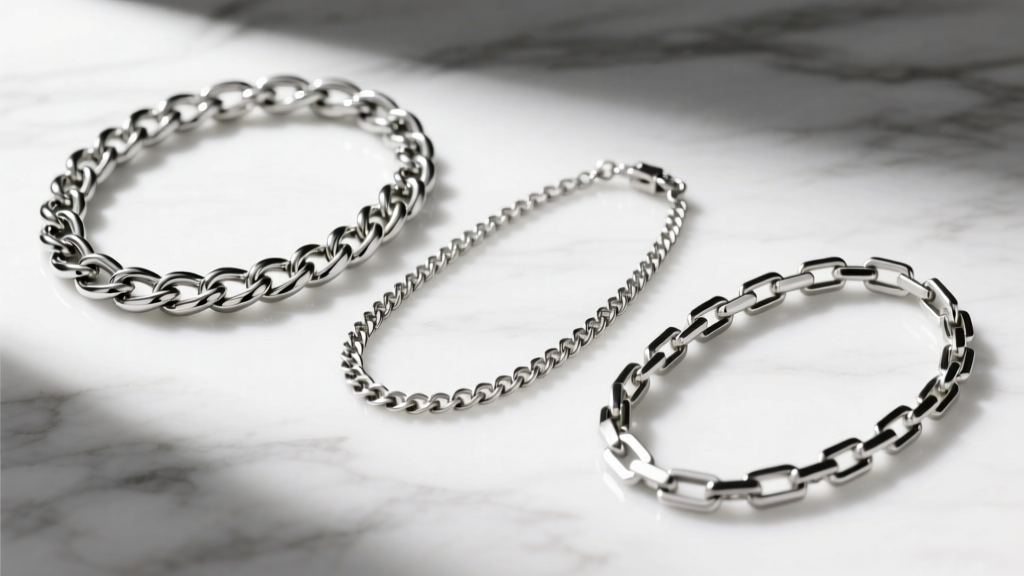
The broad, flat facets of these chains are highly susceptible to micro-scratches and surface wear. Therefore, the hardness of the metal alloy is just as critical as its precious metal content. According to the Gemological Institute of America (GIA), the alloy metals mixed with pure gold dictate the durability of the final piece.
14k vs. 18k Gold: The Hardness Trade-Off
While 18k gold (75% pure gold) offers a richer, deeper yellow hue, it is inherently softer. On a flat chain necklace, an 18k gold surface will accumulate micro-scratches much faster, eventually giving the flat facets a matte, scuffed appearance. Conversely, 14k gold (58.5% pure gold) is alloyed with higher amounts of copper, silver, and zinc. This creates a significantly harder surface that resists scratching and holds the sharp, diamond-cut edges of flat links much better over time. For a daily-wear flat chain, 14k gold is the superior functional choice.
The Rhodium Plating Trap in White Gold
If you are buying a white gold flat chain, be aware that white gold is naturally pale yellow and is plated with rhodium to achieve a bright silver color. On rounded chains, this plating lasts for years. On flat chains, the broad surfaces experience higher friction against the skin and clothing. The rhodium will wear off the flat facets much faster, revealing the yellowish alloy beneath and requiring frequent, costly re-plating. Consider platinum or palladium for a naturally white, unplated flat chain.
Sterling Silver and Tarnish Management
Sterling silver (92.5% silver, 7.5% copper) is a classic choice for flat chains, but the copper content makes it prone to oxidation. Because flat chains have tight, overlapping seams, tarnish can accumulate in the crevices and be difficult to polish out. Always look for sterling silver flat chains that have been treated with an anti-tarnish coating or e-coating at the factory level.
The Weakest Link: Clasp Mechanisms and Soldering
A flat chain necklace is only as secure as its hardware. The tension placed on the clasp of a heavy, flat link chain is immense, and failure usually occurs not at the clasp itself, but at the jump ring connecting the clasp to the chain.
Jump Ring Soldering: Laser vs. Torch
Inspect the jump ring at the end of the chain. If there is a visible slit that has not been closed, the chain will eventually slip off when the metal relaxes. High-quality flat chains feature laser-soldered jump rings. Laser soldering creates a seamless, flush weld without heating the surrounding links, preserving the work-hardened integrity of the flat chain. Avoid chains with unsoldered or simply pinched jump rings.
Clasp Types: Stamped vs. Cast Lobster
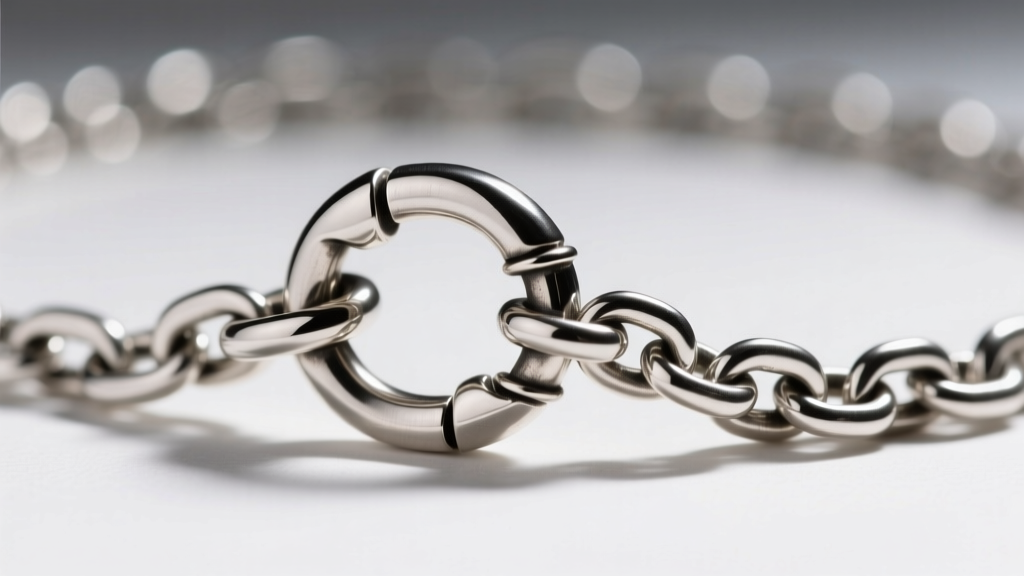
For flat chains weighing under 15 grams, a standard stamped sheet-metal lobster clasp is sufficient. However, for heavier Cuban or curb chains (20 grams and above), stamped clasps are a massive liability. The thin sheet metal can easily bend open under the chain's own weight. You must look for a solid cast lobster clasp or a hidden box clasp with a secondary figure-eight safety catch. As noted by the Jewelers of America, matching the clasp tensile strength to the chain weight is the primary defense against accidental loss.
Sizing, Proportions, and Neckline Pairing
Flat chains possess a distinct visual weight that round chains lack. A 4mm flat curb chain will look significantly wider and more imposing than a 4mm round rope chain because the flat facets face outward, maximizing the surface area visible to the eye.
- 1mm - 2mm Width (16-18 inches): Ideal for holding lightweight solitaire pendants. Sits flush against the collarbone. Best paired with V-necks and scoop necklines.
- 3mm - 5mm Width (18-22 inches): The versatile middle ground. Can be worn alone or with a medium-weight pendant. Perfect for crew necks and open button-down shirts.
- 6mm - 12mm+ Width (20-24 inches): Statement territory. These heavy flat chains should be worn standalone without pendants, as the thick links will crush standard pendant bails. Best worn over solid t-shirts or streetwear.
Pro-Tip on Length: Because flat chains do not drape as fluidly as rope or snake chains, they can stick out awkwardly if they are too short for your neck circumference. Always measure your neck with a soft tape measure and add at least 2 inches to ensure the flat links lay flush against your chest rather than choking the neckline.
Maintenance and Preventing Link Distortion
Proper care is essential to maintain the mirror-like finish of a flat chain necklace. The broad surfaces are magnets for skin oils, lotions, and environmental dust, which can quickly dull the chain's brilliance.
Safe Cleaning Protocols
For solid gold and platinum flat chains, an ultrasonic jewelry cleaner is highly effective. The high-frequency sound waves easily penetrate the tight, flat seams of curb and Cuban links, dislodging grime that a brush cannot reach. However, never use ultrasonic cleaners on hollow flat chains, silver chains with anti-tarnish coatings, or chains with fracture-filled gemstones.
The Danger of Polishing Cloths
While jewelry polishing cloths are great for rounded chains, aggressive rubbing on a flat chain necklace can actually round off the sharp, diamond-cut edges over time. This will permanently alter the chain's profile, turning a crisp curb link into a smooth, undefined oval. Instead, use a soft-bristled baby toothbrush with warm water and a drop of mild dish soap, brushing parallel to the links to preserve the sharp geometric facets.
Proper Storage to Avoid Kinking
Never toss a flat chain necklace into a jewelry box where it can become tangled. If a flat chain kinks, attempting to pull the knot tight will cause the flattened links to fold over each other, permanently warping the metal. Always hang your flat chains vertically on a padded jewelry stand or lay them completely flat and extended in a lined drawer. By respecting the unique architecture of the flat chain, you ensure it remains a brilliant, enduring staple in your collection for decades to come.


