Troubleshooting Your Green Opal Necklace: Cracks, Clouding & Care
Is your green opal necklace cloudy, cracked, or dull? Learn expert troubleshooting steps to restore hydrophane and solid opals and prevent damage.

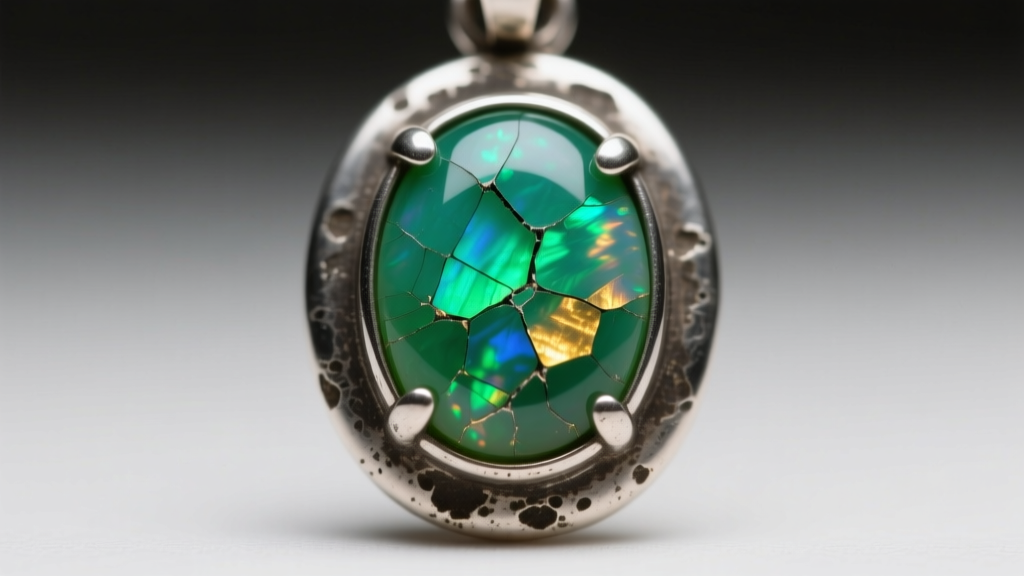
A green opal necklace is a striking, iridescent statement piece, but it is also one of the most structurally temperamental gems in jewelry. With a Mohs hardness of just 5.5 to 6.5 and a unique internal silica structure, opals are highly susceptible to environmental stressors. Whether your pendant has suddenly turned milky, developed a web of microscopic cracks, or lost its signature play-of-color, diagnosing the root cause requires an understanding of gemological mineralogy and lapidary mechanics.
In this comprehensive troubleshooting guide, we break down the exact failure modes of green opals, differentiate between hydrophane and solid stones, and provide actionable restoration protocols to salvage your damaged necklace.
The Anatomy of Green Opal Failure: Why Your Necklace is Deteriorating
Unlike crystalline gems such as emeralds or sapphires, opals are amorphous, non-crystalline silica gels. According to mineralogical data from Mindat.org, opals contain anywhere from 3% to 21% water trapped within their microscopic silica spheres. When this water content fluctuates, the physical integrity of the gem is compromised.
Hydrophane vs. Solid: The Moisture Trap
The first step in troubleshooting your green opal necklace is identifying its origin and porosity. Most vibrant, neon-green opals on the modern market are Ethiopian Welo opals. These are hydrophane, meaning they are highly porous and will actively absorb water, oils, and chemicals. If a hydrophane opal absorbs moisture, its refractive index changes, causing the stone to turn transparent, milky, or completely lose its green fire.
Conversely, Australian green opals (often from Lightning Ridge or Queensland boulder fields) are solid, non-porous opals. They will not absorb water, but they are prone to crazing—a network of fine, internal fractures caused by rapid humidity drops or extreme temperature shifts.
Troubleshooting Matrix: Diagnosing Your Green Opal's Symptoms
Use the diagnostic table below to identify the specific failure mode affecting your green opal pendant.
| Symptom | Probable Cause | Opal Type Affected | Immediate Action Required |
|---|---|---|---|
| Stone turns milky, transparent, or yellowish | Absorption of water, sweat, or lotions | Hydrophane (Ethiopian) | Remove and begin controlled desiccation |
| Web-like internal cracks (Crazing) | Rapid moisture loss, heat exposure, or physical shock | Solid (Australian) & Hydrophane | Stop wearing; consult a lapidary for resin stabilization |
| Dull, scratched surface lacking fire | Abrasion from harder materials or improper cleaning | All Types | Professional re-polishing required |
| Color appears flat, lacks depth | Adhesive failure in doublets/triplets | Composite Opals | Do not submerge; seek jeweler for re-bonding |
Step-by-Step Restoration: Fixing Cloudiness and Crazing
Once you have diagnosed the issue, you must apply the correct restoration technique. Applying the wrong treatment can permanently destroy the silica structure.
The Desiccation Method for Ethiopian Welo Opals
If your hydrophane green opal necklace has turned cloudy after exposure to rain, sweat, or an ultrasonic cleaner, the water must be extracted slowly. Never use heat, hair dryers, or direct sunlight. Rapid artificial drying forces the water out too quickly, guaranteeing severe crazing.
- Place the necklace in an airtight container with several packets of silica gel desiccant.
- Ensure the gem does not physically touch the desiccant packets.
- Leave the container in a cool, dark room (ideally 65°F to 70°F) for 7 to 14 days.
- Check the stone daily. As the moisture leaves, the green play-of-color will slowly return.
Oil Treatment Myths vs. Realities for Solid Opals
A pervasive myth in jewelry care is that rubbing baby oil or olive oil into an opal will "rehydrate" it and prevent cracking. According to the Gemological Institute of America (GIA), solid opals are not porous enough to absorb oil. Rubbing oil on a solid green opal will only leave a greasy film that attracts dust and dulls the surface. If a solid Australian opal has crazed, oil cannot penetrate the micro-fractures. The only viable repair is professional stabilization using a low-viscosity lapidary resin like Opticon, which is drawn into the cracks under a vacuum chamber.
Hardware and Setting Failures: Bezel vs. Prong
Many green opal necklaces suffer structural damage not from the environment, but from poor jewelry manufacturing. Opals lack cleavage planes but are highly brittle. They cannot withstand the localized pressure points exerted by prong settings.
The Dangers of Prong Settings
If your green opal is held in by four or six metal prongs, it is at high risk for chipping. As the metal prongs age and are pushed against the stone during daily wear, they act like tiny chisels. Furthermore, prong settings leave the edges of the opal exposed to impacts.
The Bezel Standard
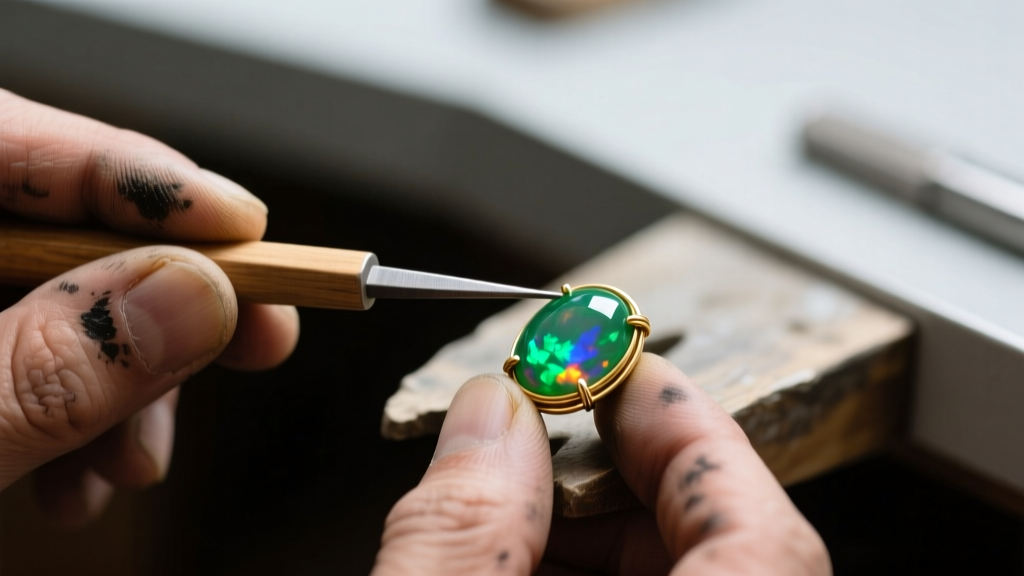
A properly engineered green opal pendant must utilize a full bezel setting. For optimal security without crushing the gem, jewelers should use 22-gauge or 24-gauge dead-soft wire (either sterling silver or 14k gold). The bezel wire must be pushed over the opal using a wooden or nylon pusher, never a steel burnisher, which can slip and scratch the 5.5 Mohs surface. The inner wall of the bezel should also feature a micro-step or gallery wire to ensure the opal sits perfectly flat; any uneven pressure on the back of the cabochon will cause it to snap when the bezel is tightened.
Identifying Composite and Dyed Fakes
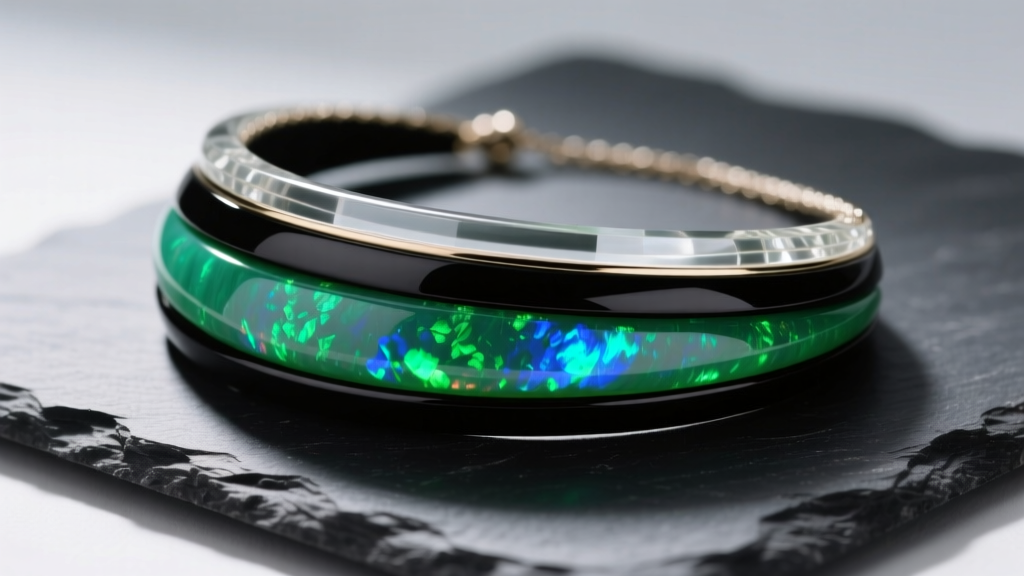
Troubleshooting becomes complicated if your necklace is not a solid natural opal. Many affordable green opal necklaces are actually doublets (a thin slice of opal glued to a black potch or glass backing) or triplets (a doublet with a clear quartz or glass dome glued on top).
If water penetrates the edge of a composite stone, the adhesive layer will degrade, causing the layers to separate and the stone to look "foggy" from the inside. This cannot be fixed at home. Additionally, some "green opals" are actually dyed quartz or dyed common opal. If your stone leaves a green residue on your skin or the silver chain when wet, it is dyed. The International Gem Society notes that dyed stones require strictly dry cleaning methods to prevent the dye from leaching out entirely.
Preventative Maintenance: A 2026 Care Protocol
To ensure your green opal necklace survives for decades, implement the following strict care protocol:
- Ban Ultrasonic Cleaners: The 40kHz cavitation bubbles generated by ultrasonic jewelry cleaners will implode against the opal's surface, causing immediate micro-fractures and total structural failure.
- Avoid Steam: Steam cleaners introduce both heat and pressurized moisture, the exact combination that triggers catastrophic crazing.
- Safe Cleaning: Use only a lint-free microfiber cloth dampened with distilled water and a single drop of pH-neutral dish soap. Dry immediately.
- Storage: Store the necklace in a sealed plastic bag with a slightly damp (not wet) cotton ball if you live in an arid climate with humidity levels below 30%. This prevents the ambient air from drawing the structural water out of the silica gel.
Expert Insight: Always put your green opal necklace on after applying perfumes, hairsprays, and lotions. The alcohol and chemical solvents in cosmetics can degrade the polish of the opal and permanently cloud hydrophane stones.
By understanding the specific mineralogical vulnerabilities of your green opal, you can move beyond generic jewelry advice and apply targeted, lapidary-grade troubleshooting to restore and protect your pendant's iridescent fire.


