Mastering the Cross and Flame Necklace: Craft & Metals
Explore the metallurgy, casting techniques, and chain pairings for the cross and flame necklace. An expert guide to materials, patinas, and styling.

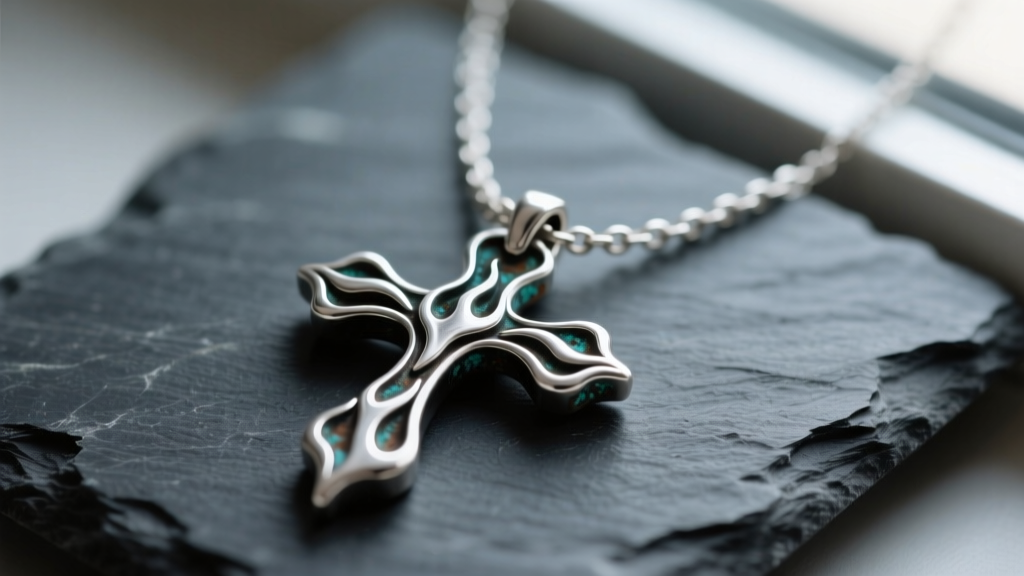
The Metallurgy of Edgy Devotion: Choosing the Right Alloy
The cross and flame necklace represents a striking juxtaposition of sacred geometry and chaotic, elemental energy. From a bench jeweler's perspective, executing this design flawlessly requires a deep understanding of metallurgy. The interplay between the rigid, linear structure of the cross and the organic, sweeping curves of the flames demands an alloy that can hold sharp edges while allowing for deep, recessed undercuts.
925 Sterling Silver vs. Argentium
Traditional 925 sterling silver (92.5% silver, 7.5% copper) remains the industry standard for alternative and gothic jewelry. The copper content is a double-edged sword: it provides the necessary hardness for detailed casting, but it also makes the alloy highly reactive to sulfur. For a cross and flame pendant, this reactivity is actually a benefit. It allows the jeweler to apply chemical patinas that sink deeply into the flame crevices, creating a high-contrast, three-dimensional effect.
Conversely, Argentium silver (which replaces some copper with germanium) offers superior tarnish resistance and a brighter natural finish. However, its failure mode in this specific design lies in oxidation. Argentium resists traditional liver of sulfur patinas, requiring specialized chemical treatments or heat-oxidation techniques to achieve the same brooding, blackened recesses that define the flame motif.
White Gold and Platinum Alternatives
When clients request a premium cross and flame necklace in 14k or 18k white gold, the fabrication approach must shift. White gold is alloyed with nickel or palladium and typically plated with rhodium to achieve a bright white luster. Chemical oxidation does not work on gold alloys in the same way it does on silver. To achieve blackened flames on a white gold cross, a master jeweler must either use black rhodium plating (which requires precise masking to avoid bleeding onto the polished cross) or inset black vitreous enamel into the flame channels. According to metallurgical guidelines from the Gemological Institute of America (GIA), black rhodium wears faster than standard rhodium, meaning high-relief flame tips will eventually require re-plating.
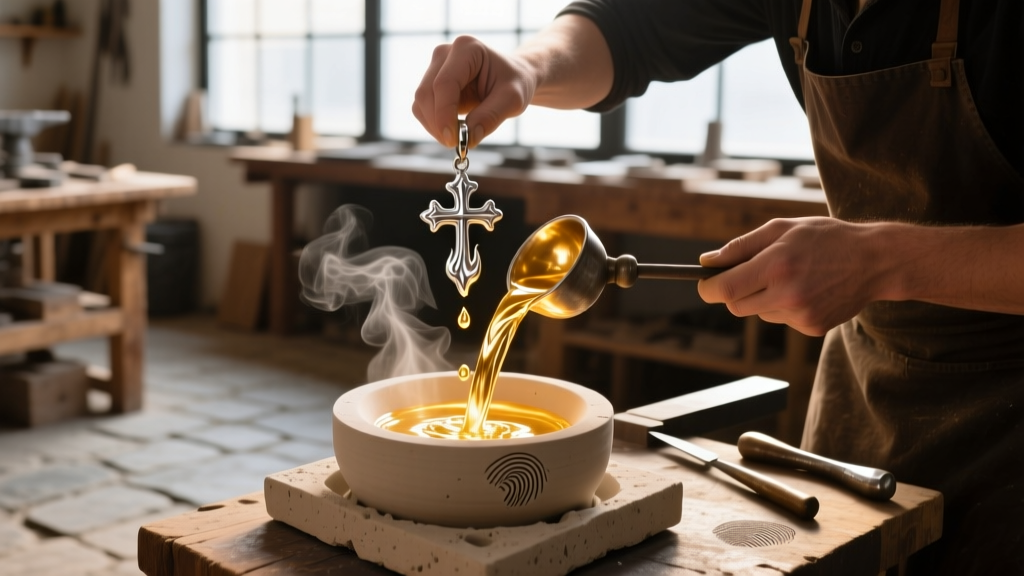
Casting and Fabrication: How the Flames Are Formed
The sweeping, overlapping nature of a flame wrap around a cross makes die-striking impossible. These pieces are almost exclusively created via lost-wax casting. The process begins with a 3D-printed or hand-carved wax model. The critical technical challenge here is 'spruing'—the placement of the wax channels that allow molten metal to flow into the mold and gases to escape.
The Spruing Strategy for Flame Motifs
If a jeweler attaches sprues to the delicate tips of the flames, cutting them off post-casting will leave visible pits or require excessive filing that ruins the tapering effect of the fire. Expert casters attach the main sprue to the thickest part of the cross's reverse side, using microscopic 'vent sprues' (0.5mm wax threads) attached to the furthest flame tips solely to allow air to escape. This ensures a porosity-free cast with pristine flame edges. For comprehensive casting supplies and spruing best practices, bench jewelers frequently rely on technical resources from Rio Grande.
The Art of Oxidation: Enhancing the Flame Motif
The visual success of a silver cross and flame necklace hinges on the patina. A flat, unoxidized silver flame looks like a melted blob; it is the dark recesses that create the illusion of flickering depth. Below is a technical breakdown of the chemical agents used to achieve these effects.
| Chemical Agent | Active Compound | Result on 925 Silver | Best Application for Flames |
|---|---|---|---|
| Liver of Sulfur | Potassium Polysulfide | Warm brown to deep black | Overall antiquing; brushed back on cross face |
| Black Max | Tellurium Dioxide | Instant, flat charcoal black | Deep crevices; requires careful masking |
| Silver Black | Hydrochloric Acid / Selenium | Matte, powdery black | Textured flame bases; prone to rubbing off |
Bench Tip: When using Liver of Sulfur, the temperature of the solution dictates the color spectrum. A cold, dilute bath yields golden yellows and purples (useful for 'heat' effects at the base of the flames), while a hot, concentrated bath drives the silver directly to a matte black.
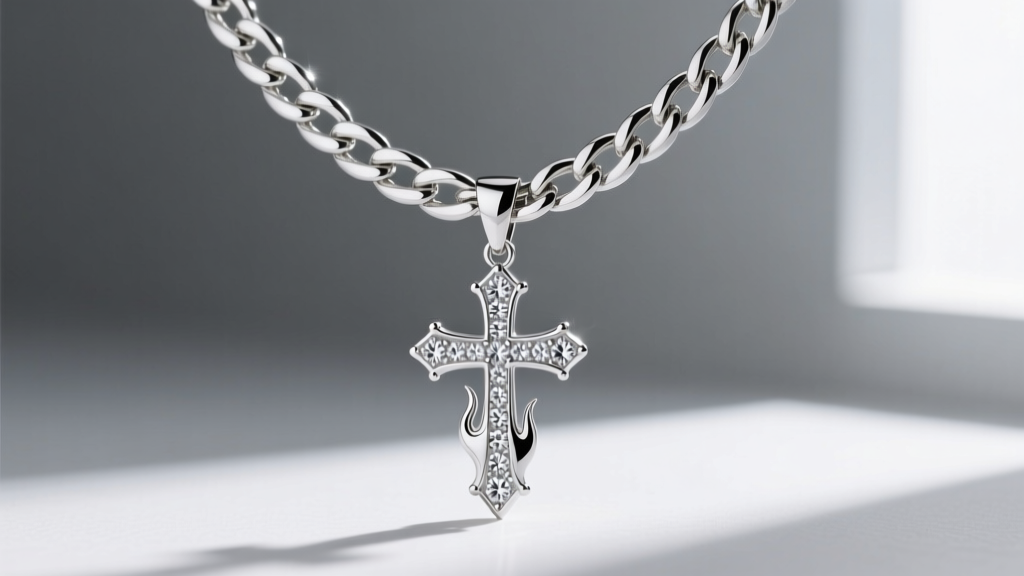
Chain Pairing and Bail Engineering
A common failure mode in heavy alternative pendants is the bail snapping or the chain kinking due to improper weight distribution. A solid 2-inch sterling silver cross and flame pendant typically weighs between 18 and 35 grams. This pendulum weight exerts significant lateral torque on the chain links.
Weight-to-Gauge Ratios
- Under 15g: A 2.5mm to 3.5mm Wheat or Box chain is sufficient. The interlocking links distribute the swing weight evenly.
- 15g to 25g: Requires a 4mm to 5mm Cuban Link or Rope chain. The mass of the chain itself helps counterbalance the heavy pendant, preventing it from flipping upside down.
- Over 25g: Demands a heavy-duty 6mm+ Figaro or thick Cuban chain with a reinforced lobster clasp. Standard spring-ring clasps will inevitably fail under this dynamic load.
Bail Construction
Never use a glued or 'pinch' bail for a cross and flame design. The kinetic energy generated when the wearer walks will eventually fatigue the adhesive or bend the prongs. The pendant must feature a soldered tube bail or an integrated hidden bail cast directly into the top arm of the cross. If the design incorporates gemstones (such as pave diamonds set into the crossbar), the bail must be laser-welded post-casting to avoid melting the stone settings during traditional torch soldering.
Maintenance and Troubleshooting
Owning an oxidized cross and flame necklace requires specific maintenance protocols to preserve the intentional patina while keeping the polished surfaces bright.
- Avoid Ultrasonic Cleaners: The high-frequency cavitation, combined with heated alkaline solutions, will strip the liver of sulfur patina right out of the flame crevices, leaving the piece looking flat and gray.
- Targeted Polishing: Use a treated silver polishing cloth only on the high-relief areas (the face of the cross and the outer ridges of the flames). Never use liquid silver dips, as they are highly acidic and will bleach the black oxidation instantly.
- Moisture Trapping: The deep undercuts where the flames overlap the cross can trap sweat and lotions. Rinse the pendant with distilled water after heavy wear and dry it with compressed air to prevent localized, unintended copper-spotting (green tarnish) in the recesses.
Ultimately, the cross and flame necklace is a masterclass in jewelry contrast. By selecting the appropriate alloy, utilizing precision lost-wax casting, and applying controlled chemical oxidation, jewelers can transform raw metal into a wearable piece of kinetic, elemental art.


