Self-Portrait with Thorn Necklace and Hummingbird Frida Kahlo: Style Analysis
Explore how Frida Kahlo's Self-Portrait with Thorn Necklace and Hummingbird inspires 2026 dark romantic jewelry trends, thorn chokers, and nature motifs.

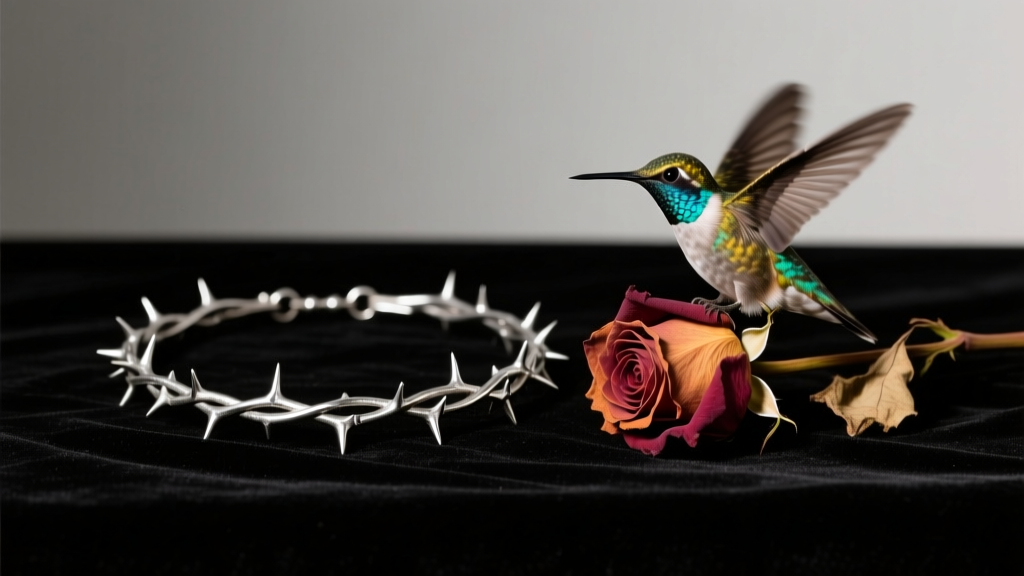
Few artworks have influenced the intersection of fine art, personal adornment, and emotional storytelling quite like Frida Kahlo’s 1940 masterpiece. The self-portrait with thorn necklace and hummingbird frida kahlo painted during a period of intense personal upheaval, remains a masterclass in using jewelry as a vehicle for psychological expression. Today, as the 2026 jewelry landscape embraces 'dark romanticism' and 'surrealist botany,' Kahlo’s iconic thorn choker has transcended the canvas to become a blueprint for modern avant-garde necklace design.
At Jewelry Style Radar, we are dissecting the anatomy of this legendary piece, exploring its historical symbolism, and providing a technical guide on how to source, style, and wear modern thorn and flora-motif necklaces without sacrificing comfort or structural integrity.
The Iconography of Pain and Beauty: Decoding the 1940 Masterpiece
To understand the modern resurgence of the thorn necklace, we must first analyze the original artwork. Painted shortly after her divorce from Diego Rivera and the death of her mother, Kahlo utilized the necklace as a literal and metaphorical instrument of martyrdom. The thorns dig visibly into her neck, drawing blood—a stark representation of emotional pain manifesting as physical restriction.
However, the necklace is not merely a tool of suffering; it is a complex surrealist assemblage. According to the official Frida Kahlo archives, the inclusion of the dead hummingbird—a traditional Mexican charm meant to attract luck in love—subverted into a symbol of lost hope, alongside the menacing black cat and the spider monkey (a gift from Rivera). This juxtaposition of organic beauty and lethal defense is precisely what high jewelry houses and indie metallists are replicating in 2026.
The "Thorn & Flora" Motif in Modern Jewelry Design
The transition from a literal, painful vine to a wearable luxury choker requires meticulous metallurgical engineering. In contemporary design, the 'thorn' motif falls under the broader category of botanical surrealism. Designers are moving away from the polished, sterile florals of the early 2010s, opting instead for oxidized, textured, and slightly dangerous-looking nature motifs.
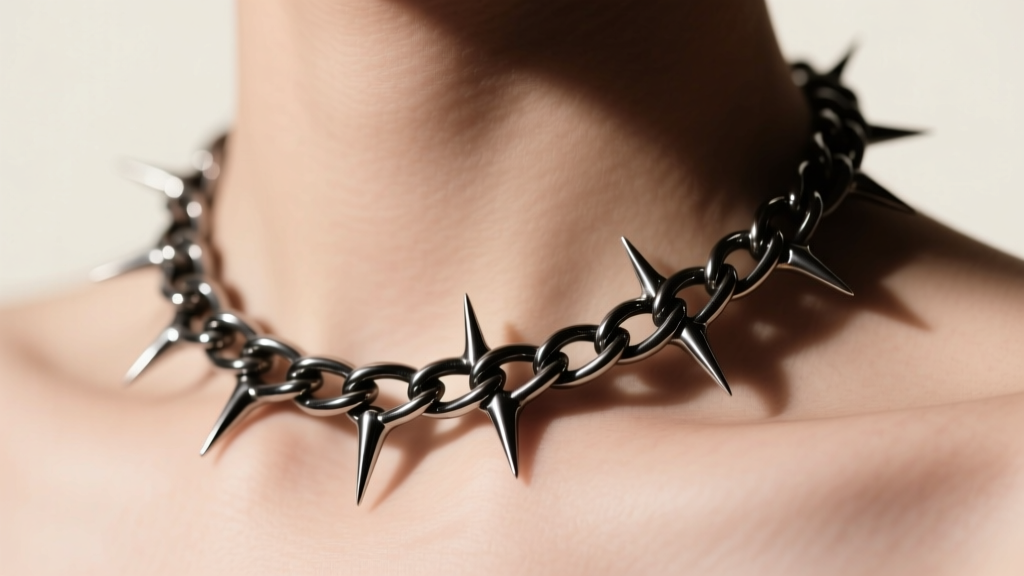
Modern thorn necklaces generally fall into two structural categories: the rigid torque and the articulated chain-link. The rigid torque offers a dramatic, sculptural silhouette that mimics the tight, choking fit of Kahlo’s original vine. Conversely, the articulated chain-link provides fluidity, allowing the 'thorns' to drape over the clavicle while maintaining a sense of organic unpredictability. The Victoria and Albert Museum's jewelry collection frequently highlights how surrealist motifs from the 1930s and 40s, pioneered by artists like Salvador Dalí and Meret Oppenheim, laid the groundwork for today's provocative botanical pieces.
Material & Gauge Specifications for Thorn Chokers
Creating a thorn necklace that is visually striking but physically safe to wear requires strict adherence to jewelry bench standards. A poorly constructed thorn necklace will catch on textiles, scratch the skin, or bend out of shape. When commissioning or purchasing a high-quality thorn choker, you must evaluate the metal hardness, wire gauge, and clasp mechanics.
Metallurgical Hardness and Wire Gauge
Thorns require a tapering effect, which means the metal must be malleable enough to shape but hard enough to retain its point. According to GIA's gemological and metallurgical standards, standard annealed sterling silver (approx. 60 HV on the Vickers Hardness scale) is too soft for sharp thorn points; it will bend upon impact with clothing. Jewelers must use work-hardened or heat-treated sterling silver (120-140 HV) or cast in 14k gold with black rhodium plating for superior durability.
| Material | Base Gauge (Chain) | Thorn Gauge (Tip) | Durability & Maintenance | Average Price Range |
|---|---|---|---|---|
| Oxidized 925 Sterling Silver | 12-14 AWG | 18-20 AWG (Tapered) | High; requires polishing cloth to maintain oxidation in crevices. | $180 - $450 |
| 14k Gold with Black Rhodium | 14-16 AWG | 20-22 AWG (Cast) | Very High; rhodium plating may need re-dipping every 3-5 years. | $1,200 - $3,500 |
| Stainless Steel (PVD Coated) | 10-12 AWG | 16-18 AWG (Machine Cut) | Extreme; hypoallergenic, but lacks the organic warmth of silver. | $45 - $120 |
The Mechanics of the Clasp
For rigid thorn torques, the clasp is a critical failure point. A standard lobster clasp is insufficient due to the torque's outward spring tension. High-end pieces utilize a custom-machined tongue-and-groove box clasp with a secondary figure-eight safety catch, ensuring the heavy metal collar does not snap open and slide down the wearer's body.
Styling the Dark Romantic Aesthetic
Styling a piece as visually aggressive as a thorn necklace requires a careful balancing act. The goal is to evoke Kahlo’s surrealist elegance, not to look like a theatrical prop. The 2026 styling protocol relies heavily on contrasting textures and deliberate neckline pairings.
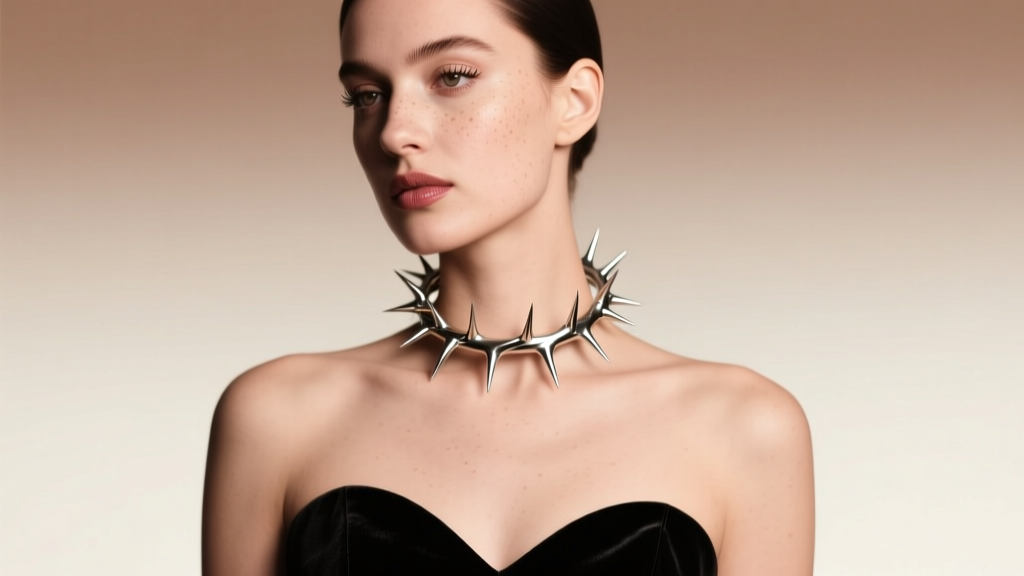
Neckline Pairings
- The Sweetheart Neckline: A rigid silver thorn torque (inner diameter 14.5cm) sits perfectly above a dark velvet or heavy silk sweetheart neckline. The softness of the fabric neutralizes the aggression of the metal, creating a deeply romantic, gothic-lite silhouette.
- The Deep Plunge (V-Neck): For articulated thorn pendants or Y-necklaces, a deep V-neck allows the central 'thorn' or 'hummingbird' motif to rest directly on the sternum, mimicking the anatomical placement in Kahlo's painting.
- The Off-Shoulder Drape: An off-shoulder wool or cashmere top provides a wide canvas of skin, allowing the thorn necklace to wrap around the collarbone without competing with collars or lapels.
Advanced Layering Techniques
Layering a thorn necklace requires contrasting the harsh, dark metal with organic, soft elements. The most effective 2026 trend involves pairing a 15-inch oxidized silver thorn choker with a 22-inch strand of unpolished, baroque freshwater pearls. The pearls represent the 'hummingbird' element—a nod to traditional luck and softness—while the thorns provide the modern, edgy framework. Avoid layering thorn pieces with delicate gold chains; the sharp points will inevitably scratch softer, high-polish metals and cause irreversible friction damage.
Sourcing Authentic Surrealist & Nature-Inspired Pieces
When hunting for a piece that honors the self-portrait with thorn necklace and hummingbird frida kahlo, avoid mass-produced 'mall brand' interpretations which often rely on glued-on resin thorns or hollow-cast base metals. Seek out independent metallists who specialize in lost-wax casting, a technique that allows for the organic, asymmetrical imperfections found in real nature. Look for pieces where the thorns are sprued directly from the main wax model before casting, ensuring a seamless, solder-free joint that will not snap under tension.
Ultimately, wearing a thorn necklace is an act of sartorial bravery. It is a declaration that beauty and pain, nature and artifice, can coexist elegantly on the human form. By understanding the material science and historical weight behind these pieces, you elevate your jewelry box from a simple accessory collection to a curated gallery of wearable art.


