The Authentic African Necklace Buyer's Guide: Beads & Metals
Discover how to buy an authentic African necklace. Learn to identify genuine Maasai beads, Tuareg silver, and Ashanti brass while avoiding fakes.

The Global Demand for Authentic African Necklaces
The market for an authentic African necklace has surged as collectors and fashion enthusiasts seek pieces with deep cultural roots and artisanal integrity. However, this demand has also flooded the market with mass-produced, factory-made imitations labeled as "tribal style." According to the Metropolitan Museum of Art, African jewelry has historically served as a complex language of status, lineage, and spiritual protection, not merely as decoration. When you purchase a genuine piece, you are acquiring a wearable artifact. This buying guide will equip you with the material knowledge, regional context, and authentication frameworks necessary to navigate the market, avoid synthetic knockoffs, and ethically support the artisans who keep these heritage crafts alive.
Decoding Regional Styles and Artisan Techniques
Africa is a vast continent with thousands of distinct cultures. Grouping all jewelry under a single umbrella ignores the highly specific techniques and materials utilized by different regions. Understanding these nuances is the first step in becoming an informed buyer.
East Africa: Maasai and Samburu Beadwork
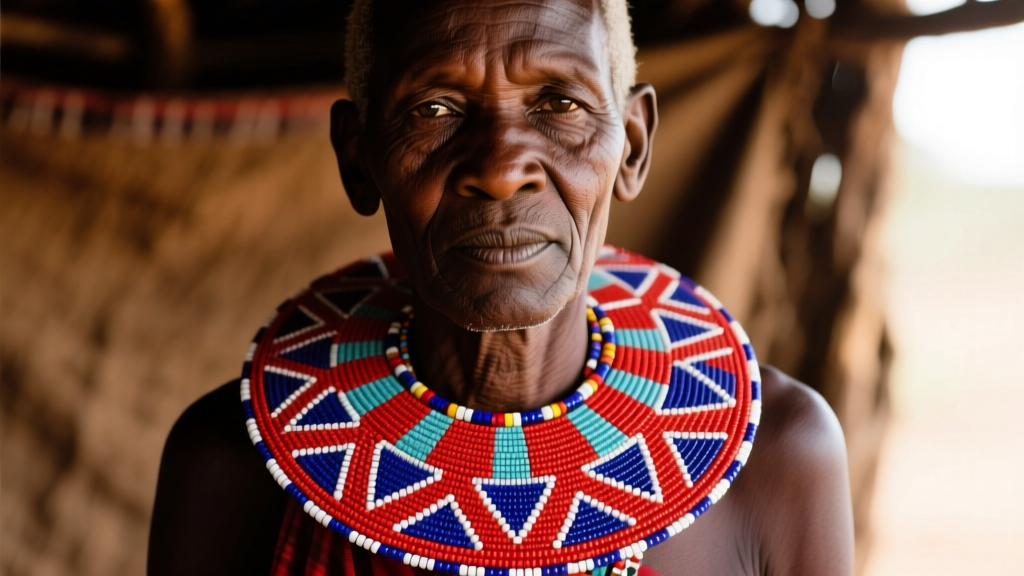
Maasai beadwork is perhaps the most globally recognized African jewelry style. Historically, the Maasai used natural materials like clay, bone, and seeds. Today, authentic artisans primarily use high-quality Czech glass seed beads (typically sizes 9/0 to 11/0). When examining a Maasai collar necklace, look for tight, uniform tension and complex geometric color blocking. Authentic modern pieces are strung on durable nylon or wire-reinforced threads to support the heavy glass beadwork. If the thread looks like frayed cotton or the beads have a plasticky sheen with uneven sizing, you are likely looking at a mass-produced factory imitation.
West Africa: Tuareg Silver and Ashanti Brass
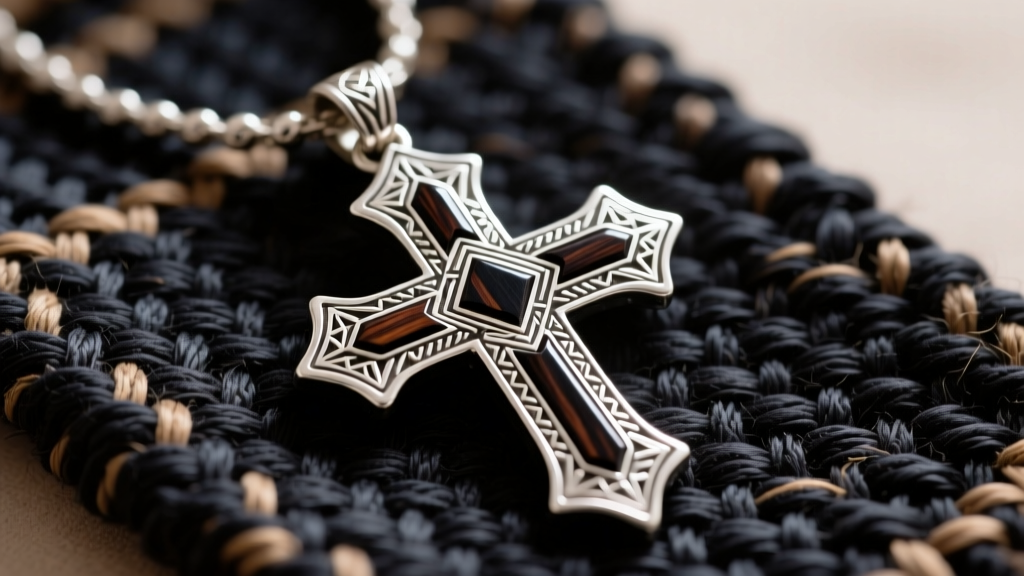
The Tuareg people of the Sahara are master silversmiths. Their most iconic piece is the Cross of Agadez, a pendant necklace featuring intricate geometric engravings and often inlaid with ebony wood. Unlike Western jewelry, Tuareg silver is rarely stamped with a 925 hallmark. It is traditionally an alloy of 80% to 90% silver mixed with copper or brass to increase durability in harsh desert climates. The metal is intentionally oxidized to create a dark, antique contrast against the bright silver engravings.
Further south, the Ashanti people of Ghana are renowned for their brass and gold-weight pendants created using the cire perdue (lost-wax) casting method. Because the clay mold is broken to reveal the final metal piece, every authentic Ashanti brass bead or pendant is entirely unique. Look for slight asymmetries and organic textures that prove it was cast by hand rather than stamped by a machine.
West Africa: Krobo Powder Glass
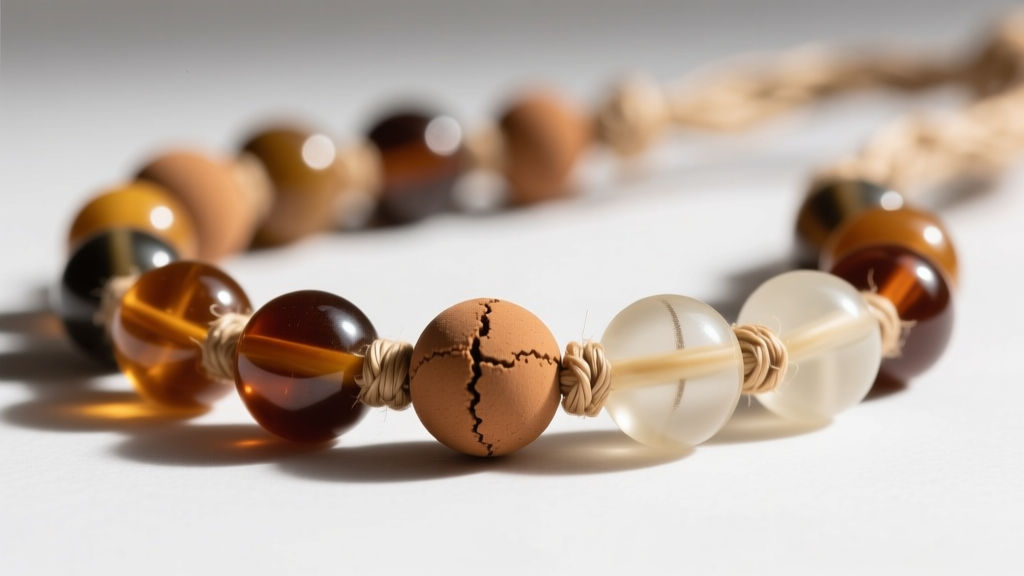
Originating from the Krobo Mountains in Ghana, powder glass beads are a marvel of thermal engineering. Artisans crush recycled glass into a fine powder, pack it into hand-carved clay molds, and fire it in a kiln at roughly 800°C. The resulting beads have a distinct, slightly porous matte finish and often feature a mosaic inlay technique. Fakes are frequently made from painted resin or mass-cast solid glass, lacking the subtle mold seams and powdered texture of the originals.
Material Authentication: Spotting the Fakes
When shopping for an African necklace online or in boutique markets, rely on these physical and visual tests to verify authenticity:
- The Glass Bead Test: Genuine Czech glass seed beads used in East African beadwork have a distinct, heavy clinking sound when tapped together. Plastic beads sound dull and feel unusually light.
- The Silver Magnet Test: While Tuareg silver contains copper or brass, it should still be predominantly non-magnetic. If a strong neodymium magnet snaps aggressively to the pendant, it is likely a base metal plated in silver.
- The Lost-Wax Seam Check: Authentic Ashanti lost-wax cast brass will not have uniform, machine-straight seams. You should see evidence of the sprue (the channel where molten metal entered the mold), usually filed down but still visible upon close inspection.
- The Powder Glass Opacity: Genuine Krobo powder glass beads are opaque and have a slightly frosted surface. If the bead is perfectly transparent or glossy like a marble, it is factory-made solid glass.
Pricing Framework: What Should You Pay?
Pricing for authentic African jewelry varies wildly based on material scarcity, artisan reputation, and the complexity of the piece. Below is a realistic pricing framework for the current market, helping you distinguish between fair-trade artisan pricing and exploitative or fake goods.
| Style / Origin | Primary Materials | Authentic Price Range (USD) | Red Flags (Fakes) |
|---|---|---|---|
| Maasai Collar Necklace | Czech glass seed beads, wire, nylon | $85 - $250 | Under $40; plastic beads; cotton thread |
| Tuareg Cross of Agadez | Silver alloy (80-90%), ebony wood | $120 - $400 | Magnetic metal; laser-etched patterns |
| Krobo Powder Glass Strand | Recycled crushed glass, clay molds | $60 - $180 | Glossy finish; perfectly uniform shapes |
| Ashanti Brass Pendants | Solid cast brass, leather cord | $45 - $150 | Hollow stamped metal; machine seams |
Ethical Sourcing and Fair Trade Verification
The provenance of your jewelry matters as much as its material composition. The Fair Trade Federation emphasizes that ethical sourcing ensures artisans receive living wages and work in safe conditions. When buying an African necklace, prioritize vendors who practice radical transparency. Look for cooperatives that name their artisans, detail the specific village or region of origin, and explain how profits are reinvested into the community. Avoid "safari gift shops" or vague online marketplaces that use terms like "African-inspired" or "tribal chic," as these are almost always indicators of offshore factory production that bypasses indigenous creators entirely. Organizations like the Smithsonian National Museum of African Art frequently highlight the importance of preserving these indigenous crafts through direct economic support.
Care and Maintenance for Heritage Pieces
Authentic African jewelry requires specific care to maintain its structural integrity and historical patina. Tuareg silver should never be cleaned with harsh chemical dips; the oxidized black contrast in the engravings is intentional and vital to the design. Instead, gently polish only the raised silver areas with a soft, dry jeweler's cloth. The ebony wood inlays must be kept away from prolonged moisture to prevent warping. For heavy Maasai beaded collars, store them flat rather than hanging them, as the sheer weight of the glass beads can stretch the nylon threading over time. If a thread begins to fray, take it to a professional bead-weaver who understands the specific tension requirements of East African collar structures. By treating these pieces with the respect due to cultural artifacts, you ensure they remain wearable for generations.


