The Army Tag Necklace: 2026 Military Chic Style Guide
Discover how the army tag necklace evolved into a 2026 high-fashion staple. Explore material grades, chain gauges, and styling frameworks for military chic.


The Evolution of Utility: From Trench to Runway
The army tag necklace, historically known as the military dog tag, has completed a fascinating metamorphosis. Originally designed for battlefield identification under strict Defense Logistics Agency specifications, this utilitarian object has been reclaimed by high fashion. In 2026, the army tag necklace is no longer just a nostalgic souvenir or a subculture staple; it is a cornerstone of the 'elevated utility' and 'gorpcore-adjacent' military chic trends. Top fashion houses have reimagined the silhouette, transforming a blunt instrument of war into a refined canvas for personal expression. According to trend forecasts from Vogue, the juxtaposition of hyper-masculine hardware against delicate, fluid fabrics is the defining aesthetic of the year. However, navigating the market requires a keen eye for metallurgy, hardware integrity, and proportional styling, as the gap between a cheap novelty tag and a luxury-grade pendant is vast.
Material Metallurgy: Beyond Basic Stainless Steel
When investing in an army tag necklace, the base metal dictates the piece's longevity, weight, and skin compatibility. While budget options rely on plated alloys that quickly oxidize and turn the skin green, premium jewelers utilize specific aerospace and medical-grade metals. Understanding the Vickers hardness (HV) and tensile strength of these materials is crucial for selecting a tag that resists bending and scratching.
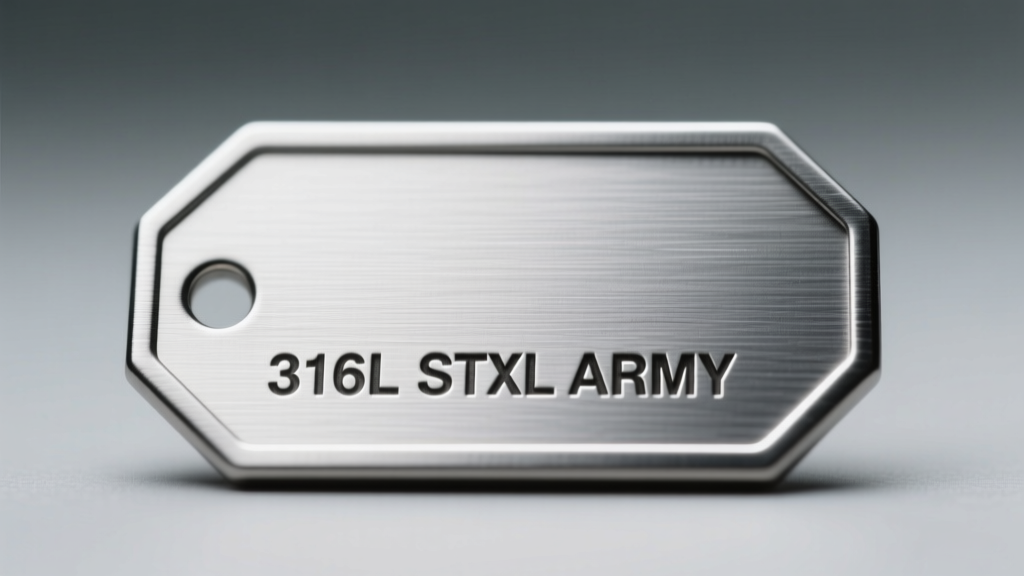
316L Surgical Stainless Steel: The industry baseline. It offers excellent corrosion resistance and a Vickers hardness of roughly 150-190 HV. It is heavy, substantial, and takes a high-polish or brushed finish beautifully. However, it can trigger reactions in individuals with severe nickel sensitivities.
Grade 5 Titanium (Ti-6Al-4V): The premium upgrade. Titanium is 45% lighter than steel and boasts a Vickers hardness of 334 HV, making it highly scratch-resistant. It is entirely hypoallergenic and biocompatible, making it the superior choice for those with sensitive skin or metal allergies.
Solid Brass and Bronze: The heritage choice. These copper alloys are softer (around 60-150 HV) and will develop a natural, darkened patina over time. They are favored by artisans who hand-stamp or acid-etch their tags, as the softer metal yields to tools more gracefully than steel or titanium.
| Material | Hardness (HV) | Weight (g/cm³) | Patina Potential | Estimated Price Range |
|---|---|---|---|---|
| 316L Stainless Steel | 150 - 190 | 8.00 | None (Maintains finish) | $45 - $120 |
| Grade 5 Titanium | 334 | 4.43 | None (Highly inert) | $150 - $350 |
| Solid Brass | 60 - 150 | 8.40 | High (Oxidizes quickly) | $60 - $180 |
Chain Mechanics and Hardware Integrity
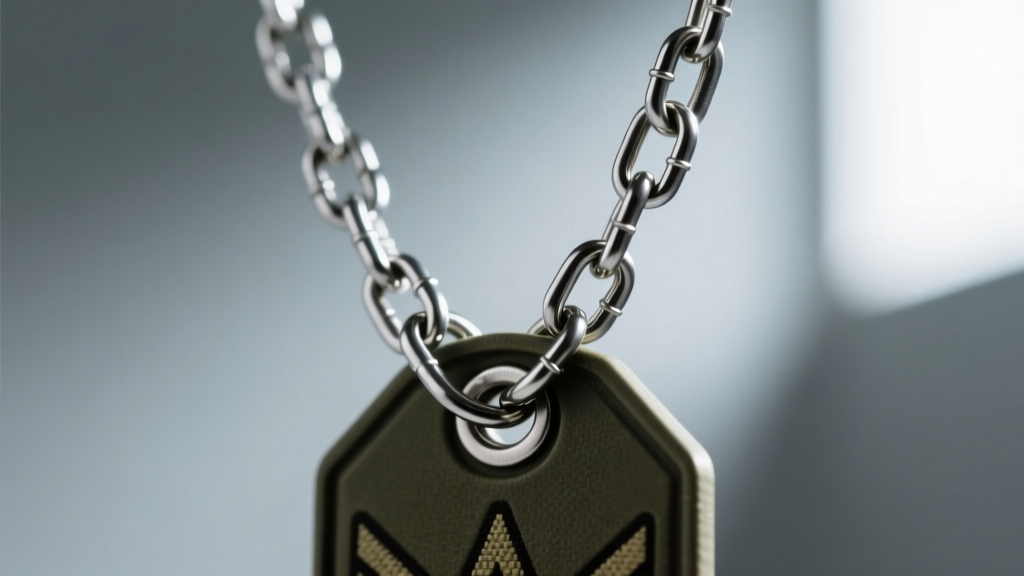
The most common point of failure in any army tag necklace is not the tag itself, but the chain and its connecting hardware. The traditional military-issue ball chain (or bead chain) is iconic, but its structural integrity is notoriously poor. A standard 2.4mm (3/32 inch) stainless steel ball chain has a tensile break point of merely 15 to 20 pounds. If the tag snags on clothing or equipment, the chain will snap, and the split-ring connector holding the tag will inevitably fail.
Upgrading the Chain Architecture
For daily wear in 2026, style and durability must intersect. Consider upgrading the chain architecture while maintaining the military aesthetic. A 2.5mm stainless steel box chain or a 3.0mm flat-cable chain increases the tensile strength to over 80 pounds. Furthermore, replacing the traditional split ring with a soldered jump ring and a secure lobster clasp eliminates the weakest link in the assembly. According to hardware analysts featured in GQ Style, the shift toward heavier, more architectural chains is a defining characteristic of modern men's and gender-neutral jewelry.
The Silencer Debate: Rubber vs. Silicone
The 'silencer'—the U-shaped rim that wraps around the edge of the tag—was originally invented to prevent the metallic clinking that could compromise a soldier's position in the field. In fashion, it serves to protect the tag's edge from scratching and adds a pop of color. Vintage tags use natural rubber, which dries out, cracks, and degrades when exposed to UV light and skin oils. When sourcing or customizing an army tag necklace, always opt for medical-grade silicone silencers. Silicone maintains its flexibility across extreme temperatures and boasts a Shore A durometer of 40-50, providing optimal impact absorption without tearing.
2026 Styling Framework: Neckline Pairings
Styling an army tag necklace requires a deliberate approach to contrast. The 'Tough-Soft' matrix is the prevailing methodology for integrating military hardware into contemporary wardrobes. Here is a practical framework for pairing your tag with various necklines and garments:
- The Silk Slip Dress (Deep V-Neck): The ultimate tough-soft contrast. Pair a matte-finish titanium army tag on a 24-inch chain with a delicate silk slip dress. The tag should rest precisely at the sternum, drawing the eye down the V-neckline without overwhelming the delicate fabric.
- The Heavyweight Crewneck Sweatshirt: For a casual, streetwear-adjacent look, opt for a shorter 20-inch chain. The tag should sit just below the ribbed collar of a heavyweight French terry crewneck. Layer it with a thicker, 5mm Cuban link chain underneath for a staggered, textural effect.
- The Asymmetrical One-Shoulder Top: Balance the visual weight of an asymmetrical neckline by wearing the army tag necklace on the exposed side. Use a matte black PVD-coated stainless steel tag to create a sleek, monochromatic shadow effect against the skin.
- The Tailored Blazer (No Shirt): A bold, high-fashion editorial look. Wear a single, highly polished 316L steel tag on a fine 1.5mm cable chain directly against the skin, framed by the sharp lapels of an unbuttoned tailored blazer. The tag acts as a minimalist, industrial alternative to a traditional pendant.
Troubleshooting Common Wear Issues
Even high-end army tag necklaces can suffer from specific wear issues if the manufacturing tolerances are ignored. Here is how to troubleshoot and prevent the most common complaints:
Tag Bending and Warping: If your tag bends easily, it is likely stamped from sheet metal that is 1.0mm thick or less. A proper, luxury-grade army tag should be milled or stamped from stock that is at least 1.5mm to 2.0mm thick. This provides the necessary rigidity to withstand daily impacts without warping.
Fading Engravings: Many commercial tags use laser engraving on polished steel, which can fade or become illegible as the metal polishes further from friction against clothing. For permanent, heirloom-quality text, seek out 'diamond drag' engraving. This mechanical process physically cuts into the metal, creating a deep, tactile groove that will never fade, regardless of surface wear.
Silicone Silencer Stretching: If the silencer constantly slips off, the tag's edges are likely too sharp or the silicone channel is too wide. A jeweler can easily run a beveling tool along the edge of the tag to create a slight chamfer, allowing the silicone to grip the metal securely without being sliced by a sharp burr.
'The modern army tag necklace is an exercise in controlled dissonance. It forces the wearer to reconcile the brutalist origins of the object with the refined context of their personal style. When executed correctly, it is the most powerful anchor piece in a jewelry collection.' — Horological and Jewelry Archivist, FIT
By prioritizing premium metallurgy, upgrading the chain hardware, and applying intentional styling frameworks, the army tag necklace transcends its utilitarian origins. It becomes a permanent, deeply personal fixture in the 2026 jewelry landscape, proving that true style often lies in the elevation of the everyday.


