How to Clean and Care for Your Diamond Teardrop Necklace
Learn expert techniques to clean, store, and maintain your diamond teardrop necklace. Protect the pear-cut tip and keep your chain tarnish-free.

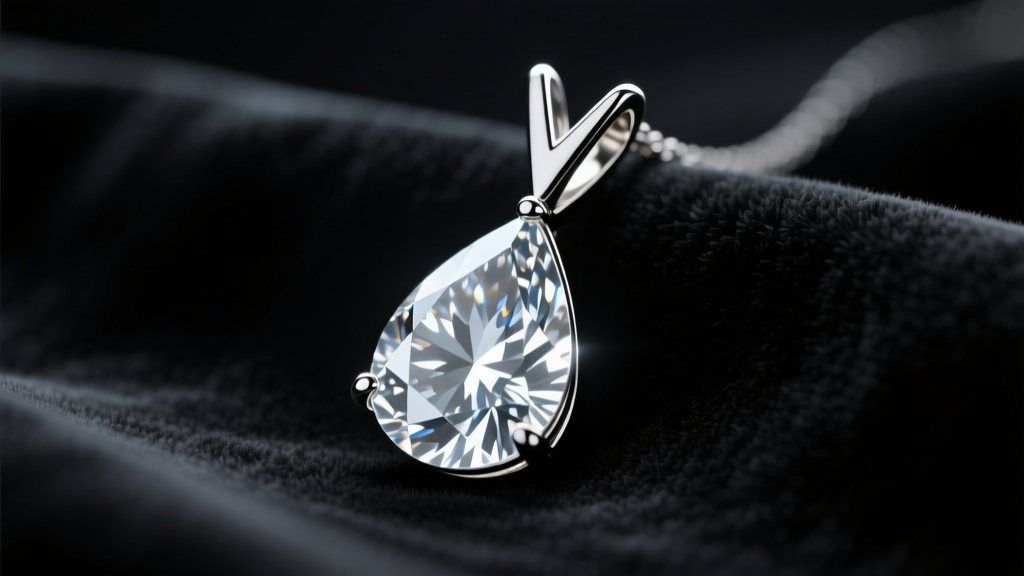
The diamond teardrop necklace, featuring the elegant and elongated pear-cut diamond, is a staple of fine jewelry. Its unique silhouette—combining the rounded curves of a brilliant round cut with the tapered elegance of a marquise—creates a stunning pendulum effect that draws the eye and elongates the neckline. However, this distinct asymmetrical geometry also introduces specific vulnerabilities that standard jewelry care routines often overlook.
Unlike symmetrical round or princess cuts, the teardrop shape possesses a delicate pointed apex that is highly susceptible to chipping if the setting degrades. Furthermore, the elongated gallery (the underside of the diamond) acts as a magnet for lotions, sebum, and environmental dust, which can rapidly dull the stone's fire and brilliance. To preserve the optical performance and structural integrity of your piece, you must adopt a specialized maintenance protocol.
The Unique Vulnerabilities of a Pear-Cut Teardrop Diamond
The most critical point of failure on any diamond teardrop necklace is the pointed tip. Because the diamond's crystalline structure meets at a sharp angle at this apex, it lacks the protective girdle thickness found on the rounded edges. A hard impact against a marble countertop or a snag on heavy knitwear can easily chip this tip if it is not properly shielded.
To mitigate this, high-quality teardrop pendants utilize a V-prong setting at the apex rather than a standard U-prong. The V-prong wraps securely around the sharp corner, distributing pressure and shielding the diamond. Over time, however, daily wear can cause the metal of the V-prong to thin or lift away from the stone. If you notice your pendant catching on silk fabrics or if you can slide a piece of paper between the prong and the diamond, the setting has compromised its structural integrity and requires immediate professional tightening.
Step-by-Step Deep Cleaning Protocol
Dirt and oils accumulate most heavily in the pavilion (the bottom half of the diamond) and the intricate basket setting holding the teardrop. When light cannot enter and exit the stone unobstructed, the diamond loses its scintillation and appears cloudy or gray. While many jewelers recommend ultrasonic cleaners, you must exercise extreme caution: if your teardrop necklace features a delicate pavé halo or if the diamond has undergone fracture-filling treatments, the 40 kHz vibrations of an ultrasonic machine can shatter the stone or dislodge the micro-accent diamonds.
For safe, highly effective at-home cleaning, follow this gemologist-approved method:
- The Solution: Mix one cup of warm distilled water with three drops of a high-quality degreasing dish soap (such as Dawn). Avoid tap water, as the dissolved minerals can leave microscopic hard-water spots on the diamond's table.
- The Soak: Submerge the necklace for 15 to 20 minutes. This softens the polymerized oils and cosmetic residues trapped in the gallery.
- The Agitation: Using an extra-soft baby toothbrush, gently brush the underside of the teardrop diamond. Use short, flicking motions moving from the center of the culet outward toward the girdle. Never use medium or hard bristles, as they can scratch precious metal settings, particularly 18k gold and platinum.
- The Rinse and Dry: Rinse thoroughly under a gentle stream of distilled water. Pat dry with a clean, lint-free microfiber cloth, ensuring no moisture remains trapped in the bail (the loop connecting the pendant to the chain).

According to the Gemological Institute of America (GIA), regular degreasing is the single most effective way to maintain a diamond's refractive index and visual brilliance between professional cleanings.
Chain Maintenance: Matching Metal Care to Your Pendant
The chain of your diamond teardrop necklace endures constant friction, particularly at the clasp and the bail. The care required for the chain depends entirely on its metallurgical composition. Below is a breakdown of how to maintain the most common chain metals paired with teardrop pendants.
| Metal Type | Tarnish Risk | Maintenance Requirements | Estimated Upkeep Cost |
|---|---|---|---|
| Platinum | None | Develops a natural patina over time; requires professional polishing to restore high-shine luster. | $40 - $80 per polish |
| 18k White Gold | Low (but yellows) | Alloy is naturally yellowish; requires rhodium plating every 12-18 months to maintain bright white color. | $50 - $120 per plating |
| 14k Yellow Gold | Very Low | Highly stable; simply wash with mild soap. Polish only if deep scratches occur. | $25 - $50 per polish |
| Sterling Silver | High | Oxidizes rapidly when exposed to sulfur and humidity; requires weekly wiping with an anti-tarnish cloth. | $10 - $20 (DIY cloths) |
When storing a white gold chain, be aware that the rhodium plating can wear thin at the back of the neck due to friction against skin and clothing. If you notice a yellowish hue bleeding through the chain links, it is time for a re-plate.
Safe Storage and Daily Wear Rules
The "pendulum effect" is a hallmark of the teardrop necklace. Because the stone is top-heavy, it swings freely, which increases the likelihood of the pointed apex catching on clothing, seatbelts, or hair. To prevent mechanical damage to both the diamond and the setting, always put your necklace on after applying makeup, perfumes, and hairspray. The alcohols and aerosols in cosmetics can degrade the finish of the metal and leave a cloudy film on the diamond that is difficult to remove with standard soap.
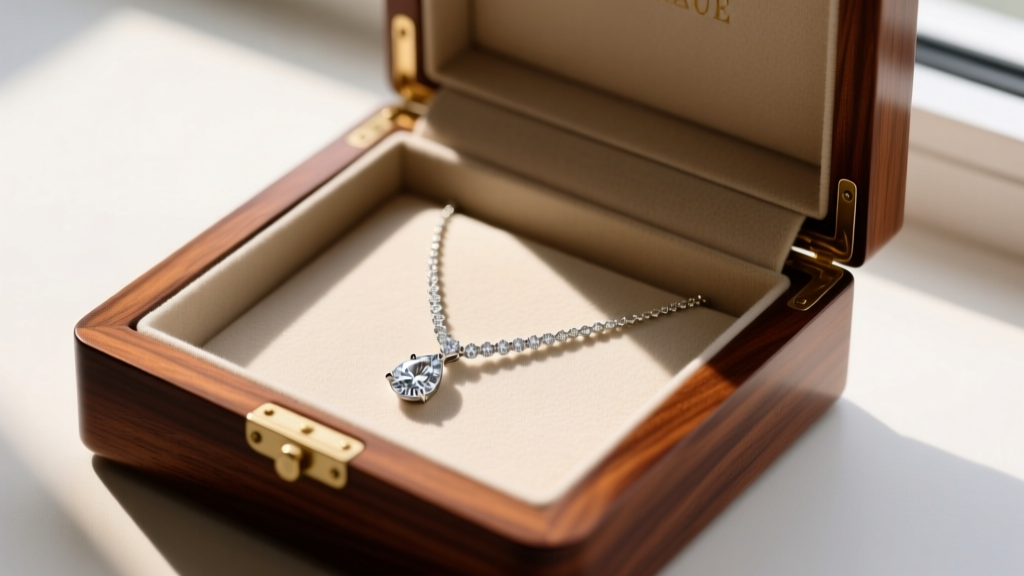
Proper storage is equally critical. Diamonds are a 10 on the Mohs hardness scale, meaning they will easily scratch any other gemstone or metal they come into contact with. Never toss a diamond teardrop necklace into a communal jewelry dish. The pointed tip can scratch the polished surface of adjacent gold bangles or chip softer stones like emeralds and opals. Store the necklace flat in a dedicated, fabric-lined compartment, ensuring the clasp is fastened to prevent the chain from tangling into microscopic knots that can stress and snap the delicate links.
When to Seek Professional Jeweler Services
While at-home cleaning is sufficient for maintaining brilliance, it cannot replace the structural diagnostics of a professional jeweler. The American Gem Society recommends an annual inspection for all fine diamond jewelry. During this visit, the jeweler will use a 10x loupe to inspect the V-prong at the teardrop's apex and check the bail for thinning caused by the chain's constant friction.
Additionally, if your teardrop necklace features a micro-pavé halo, the tiny beads of metal holding those accent diamonds can wear down. A professional will perform a "prong re-tipping" using a laser welder to add microscopic drops of metal back onto the worn prongs without subjecting the delicate diamonds to the extreme heat of a traditional jeweler's torch. By combining meticulous at-home cleaning with annual professional structural audits, your diamond teardrop necklace will retain its breathtaking fire and structural security for generations.


