How to Clean an Aroma Oil Necklace: Complete Care Guide
Learn how to clean and maintain your aroma oil necklace. Expert tips for washing lava stones, felt pads, and metal lockets to prevent rancid scents.

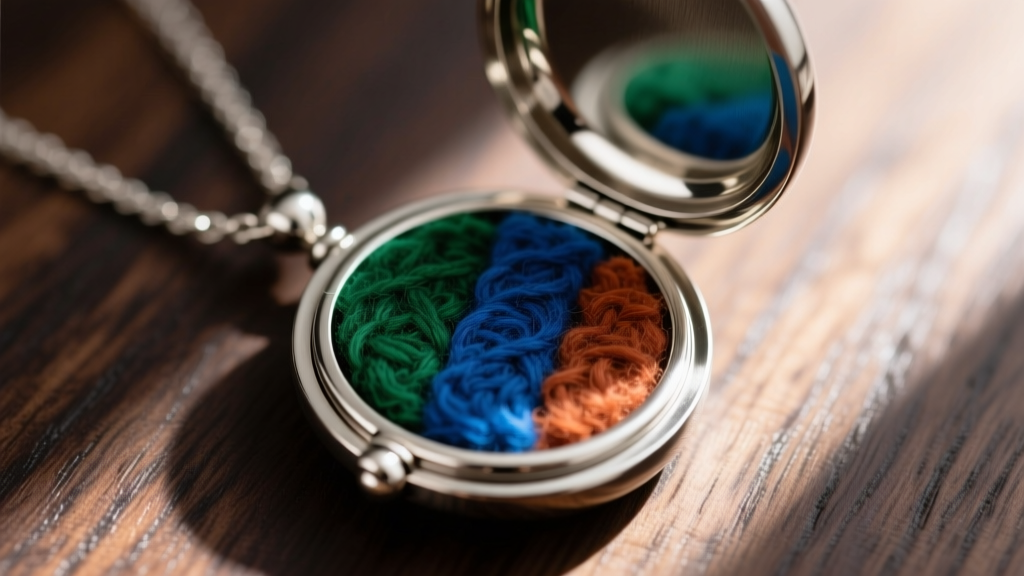
The Chemistry of Essential Oils and Jewelry Metals
Aroma oil necklaces—often referred to as diffuser lockets or aromatherapy pendants—offer a beautiful, wearable way to experience the therapeutic benefits of essential oils throughout the day. However, unlike standard fashion jewelry, these pieces are in constant contact with highly concentrated botanical extracts. Essential oils are complex chemical compounds composed of terpenes, esters, and aldehydes. While natural, they are remarkably potent and, in many cases, highly acidic or solvent-like.
According to safety guidelines outlined by the Tisserand Institute, citrus oils such as Lemon, Sweet Orange, and Grapefruit contain high concentrations of limonene. Limonene is a natural solvent that can aggressively strip gold plating, degrade cheap base metals, and cause severe oxidation in copper or brass alloys. If you are investing in an aroma oil necklace, understanding the chemical interaction between your chosen oils and the pendant's metallurgy is the first step in proper maintenance. For long-term durability, 316L surgical stainless steel and solid 925 sterling silver are the superior choices, as they resist the corrosive nature of undiluted essential oils far better than plated alternatives.
Step-by-Step Cleaning Guide for Metal Diffuser Lockets
The metal locket housing of your aroma oil necklace acts as the protective barrier for your diffuser pad or stone. Over time, oil residue transfers from the pad to the inner walls of the locket, eventually building up around the hinge and clasp mechanisms. This resinous buildup can cause the hinge to stiffen or the clasp to fail entirely.
What You Need
- Mild, phosphate-free dish soap (avoid harsh degreasers that can strip protective metal coatings)
- A soft-bristled baby toothbrush or dedicated jewelry brush
- Microfiber polishing cloth
- Cotton swabs
- Isopropyl alcohol (70% or higher) for hinge maintenance
The Cleaning Process
Begin by removing the felt pad or lava stone from the locket. Never submerge porous diffuser materials in your metal cleaning solution. Mix a few drops of mild dish soap into a bowl of lukewarm water. Dip your soft-bristled brush into the solution and gently scrub the interior and exterior of the metal locket. Pay special attention to the filigree cutouts, as these intricate designs trap oxidized oil and dead skin cells.
Rinse the locket thoroughly under warm running water. Immediately dry it with a microfiber cloth to prevent water spots, especially if you live in an area with hard water. If the locket hinge feels stiff or sticky, dip a cotton swab in isopropyl alcohol and run it along the hinge pin. The alcohol will dissolve the hardened essential oil resin without damaging the steel or silver. Once the hinge moves freely, apply a microscopic drop of mineral oil to the joint to ensure smooth operation.
Maintaining Porous Diffuser Materials
The true challenge of maintaining an aroma oil necklace lies in caring for the porous materials that actually hold and diffuse the oil. Lava stones and wool felt pads require entirely different cleaning protocols to prevent the trapping of rancid odors and bacterial growth.
Lava Stones: Deep Cleaning and Resetting
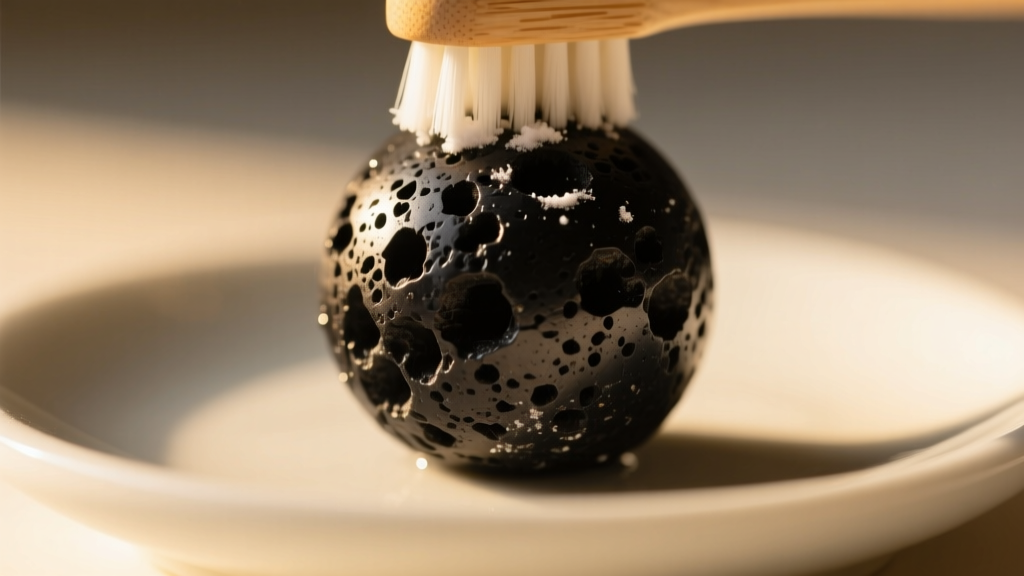
Lava rock is a basaltic, highly porous volcanic stone. Its microscopic craters provide an excellent surface area for essential oils to cling to and slowly evaporate. However, these same pores trap heavy base-note oils (like Patchouli, Vetiver, or Sandalwood) and carrier oil residues. If left unwashed, the trapped oils will oxidize, leaving your lava stone smelling like rancid crayons or old pennies.
To reset a lava stone, you must extract the oxidized oils. Create a thick paste using baking soda and warm water. Coat the lava stone entirely in the paste and let it sit for 15 to 20 minutes. The alkaline nature of the baking soda helps break down the acidic, oxidized oil bonds. Using a soft toothbrush, gently scrub the stone under warm running water. Crucial Warning: Never place lava stones in an ultrasonic jewelry cleaner. The high-frequency vibrations will shatter the porous stone and destroy its structural integrity. After washing, allow the lava stone to air dry completely for at least 24 hours before applying a new essential oil. Applying oil to a damp stone will trap moisture, leading to mildew growth inside the pores.
Wool Felt Pads: When to Wash vs. Replace
Wool felt pads are the most common diffuser medium for locket-style aroma oil necklaces. They are inexpensive, highly absorbent, and allow for quick scent changes. While you can hand-wash felt pads using a gentle castile soap, the mechanical agitation required to remove heavy oils often causes the wool fibers to mat and shrink, reducing their absorbency.
As a best practice, treat wool felt pads as semi-disposable components. Wash them gently if you are switching between oils of the same botanical family (e.g., moving from Lavender to Rosemary). However, if you are switching from a heavy, resinous oil to a light, volatile citrus oil, simply replace the pad. The National Association for Holistic Aromatherapy (NAHA) recommends rotating diffuser materials regularly to prevent olfactory fatigue and cross-contamination of complex botanical profiles. Expect to replace your felt pads every 3 to 6 months, depending on daily usage.
Material Compatibility Chart: Oils vs. Metals
Not all metals react to essential oils in the same way. Use this compatibility chart to understand how your necklace hardware will age based on the oils you diffuse.
| Necklace Material | Oil Compatibility | Vulnerabilities | Recommended Maintenance |
|---|---|---|---|
| 316L Surgical Steel | Excellent | Highly resistant to acidity and limonene. | Monthly wash with mild soap and water. |
| 925 Sterling Silver | Very Good | Can tarnish if exposed to sulfur-rich oils (e.g., Garlic, Onion, some resins). | Polish with a silver cloth; avoid chemical dips. |
| Gold-Plated Brass | Poor | Citrus and pine oils will strip the plating, exposing brass to rapid oxidation. | Wipe immediately if oil spills; replace when plating fails. |
| Solid 14K/18K Gold | Good | Softness of high-karat gold can lead to scratching from abrasive lava stones. | Use felt pads only; clean with specialized gold solution. |
Troubleshooting Common Aroma Necklace Issues
Even with meticulous care, daily wear presents unique challenges for diffuser jewelry. Here is how to troubleshoot the most frequent issues encountered by aromatherapy jewelry enthusiasts.
Issue: The Scent Fades Within an Hour
Diagnosis: You are likely using top-note essential oils (like Lemon, Eucalyptus, or Peppermint) on a dry felt pad, or the ambient temperature is too high, causing rapid volatilization.
Solution: To extend the longevity of top notes, anchor them with a base note. Apply one drop of a heavy base oil (like Jojoba or Fractionated Coconut Oil) to the felt pad first, let it absorb, and then apply your essential oil. The carrier oil acts as a fixative, slowing the evaporation rate of the lighter aromatic molecules. Alternatively, switch to a lava stone, which retains volatile compounds longer than exposed wool felt.
Issue: The Necklace Chain is Causing Skin Irritation
Diagnosis: Essential oil transfer. When you open the locket, microscopic amounts of oil transfer to your fingers, which then transfer to the necklace chain. When the chain rests against your neck, the heat of your skin causes the oil to leach out of the chain links, causing contact dermatitis.
Solution: Wash your hands thoroughly with soap immediately after applying oils to your diffuser pad. Furthermore, clean your necklace chain weekly using the same mild soapy water method used for the locket. If you have highly sensitive skin, upgrade your chain to solid titanium or niobium, which are completely hypoallergenic and non-reactive to botanical extracts.
Storage and Longevity Best Practices
How you store your aroma oil necklace when not in use is just as critical as how you clean it. Essential oils are highly sensitive to ultraviolet (UV) light and heat, both of which accelerate the oxidation process. Never leave your diffuser necklace resting on a sunny windowsill or the dashboard of your car. The UV rays will not only degrade the therapeutic properties of the oil trapped in the lava stone but will also cause the metal hardware to heat up, potentially warping delicate filigree work or weakening glued glass components.
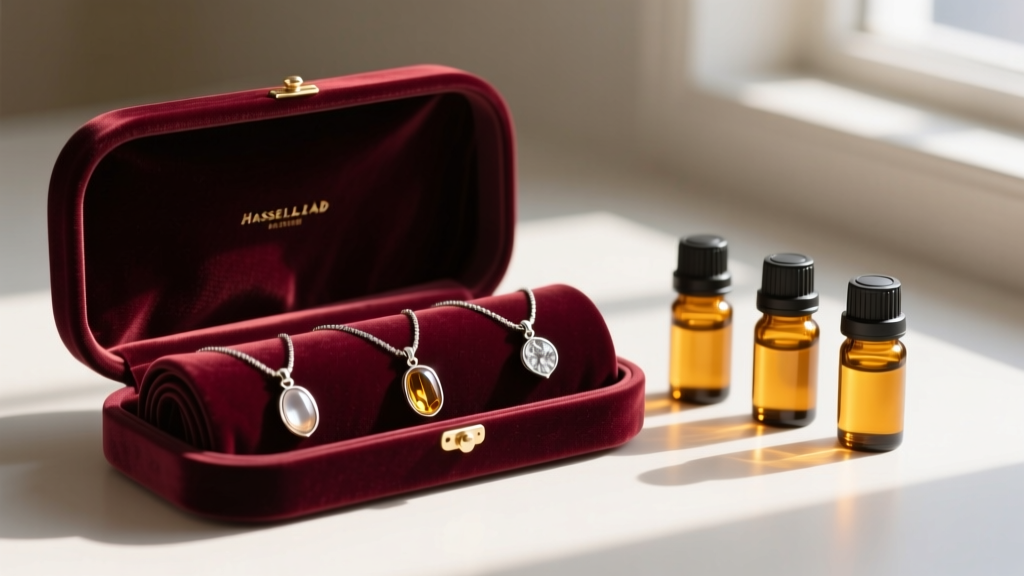
When traveling, store your aroma oil necklace in a dedicated velvet or silk pouch. Avoid storing the necklace in plastic bags or plastic-lined jewelry boxes. Undiluted essential oils, particularly citrus and pine varieties, can literally melt and degrade certain types of plastics, leaving a sticky, toxic residue on your jewelry. For long-term storage between seasons, ensure the lava stone or felt pad has been completely cleaned and dried. Store the piece in a cool, dark drawer alongside your amber glass essential oil bottles to preserve the integrity of both the jewelry and the botanical extracts.


