Hand Necklace Meme: How to Clean & Fix Delicate Pendants
Discover the truth behind the viral hand necklace meme. Learn expert cleaning, untangling, and repair tips for delicate hand-shaped pendants.

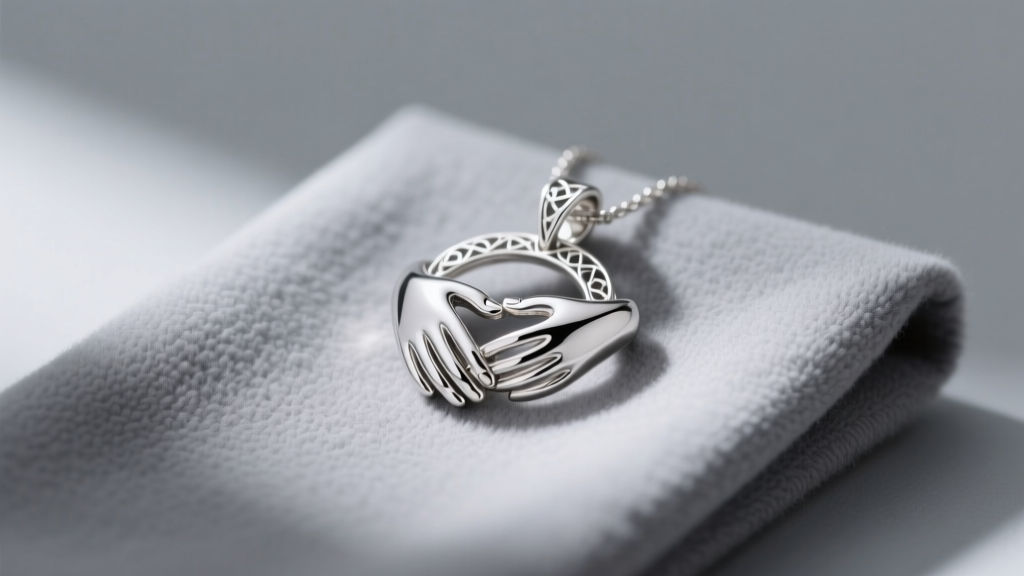
If you have spent any time on jewelry TikTok or Reddit's r/jewelry, you have likely encountered the hand necklace meme. The viral trend usually features frustrated owners showcasing their beloved interlocking hands, Hamsa, or holding-hands pendants with snapped fingers, hopelessly tangled chains, or severe tarnishing. While the internet laughs at the structural fragility of these symbolic pieces, the reality behind the meme is rooted in basic metallurgy and manufacturing limitations. Hand-shaped pendants possess a high surface-area-to-volume ratio, making them uniquely susceptible to lateral torque, casting porosity, and chain-snagging.
As a senior jewelry stylist and maintenance expert, I am here to separate the internet jokes from actionable jewelry care. Whether you own a delicate 925 sterling silver interlocking hand pendant or a 14k gold vermeil Hamsa, this comprehensive 2026 guide will teach you how to clean, untangle, and repair your hand necklaces without becoming the next viral meme.
The Anatomy of the Hand Pendant Failure
To understand how to care for a hand necklace, you must first understand why they fail. Most mass-market and even some artisan hand pendants are created using lost-wax casting. During this process, molten metal is poured into a mold. The fingers of the pendant are typically cast at a thickness of just 0.6mm to 0.9mm to maintain aesthetic delicacy.
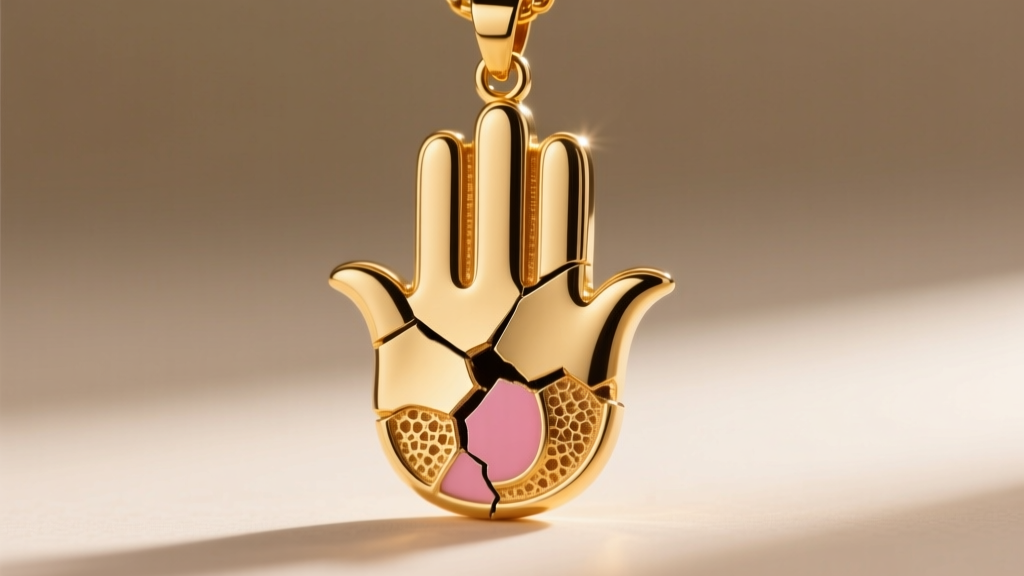
At this microscopic scale, casting porosity becomes a critical failure point. If a 0.7mm silver finger contains a 0.2mm air bubble trapped during the cooling process, that joint suffers a nearly 30% structural deficit. When the pendant catches on a knit sweater or gets pulled by a toddler, the lateral shear force easily exceeds the tensile strength of the porous metal, resulting in the dreaded "snapped pinky" that fuels the hand necklace meme.
Common Failure Modes in Hand Pendants
- Shear Snapping: Fingers breaking at the base joint due to thin casting and porosity.
- The Finger Trap: Fine chains (0.8mm - 1.2mm) slipping through the gaps between the index and middle fingers, creating impossible knots.
- Vermeil Flaking: Gold vermeil hand pendants losing their plating on the high-friction tips of the fingers due to constant skin contact and sweat exposure.
Cleaning Protocols for Intricate Hand Pendants
The intricate crevices between the fingers of a hand pendant trap dead skin cells, lotions, and environmental pollutants. However, aggressive cleaning is exactly what leads to the breakages seen in the hand necklace meme. You must avoid hard-bristled brushes and ultrasonic cleaners.
Expert Warning: Ultrasonic cleaners operate at frequencies around 40,000 Hz. The cavitation bubbles created in the liquid can easily shake loose poorly soldered joints or literally shatter thin-cast silver fingers. Never put a delicate hand pendant in an ultrasonic machine.
According to guidelines from Jewelers of America, gentle chemical action and soft mechanical wiping are the safest methods for intricate symbolic jewelry. Below is a material-specific cleaning matrix to keep your pendant pristine.
| Material | Tarnish Risk | Safe Cleaning Agent | Strictly Avoid |
|---|---|---|---|
| 925 Sterling Silver | High | Mild dish soap, warm water, baby toothbrush | Bleach, silver dip, hard bristles |
| 14k/18k Gold Vermeil | Medium | Damp microfiber cloth, mild soap suds only | Ultrasonic, polishing compounds |
| Solid 14k Gold | Low | Ammonia-free jewelry cleaner, soft cloth | Chlorine (pools/hot tubs) |
| Brass/Bronze Base | Very High | Lemon juice and baking soda paste | Harsh chemical dips |
For sterling silver hand pendants, The Silver Institute recommends using a dedicated silver polishing cloth treated with micro-abrasives. Gently glide the cloth over the flat surfaces of the palm and fingers. Do not pull the cloth tightly between the fingers, as the friction can bend or snap the thin metal digits.
Untangling the Chain: Solving the Interlocking Hand Trap
Perhaps the most famous iteration of the hand necklace meme involves a delicate chain hopelessly knotted through the gaps of the pendant's fingers. Because hand pendants have multiple open loops (between the thumb and index, index and middle, etc.), a loose chain can easily weave itself into a structural trap.
The Mineral Oil and Needle Method
Do not pull the chain. Pulling tightens the knot and can warp the chain links or bend the pendant's fingers. Instead, use this professional jeweler's technique:
- Lubricate: Place the tangled pendant on a flat, well-lit surface. Apply a single drop of mineral oil or baby oil directly to the knot. This drastically reduces the coefficient of friction between the metal links.
- Isolate: Take two fine sewing needles or beading awls. Insert the tips into the center of the knot.
- Wiggle, Don't Pull: Gently wiggle the needles in opposite directions to create slack in the center of the knot.
- Extract: Once slack is created, use the needles to push the chain links back through the finger gaps in the exact reverse order of how they became tangled.
- Clean: Wash the pendant and chain with mild dish soap to remove the mineral oil residue.
Preventative Maintenance and Storage
Proper storage is the ultimate defense against the hand necklace meme. Because of their irregular, multi-pronged shapes, hand pendants should never be tossed into a communal jewelry box. The weight of heavier chains or bangles can easily crush a 0.8mm silver finger.
- Individual Pouches: Store hand pendants in individual anti-tarnish flannel pouches. The flannel prevents micro-scratches, while the treated lining absorbs sulfur compounds in the air that cause silver to blacken.
- Clasp Closure: Always store the necklace with the clasp securely closed. An open clasp is the primary culprit for chains weaving through the pendant's fingers while sitting in a drawer.
- Silica Gel Packets: Drop a small silica gel packet into your jewelry box or pouch to control ambient humidity, which accelerates the oxidation of brass and silver base metals.
When to Seek Professional Laser Welding
If your hand pendant does suffer a broken finger, resist the urge to use cyanoacrylate (Superglue). This is a common DIY mistake that results in a brittle, visible bond that off-gasses a frosty white residue onto the surrounding metal, ruining the finish. Furthermore, glue cannot withstand the lateral torque of daily wear.
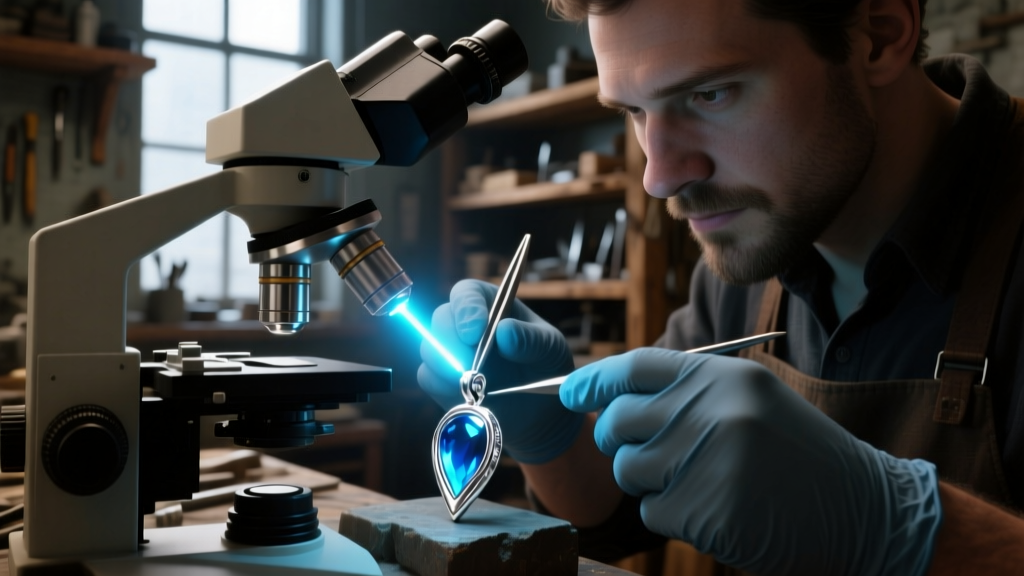
Instead, take the piece to a jeweler equipped with a laser welder. Laser welding uses a concentrated pulse of light to melt a microscopic piece of filler wire (matching the exact alloy of your pendant) directly into the fracture joint. This rebuilds the lost metal from the casting porosity and creates a bond that is often stronger than the original cast piece, ensuring your hand necklace remains a cherished symbol rather than a fleeting internet joke.


