How to Clean a Clove Gold Necklace: Expert Care Guide
Learn how to safely clean and maintain your clove gold necklace. Expert tips on removing tarnish, cleaning botanical crevices, and daily storage.

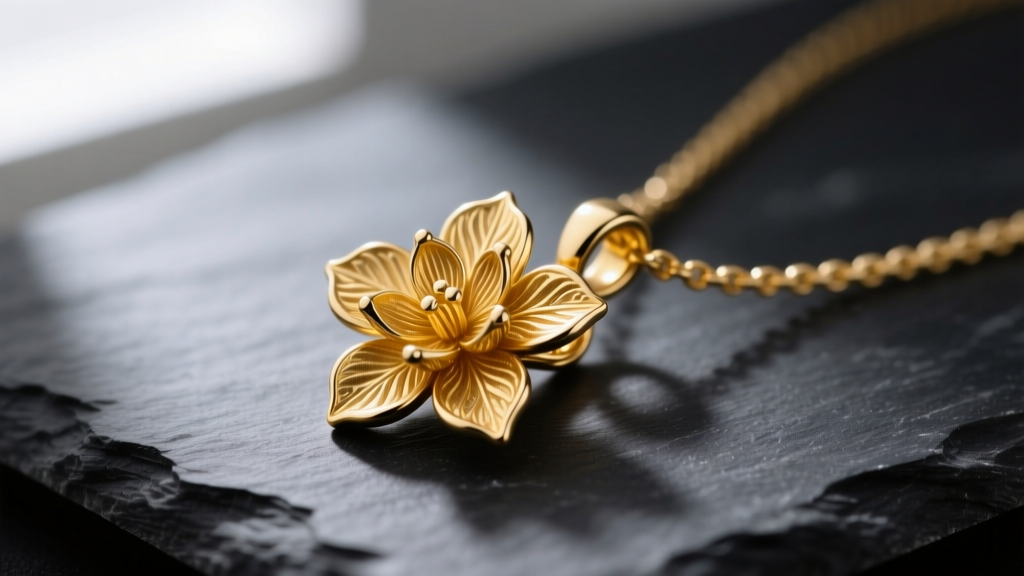
The Unique Anatomy of a Clove Gold Necklace
Botanical jewelry has seen a massive resurgence in the mid-2020s, with the clove gold necklace emerging as a standout piece for its organic geometry and subtle spice-inspired symbolism. However, the very details that make a clove pendant visually striking—specifically the fluted calyx (the crown-like top) and the textured hypanthium (the tubular base)—create microscopic crevices that are notorious for trapping sebum, dead skin cells, and cosmetic residues. Unlike a smooth, polished gold disc or a simple gemstone solitaire, a three-dimensional botanical motif requires a highly specialized approach to maintenance. If left uncleaned, the organic oils trapped in these crevices can oxidize and dull the gold's natural luster, while also creating a breeding ground for contact dermatitis.
Understanding Your Gold Alloy: 14k vs. 18k vs. 22k
Before applying any cleaning solution, you must identify the karat weight of your clove necklace. Pure 24k gold is entirely immune to tarnish, but it is far too soft to hold the intricate structural details of a clove motif. Therefore, jewelers alloy gold with metals like copper, silver, and zinc. According to the Gemological Institute of America (GIA), the specific ratio of these alloy metals dictates how your necklace will react to environmental factors.
- 14k Gold (58.5% Pure Gold): Contains a higher percentage of copper and zinc. This makes it highly durable but significantly more prone to oxidation and tarnishing when exposed to sulfur, sweat, and humidity. The crevices of a 14k clove pendant will show dark tarnish buildup much faster than higher karats.
- 18k Gold (75% Pure Gold): The industry standard for fine botanical jewelry. It offers a rich, buttery yellow hue and is highly resistant to tarnish, though the alloyed metals can still react to harsh chemicals like chlorine.
- 22k Gold (91.6% Pure Gold): Rarely used for highly detailed 3D pendants due to its malleability, but if your clove is a stamped or cast 22k piece, it requires extreme care to avoid bending the delicate calyx points during cleaning.
The Danger of Chlorine and Stress Corrosion Cracking
Never wear your gold clove necklace in a chlorinated swimming pool or hot tub. Chlorine reacts aggressively with the copper and zinc alloys in 14k and 18k gold, leading to a phenomenon known as stress corrosion cracking. Over time, this microscopic degradation will cause the delicate prongs or the bail (the loop connecting the clove to the chain) to become brittle and snap.
Step-by-Step Deep Cleaning Guide
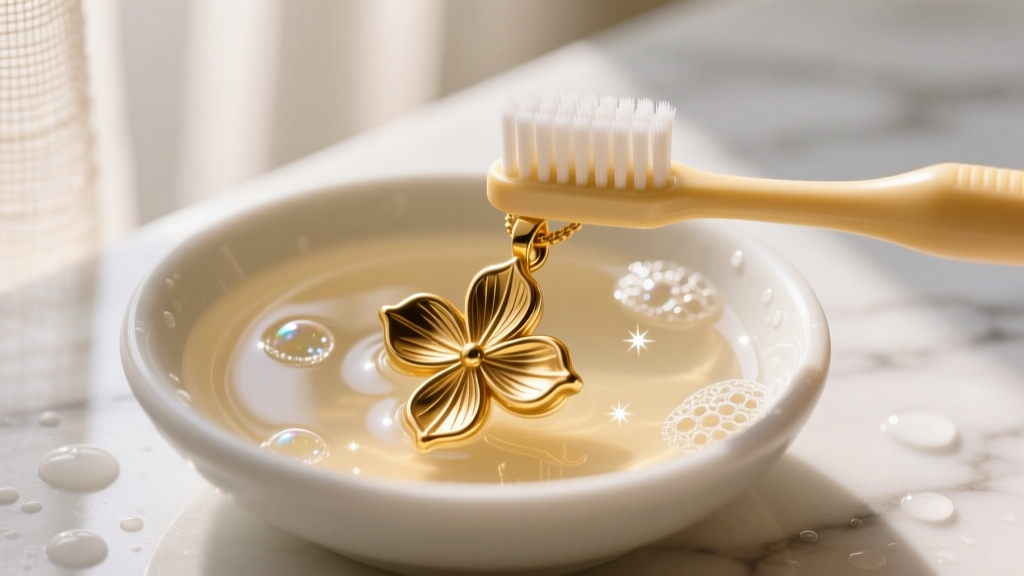
To safely remove buildup from the intricate grooves of your clove pendant without scratching the gold or damaging the chain, follow this professional-grade cleaning protocol. The Jewelers of America recommends gentle, non-abrasive methods for textured gold surfaces.
- Prepare the Solution: Fill a small glass bowl with warm distilled water. Avoid tap water, as the dissolved minerals and municipal chlorine can leave micro-deposits on the gold. Add three drops of a pH-neutral, phosphate-free liquid dish soap (such as original blue Dawn).
- The Soak: Submerge the clove necklace completely. Allow it to soak for exactly 15 to 20 minutes. This dwell time is critical; it softens the hardened sebum and lotion trapped deep within the calyx crevices without requiring aggressive scrubbing.
- Targeted Agitation: Remove the necklace and place it on a damp microfiber cloth. Using an extra-soft baby toothbrush (specifically one with 0.05mm to 0.1mm ultra-fine bristles), gently sweep the bristles into the vertical grooves of the clove bud. Always brush in the direction of the metal's grain or the pendant's natural lines to avoid creating micro-scratches.
- The Chain Flush: If your clove is suspended on a rope or cable chain, use the brush to gently agitate the links, where dead skin cells frequently accumulate.
- The Rinse: Rinse the necklace thoroughly under a gentle stream of lukewarm distilled water to ensure no soap residue remains in the pendant's undercarriage.
- Drying: Pat dry with a lint-free microfiber cloth. Use a can of compressed air (held at least six inches away) to blow out any lingering water droplets trapped inside the deepest recesses of the clove motif. Air drying can lead to water spots.
Cleaning Agents: What to Use and What to Avoid
Not all jewelry cleaners are created equal. Commercial dips often contain harsh chemicals like thiourea, which can strip the natural patina from botanical pieces and leave a chalky residue in textured crevices.
| Cleaning Agent | Safety for Clove Motif | Best Use Case | Risks |
|---|---|---|---|
| pH-Neutral Dish Soap | Excellent | Routine deep cleaning (monthly) | None if rinsed with distilled water |
| Baking Soda Paste | Poor | Avoid entirely | Highly abrasive; will scratch high-polish areas and leave white residue in crevices |
| Commercial Gold Dips | Fair | Severe tarnish on 14k chains | Chemicals can pool in the clove base and cause localized discoloration |
| Isopropyl Alcohol | Good | Sanitizing the chain and bail | Can dry out and crack any resin or enamel accents on the clove |
The Ultrasonic Cleaner Warning
While ultrasonic cleaners are highly effective for smooth diamond solitaires, they pose a significant risk to botanical jewelry. The high-frequency sound waves create microscopic cavitation bubbles that implode with intense localized heat and pressure. If your clove gold necklace features any accent gemstones (such as tsavorite garnets or sapphires set in the calyx), or if the crevices are filled with cold enamel or guilloché, the ultrasonic vibrations can easily shatter the stones or fracture the enamel. Furthermore, if the chain has any micro-fractures, the ultrasonic waves can exacerbate them, leading to sudden chain failure.
Proper Storage and Preventative Maintenance
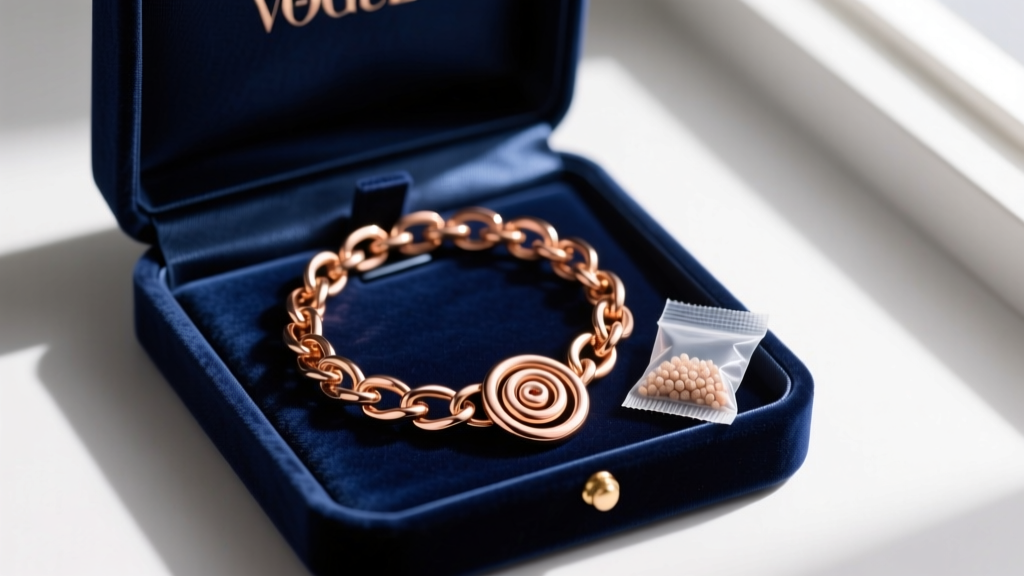
How you store your clove necklace is just as important as how you clean it. Gold is a relatively soft metal, and the protruding points of the clove calyx can easily scratch other pieces in a communal jewelry box, or become bent if crushed.
Expert Storage Rule: Always store your botanical pendants individually. The organic geometry of a clove requires ample space to prevent the delicate tips from snagging on the links of other chains.
For optimal preservation, place the cleaned and fully dried necklace inside an individual polyethylene ziplock bag. Polyethylene is chemically inert and will not off-gas sulfur compounds that cause tarnish. For added protection, especially for 14k gold pieces, include a 3M anti-tarnish strip inside the bag. These strips absorb airborne sulfur and hydrogen sulfide, effectively neutralizing the environment and keeping your clove pendant brilliantly polished for up to a year. Finally, store the bag in a cool, dark drawer away from direct sunlight and fluctuating humidity levels to ensure the gold's structural integrity and luster remain pristine.


