Material Science: Matching Metal Necklaces for Necklines
Discover how metal density, drape, and tarnish resistance dictate the best material choices when styling necklaces for necklines and fabrics.

Beyond Length: The Physics of Jewelry and Fabric Interaction
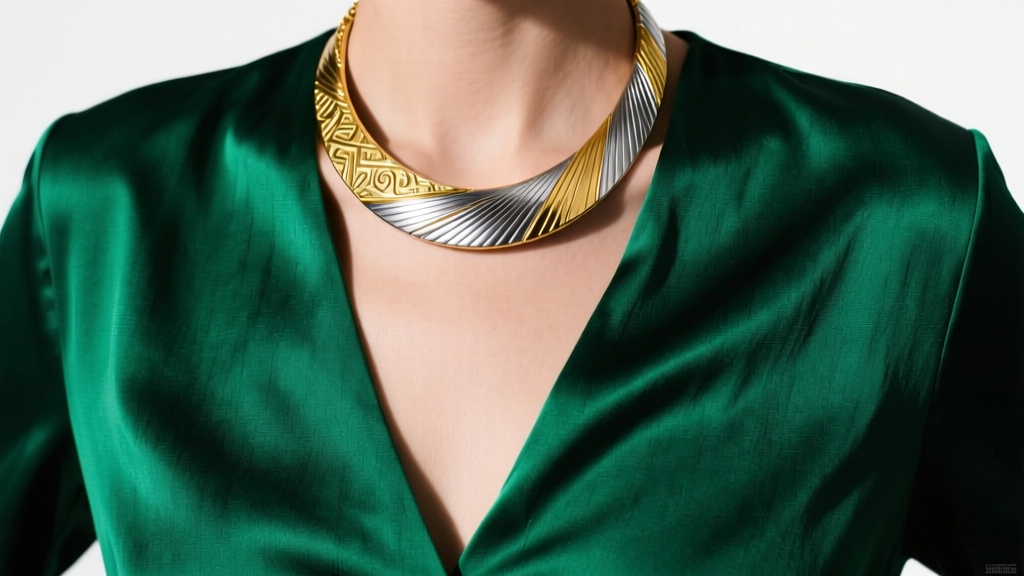
When selecting necklaces for necklines, the vast majority of style guides focus exclusively on length and proportion. You are told to pair an 18-inch chain with a V-neck or a 16-inch choker with a crew neck. However, this two-dimensional approach ignores a critical factor: material physics. The specific gravity, tensile strength, and Vickers hardness of a metal dictate how it drapes, how it interacts with delicate textiles, and how it withstands the friction of daily wear. In 2026, as sustainable wardrobes and high-performance fabrics become the norm, understanding the material science behind your jewelry is essential for preserving both your garments and your precious metals.
The Physics of Drape: Why Metal Density Matters
Density, measured in specific gravity (SG), determines how heavy a chain feels relative to its volume. This physical property directly impacts how a necklace behaves when suspended over different garments. According to the World Gold Council, pure gold has a specific gravity of 19.3, making it exceptionally dense. When alloyed into 14k or 18k gold, or when substituted with platinum, the weight variations become significant.
Platinum and High-Density Alloys
Platinum boasts a specific gravity of 21.45 g/cm³, making it roughly 60% denser than 14k yellow gold (12.9 g/cm³). If you wear a heavy, solid platinum pendant on a 24-inch chain over a delicate silk V-neck, the sheer mass of the metal will pull the silk downward. This tensile drag can warp the shoulder seams of the blouse and distort the intended silhouette of the neckline. Platinum is best reserved for structured fabrics like heavy wool, denim, or tailored cotton button-downs where the material can support the weight without stretching.
Titanium and Aerospace Aluminum
Conversely, aerospace-grade titanium (SG 4.5) and anodized aluminum (SG 2.7) offer immense visual volume without the structural drag. When styling chunky, oversized statement necklaces for necklines made of fragile materials like chiffon, charmeuse, or fine-gauge cashmere, low-density metals are mandatory. They allow the jewelry to rest on the fabric without compromising the garment's structural integrity.
Hardness, Friction, and Fabric Snagging
The Vickers Hardness (HV) scale measures a metal's resistance to deformation and scratching. This is particularly relevant when considering how chains interact with textured fabrics and active movement.
The Herringbone and Snake Chain Dilemma
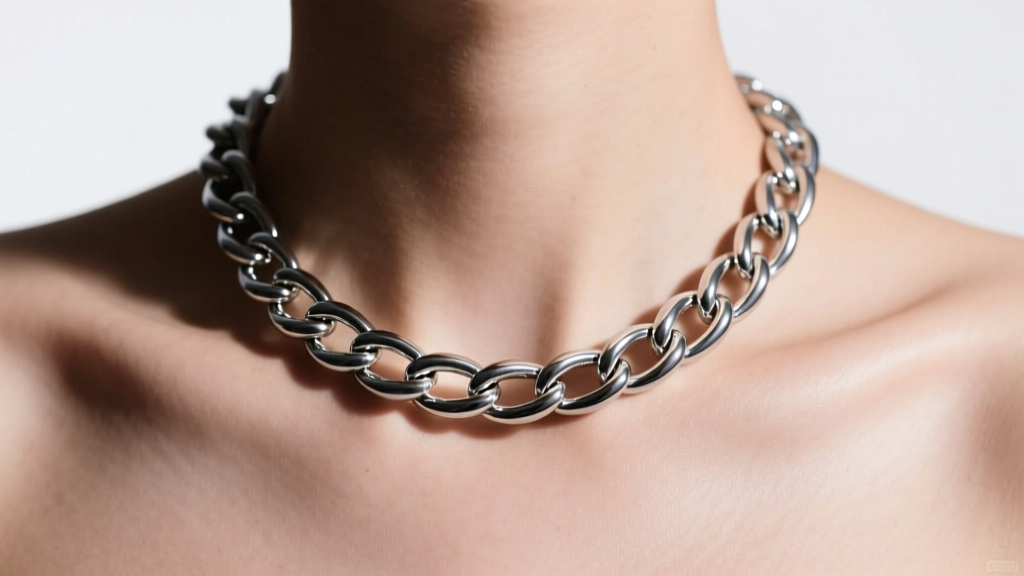
Flat-laid chains like herringbone and snake chains are notorious for kinking. 14k yellow gold typically registers around 135 HV. While this makes it highly malleable and easy for jewelers to repair, it also means a 14k gold herringbone chain will easily dent and permanently kink if bent sharply against the structured edge of a sweetheart neckline or caught in the zipper of a high-necked garment. White gold, which is alloyed with nickel or palladium and plated with rhodium, boasts a higher hardness (often exceeding 160 HV). This increased rigidity makes white gold slightly more resistant to the friction and bending caused by active movement over a boatneck or halter top.
Prong and Setting Snagging
If your necklace features a pendant with gemstone prongs, the hardness of the metal matters. Platinum prongs (HV ~125) are highly malleable; they will bend rather than snap if caught on a loose-knit sweater or lace neckline, keeping the stone secure. White gold prongs are more brittle and can snap entirely under the same sheer force, leading to stone loss. Therefore, when wearing gemstone pendants over textured, high-friction necklines, platinum is the superior protective choice.
Skin Chemistry and High-Contact Necklines
Chokers, collar necklaces, and pieces worn with crew necks sit directly against the décolletage. This introduces the variable of human skin chemistry. The average pH of human sweat ranges from 4.5 to 7.0, containing water, salts, urea, and lactic acid.
- Sterling Silver (92.5% Ag, 7.5% Cu): The copper alloy in sterling silver reacts with sulfur and moisture in the air and on the skin, creating silver sulfide. On a bare neck, this manifests as dark, grayish smudges that stain the skin and collarbones.
- 10k and 14k Gold: Lower-karat golds contain higher percentages of copper and zinc. When exposed to acidic sweat, the copper can oxidize and leave a green residue (copper chloride) on the skin, a common complaint with tight-fitting chokers.
- Grade 23 Titanium (Ti-6Al-4V ELI) and 950 Platinum: Both materials are entirely inert and hypoallergenic. They will not react with skin acidity, making them the only safe choices for high-contact, bare-skin necklines for individuals with sensitive skin or active lifestyles.
For a comprehensive breakdown of how alloy compositions affect metal behavior, the Gemological Institute of America (GIA) provides extensive metallurgical data on gold karats and their respective alloy mixes.
Material vs. Neckline Compatibility Matrix
| Material | Specific Gravity | Vickers Hardness (HV) | Ideal Neckline Pairing | Fabric / Skin Warning |
|---|---|---|---|---|
| 950 Platinum | 21.45 | ~125 | Structured Button-Down, Heavy Wool | Too heavy for delicate silk; will drag fabric. |
| 18k Yellow Gold | 15.20 | ~135 | V-Neck, Scoop Neck (Medium Weight) | Prongs may bend on lace; requires careful storage. |
| 14k White Gold | 12.90 | ~160+ | Boatneck, Halter (Active Wear) | Rhodium plating wears off with high skin friction. |
| Sterling Silver | 10.36 | ~140 | Deep Plunge (Over Fabric Only) | Tarnishes rapidly on bare skin; avoid with chokers. |
| Grade-5 Titanium | 4.43 | ~350 | Chokers, Crew Necks, Delicate Silk | Extremely rigid; will not drape softly like gold. |
Structural Integrity: Chain Gauges and Clasp Mechanics
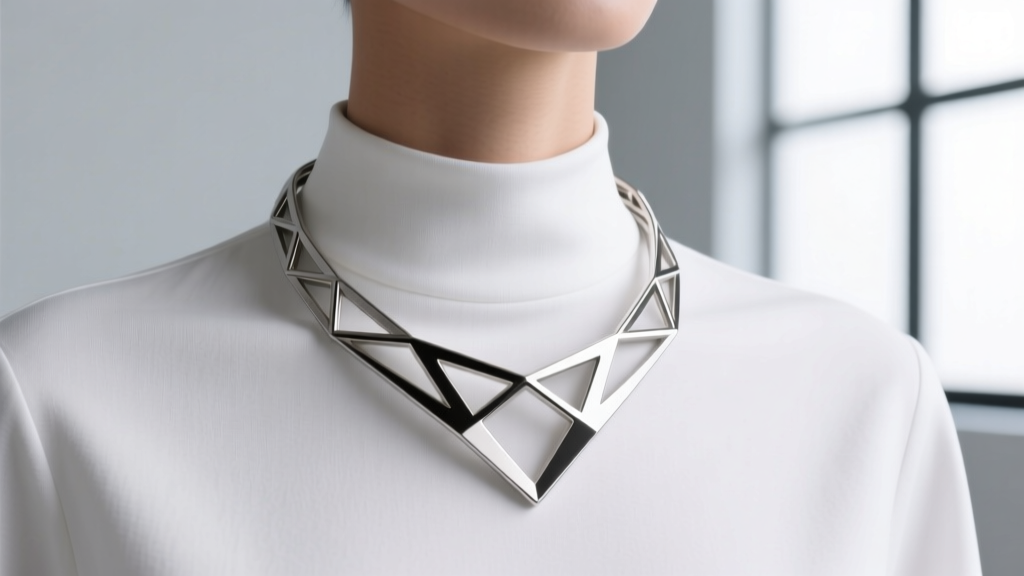
The visual weight of a chain gauge must be balanced not just aesthetically, but mechanically, with the clasp and the neckline. A common failure mode in jewelry styling is a clasp that acts as a counterweight, causing the necklace to constantly flip backward.
When styling a delicate 0.8mm to 1.2mm cable chain over a deep plunge or sweetheart neckline, utilizing a heavy 12mm lobster clasp will create a pendulum effect. The clasp's mass will pull the chain around to the front, ruining the seamless visual line. Instead, opt for a lightweight 5mm spring ring clasp or a hidden magnetic barrel clasp. Conversely, when wearing a 2.5mm to 4.0mm curb or rope chain over a high, structured boatneck, a robust lobster clasp or a custom T-bar toggle is required to support the chain's tensile load and prevent the clasp ring from deforming under the metal's own weight.
The 2026 Framework: Decision Matrix for Your Wardrobe
To synthesize this material science into actionable styling, use this three-step framework before putting on your jewelry:
- Assess the Fabric Tensile Strength: Is the garment delicate (silk, chiffon) or structured (denim, wool)? Choose low-density metals (titanium, hollow gold) for the former, and high-density metals (solid gold, platinum) for the latter.
- Evaluate Skin Contact: Will the metal touch your bare skin? If yes, and you are wearing a choker or crew neck, eliminate copper-heavy alloys and sterling silver to prevent oxidation and skin staining.
- Calculate the Friction Risk: Will you be moving actively? Avoid soft, flat-laid chains like herringbone in 14k gold if the neckline has zippers, rough seams, or heavy textures that could kink the links.
Conclusion
Mastering the art of styling necklaces for necklines requires looking past the mirror and understanding the physical properties of the metals you wear. By respecting the density, hardness, and chemical reactivity of your jewelry, you ensure that your garments maintain their silhouette, your skin remains unblemished, and your precious metals withstand the rigors of daily wear. True style is not just about what looks good in a static moment; it is about how materials perform in motion.


