Art Deco Diamond Necklace: Authentication & Valuation Guide
Master the technical details of evaluating an art deco diamond necklace. Learn to identify authentic platinum filigree, calibre cuts, and hallmarks.

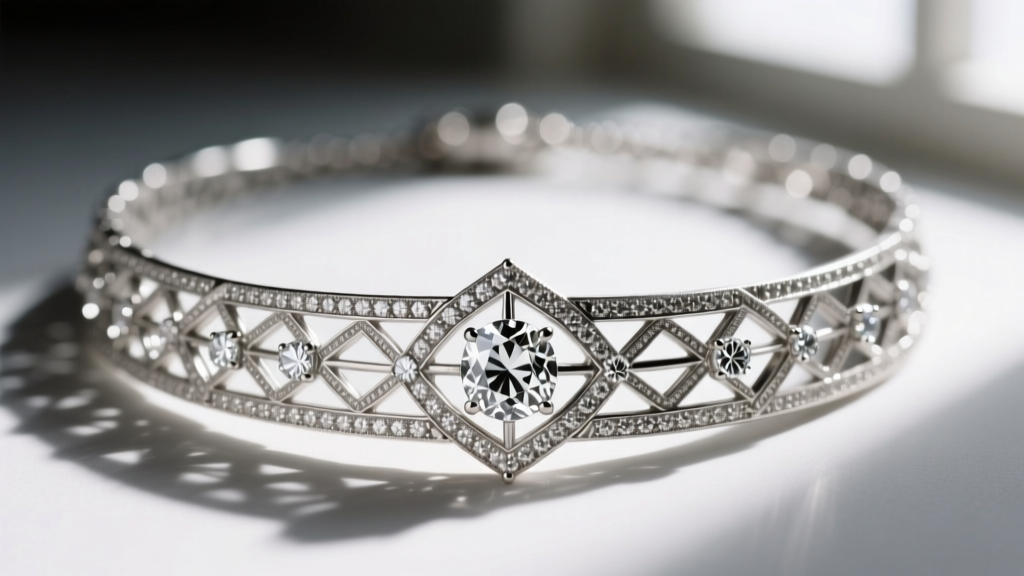
The Anatomy of Authentic 1920s-1930s Necklaces
Evaluating an authentic art deco diamond necklace requires moving beyond superficial aesthetic appreciation into the realm of metallurgical and gemological forensics. The Art Deco era (roughly 1920 to 1935) was defined by a radical shift toward geometric precision, mechanized fabrication techniques, and high-contrast material pairings. For collectors and investors, the distinction between a genuine period piece, a later 20th-century reproduction, and a modern CAD-cast replica hinges on microscopic details in fabrication, diamond cutting styles, and structural wear patterns.
Unlike Victorian or Edwardian jewelry, which often relied on organic motifs and rose-cut diamonds, Deco pieces celebrated the machine age. This means that authentic examples exhibit a specific tension between hand-finishing and die-struck manufacturing. Understanding these technical markers is the only reliable way to authenticate and accurately value these historic garments.
Platinum vs. White Gold: The Metallurgical Test
The vast majority of high-end Art Deco diamond necklaces were forged in platinum. Specifically, you should look for 950 Platinum (95% platinum, 5% ruthenium or iridium) or the slightly older 900 Plat/10% Iridium alloy. Platinum’s immense tensile strength allowed jewelers to create the impossibly fine, openwork filigree and nearly invisible prong settings that define the era.
White gold (14k or 18k) was utilized, particularly during the Great Depression when platinum was deemed too expensive or restricted, but it lacks the structural rigidity for ultra-fine die-struck filigree. If you are examining a necklace with intricate, paper-thin platinum-style filigree but it tests as 10k or 14k white gold, you are likely looking at a 1980s reproduction or a modern cast piece. Furthermore, authentic Deco platinum often develops a specific soft, grayish patina over a century of wear, whereas rhodium-plated white gold will show brassy yellow undertones where the plating has worn thin at the clasp and high-friction links.
Diamond Cuts and Calibre Stone Integration
The diamonds used in a genuine art deco diamond necklace are entirely distinct from modern stones. The Old European Cut (OEC) was the standard for center stones and larger accents. OEC diamonds feature high crowns, small tables (typically under 53%), and an open culet (the bottom point of the diamond is faceted flat rather than coming to a sharp point). For the smaller melee stones and geometric halos, jewelers relied on Single Cuts (also known as 8/8 cuts), which feature only 17 or 18 facets compared to the 57/58 facets of a modern Round Brilliant.
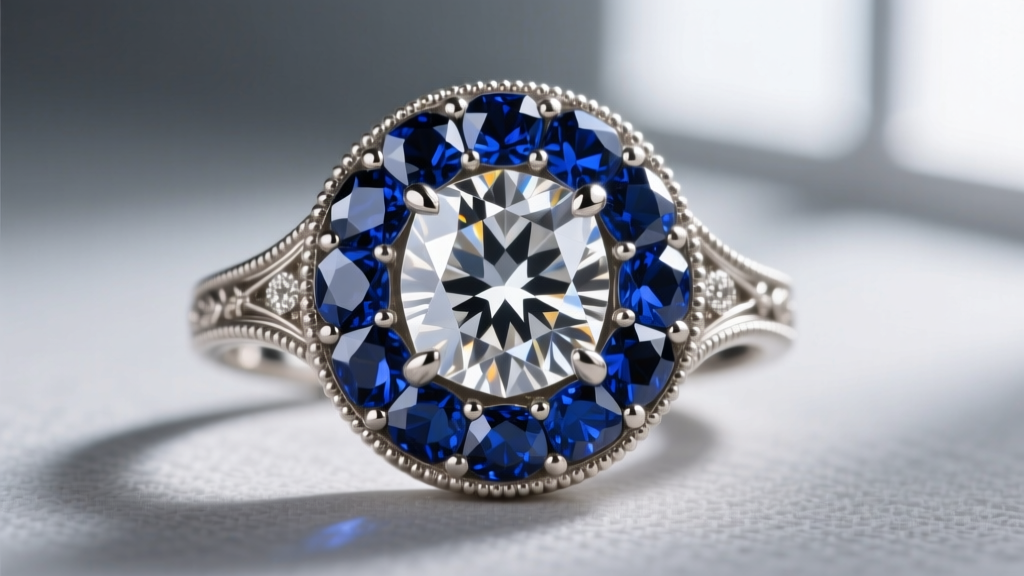
If you examine a purported 1920s necklace under a 10x loupe and observe modern Round Brilliant cuts with large tables and sharp, pointed culets, the stones are either modern replacements or the entire piece is a reproduction. According to the Gemological Institute of America (GIA), the transition from OEC to the modern brilliant cut was a gradual process that did not fully standardize until the late 1930s and 1940s.
| Cut Style | Facet Count | Table Size | Culet | Era Accuracy |
|---|---|---|---|---|
| Old European Cut (OEC) | 58 | Small (<53%) | Open / Flat | Authentic 1920s-1930s |
| Single Cut (Melee) | 17 or 18 | Variable | Open / Flat | Authentic Deco Melee |
| Modern Round Brilliant | 57 or 58 | Large (54-60%) | Pointed | Red Flag / Replacement |
| Transitional Cut | 58 | Medium | Variable | Late 1930s / 1940s |
The Calibre Stone Factor: Art Deco designs heavily featured calibre-cut sapphires, rubies, and emeralds custom-fitted into geometric channels. A crucial E-E-A-T insight for collectors: many authentic 1920s pieces utilized synthetic rubies and sapphires created via the Verneuil flame-fusion process. In the 1920s, synthetic stones were celebrated as triumphs of modern science and were highly prized. Finding a synthetic calibre sapphire in a platinum Deco necklace does not diminish its authenticity; in fact, it often corroborates its 1920s origins.
Structural Integrity: Inspecting Filigree and Milgrain
The most telling signature of an authentic art deco diamond necklace lies in its milgrain and filigree work. Milgrain is the delicate beaded edging applied to the borders of metal settings. In genuine period pieces, milgrain was applied by hand using a knurling tool. Under magnification, authentic milgrain will show microscopic irregularities, slight variations in bead size, and occasional tool slips.
Conversely, modern reproductions are typically cast from CAD-designed wax models. Cast milgrain appears perfectly uniform, overly rounded, and lacks the crisp, sharp edges of hand-tooled metal. Similarly, authentic Deco filigree was largely die-struck—a process where sheets of platinum were stamped under immense pressure using hardened steel dies. This results in metal that is incredibly dense, sharp, and possesses a slight concave curvature on the reverse side. Cast filigree will appear soft, thick, and porous, with rounded edges that lack the architectural tension of die-struck platinum.
Pricing Tiers and Market Valuation
Valuing these necklaces requires parsing out carat weight, provenance, and condition. The market for antique jewelry has matured significantly, with collectors prioritizing original condition over heavily restored pieces.
- Entry-Level ($4,000 - $12,000): Smaller pendant necklaces or delicate sautoirs featuring 1.00 to 3.00 total carat weight (TCW) of Single Cut melee and OEC diamonds, often with minor filigree work and white gold or lighter platinum settings.
- Mid-Tier Collector ($15,000 - $45,000): Substantial geometric bib necklaces or long sautoirs featuring 5.00 to 15.00 TCW, prominent OEC center stones, intricate die-struck filigree, and natural or high-quality synthetic calibre accents.
- Museum / High Jewelry ($60,000 - $250,000+): Masterworks by houses like Cartier, Boucheron, or Mauboussin. These feature exceptional diamond clarity, complex convertible mechanisms (e.g., a necklace that separates into two bracelets), and impeccable provenance documented in auction archives.
Common Reproductions and Red Flags
When evaluating an art deco diamond necklace, be highly skeptical of laser welding. While laser welding is a fantastic modern repair technique, it leaves a distinct, perfectly round, shiny micro-scar that disrupts the century-old patina of the platinum. A necklace riddled with laser welds has likely suffered severe structural failure or heavy alteration.
Another major red flag is the presence of modern spring-ring clasps or lightweight lobster claws. Authentic Deco necklaces utilized sturdy platinum barrel clasps, dog-leash clips, or box clasps with intricate safety chains. The Lang Antiques' Antique Jewelry University notes that clasp hardware is often the first component to fail or be replaced; however, a modern clasp on a purported 1920s piece should immediately trigger a deeper forensic inspection of the chain links and jump rings.
Sourcing, Certification, and Provenance
Acquiring a high-value art deco diamond necklace should always be contingent upon independent gemological verification. While the GIA does not grade antique diamonds using the same strict modern cut grades (as OEC proportions fall outside modern ideal parameters), they will identify the cut style, confirm natural vs. synthetic origin of calibre stones, and verify the metal composition. Always request a GIA or AGS report for any center stone over 0.75 carats.
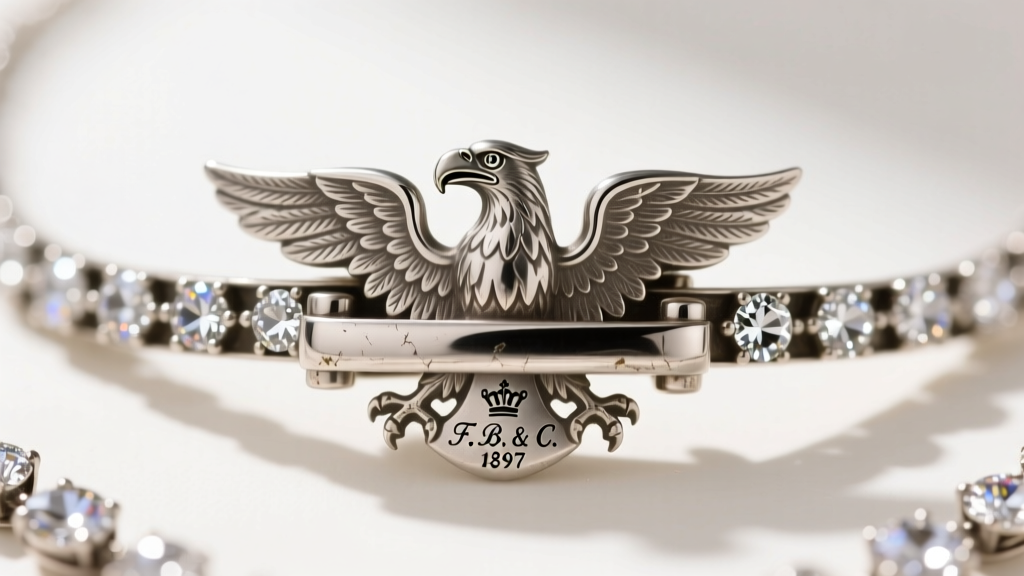
Finally, examine the hallmarks. French Art Deco pieces will often bear the eagle head mark (indicating 18k gold) or the dog head mark (indicating platinum), alongside a maker's mark stamped in a lozenge shape. American pieces may lack formal metal hallmarks but will often feature the stamped trademark of the manufacturing jeweler inside the clasp housing. Cross-referencing these maker marks with historical archives is the ultimate step in securing a historically significant and financially sound investment.


