The Anatomy of an Art Deco Lariat Necklace: A Technical Guide
Explore the technical anatomy of the art deco lariat necklace. Learn about metal alloys, gemstone cuts, drop ratios, and construction mechanics.

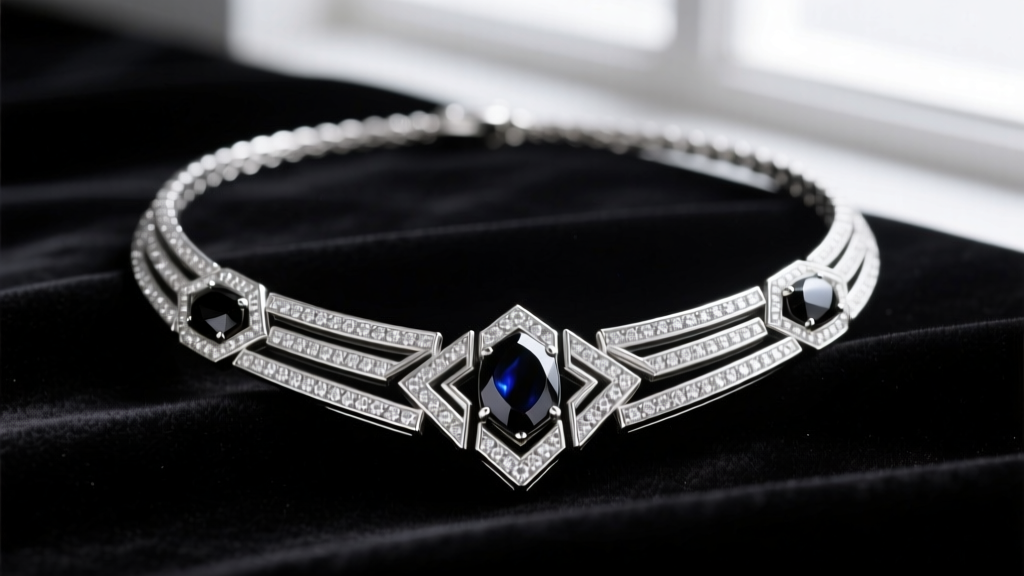
The Engineering of 1920s Elegance
The art deco lariat necklace represents a pinnacle of early 20th-century jewelry engineering. Unlike standard Y-necklaces that rely on a fixed soldered junction, the true lariat features a dynamic drop mechanism, allowing the terminal pendant to slide through a geometric receiver. This design was not merely an aesthetic choice; it was a kinetic response to the fluid, high-energy movement of the 1920s flapper era. For collectors, bench jewelers, and serious enthusiasts, understanding the technical anatomy of these pieces is critical for authentication, valuation, and proper restoration.
In this deep dive, we deconstruct the metallurgical foundations, gemstone calibration mechanics, and structural kinematics that define an authentic art deco lariat necklace. Whether you are evaluating a vintage piece at auction or commissioning a bespoke reproduction, these technical specifications will serve as your definitive framework.
Metallurgical Foundations: Platinum vs. White Gold
The structural integrity of an art deco lariat necklace relies heavily on the tensile strength and malleability of its base metal. During the height of the Art Deco period (1920–1935), platinum was the undisputed standard.
The 900Pt vs. 950Pt Alloy Distinction
Vintage pieces were predominantly crafted using 900 parts per thousand platinum, alloyed with 100 parts iridium (900Pt/Ir). This specific alloy provided a lower melting point (approx. 1,768°C) and superior malleability, allowing master jewelers to execute the microscopic millegrain detailing and delicate pierced openwork (ajouré) that define the era. Modern reproductions often utilize 950Pt alloyed with ruthenium, which is significantly harder and more brittle, making it unsuitable for the ultra-fine bezel settings required in original Deco designs.
Conversely, 18k white gold was rarely used for high-end lariats in the 1920s. When it was, it required heavy rhodium plating to mimic platinum's bright white luster. Under 10x loupe magnification, vintage white gold lariats will often show microscopic flaking or wear at the high-friction slide points, revealing the pale yellow alloy beneath—a key indicator for appraisers.
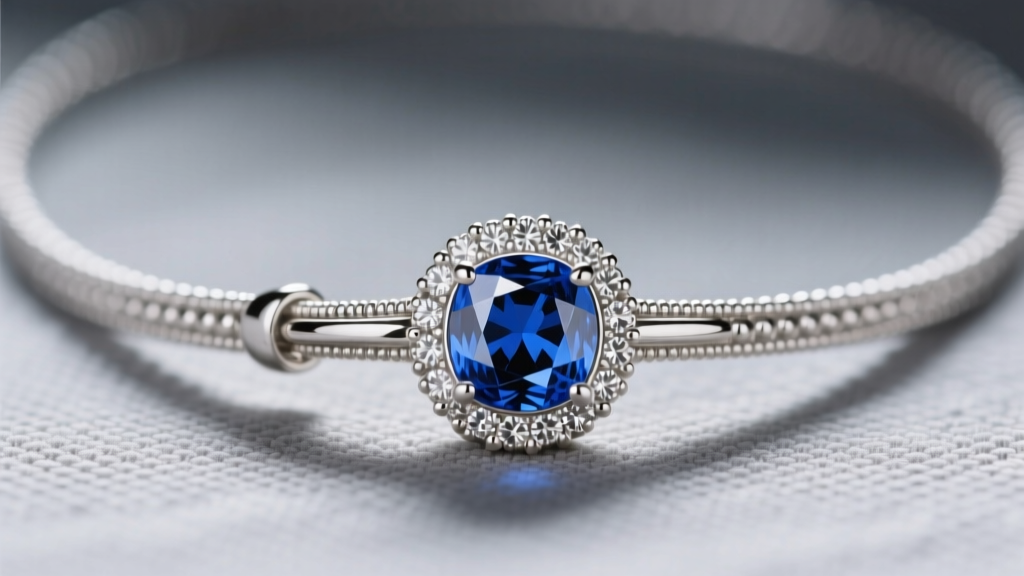
Gemstone Calibration and Friction-Set Mechanics
The terminal drop of an art deco lariat necklace is typically a rigid, geometric baton or tassel, heavily pavé-set or channel-set with precision-cut stones. The engineering challenge lies in the calibré technique.
The Calibré Cut Tolerance
According to historical archives at the Victoria and Albert Museum Jewelry Collection, calibré stones (rubies, sapphires, or onyx) were custom-cut to fit seamlessly into a continuous channel without any visible metal between them. The tolerance for these cuts was often within 0.1 millimeters. If a stone is replaced during restoration using modern laser-cutting, the slight beveling of the girdle can compromise the friction fit, leading to stone loss during the kinetic movement of the lariat drop.
Diamond Proportions in the Drop
The diamonds used in the lariat's receiver and collar were almost exclusively Old European or early transitional cuts. As detailed by the Gemological Institute of America (GIA), these stones feature smaller tables (typically 53% or less), high crowns, and large culets. When evaluating a piece, finding modern round brilliant cuts (with 57-58 facets and large tables) in the primary structural channels is an immediate red flag indicating a later alteration or a modern reproduction.
Structural Vulnerability by Gemstone Cut
| Gemstone Cut | Primary Location in Lariat | Structural Vulnerability | Restoration Risk |
|---|---|---|---|
| Baguette | Collar links, receiver edges | High (exposed corners) | Chipping during prong tightening |
| Calibré Square | Terminal drop channels | Medium (girdle abrasion) | Stones popping out if channel bends |
| Trapezoid | Geometric slide shoulders | Low (protected by bezels) | Difficulty sourcing exact angles |
| Rose Cut | Pavé backgrounds, tassels | Low (flat bases) | Foil backing degradation |
The Physics of the Drop: Kinematics and Length Ratios
The defining feature of the art deco lariat necklace is its sliding mechanism. However, the physics governing this movement require precise weight distribution and dimensional ratios to function correctly without damaging the chain.
The Slide Receiver Tolerances
The receiver (the geometric motif through which the chain passes) must accommodate the chain while preventing the terminal drop from slipping through entirely. In authentic 1920s pieces, the interior diameter of the receiver loop is engineered to be exactly 0.2mm to 0.4mm larger than the chain's outer width. If the gap is too large, the rigid drop will pull through under the weight of movement. If the gap is too tight, the friction will wear down the chain links, leading to catastrophic tensile failure.
Weight Distribution and the 'Y' Ratio
A properly balanced lariat requires a specific weight ratio between the collar and the drop. The terminal pendant must weigh at least 15% to 20% more than the equivalent length of the collar chain. This differential ensures gravity keeps the drop extended vertically. If a modern jeweler replaces the original heavy platinum drop with a lighter hollow-cast or silver alternative, the necklace will fail to drape correctly, constantly sliding off-center and requiring manual adjustment by the wearer.
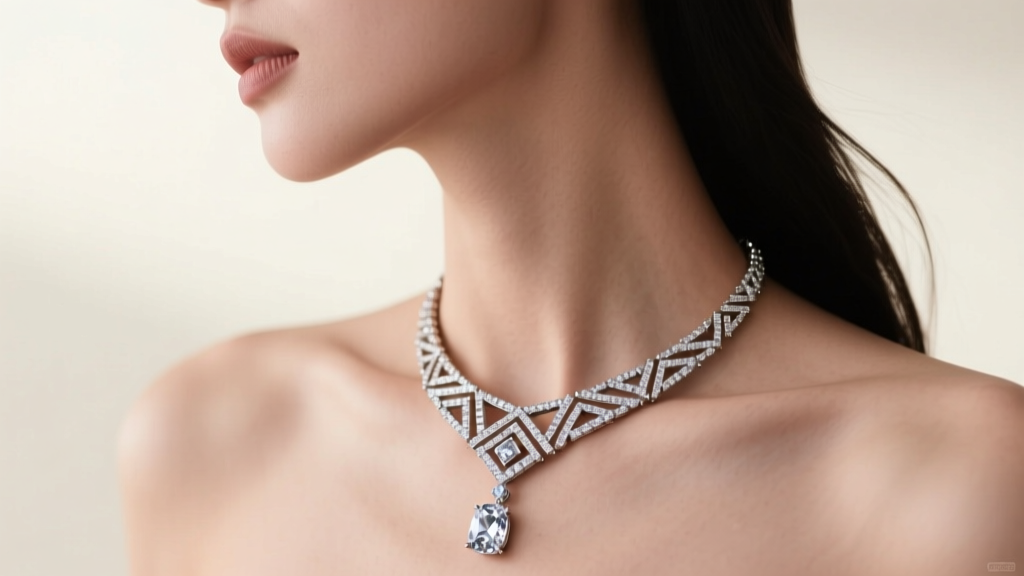
Authentication: Spotting the Hallmarks of Time
With the resurgence of 1920s aesthetics in the 2020s, the market is flooded with high-quality reproductions. Differentiating a genuine art deco lariat necklace from a modern homage requires looking beyond surface-level design into the microscopic evidence of age and manufacturing techniques.
Chain Link Morphology
Vintage lariats predominantly utilized fine cable chains or early wheat (spiga) chains drawn by hand or early mechanical dies. These links often exhibit slight asymmetries and microscopic soldering seams at the joints. Modern laser-welded chains are perfectly uniform and lack the subtle work-hardening marks visible under a gemological microscope.
Blacklight and Synthetic Detection
During the Art Deco period, synthetic rubies and sapphires produced via the Verneuil flame-fusion process were highly prized and widely used in calibré channels. According to GIA News and Research, these early synthetics often exhibit curved striae and gas bubbles that are invisible to the naked eye but detectable under magnification. Furthermore, some period-correct synthetic rubies exhibit distinct fluorescence under long-wave UV light. Paradoxically, finding flawless, natural, unheated sapphires in a geometric channel setting might indicate a modern piece, as 1920s jewelers preferred the uniform color saturation of synthetics for strict geometric designs.
Conservation and Wearability Protocols
Owning an authentic art deco lariat necklace requires strict adherence to conservation protocols. The sliding mechanism is a high-friction zone. Never apply ultrasonic cleaning to the receiver loop, as the high-frequency vibrations can loosen the fragile friction-set calibré stones. Instead, use a soft horsehair brush and a mild, non-ionic surfactant. When storing, the necklace must be laid flat or hung from a padded form; coiling the chain can introduce micro-kinks that compromise the platinum's crystalline structure, eventually leading to link snapping under the dynamic load of the sliding drop.


