The Atlantis Necklace: Metallurgy, Gem Inlay & Sacred Geometry
Explore the technical craftsmanship of the Atlantis necklace. We analyze 18k gold casting, gemstone inlay tension, and sacred geometry ratios.

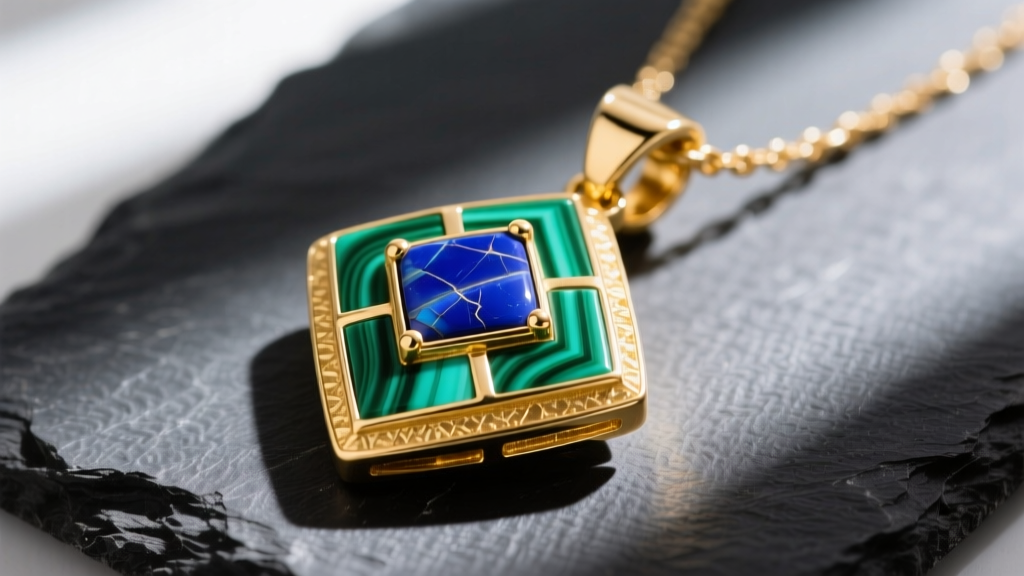
The Anatomy of an Atlantis Pendant Necklace
The Atlantis necklace is far more than a simple esoteric trinket; it is a masterclass in precision lapidary work and metallurgical engineering. Originally derived from the 19th-century "Atlantis Ring"—a piece steeped in occult history and later popularized by Edgar Cayce’s metaphysical readings—the modern Atlantis pendant translates complex sacred geometry into a wearable format. However, transitioning a rigid, structural ring design into a pendant that hangs flush against the sternum introduces severe engineering challenges. The piece must balance significant carat weight, manage the differential hardness of inlaid gemstones, and maintain the exact harmonic ratios of the Luxor wave pattern. For jewelry manufacturers and serious collectors, understanding the technical specifications of a high-tier Atlantis necklace is critical to distinguishing master craftsmanship from mass-produced costume jewelry.
Sacred Geometry and the Luxor Wave
At the core of the Atlantis pendant is the "Luxor Wave," a geometric pattern based on the Vesica Piscis and specific harmonic wave forms. In a master-crafted piece, the angles of the gold dividers separating the gemstone inlays are not arbitrary. They are typically cut at precise 18-degree and 36-degree increments to mimic the geometric proportions found in the Great Pyramid. From a manufacturing standpoint, maintaining these sharp, microscopic angles during the casting and polishing phases requires advanced CAD modeling and high-resolution 3D wax printing. If the angles are rounded during the final buffing stage, the structural integrity of the esoteric design is visually compromised.
Metallurgical Requirements: Casting the 18k Gold Chassis
The chassis of an authentic, high-end Atlantis necklace is almost exclusively cast in 18-karat yellow gold. While 14k gold is harder and cheaper, it lacks the deep, rich yellow hue required to provide adequate visual contrast against the deep blue lapis lazuli and vibrant green malachite. More importantly, the specific alloy composition of the 18k gold must be tightly controlled. A standard 18k yellow gold alloy consists of 75% pure gold, 12.5% silver, and 12.5% copper. This specific ratio yields a Vickers hardness (HV) of approximately 120-130, which is the absolute minimum threshold required to hold tension-set gemstone inlays without the gold walls warping under daily wear.
Casting a piece with such intricate, shallow channels requires the use of phosphate-bonded investment powders rather than standard gypsum-bonded investments. The flask must be burned out at precisely 730°C and cast using a centrifugal or vacuum-assisted casting machine to ensure the molten gold fills the microscopic Luxor wave dividers without porosity. Any porosity in the gold channels will lead to structural failure when the lapidary applies pressure to seat the stones.
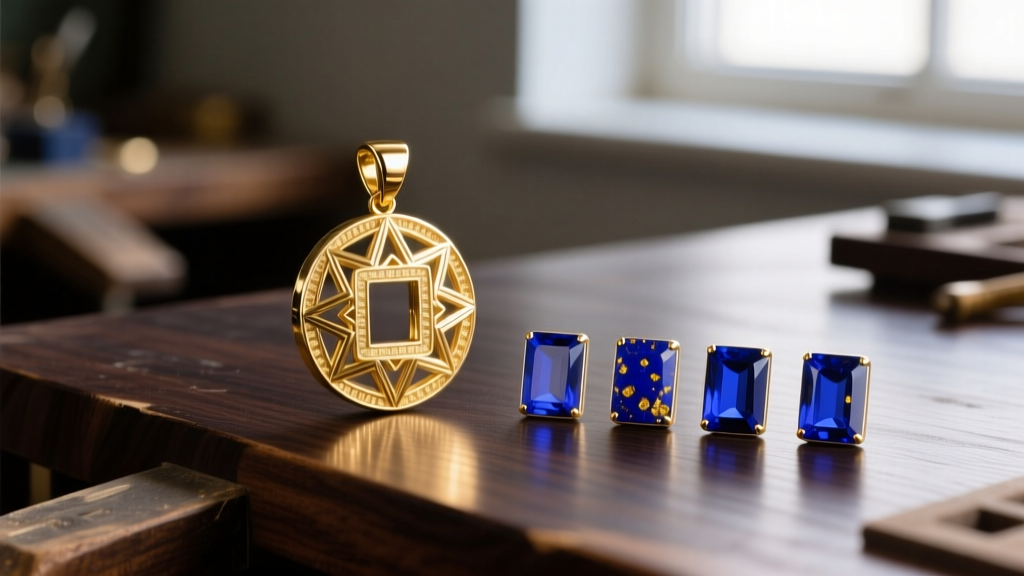
Lapidary Precision: Sourcing and Cutting the Inlay Stones
The true test of an Atlantis necklace lies in its gemstone inlays. The classic configuration utilizes three distinct materials: Lapis Lazuli, Malachite, and Turquoise. Sourcing and cutting these stones to fit flush within a 1.5mm gold channel requires exceptional lapidary skill, primarily due to their varying positions on the Mohs scale of mineral hardness.
- Lapis Lazuli (Mohs 5-6): High-tier pendants exclusively use untreated, deep-blue Afghan lapis from the Sar-e-Sang mines. The stone must be cut with diamond-tipped lapidary saws to ensure perfectly square edges. Any microscopic chipping on the corners will result in visible gaps once seated in the gold channel.
- Malachite (Mohs 3.5-4): Sourced primarily from the Congo, malachite is notoriously soft, porous, and heat-sensitive. Cutting malachite to the exact micron-level tolerance required for a flush inlay is incredibly difficult. The friction from standard polishing wheels can easily burn or fracture the stone.
- Turquoise (Mohs 5-6): Only stabilized or naturally hard Persian and Sleeping Beauty turquoise is suitable. Chalky, untreated turquoise will absorb skin oils and epoxy resins during the setting process, permanently altering its color matrix.
According to the Gemological Institute of America (GIA), the presence of calcite or excessive pyrite in lower-grade lapis lazuli creates uneven wear patterns. When set flush against gold, the softer calcite veins will wear down faster than the gold, creating an uneven, concave surface over time. Therefore, master jewelers reject any lapis slab that shows visible calcite banding for use in precision inlay work.
Tension Setting vs. Epoxy: How the Inlay Survives
Historically, Atlantis rings and pendants relied on pure friction and tension to hold the stones in place. The gold channels are undercut slightly, and the stones are snapped into place. However, because malachite has a Mohs hardness of just 3.5, the pressure required to snap a stone into an 18k gold tension channel will often shatter the malachite. As detailed in the GIA Malachite Profile, the stone's perfect cleavage and brittle tenacity make it highly susceptible to pressure fractures.
To solve this, modern master jewelers utilize a hybrid approach. The harder stones (lapis and turquoise) are tension-set using a burnishing tool to push the 18k gold lips over the edges of the stone. The softer malachite, however, is seated using a specialized, optically clear, aerospace-grade epoxy resin. This resin cures without generating exothermic heat (which would damage the malachite) and provides a flexible buffer that absorbs shock if the pendant is dropped against a hard surface.
Chain Selection and Weight Distribution
A solid 18k gold Atlantis pendant with full gemstone inlays is a heavy piece of jewelry, typically weighing between 14 and 22 grams. Suspending this weight requires a chain with high tensile strength and a robust clasp mechanism. The most common mistake consumers make is pairing a heavy esoteric pendant with a delicate cable or snake chain, leading to inevitable chain failure and loss of the pendant.
| Chain Type | Recommended Thickness | Tensile Suitability | Notes for Atlantis Pendants |
|---|---|---|---|
| Wheat (Spiga) | 2.0mm - 2.5mm | Excellent | Woven links distribute weight evenly; highly resistant to kinking and snapping under a 20g load. |
| Solid Rope | 2.5mm - 3.0mm | Superior | The twisted structure provides immense tensile strength and complements the geometric angles of the pendant. |
| Curb / Cuban | 2.5mm+ | Good | Very strong, but the flat links can catch on the pendant bail, causing premature wear on the bail hole. |
| Snake | Any | Poor | Highly prone to kinking and snapping when subjected to the continuous pendulum motion of a heavy pendant. |
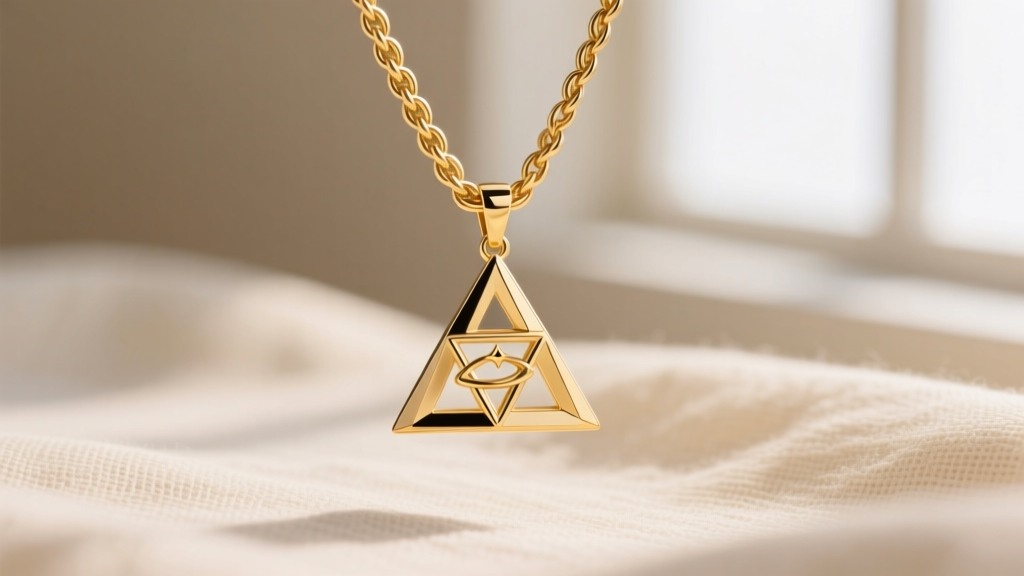
Furthermore, the bail (the loop connecting the pendant to the chain) must be cast as an integral part of the chassis or soldered using high-temperature laser welding. A standard jump ring soldered with low-temperature paste solder will eventually fatigue and open under the dynamic stress of a 20-gram pendant swinging against the chest.
Authenticating High-Tier Atlantis Necklaces
The market is flooded with counterfeit Atlantis necklaces, often manufactured in overseas mass-production facilities using base metals and dyed stones. When evaluating a piece, apply the following technical checklist to verify authenticity and craftsmanship quality:
- Weight Verification: A genuine 18k gold pendant of standard dimensions (approx. 35mm x 20mm) should weigh no less than 12 grams. If the piece feels suspiciously light, it is likely gold-plated brass or silver.
- Stone Matrix Analysis: Inspect the lapis lazuli under a 10x jeweler's loupe. Authentic Afghan lapis will show microscopic pyrite inclusions (gold flecks) that are randomly distributed. Dyed howlite or synthetic lapis will lack these natural inclusions or feature painted-on metallic flecks that sit on the surface.
- Channel Flushness: Run your fingernail lightly across the surface where the gold meets the gemstones. In a master-crafted piece, the transition should be perfectly seamless. If you feel a distinct "lip" or ridge, the stones were poorly calibrated, and the gold was merely pushed over the edges to hide the gap.
- Clasp Hallmarks: According to the World Gold Council, legitimate 18k gold jewelry must bear a recognized hallmark (such as "750" or "18k") alongside the manufacturer's trademark. Ensure the hallmark is stamped cleanly inside the clasp, not merely laser-etched on the surface.
Investing in an Atlantis necklace is an investment in both historical esotericism and high-level jewelry manufacturing. By understanding the metallurgical constraints of 18k gold, the lapidary challenges of mixed-hardness inlays, and the physics of chain tension, collectors can confidently acquire pieces that will endure both physically and aesthetically for generations.


