14kt Italy Necklace Buying Guide: What to Look For in 2026
Discover how to authenticate, evaluate, and buy a genuine 14kt Italy necklace. Learn about Italian hallmarks, chain styles, and solid vs. hollow gold.

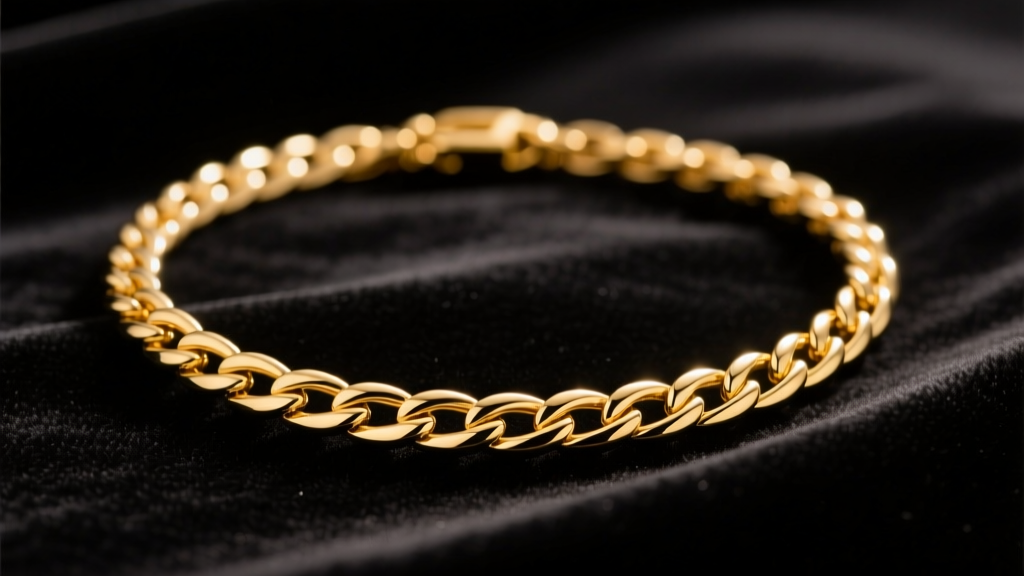
The Allure of Italian Gold Craftsmanship
When shopping for fine jewelry, the stamp "14kt Italy" carries a specific weight in the market. Italy has been the global epicenter of gold chain manufacturing for decades, with cities like Arezzo, Vicenza, and Alessandria serving as the heartlands of precision jewelry engineering. A genuine 14kt Italy necklace represents a marriage of 58.5% pure gold alloyed for optimal durability, and centuries-old manufacturing techniques refined by modern CNC machining and laser welding. However, as the secondary market and overseas e-commerce platforms flood with counterfeit stamps in 2026, knowing how to authenticate and evaluate these pieces is no longer optional—it is essential for protecting your investment.
This comprehensive buying guide breaks down the metallurgical specifics, hallmark decoding, and structural integrity checks you must perform before purchasing an Italian gold chain.
Decoding the Hallmarks: How to Authenticate a 14kt Italy Necklace
The FTC Jewelry Guides mandate strict karatage disclosures in the US, but Italian gold jewelry operates under a parallel, highly regulated European assay system. A genuine piece will rarely just say "14kt Italy." Instead, you must look for a triad of microscopic stamps, usually located on the clasp tongue or the jump ring.
- The Millesimal Mark (585): While "14K" or "14KT" is common for export to the US, authentic Italian domestic and high-grade export pieces will feature the number 585, denoting 58.5% pure gold content.
- The Maker's Mark (Il Marchio del Fabbricante): This is the ultimate proof of Italian origin. It consists of a star polygon, a unique registration number, and a two-letter province code. For example, 1234 AR indicates a registered manufacturer in Arezzo, while 567 VI points to Vicenza.
- The Assay Office Mark: A provincial seal that verifies the local chamber of commerce has tested and approved the alloy's purity.
Pro Tip: Use a 10x jeweler's loupe. Counterfeit chains often feature shallow, poorly struck "14kt Italy" text stamps, whereas genuine Italian maker's marks are deeply and crisply laser-engraved or struck into the metal.
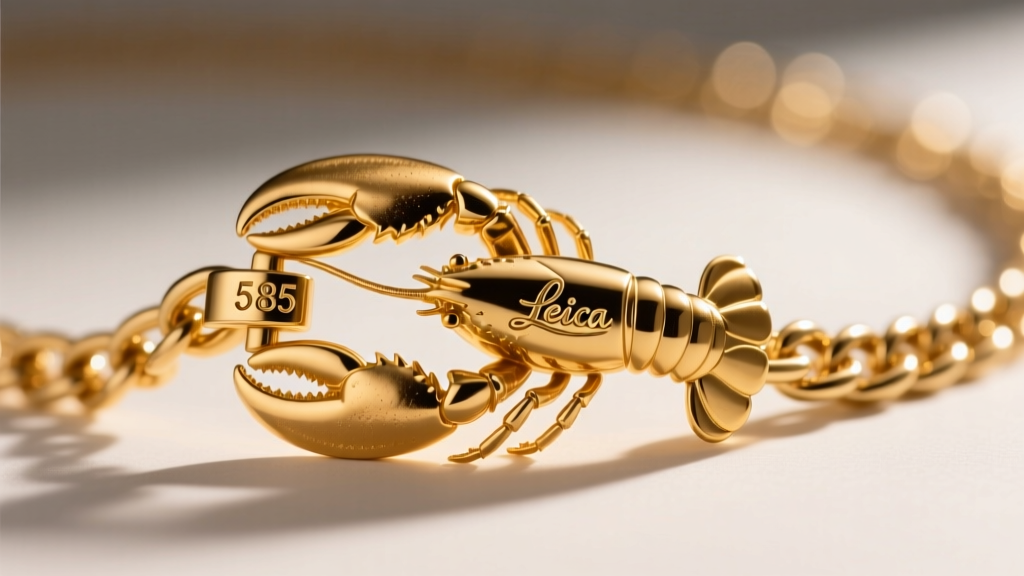
Solid vs. Hollow: The Weight and Durability Factor
One of the most common pitfalls when buying a 14kt Italy necklace is assuming that visual thickness equals structural integrity. Italian manufacturers pioneered the electroforming and hollow-tube drawing techniques that allow for massive-looking chains at a fraction of the gold weight. While this makes luxury accessible, it drastically alters the chain's lifespan.
| Construction Type | Manufacturing Process | Weight (20" 3mm Rope) | Durability & Repairability |
|---|---|---|---|
| Solid | Drawn wire, tightly woven/soldered | 11.5 - 14.0 grams | Exceptional. Can be easily soldered if broken. |
| Semi-Hollow | Thin gold sheet wrapped around a base core, then etched | 6.0 - 8.5 grams | Moderate. Resists light pulling but dents under pressure. |
| Hollow | Electroformed over a wax/resin core, core is melted out | 2.5 - 4.0 grams | Poor. Dents permanently; nearly impossible to solder. |
According to the Gemological Institute of America (GIA), hollow gold chains are highly susceptible to crushing. If you sleep in a hollow 14kt Italian Figaro chain and roll over it, the links will collapse inward. Always ask the seller for the exact gram weight and compare it against standard solid chain weight charts before purchasing.
Popular Italian Chain Styles and Their Best Uses
Italian factories produce dozens of chain profiles, but four dominate the market due to their distinct light-refraction properties and tensile strengths.
Figaro and Rope Chains
The Figaro chain, characterized by a pattern of three short links followed by one elongated link, is an Italian staple. It lies flat and offers a vintage, masculine aesthetic. The Rope chain consists of twisted links that mimic a woven rope. Because the facets hit light from multiple angles, a 14kt Italian rope chain offers the highest "sparkle" factor of any standard chain, making it ideal for suspending diamond pendants.
Franco and Box Chains
For pure durability, the Franco chain is unmatched. Its V-shaped, interlocking links create a smooth, four-sided cylinder that is virtually kink-proof. Box chains, featuring square links connected at right angles, offer a modern, geometric look. However, thinner box chains (under 1.5mm) are prone to kinking and snapping if bent at sharp angles.
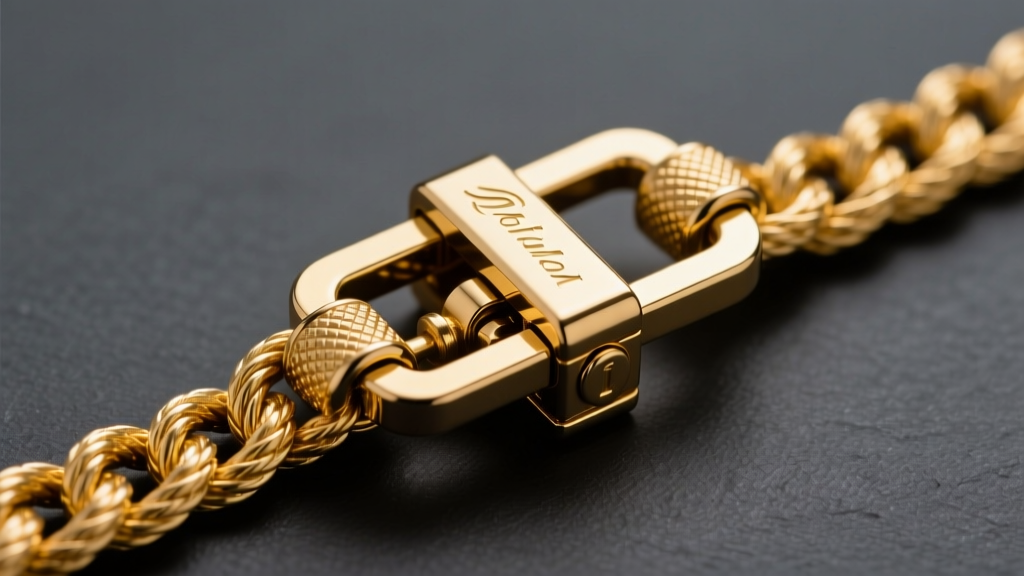
Clasp Mechanics: The Weak Point of Any Chain
A 14kt Italy necklace is only as strong as its clasp. Italian manufacturers typically utilize three types of clasps, each suited for different chain weights:
- Spring Ring: Found on lightweight chains (under 3 grams). These are prone to breaking and difficult to operate with one hand.
- Lobster Claw: The industry standard for medium-weight chains (4 to 15 grams). A genuine Italian lobster clasp will feature a solid, non-hollow lever and a robust internal spring.
- Box Clasp with Figure-8 Safety: Mandatory for heavy chains (15+ grams). The box mechanism locks the tongue in place, while the external figure-8 wire acts as a secondary fail-safe if the primary latch fails.
Expert Insight: When inspecting a lobster clasp on a supposed Italian chain, check the jump ring connecting the clasp to the chain. Authentic high-end Italian chains will feature a soldered (closed) jump ring on the clasp end to prevent the gold from pulling apart under tension.
Pricing Framework: What Should You Actually Pay?
To avoid overpaying, you must understand the pricing matrix for Italian gold. The price of a 14kt Italy necklace is not arbitrary; it is a calculated sum of the raw material and the manufacturing premium. As tracked by the World Gold Council, gold spot prices fluctuate daily, but the formula remains constant.
The Formula: (Chain Weight in Grams × 14k Melt Value per Gram) + Manufacturing Premium.
For standard machine-made Italian chains (like a basic cable or Figaro), the manufacturing premium should range between 20% and 45% over the melt value. For complex, hand-finished, or diamond-cut chains (like a multi-strand rope or Byzantine), premiums can legally and fairly reach 60% to 100%. If a retailer is charging a 300% premium for a basic hollow chain, you are paying for the brand name, not the Italian craftsmanship.
Final Verdict: Investing in Authentic Italian Gold
A genuine 14kt Italy necklace is a masterclass in metallurgical precision and timeless style. By demanding to see the 585 and provincial maker's marks, verifying the gram weight to ensure you aren't buying fragile hollow gold, and selecting the right clasp for the chain's tensile load, you secure a piece of jewelry that will outlast fleeting trends. Approach your purchase with a loupe in hand and a calculator in your pocket, and you will effortlessly navigate the market like a seasoned jeweler.


