The Beginner’s Guide to Buying an Authentic Murano Vetro Necklace
Discover how to identify, style, and care for an authentic Murano vetro necklace. Learn about Millefiori, Sommerso, and pricing in this beginner guide.

What Exactly is a Murano Vetro Necklace?
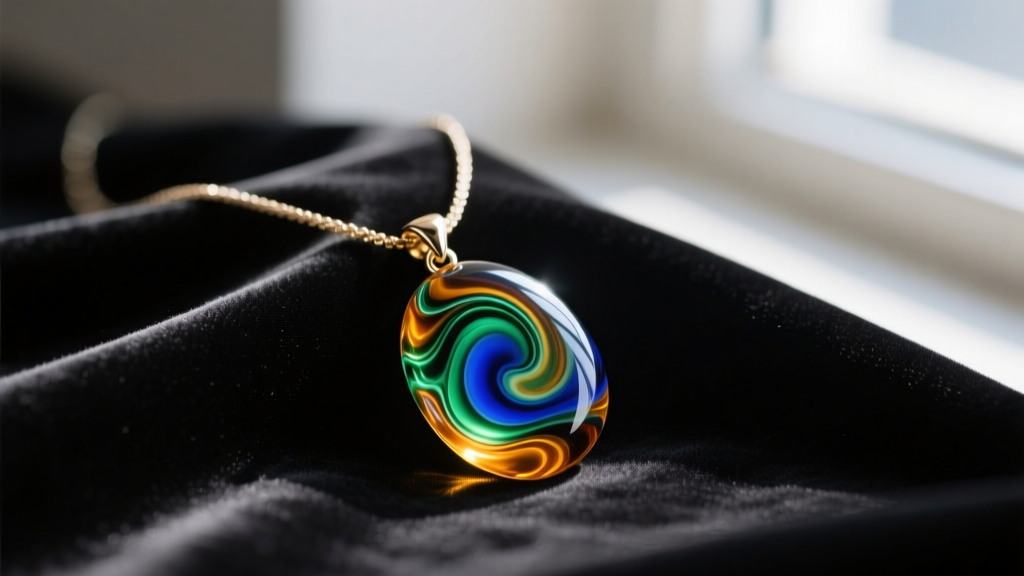
When you begin exploring artisan jewelry, few materials captivate the imagination quite like Italian glass. The term vetro simply translates to "glass" in Italian, but when paired with the legendary island of Murano, it represents centuries of unparalleled craftsmanship. A Murano vetro necklace is not merely a fashion accessory; it is a wearable piece of Venetian history, crafted by master glassmakers (maestri vetrai) who have guarded their techniques for generations.
For beginners, navigating the market can be overwhelming due to the influx of mass-produced imitations. To protect the heritage of this craft, the regional government of Veneto established the Vetro Artistico® Murano trademark in 1994. According to the Consorzio Promovetro Murano, only glass produced on the island of Murano using traditional methods and specific raw materials can legally bear this mark. Understanding this distinction is the first step in building an authentic collection.
4 Classic Murano Glass Techniques You Should Know
The beauty of a Murano vetro necklace lies in the specific techniques used to manipulate molten silica. Here are the four most iconic methods you will encounter when shopping for pendants and beads.
1. Millefiori (Thousand Flowers)
This is perhaps the most recognizable Murano technique. Artisans create long glass canes with intricate cross-sectional designs, often resembling flowers or stars. These canes (called murrine) are sliced into tiny discs and fused together over a core of clear or colored glass. A genuine Millefiori necklace pendant will feature crisp, distinct patterns that are visible from both the top and the sides of the bead.
2. Sommerso (Submerged)
Sommerso involves dipping a gather of colored glass into another pot of molten glass, usually a contrasting color or clear crystal. This creates distinct, unmixed layers that give the pendant a striking three-dimensional depth. High-end Sommerso pendants often feature up to five or six layers, with gold or silver leaf trapped between the strata.

3. Reticello (Net)
A true test of a master glassmaker's skill, Reticello involves crisscrossing fine threads of glass to create a delicate net-like pattern. The magic of this technique lies in the tiny, perfectly uniform air bubbles that become trapped in the diamond-shaped intersections of the glass threads. According to the Corning Museum of Glass, achieving this symmetry requires exact timing and temperature control, making Reticello necklaces highly prized by collectors.
4. Avventurina (Aventurine Glass)
Do not confuse this with the natural quartz mineral. Murano Avventurina is a glassmaking marvel created by introducing copper oxide into the molten glass and allowing it to cool slowly in a reduction atmosphere. This process forces microscopic copper crystals to precipitate and suspend within the glass, resulting in a deep, sparkling brown or red gemstone that mimics the glitter of gold.
Authentication: How to Spot Fake Murano Glass
Because authentic Murano vetro commands a premium price, the market is flooded with resin or factory-made glass imitations. Use this actionable checklist to verify authenticity before purchasing a necklace:
- The Trademark Seal: Look for the official "Vetro Artistico® Murano" sticker. Modern seals include a QR code and a unique alphanumeric identifier that you can scan to verify the exact furnace (fornace) that produced the piece.
- Weight and Temperature: Glass is significantly denser than plastic or resin. An authentic pendant will feel surprisingly heavy for its size and will feel distinctly cold to the touch when first held against the skin.
- Embrace Imperfections: Hand-blown and hand-shaped glass is never perfectly symmetrical. Look for slight asymmetries, minor tool marks near the bail (the loop where the chain attaches), or tiny, naturally occurring air bubbles. If a Millefiori pendant is mathematically perfect, it is likely machine-pressed.
- The Pontil Scar: While many high-end pendants are fire-polished to remove it, some beads or rustic pendants may retain a small, slightly rough pontil mark on the base where the glassmaker's iron rod was detached.
Pricing Guide: What Should You Expect to Pay?
The price of a Murano vetro necklace varies wildly based on the complexity of the technique, the size of the pendant, and the inclusion of precious metals. Below is a realistic pricing framework for authentic pieces in the current market.
| Glass Technique / Style | Typical Necklace Type | Estimated Price Range (USD) |
|---|---|---|
| Simple Millefiori Beads | Multi-bead strand necklace | $40 – $120 |
| Sommerso (2-3 layers) | Single pendant on silver chain | $90 – $250 |
| Avventurina with Gold Leaf | Statement pendant | $180 – $400 |
| Reticello / Complex Sculptural | Masterwork art pendant | $350 – $800+ |
Note: If you find a "Murano" Sommerso pendant selling for under $30, it is almost certainly mass-produced glass from overseas, not authentic Venetian craftsmanship.
Styling and Caring for Your Glass Pendant

Glass is a remarkably stable material that will not tarnish or oxidize like silver or copper. However, it requires specific care to maintain its brilliant luster and structural integrity.
The Mohs Scale and Storage
Murano glass sits at approximately 5.5 to 6.5 on the Mohs hardness scale. This means it is harder than a steel knife but softer than quartz, topaz, sapphire, and diamond. Never store your Murano vetro necklace in a communal jewelry box where it can be scratched by harder gemstones. Always keep it in a dedicated soft pouch or a lined compartment.
Cleaning Protocols
- Never use ultrasonic cleaners: The high-frequency vibrations can exploit microscopic internal stress points in the glass, causing the pendant to fracture or shatter.
- Avoid harsh chemicals: Ammonia-based glass cleaners can degrade the polish of the glass and damage the metal bail or chain.
- The Safe Method: Mix a few drops of mild, phosphate-free dish soap in lukewarm water. Gently rub the glass pendant with your fingertips or a very soft baby toothbrush. Rinse with distilled water to prevent hard water spots, and dry immediately with a clean microfiber cloth.
Final Thoughts
Investing in a Murano vetro necklace is an investment in wearable art. By understanding the distinct techniques like Sommerso and Reticello, knowing how to verify the Vetro Artistico® trademark, and caring for the glass properly, you ensure that your piece remains a vibrant, cherished heirloom. Whether you prefer the bold, colorful geometry of Millefiori or the sophisticated, subtle depths of Avventurina, authentic Murano glass offers a timeless elegance that no synthetic material can replicate.


