Big Diamond Cross Necklace: 2026 Buying Guide & Tips
Discover how to choose a big diamond cross necklace. Learn about carat weights, chain gauges, clarity grades, and 2026 pricing for lab and natural stones.

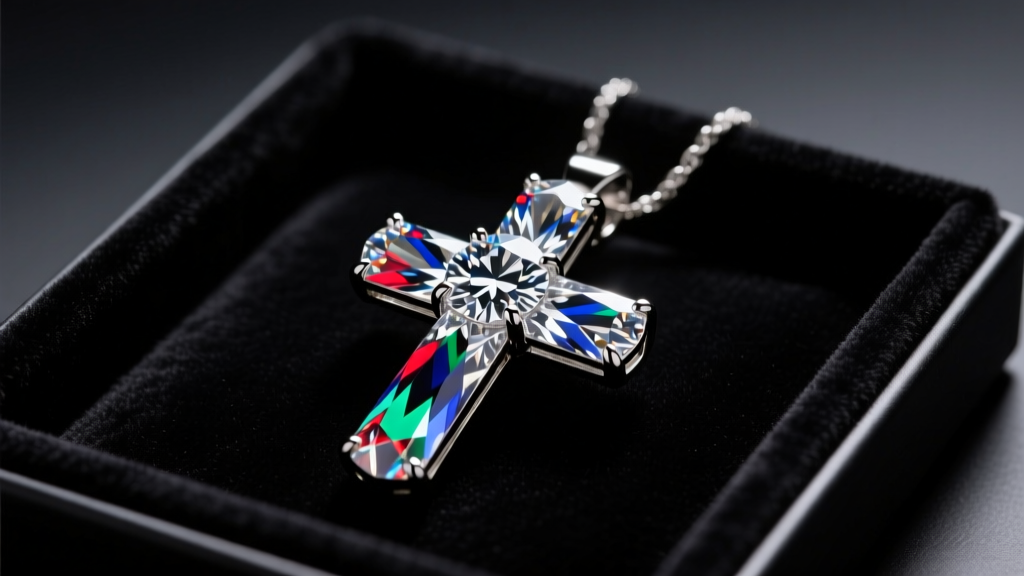
A big diamond cross necklace is more than just jewelry; it is a substantial financial investment and a bold statement of personal style. Whether you are drawn to the cultural significance, the religious symbolism, or the sheer horological flex of a heavy, ice-out pendant, purchasing a large-scale cross requires a deep understanding of jewelry engineering and diamond grading. In 2026, the market offers more options than ever, particularly with the maturation of lab-grown diamonds and advanced chain manufacturing. This guide breaks down exactly what to look for when investing in a large diamond cross pendant, ensuring your piece is visually stunning, structurally sound, and fairly priced.
Defining 'Big': Proportions and Carat Weight
In the realm of statement pendants, the term 'big' generally refers to crosses ranging from 2.5 to over 4 inches in height, with a Total Carat Weight (TCW) starting around 5 carats and extending well past 20 carats. The visual impact of the cross depends heavily on the distribution of that weight. A 10-carat cross made of 100 small melee diamonds in a pave setting will look vastly different from one constructed with 10 individual 1-carat solitaire stones. Furthermore, the physical dimensions must match the wearer's frame; a 4-inch cross can overwhelm a slender neckline but sits perfectly on a broader chest.
2026 Pricing Matrix by Size and Origin
Pricing fluctuates based on the origin of the stones and the complexity of the setting. Below is a realistic market matrix for 14k and 18k gold settings in the current landscape:
| Cross Height | Total Carat Weight (TCW) | Est. Natural Diamond Price | Est. Lab-Grown Diamond Price |
|---|---|---|---|
| 2.0 - 2.5 inches | 3.00 - 5.00 ct | $12,000 - $25,000 | $1,500 - $3,500 |
| 3.0 - 3.5 inches | 6.00 - 10.00 ct | $30,000 - $65,000 | $4,000 - $8,000 |
| 4.0+ inches | 12.00 - 20.00+ ct | $80,000 - $150,000+ | $9,000 - $18,000 |
Diamond Quality: The 4Cs for Large Stones
When dealing with high TCW pendants, you cannot apply the same grading strictness used for a 2-carat engagement ring. According to the Gemological Institute of America (GIA), diamond grading must be contextualized by the stone's purpose and size. Here is how to optimize the 4Cs for a large cross:
- Color: If setting the cross in 14k or 18k yellow gold, you can safely drop to J-K color grades without noticing warmth, saving up to 20% on natural stones. For white gold or platinum, stick to G-H color to prevent the stones from looking yellow against the bright metal.
- Clarity: For stones over 0.50ct each, avoid I1-I3 grades, as large black carbon inclusions will be visible to the naked eye. SI1 to VS2 is the sweet spot. Ensure the inclusions are white and located near the girdle where prongs can hide them.
- Cut: Do not compromise here. A poorly cut 1-carat stone will look dull and glassy, ruining the 'ice' effect. Insist on Very Good or Excellent cut grades to maximize light return.
Chain Engineering: Supporting Heavy Pendants
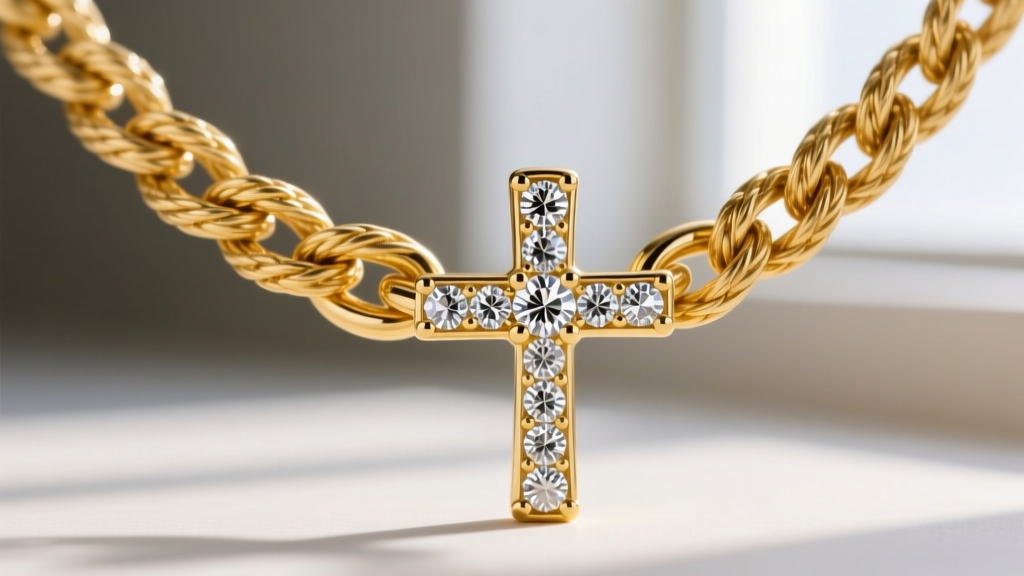
A massive diamond cross is heavy. A 10 TCW cross set in solid 14k gold can easily weigh between 20 and 35 grams. Hanging this weight on a standard 2mm chain is a recipe for disaster. The chain will stretch, the links will warp, and eventually, it will snap under the dynamic pendulum motion of daily wear.
Gauge and Link Styles
For pendants weighing over 15 grams, you need a chain with a minimum width of 5mm to 7mm. The best structural options include:
- Solid Rope Chain: The twisted links distribute weight evenly and offer immense tensile strength. Ensure it is solid, not hollow-core.
- Cuban Link: Flat, interlocking links that lay flush against the chest, providing a wide surface area that resists pulling and twisting.
- Figaro Chain: Offers a classic aesthetic with thick soldered links, though slightly less flexible than a rope chain.
Crucial Clasp Warning: Standard lobster clasps are insufficient for heavy pendants. The lever mechanism can bend under dynamic stress. Always upgrade to a Box Clasp with a Figure-8 Safety Latch or a heavy-duty magnetic clasp with a secondary locking mechanism.
The Bail: The Most Overlooked Component
The bail is the metal loop that connects the cross to the chain. In mass-market jewelry, bails are often flimsy, soldered-on loops that will warp or snap under the pendulum motion of a heavy cross. When commissioning or buying a big diamond cross, inspect the bail closely. You want a donut bail or a custom integrated jump ring forged from at least 12-gauge or 14-gauge wire. The interior diameter of the bail must also be wide enough to accommodate your 5mm+ chain without causing metal-on-metal friction that wears down the gold over time.
Gold Purity: Why 14k Often Beats 18k for Heavy Pendants
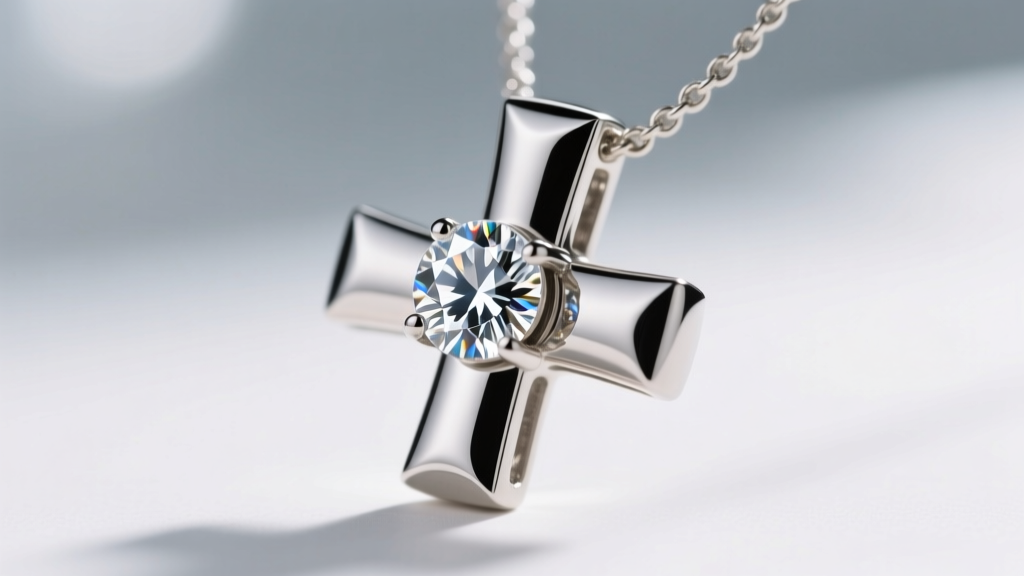
While 18k gold is prized for its rich color and purity, it is a relatively soft metal. When supporting a 25-gram diamond cross, the constant downward pull and pendulum swinging can cause 18k gold bails and chain links to stretch over time. 14k gold, alloyed with stronger metals like zinc and copper, offers superior tensile strength and scratch resistance. For oversized, heavy statement pieces worn daily, 14k white or yellow gold is structurally the smarter choice, ensuring the setting and chain maintain their integrity for decades.
Lab-Grown vs. Natural Diamonds in 2026
The debate between lab-grown and natural diamonds is particularly relevant for large statement pieces. As documented in GIA's Lab-Grown Diamond Reports, lab stones possess the exact same chemical and optical properties as mined diamonds. In 2026, lab-grown diamond prices have stabilized at a fraction of their natural counterparts, allowing buyers to achieve a massive 15-carat cross for the price of a modest 3-carat natural pendant.
Pro Tip: If you choose lab-grown for a large cross, allocate the thousands of dollars saved toward a premium, heavy-weight solid gold chain and a custom, hand-forged bail. The metalwork is what ultimately ensures the longevity of a heavy pendant.
Security Settings and Maintenance
How the diamonds are secured to the gold framework dictates how often you will need maintenance.
- Shared Prong Settings: Offers maximum light exposure and brilliance, but prongs can catch on clothing. Requires professional tightening every 12 months.
- Bezel Settings: A rim of metal surrounds each stone. While it slightly reduces sparkle, it is virtually snag-proof and offers the highest security for active wearers.
- Pave/Micro-Pave: Uses tiny beads of metal to hold small melee diamonds. High risk of stone loss if the pendant is dropped or subjected to heavy impact. Avoid pave on the outer edges of the cross where it will bump against surfaces.
Before finalizing your purchase, ensure the jeweler provides a comprehensive CAD (Computer-Aided Design) rendering if custom, or high-resolution macro photography if buying pre-made. Verify the exact gram weight of the gold, the TCW, and the specific clarity/color ranges of the stones. For ongoing care, follow the Jewelers of America guidelines for ultrasonic cleaning, ensuring no loose stones are vibrated out of their settings during the process.


