Peruvian Necklace Materials: Silver, Spondylus & Stone Properties
Discover the unique properties of authentic Peruvian necklace materials. Compare Andean silver, Spondylus shell, and chrysocolla for durability and style.

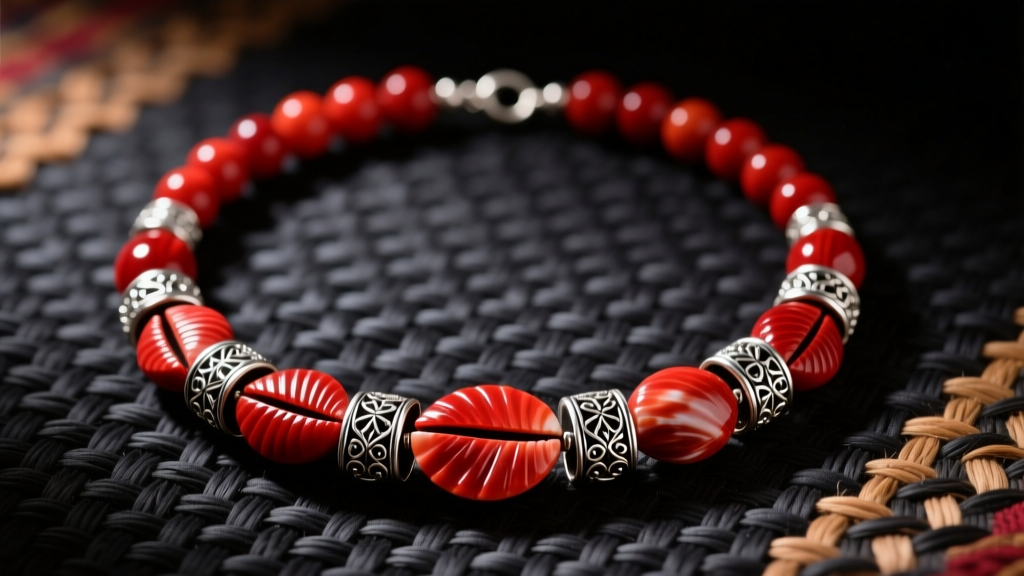
The Legacy of Andean Adornment
When collectors, stylists, and jewelry enthusiasts seek out an authentic Peruvian necklace, they are often drawn by the vibrant aesthetics and rich cultural heritage of the Andes. However, the true value of these pieces lies in their material science. From pre-Columbian metallurgy to modern lapidary techniques, Peruvian jewelry relies on a highly specific palette of organic and inorganic materials. Understanding the physical properties, durability, and chemical vulnerabilities of these materials is essential for making informed purchases and ensuring the longevity of your collection.
In 2026, the market is saturated with mass-produced tourist trinkets disguised as artisanal crafts. Distinguishing between genuine Andean silverwork, stabilized copper silicates, and dyed organic imitations requires a deep dive into material properties. This guide deconstructs the core components of traditional and contemporary Peruvian necklaces, providing actionable insights for buyers and collectors.
Organic Elements: Spondylus Shell and Huayruro Seeds
Long before the Spanish introduced European gemstones to South America, indigenous cultures revered organic materials. These elements remain foundational to authentic Peruvian necklace designs today, though their physical properties demand specific care protocols.
Spondylus (Mullu): The Red Gold of the Andes
The Spondylus shell (specifically Spondylus crassiquama) was historically valued above gold by the Moche and Inca civilizations. Composed primarily of calcium carbonate, genuine Spondylus exhibits a Mohs hardness of 3.5 to 4.5. Its natural color ranges from pale orange to deep, blood-red crimson, a result of the carotenoid pigments in the mollusk's diet.
Authentication & Failure Modes: Because gem-grade Spondylus is scarce and commands premium prices (often $15 to $40 per gram for top-tier polished beads), the tourist market is flooded with dyed howlite, dyed coral, and molded resins. To test for authenticity, examine the bead under a 10x loupe. Genuine shell will reveal a subtle, fibrous cross-lamellar structure. Dyed howlite will show dye concentrated in the natural matrix cracks, while plastics will exhibit a dead, uniform opacity. Furthermore, Spondylus is highly sensitive to acids; exposure to perfume, sweat, or citrus will etch the calcium carbonate surface, leaving permanent dull spots.
Huayruro Seeds: Botanical Amulets
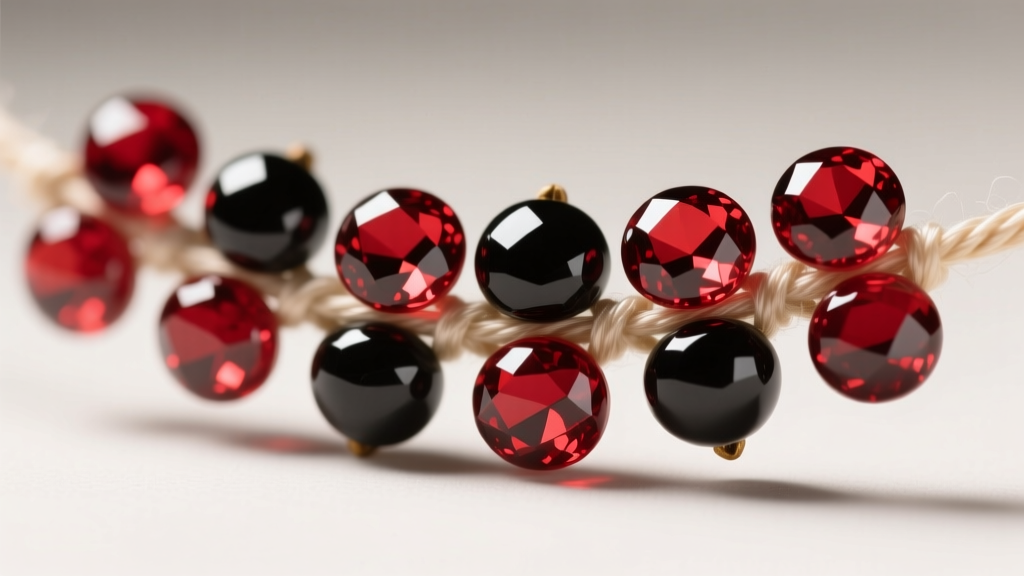
Huayruro seeds (Ormosia coccinea) are iconic in Peruvian jewelry, recognized by their striking red and black coloration. These seeds are prized not just for their beauty, but as traditional amulets for luck and protection. Structurally, they are composed of dense cellulose and lignin, giving them a surprising impact resistance.
However, huayruro seeds possess a natural, mildly toxic alkaloid coating (cytisine) that acts as an insect repellent. While safe for external wear, this organic coating breaks down when exposed to prolonged moisture and human sebum (skin oils). Over time, a huayruro necklace worn daily against the skin will lose its high-gloss finish and become matte. To preserve the luster, artisans recommend occasionally buffing the seeds with a microfiber cloth and a microscopic drop of natural jojoba oil, avoiding water-based cleaners entirely.
Andean Silverwork: Filigree, Cast Alloys, and the Alpaca Trap
Peru is one of the world's leading silver producers, and its silversmithing tradition—particularly the intricate filigree (hilación) of Catacaos and Arequipa—is globally renowned. Yet, the metallurgical terminology used in local markets can be deeply misleading.
Sterling vs. Alpaca: A Metallurgical Breakdown
Authentic Peruvian filigree requires ultra-fine silver wires, often drawn down to 0.2mm or thinner. To achieve this malleability without the wire snapping during the twisting process, master artisans prefer .950 silver (95% silver, 5% copper) over the international .925 sterling standard. The higher silver content reduces the stiffness of the alloy, allowing for the gossamer-thin spirals characteristic of Andean filigree.
Conversely, tourists are frequently sold "Alpaca Silver" or "German Silver." This is a critical material misnomer. Alpaca contains zero silver. It is an alloy of copper, zinc, and nickel. While it polishes to a bright, silvery shine, it has a high tarnish rate, lacks the specific gravity of precious metals, and is a primary culprit for contact dermatitis and green skin staining due to the copper-nickel oxidation reaction.
Expert Tip: Always look for the "950" or "925" stamp on the clasp or bail. If a vendor claims Alpaca is a "type of silver," walk away. For authoritative standards on precious metal hallmarking and alloy compositions, refer to the guidelines established by international assay offices, such as those detailed by the London Assay Office.
Lithic Centerpieces: Chrysocolla, Sodalite, and Lapis Lazuli
The Andean region is rich in copper and semi-precious silicate deposits, making stone pendants a staple of the Peruvian necklace market. However, the porosity and hardness of these stones dictate their wearability.
Chrysocolla: The Fragile Copper Silicate
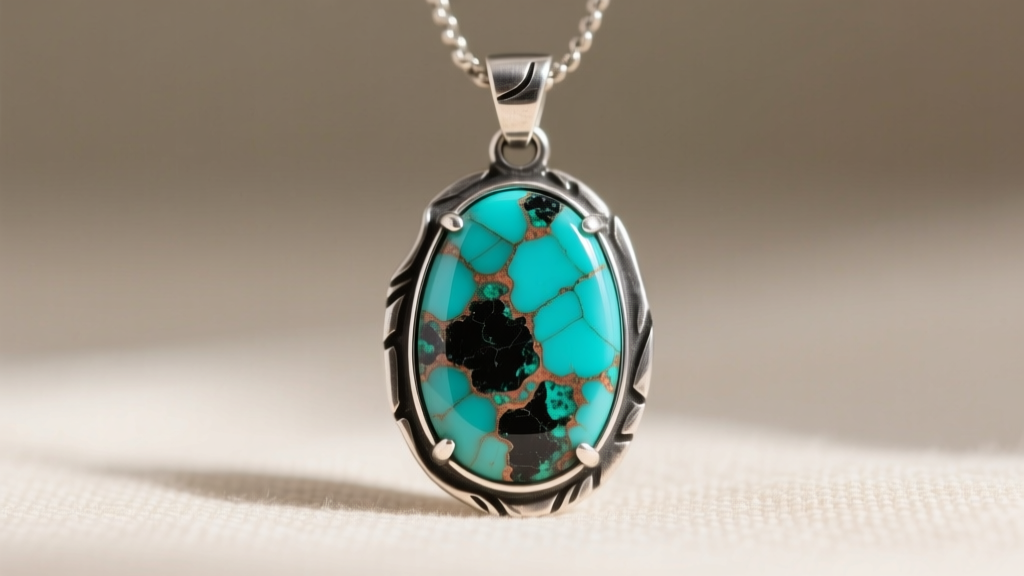
Chrysocolla is a hydrous copper phyllosilicate, famous for its mesmerizing blue-green hues. With a Mohs hardness of just 2.5 to 3.5, it is inherently too soft and fragile to survive the kinetic impacts of daily necklace wear. According to the Gemological Institute of America (GIA), natural chrysocolla is highly porous and prone to crazing (surface cracking) when exposed to temperature fluctuations.
Therefore, almost all chrysocolla used in commercial Peruvian pendants is stabilized. Artisans vacuum-impregnate the rough stone with a clear epoxy resin to bind the matrix and increase its structural integrity. When buying, ask the artisan if the stone is stabilized; if they claim it is "raw and untreated" but it has a glass-like polish and no surface pitting, they are either misinformed or misleading you. Untreated chrysocolla will absorb skin oils and darken unevenly over time.
The Sodalite vs. Lapis Lazuli Substitution
Peru mines significant quantities of sodalite, particularly in the Arequipa region. In tourist hubs like Cusco and Lima, sodalite is routinely passed off as Afghan or Chilean Lapis Lazuli. While both are deep blue, their mineralogical properties differ vastly:
- Inclusions: Genuine Lapis Lazuli contains pyrite (iron sulfide) flecks that look like gold dust. Sodalite contains no pyrite; instead, it features white calcite veining.
- Hardness: Sodalite (Mohs 5.5-6) is slightly harder and less porous than Lapis (Mohs 5-5.5), making it more resistant to acid etching from sweat.
- UV Reaction: Under shortwave UV light, the calcite in sodalite will often fluoresce a bright orange or pink, whereas Lapis Lazuli typically remains inert or shows a weak, mottled reaction.
Durability and Care Matrix for Peruvian Necklaces
To maintain the structural integrity and aesthetic brilliance of your jewelry, it is crucial to match your care routine to the specific material properties. The following matrix outlines the vulnerabilities and maintenance protocols for common Peruvian necklace components.
| Material | Mohs Hardness | Primary Vulnerability | Cleaning Protocol | Avg. Authentic Price Range |
|---|---|---|---|---|
| .950 Filigree Silver | 2.5 - 3.0 | Sulfur tarnish, physical crushing | Polishing cloth; avoid liquid dips | $80 - $350+ |
| Spondylus Shell | 3.5 - 4.5 | Acids (sweat, perfume), heat | Damp microfiber cloth only | $40 - $150 |
| Stabilized Chrysocolla | 4.0 (post-resin) | Hard impacts, prolonged UV exposure | Mild soap, soft brush, dry immediately | $30 - $120 |
| Huayruro Seeds | N/A (Organic) | Prolonged moisture, sebum degradation | Dry buffing; jojoba oil conditioning | $10 - $35 |
| Andean Sodalite | 5.5 - 6.0 | Thermal shock, harsh ultrasonics | Warm soapy water; no ultrasonic baths | $25 - $90 |
Sourcing, Ethics, and Cultural Preservation
As global demand for indigenous-inspired jewelry grows, the ethical sourcing of these materials has become a paramount concern. The harvesting of Spondylus shell, for instance, is heavily regulated due to overfishing and ecological shifts in the Pacific. Purchasing from certified artisan cooperatives ensures that the materials are legally sourced and that the economic benefits remain within the local communities of the Andes. Institutions like the Metropolitan Museum of Art frequently highlight the historical significance of these materials, underscoring the importance of preserving authentic crafting techniques over mass-produced approximations.
Conclusion
A genuine Peruvian necklace is far more than a colorful accessory; it is a wearable archive of geology, botany, and ancient metallurgy. By understanding the distinct properties of Spondylus shell, the metallurgical realities of .950 filigree versus Alpaca, and the stabilization requirements of Andean chrysocolla, you can navigate the market with confidence. Armed with this material knowledge, you can curate a collection that respects the cultural heritage of Peru while ensuring your pieces endure for generations to come.


