Sunray Necklace Materials: Gold, Silver & Brass Compared
Discover the best metals for a sunray necklace. We compare 14k gold, sterling silver, and brass for durability, detail retention, and tarnish.

The Anatomy of a Sunray Necklace Design
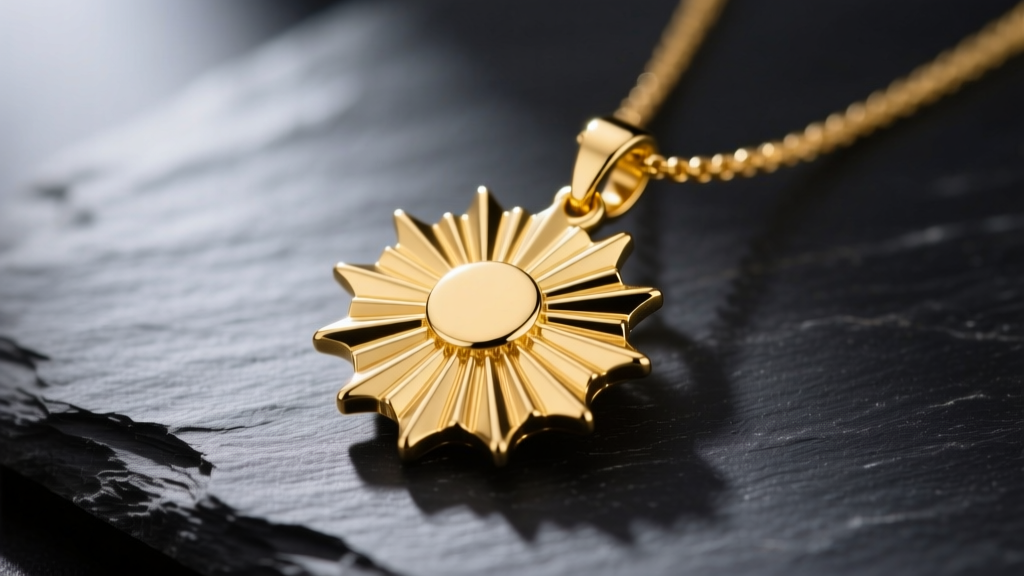
The sunray necklace, characterized by its dynamic, radiating lines extending from a central focal point, is a masterclass in light manipulation and optical jewelry design. Whether the rays are deeply carved, cast in relief, or stamped into a flat disc, the visual impact of these ridges relies entirely on the metallurgical properties of the chosen material. When light hits the sharp peaks of a sunburst pendant, it creates high-contrast reflections that mimic the brilliance of the sun. However, if the metal is too soft, these microscopic peaks will quickly round off from daily friction, dulling the optical effect.
Choosing the right material for a sunray necklace is not just about color preference; it is a critical decision regarding edge retention, tarnish management in deep grooves, and structural integrity. In this comprehensive guide, we analyze the best metals for crafting and wearing a sunray necklace, comparing gold alloys, silver variants, and alternative base metals based on hardness, manufacturing suitability, and long-term maintenance.
Precious Metals: 14k vs. 18k Gold for Crisp Rays
Gold remains the premier choice for fine sunray pendants, but not all gold alloys are created equal when it comes to holding intricate textures. The purity of gold is measured in karats, which directly dictates its hardness and durability.
The Metallurgy of Edge Retention
14k gold (58.5% pure gold) is alloyed with metals like copper, silver, or zinc to increase its structural integrity. According to Lang Antiques' metallurgical guides, standard 14k yellow gold boasts a Vickers hardness (HV) of roughly 135 to 150, depending on the specific alloy mix and heat treatment. In contrast, 18k gold (75% pure gold) is significantly softer, typically measuring between 115 and 125 HV. For a sunray necklace featuring micro-textured ridges or sharp die-struck rays, 14k gold is vastly superior for long-term edge retention. The harder alloy resists the micro-abrasions that occur when the pendant rubs against clothing or skin, ensuring the rays remain crisp for decades.
Manufacturing Methods: Casting vs. Die-Striking
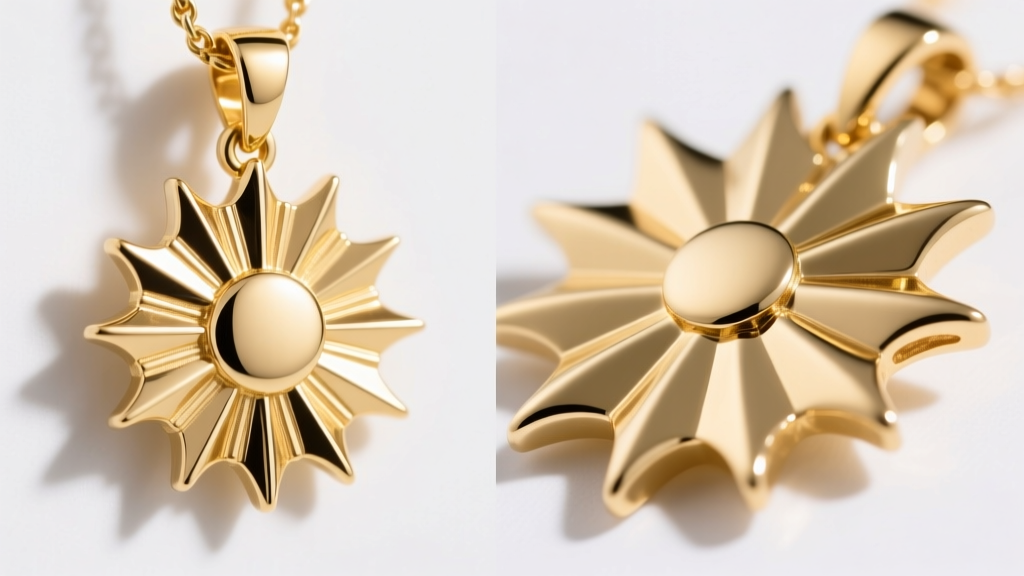
The way the gold is formed also impacts the sunray design. Lost-wax casting, while excellent for complex 3D shapes, can sometimes result in slightly rounded ray edges if the investment material doesn't capture the sharpest corners of the wax model. Die-striking, however, involves pressing sheet gold between two hardened steel dies under immense pressure (often hundreds of tons). This process aligns the grain structure of the metal, making the sunray ridges incredibly dense, work-hardened, and resistant to scratching. If you are investing in a high-end gold sunray necklace, seek out die-struck pieces for the sharpest light reflection.
Sterling Silver & Argentium: Managing Tarnish in the Grooves
Silver offers a brilliant, moon-like reflectivity that makes the rays of a sunburst pendant pop, but it comes with specific chemical challenges. Standard sterling silver (92.5% silver, 7.5% copper) is prone to tarnishing when exposed to sulfur compounds in the air.
The Tarnish Trap in Textured Jewelry
In a smooth, polished pendant, tarnish is easily wiped away. In a sunray necklace, however, silver sulfide (the black tarnish layer) rapidly accumulates and traps itself in the deep valleys between the radiating ridges. While some collectors appreciate this "antiqued" look for the high contrast it provides, those who prefer a bright, uniform shine will find cleaning the grooves tedious. To mitigate this, many jewelers apply a micro-thin layer of rhodium plating over sterling silver sunray pendants. Rhodium is a platinum-group metal that is highly reflective and completely impervious to tarnish, though it will eventually wear off the highest peaks of the rays, requiring re-plating every few years.
The Argentium Advantage
For a modern alternative, look for sunray necklaces crafted from Argentium silver. Argentium 960 replaces some of the traditional copper with the metalloid germanium. As noted by the Gemological Institute of America (GIA), the germanium forms a transparent, self-healing oxide layer on the surface that prevents sulfur from reacting with the silver. An Argentium sunray necklace will remain bright and tarnish-free in the grooves for years without the need for rhodium plating, making it an exceptional choice for low-maintenance, high-detail silver jewelry.
Base Metals & Alternatives: Brass, Bronze, and Titanium
For those seeking budget-friendly options or avant-garde industrial aesthetics, base metals and aerospace alloys offer unique interpretations of the sunray motif.
Brass and Bronze: The Patina Effect
Brass (an alloy of copper and zinc) and bronze (copper and tin) are highly favored in artisanal and bohemian jewelry. These metals are relatively soft and easy to cast, allowing for deep, dramatic sunray grooves. However, they are highly reactive. Over time, the oils from your skin and environmental moisture will cause the brass or bronze to oxidize, creating a dark patina. In a sunray design, this oxidation will permanently darken the recessed grooves while the raised rays remain polished from friction against your skin. This creates a permanent, high-contrast antique finish that many designers intentionally accelerate using liver of sulfur.
Titanium: Aerospace Precision
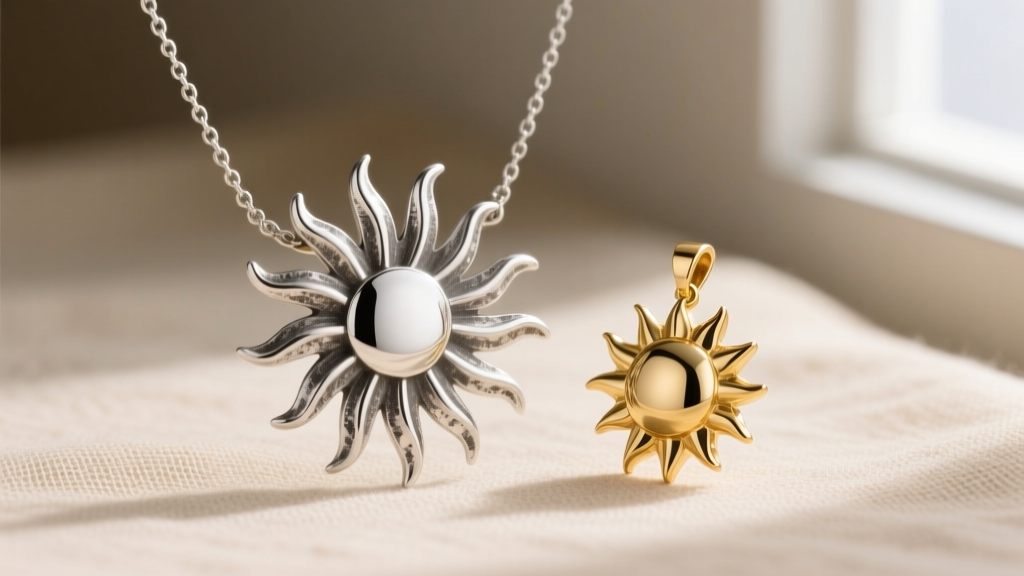
Titanium is exceptionally strong, lightweight, and entirely hypoallergenic. However, its extreme hardness and high melting point make traditional lost-wax casting nearly impossible. Sunray necklaces made from titanium are typically CNC milled from a solid billet of Grade 5 titanium (Ti-6Al-4V) or laser-cut from sheet metal. CNC milling allows for mathematically perfect, razor-sharp radiating lines that will never dull, bend, or tarnish. The trade-off is a higher manufacturing cost and a cooler, greyer color profile compared to warm gold or bright silver.
Material Comparison Matrix
Use the following data table to evaluate which metal best aligns with your lifestyle, budget, and aesthetic preferences for a sunray necklace.
| Metal / Alloy | Vickers Hardness (HV) | Detail Retention | Tarnish Risk | Avg. Price Range (1" Pendant) |
|---|---|---|---|---|
| 14k Yellow Gold | 135 - 150 | Excellent | None | $350 - $800 |
| 18k Yellow Gold | 115 - 125 | Good | None | $550 - $1,200 |
| Sterling Silver (925) | 65 - 75 | Fair | High (in grooves) | $45 - $150 |
| Argentium 960 | 70 - 85 | Good | Very Low | $80 - $200 |
| Jeweler's Brass | 55 - 70 | Fair | High (Patina) | $25 - $75 |
| Grade 5 Titanium | 330 - 350 | Exceptional | None | $120 - $300 |
How to Choose Based on Wear & Care
Selecting the right material for your sunray necklace requires an honest assessment of your daily habits and maintenance tolerance.
- For Daily, Never-Remove Wear: Choose 14k gold or Grade 5 titanium. These materials possess the hardness required to withstand showering, sleeping, and accidental impacts without the sunray ridges flattening or the metal warping. Avoid sterling silver for 24/7 wear, as constant exposure to water and soaps will accelerate tarnish buildup in the grooves.
- For High-Contrast, Antique Aesthetics: Opt for oxidized sterling silver or raw brass. The natural accumulation of patina in the radiating valleys will enhance the 3D depth of the sunburst design over time, requiring zero active maintenance to maintain the look.
- For Maximum Brilliance and Low Maintenance: Argentium silver or rhodium-plated white gold are your best options. They provide the icy, high-reflectivity flash that makes sunray designs look like actual bursts of light, without the constant need for polishing.
Maintenance & Polishing Radiating Grooves
Cleaning a sunray necklace requires specific techniques to avoid damaging the delicate ridges or trapping moisture. According to Rio Grande jewelry supply standards, ultrasonic cleaners are highly effective for dislodging dirt from deep grooves, but they must be used with caution. If your sunray pendant features a central gemstone (like a turquoise or opal cabochon often found in vintage sunburst designs), the high-frequency vibrations can fracture the stone or loosen the bezel setting.
For safe, manual cleaning of textured gold or silver sunray necklaces, avoid abrasive polishing cloths, which cannot reach into the valleys and will prematurely wear down the peaks. Instead, create a mild solution of warm water and phosphate-free dish soap. Use a soft-bristled brass detailing brush or a clean, ultra-soft baby toothbrush to gently agitate the soapy water along the direction of the radiating rays. This mechanical action lifts sebum, lotion, and dust from the grooves without scratching the metal. Rinse thoroughly with distilled water to prevent hard water spots from settling in the textures, and dry immediately with a blast of compressed air or a microfiber cloth to prevent water spots from dulling the sun's rays.


