Expert Guide to the Peyote Bird Turquoise Necklace & Stone Grades
Discover the craftsmanship behind the peyote bird turquoise necklace. Learn about stone grading, Zuni inlay techniques, and how to authenticate silverwork.

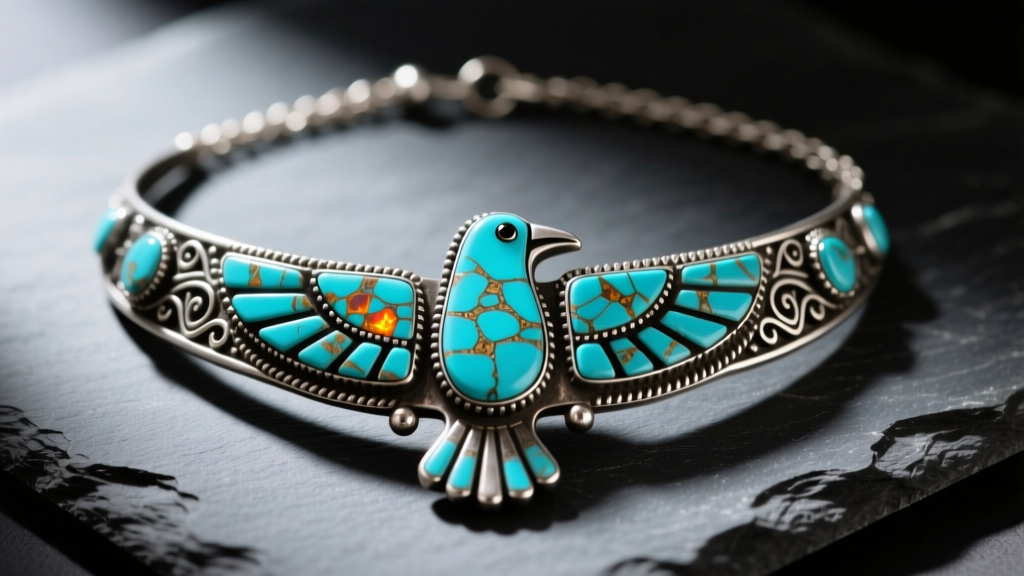
When evaluating a peyote bird turquoise necklace, collectors and enthusiasts must look beyond the striking aesthetic to understand the complex gemological and metallurgical craftsmanship involved. The peyote bird—often interchangeably referred to in trading posts as the water bird or thunderbird—holds profound spiritual significance in Native American cultures, particularly among the Zuni and Navajo peoples. It is a symbol of rain, fertility, and the sacred peyote ceremony. However, the modern market is saturated with mass-produced imitations. To truly appreciate and authenticate these pieces, one must deconstruct the necklace into its core technical components: the turquoise grade, the silver purity, and the precision of the inlay or bezel work.
The Cultural and Artistic Significance of the Peyote Bird Motif
The peyote bird motif is not merely decorative; it is a deeply rooted cultural emblem. According to the Smithsonian National Museum of the American Indian, avian motifs in Puebloan jewelry often represent the messengers between the earthly realm and the spiritual sky. The stylized peyote bird features a distinct geometric anatomy: a crested head, a sharp beak, and a fanned tail, typically rendered in vibrant turquoise, jet, coral, and mother-of-pearl. Master artisans spend dozens of hours hand-cutting these microscopic stone pieces to fit seamlessly into silver channels, making each authentic piece a masterclass in lapidary precision.
Deconstructing the Turquoise: Matrix, Hardness, and Origin
The value of any Native American turquoise necklace hinges primarily on the gemological quality of the stone. Turquoise is a hydrous phosphate of copper and aluminum, and its structural integrity varies wildly depending on its mine of origin. The Gemological Institute of America (GIA) notes that natural, untreated turquoise ranges from 5 to 6 on the Mohs hardness scale. Stones falling below 4 are considered "chalk" turquoise and require stabilization to be used in jewelry.
Top-Tier Turquoise Mines Used in Authentic Pieces
- Sleeping Beauty (Arizona): Prized for its uniform, sky-blue color and complete lack of matrix (the host rock webbing). It is highly sought after for intricate Zuni channel inlay because its consistent color allows for seamless gradient work.
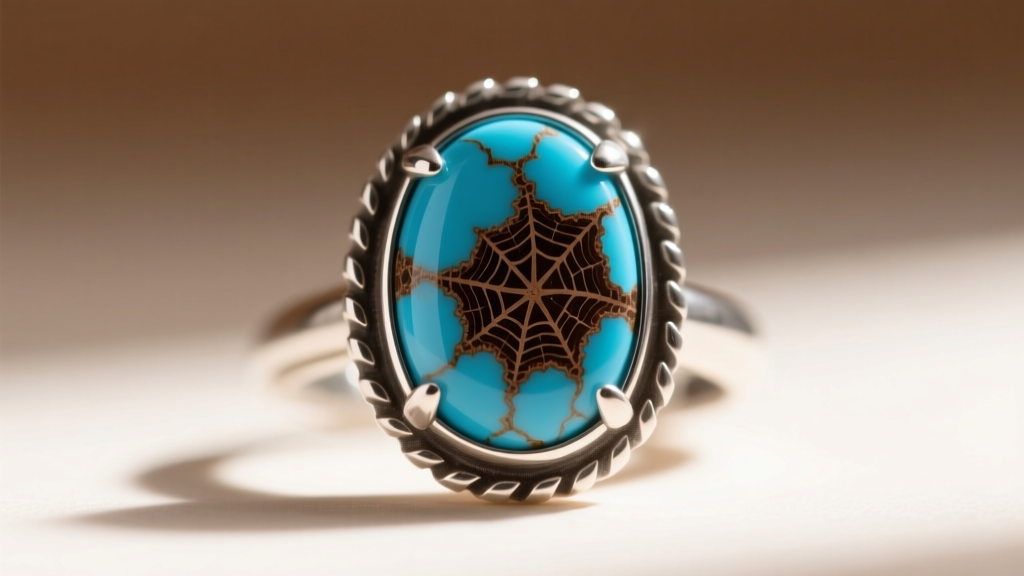
- Kingman (Arizona): Famous for its deep, vibrant blue color contrasted by striking black or brown pyrite matrix. Kingman stones are typically cut into cabochons and set in heavy bezels rather than used for micro-inlay.
- Royston (Nevada): Yields stones ranging from light green to deep emerald, heavily webbed with a golden-brown matrix. It is highly valued by collectors who prefer an earthy, organic aesthetic.
The Stabilization Process: Enhancement vs. Alteration
Because only about 10% of mined turquoise is hard enough to be cut and polished without treatment, stabilization is a standard, ethically accepted practice. The stones are submerged in a clear epoxy resin and placed in a vacuum chamber. The pressure forces the resin deep into the porous stone, hardening it to a Mohs 6 or 7. This is vastly different from "block" turquoise (which is entirely synthetic) or "dyed" howlite (a white mineral chemically colored to mimic turquoise). An authentic peyote bird turquoise necklace will use either high-grade natural stone or professionally stabilized natural stone, never reconstituted chalk or dyed substitutes.
Silverwork and Chain Anatomy: A Technical Breakdown
The metalwork supporting the pendant is just as critical as the stone. Authentic Native American jewelry is crafted in sterling silver, an alloy consisting of 92.5% pure silver and 7.5% copper (stamped as .925). The copper adds necessary tensile strength, preventing the soft pure silver from warping under the pressure of stone setting.
Chain Gauges and Drape
The chain accompanying a heavy turquoise pendant must be engineered to support the weight without stretching. Artisans typically utilize foxtail, box, or rope chains.
- Lightweight (1.0mm - 1.5mm): Suitable only for small, hollow-backed pendants weighing under 15 grams.
- Medium Weight (2.0mm - 3.0mm): The industry standard for most peyote bird pendants, offering a balance of durability and flexibility.
- Heavyweight (4.0mm+): Reserved for massive, multi-stone squash blossom or heavy cast-silver pieces. These chains are rigid and possess high tensile strength.
Inlay Techniques: Channel vs. Bezel vs. Mosaic
The method used to secure the turquoise dictates both the visual impact and the structural longevity of the necklace. Below is a technical comparison of the three primary setting techniques utilized by Zuni and Navajo silversmiths.
| Technique | Technical Process | Durability & Maintenance | Best Suited For |
|---|---|---|---|
| Channel Inlay | Silver walls are soldered to a backplate. Stones are cut, glued, and ground completely flush with the silver rim. | Highly durable. The silver walls protect the stone edges from chipping. Requires occasional polishing of the silver rim. | Complex geometric motifs like the peyote bird, where flush surfaces are required. |
| Bezel Setting | A thin strip of silver is wrapped around a cabochon and pushed over the stone's edge using a bezel roller or pusher. | Moderate to High. The stone's dome is exposed to impact, but the setting is easily tightened by a jeweler if the stone loosens. | Large, single Kingman or Royston cabochons with prominent matrix patterns. |
| Chip Inlay | Small, irregular chips of turquoise and coral are mixed with epoxy resin and poured into carved silver cavities, then sanded flat. | Lower durability. The epoxy can yellow over time or crack if exposed to extreme temperature fluctuations. | Vintage 1970s pieces or budget-friendly tourist-trade jewelry. |
Authenticating Native American Silver and Stone
The Indian Arts and Crafts Board strictly enforces the Indian Arts and Crafts Act, making it illegal to sell non-Native-made jewelry as authentic. However, enforcement in online marketplaces is challenging. Buyers must rely on technical authentication methods.
Hallmarks and Acid Testing
Authentic pieces will bear a hallmark—usually the artist's initials or a specific clan symbol—stamped into the silver backplate. For example, a "T.S." might denote a specific Zuni family lineage. Furthermore, you can verify the silver purity using a non-destructive XRF (X-ray fluorescence) analyzer, or a standard jeweler's acid test on an inconspicuous area. If the acid turns bright red, the metal is .925 sterling; if it turns green, it is heavily plated brass or nickel silver.
Identifying Dyed Howlite and Block Turquoise
To spot dyed howlite masquerading as turquoise, examine the stone under a 10x jeweler's loupe. Howlite has a distinct, angular white webbing that absorbs dye unevenly, often resulting in concentrated dark spots in the crevices. True turquoise matrix is organic, flowing, and often contains metallic pyrite inclusions that flash under direct light. "Block" turquoise, being entirely plastic and epoxy, will feel unusually light and will emit a chemical odor if subjected to a hot pin test (though this destructive test is not recommended for valuable pieces).
Pricing Tiers and Market Valuation
The valuation of a peyote bird turquoise necklace is not arbitrary; it is calculated based on material cost, hours of labor, and the artist's recognized mastery. As of the current market, pricing generally falls into three distinct tiers:
- Entry-Level / Vintage Tourist Trade ($150 - $400): These pieces often feature chip inlay, stabilized or dyed stones, and lightweight, unmarked sterling silver. They are charming but lack investment-grade materials.
- Mid-Tier Artisan ($500 - $1,500): Crafted by recognized but non-master artisans. Features precise channel inlay, genuine Sleeping Beauty or Kingman turquoise, and heavy 14-gauge to 18-gauge sterling silver backplates with clear hallmarks.
- Master / Museum Grade ($2,500 - $10,000+): Created by award-winning Zuni or Navajo master lapidaries. These pieces utilize rare, high-grade natural (unstabilized) turquoise, intricate multi-stone mosaic techniques, and hand-stamped, heavy-gauge silverwork. They appreciate in value over time.
"Investing in high-grade Native American turquoise is akin to investing in fine art. The closure of historic mines like Sleeping Beauty means that the existing supply of top-tier, unenhanced stone is finite, driving a steady appreciation in master-crafted pieces."
Care and Maintenance for High-Grade Turquoise
Turquoise is a highly porous gemstone, making it vulnerable to chemical alteration. To preserve the integrity of your necklace, never use ultrasonic cleaners, steam cleaners, or commercial silver dips. The harsh chemicals and high-frequency vibrations can fracture the stone and dissolve the epoxy used in channel inlay.
Instead, clean the silver components with a dry, untreated microfiber polishing cloth. If the turquoise becomes dull, gently wipe it with a barely damp cloth and dry it immediately. Always store your necklace in a dark, climate-controlled environment, as prolonged exposure to UV light and extreme heat can cause the copper within the turquoise to oxidize, shifting its vibrant blue hue to an undesirable muddy green. By understanding the technical nuances of the stones, the silverwork, and the cultural heritage, you can confidently acquire and preserve a genuine masterpiece of Native American lapidary art.


