Types of Gold Necklaces and Their Names: A Value Guide
Evaluate the true cost of gold jewelry. We break down the types of gold necklaces and their names, focusing on durability, karats, and ROI.

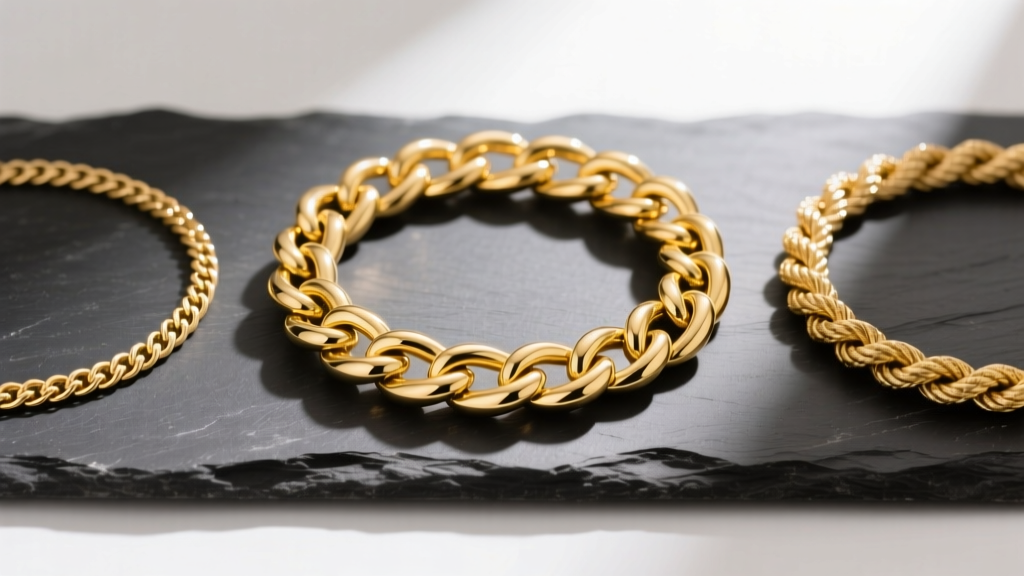
With gold spot prices experiencing historic surges through 2025 and into 2026, the retail jewelry market has shifted dramatically. Consumers are no longer just buying gold for its aesthetic appeal; they are evaluating it as a tangible asset. However, not all gold chains hold their value equally. A delicate 18k herringbone chain and a solid 14k Cuban link might weigh the same, but their long-term financial viability, repair costs, and structural integrity are worlds apart.
When evaluating the various types of gold necklaces and their names, it is crucial to look beyond the aesthetic and scrutinize the karatage, construction method, and link architecture. This comprehensive value assessment will help you navigate the market, avoid depreciating assets, and invest in chains that offer genuine long-term ROI.
The True Cost of Gold: Karats and Market Value
Before dissecting chain styles, we must establish the baseline of gold purity. The Gemological Institute of America (GIA) defines karatage as the proportion of pure gold in an alloy. Pure gold (24k) is far too malleable for daily-wear chains; it will stretch, warp, and snap under the weight of a simple pendant.
- 10k Gold (41.7% pure): The most budget-friendly and highly durable option, but it lacks the rich yellow hue of higher karats. It offers the lowest intrinsic melt value and is prone to tarnishing due to the high copper/zinc alloy content.
- 14k Gold (58.3% pure): The undisputed industry standard for value and durability in the US market. It offers an optimal balance of rich color, structural rigidity, and resale liquidity.
- 18k Gold (75.0% pure): Prized in European and luxury markets for its deep, saturated yellow color. However, it is softer, making complex, delicate weaves highly susceptible to stretching and micro-abrasions.
- 22k Gold (91.6% pure): Generally reserved for simple, heavy rope or band chains in South Asian and Middle Eastern markets. It is a pure investment vehicle, rarely used for intricate jewelry weaves due to its softness.
Solid, Semi-Hollow, and Plated: Decoding Construction
To keep retail price points under $500 despite soaring spot prices, many manufacturers have pivoted to semi-hollow construction. Understanding these manufacturing methods is vital for budget assessment.
Solid Gold Chains
Cast or drawn from solid wire, these chains are heavy, durable, and retain value directly correlated to the gold spot market. If a solid 14k chain breaks, any competent jeweler can solder it back together seamlessly. Value Verdict: High initial cost, excellent long-term retention.
Semi-Hollow and Tubular Chains
These chains are created by wrapping a thin sheet of gold around a base metal or resin core, which is later dissolved or left inside. They offer the visual bulk of a heavy chain at a fraction of the gram weight. The Failure Mode: If a semi-hollow chain is crushed or kinked, it cannot be hammered out. Furthermore, traditional torch soldering will melt the thin gold shell. Repair requires expensive laser welding, often costing more than the chain's intrinsic gold value.
Gold Plated and Vermeil
According to the Federal Trade Commission (FTC), gold vermeil must consist of a sterling silver base plated with at least 10k gold that is 2.5 microns thick. While vermeil offers a luxurious look on a budget, it possesses zero intrinsic gold melt value. Once the plating wears through at the friction points (near the clasp and jump rings), the piece is essentially worthless from an investment standpoint.
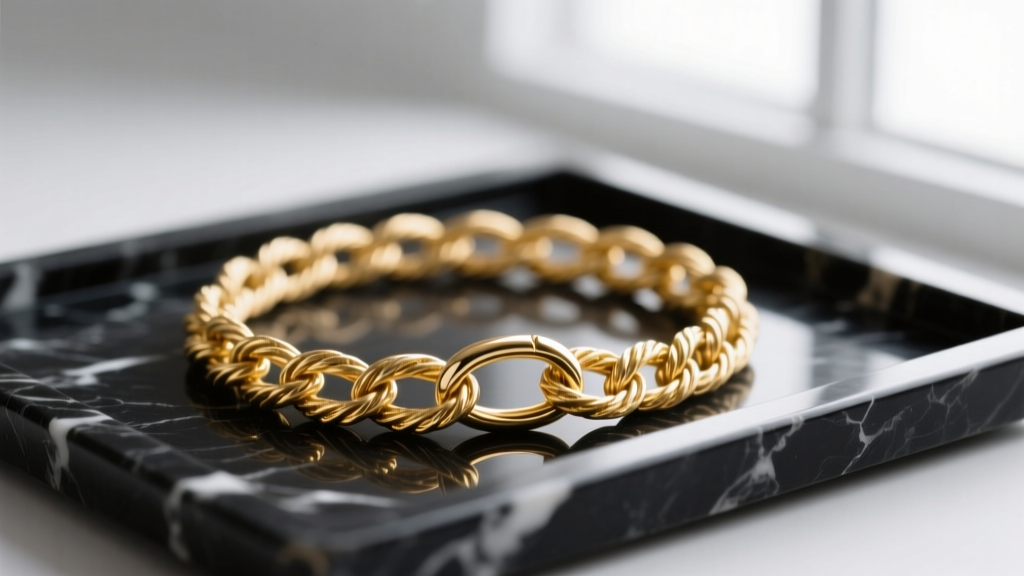
Types of Gold Necklaces and Their Names: A Value Matrix
Below is a structured assessment of the most common chain weaves, graded on their structural longevity, repairability, and overall value retention. This matrix is essential for buyers looking to maximize their budget.
| Chain Name | Link Architecture | Durability (1-10) | Repairability | Value Tier |
|---|---|---|---|---|
| Cuban Link | Interlocking flat, oval links | 9 | Excellent (Torch or Laser) | Tier 1 (Investment) |
| Figaro | Alternating long and short links | 8 | Very Good | Tier 1 (Investment) |
| Box Chain | Square, interlocking geometric links | 7 | Good (Can be stiff if kinked) | Tier 2 (Moderate) |
| Rope Chain | Twisted, spiraling oval links | 6 (Solid) / 2 (Hollow) | Poor (Highly visible solder lines) | Tier 2 (If Solid) |
| Herringbone | Flat, parallel, tightly woven links | 3 | Impossible (Kinks permanently) | Tier 3 (Depreciating) |
| Omega | Smooth metal plates over a wire core | 2 | Poor (Snaps at the clasp ring) | Tier 3 (Depreciating) |
High-Value Investment Chains: Cuban, Figaro, and Rope
If your goal is to purchase a gold necklace that retains its value and withstands daily wear, the Cuban link is the gold standard. The interlocking flat links distribute tension evenly, making it incredibly difficult to snap. A solid 14k Cuban link chain weighing 30 grams will not only survive decades of wear but will track closely with the spot price of gold. The Figaro chain, a stylistic cousin to the Cuban, offers similar durability with a more intricate visual rhythm, making it an excellent mid-tier investment.
The Rope chain is a unique case. A solid, heavyweight rope chain is a spectacular, light-catching asset. However, the market is flooded with hollow and semi-hollow rope chains. Always verify the gram weight; a 22-inch hollow rope might weigh only 4 grams, whereas a solid version of the exact same visual width would weigh upwards of 25 grams.
High-Risk, Low-Repair Chains: Herringbone, Snake, and Omega
From a strict budget and value perspective, Herringbone and Snake chains are depreciating assets. Their fluid, liquid-like drape is visually stunning, but their structural weakness is catastrophic. A single accidental bend in a herringbone chain leaves a permanent, visible kink that weakens the entire structural integrity of the piece. Jewelers generally refuse to repair snapped herringbone chains because the heat from the torch will melt the surrounding microscopic links, creating a massive, unsightly scar.

How to Calculate the Fair Retail Price of a Gold Chain
To avoid being overcharged by retail markups, savvy buyers in 2026 are using the Melt Value Plus Premium formula. Here is how to calculate the fair market value of a solid gold chain before you swipe your card:
The Value Formula:
(Current Spot Price per Ounce ÷ 31.1) × Karat Purity Multiplier × Chain Weight in Grams = Base Melt Value
Base Melt Value + Manufacturing Premium (20% to 60%) = Fair Retail Price
Real-World Example:
Assume the spot price of gold is $2,350 per troy ounce. You are looking at a solid 14k (0.583 purity) Box chain weighing 15 grams.
- Price per gram of pure gold: $2,350 ÷ 31.1 = $75.56
- Price per gram of 14k gold: $75.56 × 0.583 = $44.05
- Base Melt Value: $44.05 × 15 grams = $660.75
A fair retail markup for a standard, machine-made box chain is around 30% to 40%. Therefore, a fair retail price ranges from $858 to $925. If a mall jeweler is charging $1,800 for this exact chain, you are paying a 170% premium, which you will never recoup upon resale.
Conversely, highly complex, hand-woven Italian chains (like a solid Byzantine or Mariner link) command manufacturing premiums of 100% to 300% due to the intense labor required to assemble them. You are paying for artistry, not just metal.
Expert Verdict: Which Chain Offers the Best Long-Term Value?
When navigating the myriad types of gold necklaces and their names, the ultimate rule of thumb for budget-conscious buyers is to prioritize structural geometry over delicate aesthetics.
For men and women seeking a daily-wear piece that functions as both a stylish accessory and a liquid asset, a solid 14k Cuban or Curb link chain (ranging from 4mm to 8mm in width) remains the undisputed champion of value. It resists snapping, hides scratches well within its faceted edges, and can be easily repaired by any jeweler globally. Avoid hollow chains at all costs—they are the fast fashion of the fine jewelry world, offering an illusion of wealth that shatters the moment it is tested.


