Nizam of Hyderabad Necklace: Heritage Trend Revival
Explore the 2026 revival of the Nizam of Hyderabad necklace. Discover Polki diamonds, multi-strand pearls, and how to style this royal heritage trend.

The Legacy of the Nizam of Hyderabad Necklace in Modern High Jewelry
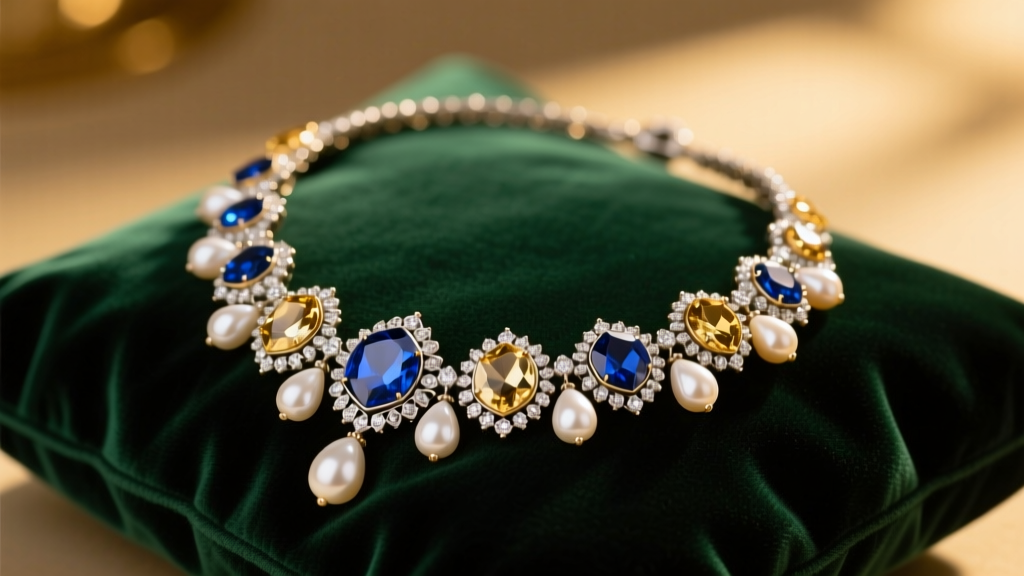
When discussing the zenith of royal Indian jewelry, few collections command the reverence and awe inspired by the Nizams of Hyderabad. Ruling over one of the wealthiest princely states in the Indian subcontinent, the Nizams amassed a jewelry collection that rivaled the crown jewels of Europe. Today, the term nizam of hyderabad necklace evokes images of staggering opulence: multi-strand natural pearl chokers, uncut diamond bibs, and emerald-drenched collars. As we navigate the high jewelry landscape of 2026, a distinct 'Heritage Revival' trend has taken hold on global runways and elite bridal circuits. Designers and collectors are looking backward to move forward, resurrecting the architectural grandeur and gemological purity of the Nizam era, but re-engineering these masterpieces for the modern wearer. This analysis explores the anatomical brilliance of these historical pieces, their gemological significance, and how contemporary jewelers are adapting the Nizam aesthetic for today's discerning collectors.
Anatomical Breakdown: What Defines the Nizam Aesthetic?
To truly understand the nizam of hyderabad necklace, one must look beyond the sheer carat weight and examine the structural engineering of the pieces. The Nizam aesthetic is defined by three core pillars: the Jadau setting technique, the use of uncut diamonds, and the strategic layering of natural pearls. Unlike Western jewelry, which prioritizes the faceted brilliance of diamonds to catch the light, traditional Indian royal jewelry focuses on color, volume, and the intricate interplay of gold and enamel.
"The jewelry of the Nizams represents a masterclass in volume without structural compromise. The articulation of the gold links allowed heavy, multi-strand pearl necklaces to drape like liquid fabric against the skin." — Archival notes on Indian Royal Jewelry, Victoria and Albert Museum.
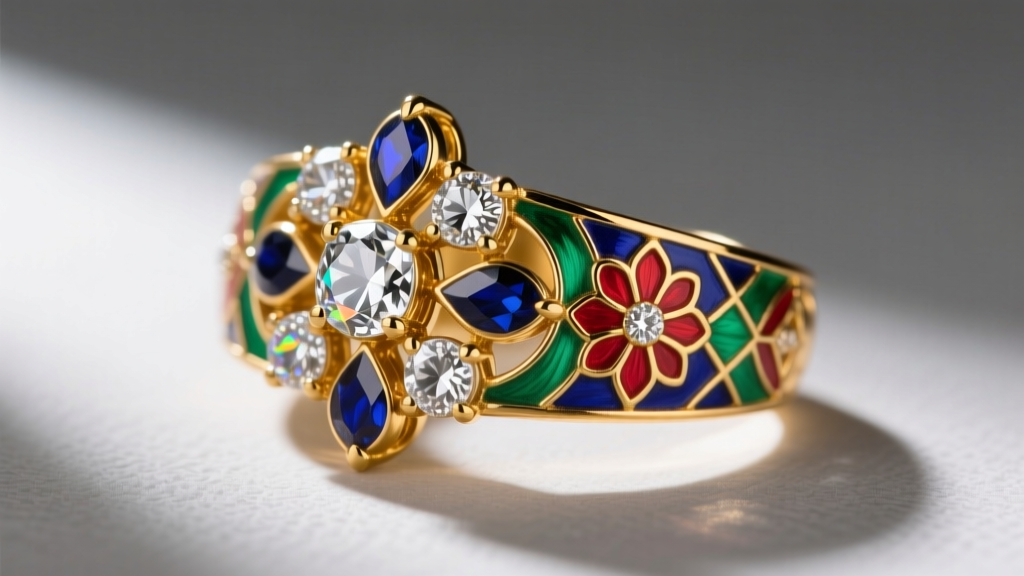
The foundation of these necklaces is the Jadau technique, a highly specialized method where gemstones are set into gold without the use of prongs or claws. Instead, pure 24-karat gold is melted and shaped around the stones. This requires a master craftsman, known as a Ghaaria, to create the gold framework, and a Chitarsan to apply the intricate Meenakari (enamel) work on the reverse side, ensuring the necklace is as beautiful from the back as it is from the front.
Comparative Specs: Historical vs. 2026 Adaptations
| Feature | Historical Nizam Era (18th-19th C.) | 2026 Modern Heritage Adaptation |
|---|---|---|
| Diamond Type | Uncut Golconda (Type IIa, flawless) | Uncut Polki (Clarity SI1-I1, foiled) |
| Gold Purity | 24k (Highly malleable, heavy) | 22k or 18k (Alloyed for durability) |
| Pearl Origin | Natural Basra (Irregular, rare) | Cultured South Sea (Uniform, accessible) |
| Clasp Mechanism | Traditional silk tie (Dori) | Hidden magnetic or box clasps |
| Average Weight | 150g - 400g+ | 60g - 120g |
Gemological Deep Dive: Polki, Kundan, and Golconda
A common point of confusion in the jewelry market is the interchangeable use of 'Polki' and 'Kundan.' In the context of a nizam of hyderabad necklace, understanding the distinction is critical for both collectors and appraisers. Polki refers to the uncut, unfaceted, and unpolished diamond itself. Historically, the Nizams sourced these from the legendary Golconda mines, which produced Type IIa diamonds renowned for their chemical purity and exceptional transparency. Today, authentic Golconda diamonds are virtually extinct on the open market, reserved for museum archives and elite auction houses like Sotheby's and Christie's.
Kundan, on the other hand, is not a stone but a setting material. It refers to the highly refined, pure 24-karat gold strips used to secure the Polki diamonds into the jewelry mount. Because pure gold is exceptionally soft, it can be pressed and burnished around the edges of the uncut diamond at room temperature, creating a watertight seal. To enhance the brilliance of the uncut Polki, which lacks the light-return of a faceted stone, master setters apply a silver or gold foil backing behind the diamond, a technique known as 'foiling.' In 2026, ethical sourcing has led to a rise in lab-grown Polki alternatives, though high-net-worth collectors still demand natural, ethically mined uncut diamonds with transparent color grades (G-H) to ensure the foiling reflects a bright, white sparkle rather than a muddy yellow.
2026 Trend Analysis: The Revival of Heritage Layering
The most defining visual characteristic of the Nizam necklace collection is the extravagant layering of pearls and gemstones. The Nizams frequently wore necklaces consisting of seven to nine individual strands of pearls, interspersed with emerald or ruby beads, culminating in a massive Polki pendant. In 2026, this maximalist approach has been reinterpreted for contemporary high jewelry. Designers are moving away from rigid, heavy collars and embracing 'fluid layering.'
Modern interpretations utilize micro-hinges and articulated gold links between the pearl strands, allowing a 5-strand necklace to drape organically over the collarbone rather than sitting like a stiff bib. Furthermore, the integration of convertible engineering is a major trend. A single, heavy Nizam-inspired necklace is now designed with discreet screw-mechanisms, allowing the wearer to detach the bottom three strands for a daytime choker, while reserving the full multi-strand configuration for evening galas. This modularity justifies the high acquisition cost, which typically ranges from $45,000 to $150,000 for premium designer pieces featuring natural uncut diamonds and high-grade cultured pearls.
Styling the Nizam-Inspired Necklace for Contemporary Necklines
Styling a heavily ornamented, multi-strand heritage necklace requires a deliberate approach to garment necklines to avoid visual clutter. Here is a practical framework for styling these opulent pieces in 2026:
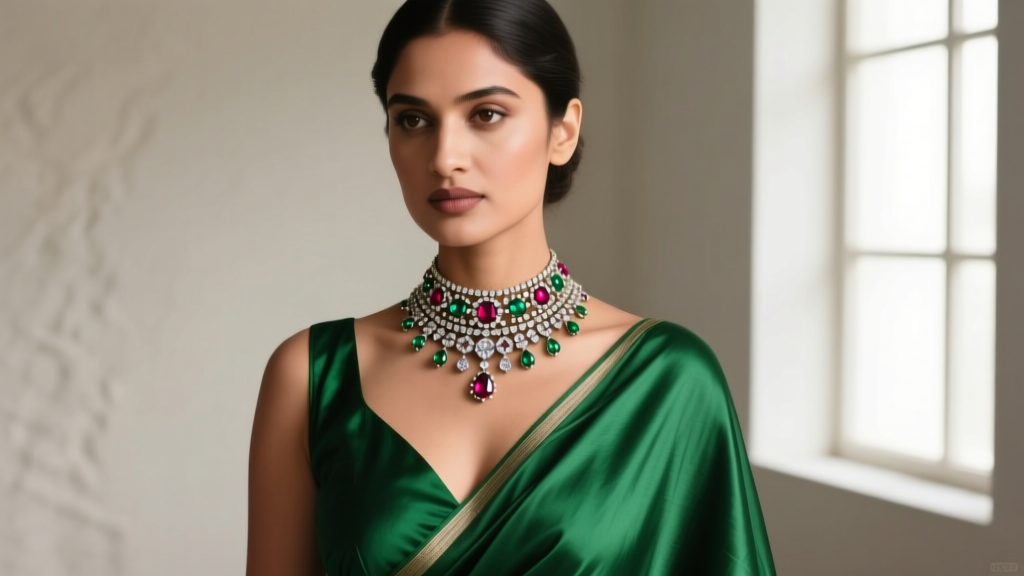
- The Deep V-Neckline: The ideal canvas for a multi-strand pearl and Polki choker. The V-shape mimics the natural drape of the necklace, drawing the eye downward and elongating the neck. Ensure the apex of the necklace sits exactly one inch above the fabric's edge.
- The Sweetheart Neckline: Pairs beautifully with shorter, wider Nizam-style collars (Rani Haar style). The curved neckline of the dress echoes the curvature of the gold and pearl strands, creating a harmonious, romantic silhouette.
- The Off-the-Shoulder / Bateau: Best suited for single, heavy Polki pendants suspended on a thick, multi-strand pearl chain. The horizontal line of the dress contrasts sharply with the vertical drop of the pendant, creating striking architectural tension.
- Avoid: High halter necks, heavy ruffled collars, or heavily embroidered bodices. The intricate Meenakari and Polki work will compete with the textile patterns, diminishing the visual impact of the jewelry.
Investment and Acquisition: Sourcing Authentic Pieces
For collectors looking to acquire a piece that embodies the nizam of hyderabad necklace aesthetic, the market is segmented into three distinct tiers. According to market analyses featured in Christie's educational guides on Indian Jewelry, the provenance and material authenticity dictate the investment trajectory.
1. Museum-Grade Antiques ($250,000 - $2M+): Authentic 19th-century pieces with documented royal provenance. These feature natural Basra pearls and Golconda diamonds. They are acquired primarily through private treaty sales at major auction houses and are treated as alternative asset classes rather than wearable accessories.
2. Contemporary High Jewelry Heritage Lines ($30,000 - $120,000): Created by elite Indian and global houses (e.g., Sabyasachi, Cartier's annual high jewelry collections). These pieces utilize the traditional Jadau technique but incorporate modern 22k gold alloys for durability and ethically sourced uncut diamonds. They offer excellent wearability and hold their value well within the bridal and collector markets.
3. Commercial Polki Jewelry ($2,500 - $15,000): Mass-produced or semi-custom pieces that mimic the visual style using lower-grade uncut diamonds (often heavily included or treated), silver-foil backing instead of gold, and synthetic enamel. While beautiful for occasional wear, these hold virtually no secondary market investment value.
Conclusion
The nizam of hyderabad necklace remains a masterclass in the marriage of immense wealth and unparalleled artisanal skill. As the 2026 high jewelry market continues to embrace heritage revivals, the demand for the raw, unpolished beauty of Polki diamonds and the fluid drape of multi-strand pearls is at an all-time high. By understanding the gemological distinctions between Kundan and Polki, recognizing the structural innovations of modern Jadau setting, and applying strategic styling principles, collectors and enthusiasts can confidently navigate this opulent sector of the jewelry world. Whether acquired as a wearable heirloom or a museum-grade investment, the legacy of the Nizams continues to dictate the pinnacle of royal jewelry aesthetics.