Poka Shell Necklace Guide: Grading, Sourcing, and Care
Discover the technical grading metrics for an authentic poka shell necklace. Learn about cone shell anatomy, Mohs hardness, and spotting fakes.

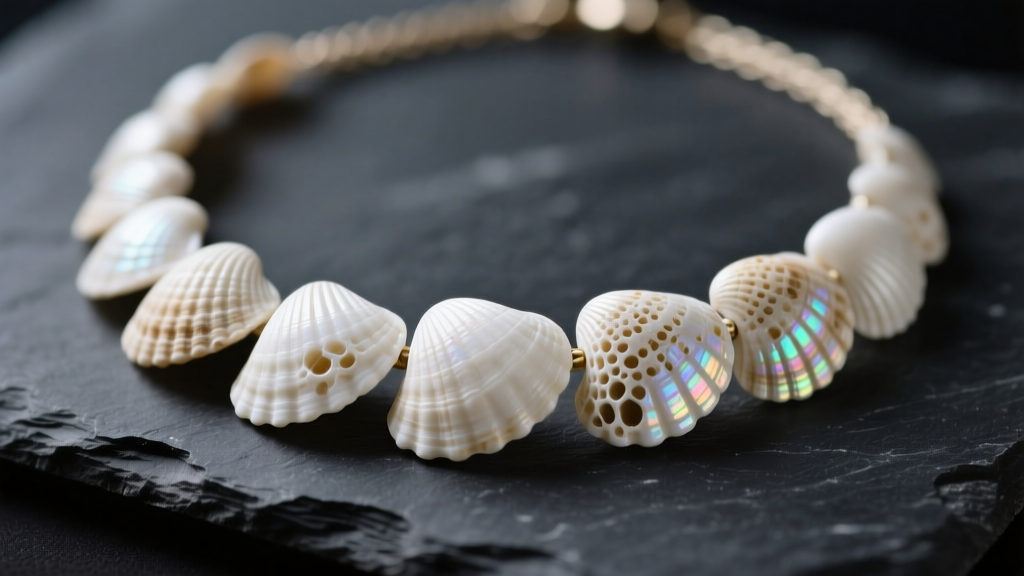
The Malacological Anatomy of a True Poka Shell Necklace
While traditionally known in Hawaiian culture as puka (the word for 'hole'), the global gemological and wholesale trade markets frequently utilize the spelling poka to categorize specific grades and regional variants of cone shell fragments. For the purposes of this technical guide, we will use the industry search term poka shell necklace while applying rigorous malacological and gemological standards to evaluate these organic gems. Understanding the value of a poka shell necklace requires looking past the surface and examining the calcium carbonate micro-structure of the shell itself.
Authentic poka beads are derived primarily from the Conus genus of marine snails, specifically Conus miliaris and Conus sponsalis. The shell is composed of three distinct structural layers. The outermost layer, the periostracum, is an organic protein called conchiolin. Beneath this lies the ostracum, a calcitic prismatic layer that provides structural rigidity. The innermost layer is the hypostracum, composed of aragonite crystals which, in some species, form nacre (mother-of-pearl). High-quality poka shell beads are cut from the spire or the body whorl where the natural aperture occurs. The interplay between the calcite and aragonite layers gives genuine shell its characteristic waxy luster and subtle translucency, a feature that synthetic polymers consistently fail to replicate.
Technical Grading Metrics for Shell Beads
Not all shell strands are created equal. The market is flooded with commercial-grade chips, but serious collectors and jewelers evaluate a poka shell necklace based on strict dimensional and visual criteria. The thickness of the bead, the symmetry of the hole, and the integrity of the surface texture dictate the wholesale and retail pricing. Below is the standardized grading framework used by high-end organic gem dealers.
| Grade Tier | Thickness (mm) | Hole Symmetry | Surface Periostracum | Market Value (18-inch strand) |
|---|---|---|---|---|
| AAA (Heirloom) | 4.0 - 6.5mm | Perfectly centered natural hole | Smooth, minimal pitting, high luster | $180 - $350+ |
| AA (Premium) | 2.5 - 4.0mm | Slightly off-center | Moderate natural texture, waxy finish | $75 - $160 |
| A (Commercial) | < 2.5mm | Asymmetrical / Machine-drilled | Heavy pitting, chalky, over-polished | $15 - $60 |
When sourcing AAA-grade poka beads, pay close attention to the hole formation. True natural holes, formed by the erosion of the shell's apex in the ocean surf, possess a slightly irregular, organic taper. Conversely, machine-drilled beads often show microscopic striations from diamond-tipped drill bits and lack the premium pricing of their naturally holed counterparts.
Authenticity Testing: Calcium Carbonate vs. Polymer Fakes
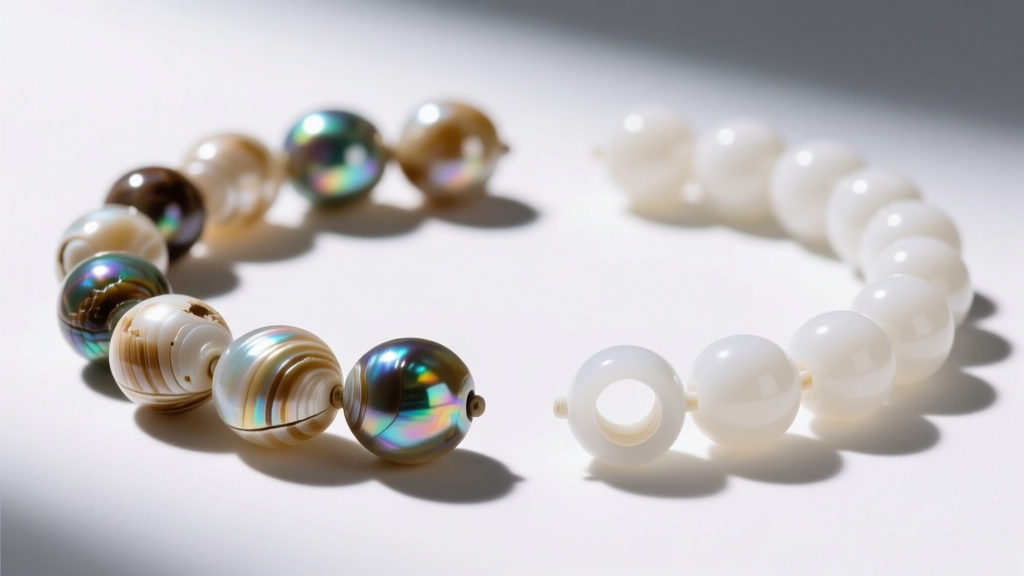
As the popularity of organic jewelry has surged, so has the sophistication of counterfeit manufacturing. Modern polymer resins and compressed bone dust composites are frequently molded to mimic the pitted texture of a poka shell necklace. Relying on visual inspection alone is no longer sufficient for appraisal. Gemologists utilize several non-destructive testing methods to verify authenticity.
Specific Gravity (SG) Testing
Genuine marine shell is composed of dense calcium carbonate, yielding a Specific Gravity (SG) of approximately 2.70 to 2.90. Most plastic and resin imitations possess an SG between 1.05 and 1.30. By utilizing a hydrostatic balance, a jeweler can definitively separate heavy, authentic shell from lightweight polymer fakes. If a strand feels suspiciously light or 'warm' to the touch, it is likely a synthetic composite.
UV Fluorescence Analysis
Under long-wave ultraviolet (UV) light at 365nm, the aragonite crystals in genuine shell typically exhibit a dull, chalky white or pale blue fluorescence. In contrast, many synthetic resins and optical brighteners added to plastic fakes will fluoresce with an unnatural, vibrant green or stark yellow glow. According to the Gemological Institute of America (GIA), UV testing remains one of the most reliable first-line defenses for identifying treated or entirely synthetic organic gems.
The Thermal Conductivity Test
Shell is an excellent thermal conductor compared to plastic. When pressed against the skin or the tip of the tongue, genuine poka shell will feel distinctly cold and will take several seconds to warm to body temperature. Polymer beads will feel ambient or slightly warm immediately upon contact. While subjective, this thermal test is a standard field technique used by pearl and shell buyers in wholesale markets.
Stringing Materials and Tensile Engineering
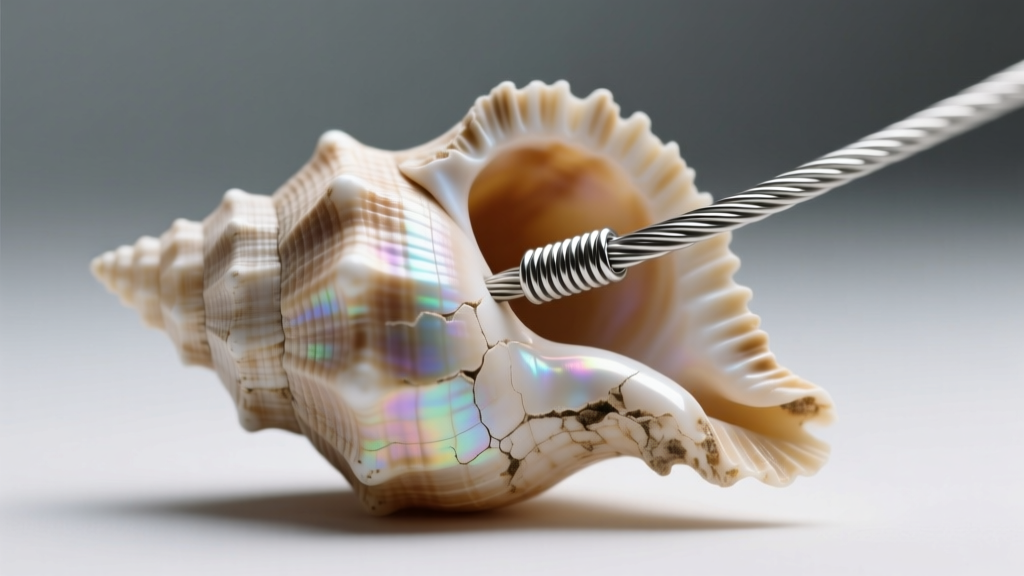
The structural integrity of a poka shell necklace is entirely dependent on the stringing medium. The interior edges of natural shell holes can be microscopically sharp and abrasive. Over time, the friction of calcium carbonate against traditional silk or cotton thread will cause the fibers to fray and eventually snap, leading to catastrophic strand failure.
For modern, durable stringing, master jewelers recommend using 49-strand micro-fused stainless steel beading wire with a nylon coating. The ideal gauge for standard 4mm to 6mm poka beads is 0.018 inches (0.46mm). This gauge provides a tensile strength of approximately 25 to 30 pounds, which is more than sufficient to support the weight of the shell while remaining flexible enough to drape naturally around the clavicle. For heavier, jumbo AAA-grade beads, stepping up to a 0.024-inch (0.61mm) gauge wire is advised to prevent kinking.
When finishing the necklace, avoid crimping directly against the shell. Always use sterling silver or gold-filled French wire (gimp) or wire protectors to create a smooth transition between the abrasive shell edge and the metal clasp. As detailed in technical fabrication guides by the Ganoksin Jewelry Making Community, protecting the stringing medium from the internal abrasion of organic beads is critical for ensuring the heirloom longevity of the piece.
Environmental Degradation and Chemical Preservation
Because a poka shell necklace is an organic gem, it is highly reactive to its environment. The calcium carbonate structure is alkaline and inherently vulnerable to acidic degradation. The Mohs hardness of marine shell ranges from a mere 3.0 to 3.5, making it susceptible to scratching from everyday dust (which contains quartz particles at 7.0 Mohs) and chemical etching from daily wear products.
The Danger of Chemical Sunscreens and pH
The most common cause of irreversible damage to shell jewelry is exposure to chemical sunscreens and human perspiration. Active UV-filtering compounds like avobenzone and octocrylene, combined with the natural lactic acid in human sweat, will slowly dissolve the outer calcitic layer of the shell. This manifests as a dull, chalky white film that cannot be polished away, as the material itself has been chemically removed. Always apply cosmetics, perfumes, and sunscreens at least 20 minutes before donning a shell necklace to allow volatile alcohols and acids to evaporate.
Chlorine and Bromine Exposure
Never wear a poka shell necklace in swimming pools or hot tubs. Halogens like chlorine and bromine react violently with calcium carbonate, causing rapid pitting, structural weakening, and permanent discoloration. Even brief exposure to heavily chlorinated water can compromise the conchiolin protein matrix that holds the crystalline layers together.
Optimal Storage Humidity
Unlike inorganic gemstones, organic shells contain trace amounts of water within their crystalline matrix. Storing a poka shell necklace in a hyper-dry environment, such as a safe deposit box or a room with aggressive dehumidification (below 30% relative humidity), can cause the aragonite to dehydrate. This leads to micro-fractures and 'crazing' on the surface of the beads. Store your necklace in a soft, unbleached cotton pouch in a climate-controlled environment maintaining 40% to 55% relative humidity to preserve the structural integrity and waxy luster of the shell for generations.


