Expert Guide to Types of Necklaces for Men: Links, Metals and Gauges
Explore the best types of necklaces for men with our technical guide. Compare chain links, metal grades, gauge widths, and clasp mechanics for daily wear.

The Anatomy of Men's Chain Necklaces: Width, Gauge, and Tensile Strength
When evaluating the various types of necklaces for men, understanding the structural anatomy of the chain is paramount. Unlike women's jewelry, which often prioritizes delicate aesthetics, men's chains must balance visual weight with structural integrity. The two primary metrics for this are millimeter (mm) width and wire gauge.
Most men's chains fall between 3mm and 12mm in width. Anything under 3mm risks looking disproportionate on a broader frame and lacks the tensile strength to support heavy pendants. Conversely, chains exceeding 12mm cross into statement territory and can weigh upwards of 150 grams, requiring specialized clasps. Wire gauge measures the thickness of the individual wire used to forge the links. A standard 5mm Cuban link is typically forged from 8-gauge wire (approx. 3.2mm thick), providing a solid, heavy feel without excessive rigidity.
A critical manufacturing detail to inspect is whether the links are soldered. Soldered links feature a micro-welded joint that closes the loop completely. According to manufacturing standards outlined by Stuller, soldered links distribute tensile stress evenly across the entire link, preventing the chain from stretching or pulling apart if snagged. Unsoldered links, common in cheaper cable chains, will easily deform and open under as little as 5 pounds of lateral tension.
Decoding Chain Link Styles: Structural Profiles
The geometry of the link dictates not only the visual style but also the chain's drape, scratch resistance, and failure points. Here is a technical breakdown of the most prominent styles.
Cuban Link (The Heavyweight Standard)
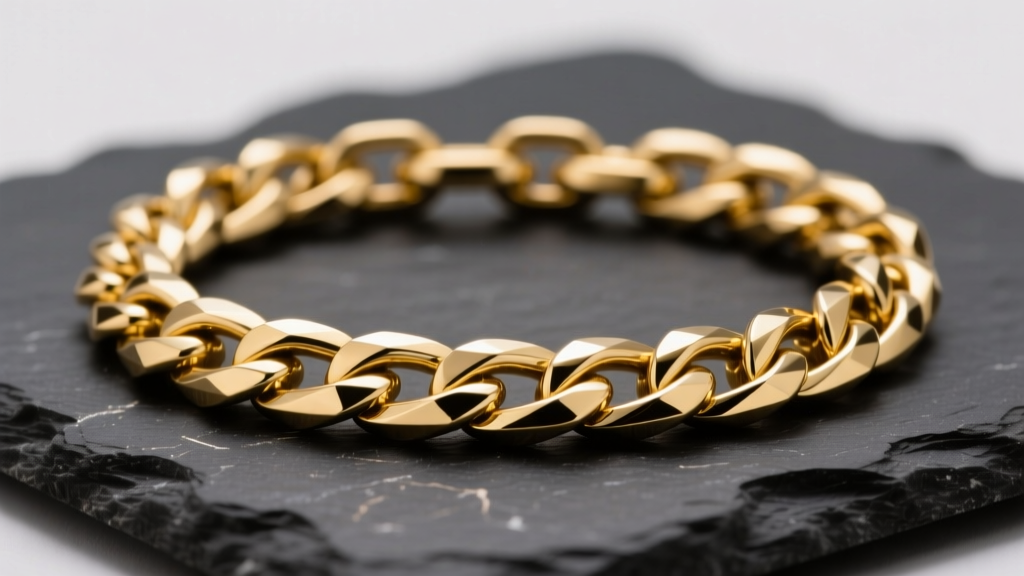
The Cuban link is characterized by its interlocking, flat-faced oval links. The flat profile allows the chain to lay flush against the sternum, reducing the risk of snagging on clothing. From a finishing perspective, you will encounter two main variants: high-polish and diamond-cut. High-polish Cubans offer a mirror-like finish that is easy to clean with a microfiber cloth. Diamond-cut Cubans feature faceted grooves milled into the metal, which maximize light refraction but act as traps for sebum and environmental dust, requiring periodic ultrasonic cleaning to maintain their brilliance.
Figaro Chain (The Asymmetrical Classic)
Originating in Italy, the Figaro chain utilizes an asymmetrical pattern—typically three short circular links followed by one elongated oval link. While visually striking, the Figaro presents a unique structural vulnerability. The smaller links require tighter bends during the forging process, which can induce work hardening in the metal. If not properly annealed during manufacturing, these small links become brittle and are the most common point of failure under sudden tensile shock.
Rope Chain (The High-Tensile Option)
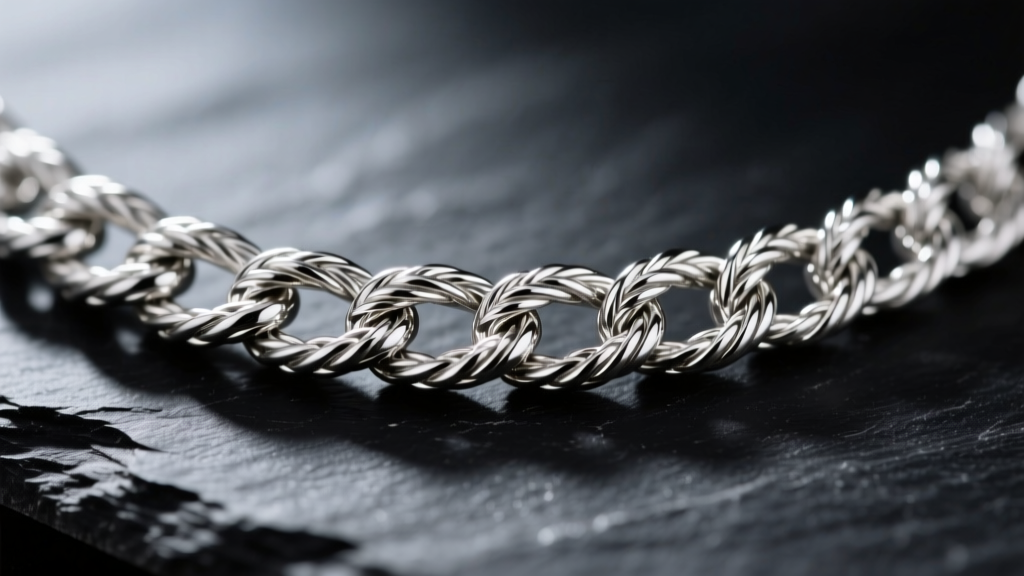
Rope chains are constructed by twisting multiple smaller links into a continuous spiral, mimicking the structure of a woven rope. This multi-axis geometry gives the rope chain the highest tensile strength-to-weight ratio among men's styles. Because the load is distributed across overlapping diagonal planes rather than a single linear axis, rope chains are highly resistant to snapping. However, their intricate crevices make them notoriously difficult to polish if heavily scratched.
Metallurgy & Material Grades: What Actually Lasts?
The longevity of men's jewelry is entirely dependent on the metallurgical composition of the alloy. Pure metals are generally too soft for daily wear, necessitating the use of specific alloy blends to achieve optimal Vickers Hardness (HV) and yield strength.
| Metal Alloy | Composition | Vickers Hardness (HV) | Tensile Strength | Best Application |
|---|---|---|---|---|
| 316L Stainless Steel | Fe, 16-18% Cr, 10-14% Ni, 2-3% Mo | ~150 HV | ~485 MPa | Daily wear, marine environments, high-impact sports |
| 14k Yellow Gold | 58.5% Au, Ag, Cu, Zn | ~135 HV | ~400 MPa | Heirloom pieces, status symbols, formal wear |
| Grade 5 Titanium | Ti, 6% Al, 4% V | ~350 HV | ~900 MPa | Active lifestyles, hypoallergenic requirements, lightweight needs |
| 925 Sterling Silver | 92.5% Ag, 7.5% Cu | ~65 HV | ~250 MPa | Occasional wear, fashion-forward styling (prone to oxidation) |
For men seeking a virtually indestructible option, Grade 5 Titanium (Ti-6Al-4V) is the undisputed champion. As noted by the Gemological Institute of America (GIA) in their metallurgical overviews, while precious metals like gold carry intrinsic value, titanium alloys offer aerospace-grade durability. Grade 5 titanium is nearly three times stronger than 316L stainless steel and will not oxidize, tarnish, or trigger nickel allergies. The trade-off is that its extreme hardness makes it impossible to resize or easily repair with standard jeweler's torches; laser welding is required for any structural fixes.
Clasp Mechanics: The Weakest Point of Failure
A chain is only as strong as its clasp. When exploring the different types of necklaces for men, you will frequently encounter three primary clasp mechanisms, each with distinct failure modes.
- Lobster Claw: The industry standard. It relies on an internal spring mechanism. The failure mode is spring fatigue; over time, or when exposed to chlorine and saltwater, the spring loses tension, causing the lever to fail to close completely. Not recommended for chains weighing over 80 grams.
- Box Clasp with Figure-8 Safety: The gold standard for heavy men's chains. The primary mechanism is a V-shaped lever that snaps into a square box. The "figure-8" safety is a secondary wire loop that hinges over a small pin on the opposite side. Even if the primary lever snaps or is accidentally depressed, the figure-8 safety will catch the chain, preventing a catastrophic drop.
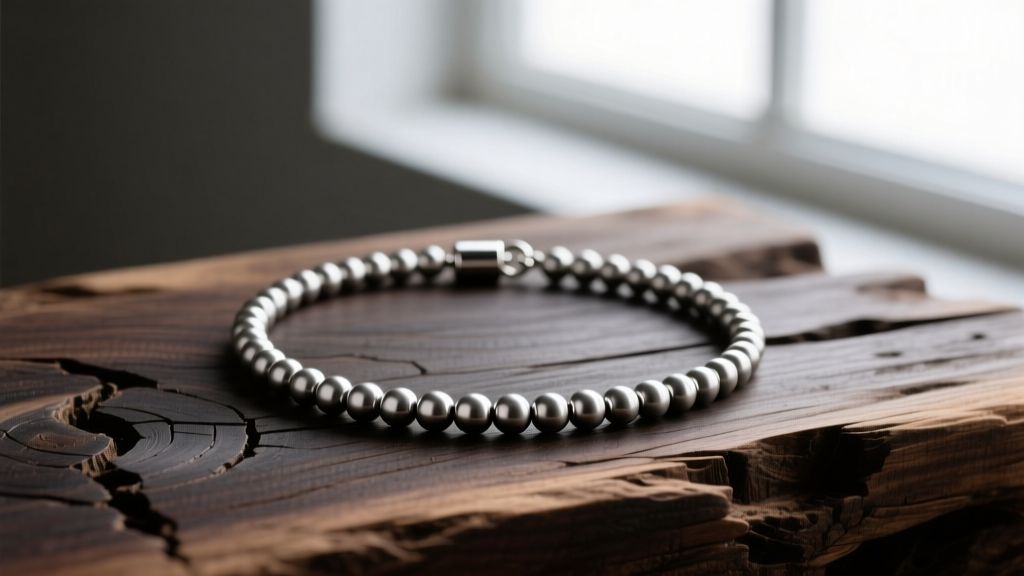
- Neodymium Magnetic: Utilizes rare-earth magnets encased in stainless steel or titanium. While excellent for accessibility and seamless aesthetics, magnetic clasps are vulnerable to lateral shearing forces. A sharp sideways tug can break the magnetic seal, making them unsuitable for heavy pendants or active wear.
Sizing Framework: Matching Chain Width to Neck Circumference
Proper proportion is the difference between a refined accessory and an overwhelming costume piece. Use this technical framework to match chain width to your specific anatomy.
The Proportion Rule: The width of the chain should scale linearly with the circumference of the neck and the breadth of the sternum. A 10mm chain on a 14-inch neck will look like a rigid collar, while a 3mm chain on an 18-inch neck will visually disappear.
For Neck Circumferences Under 15 Inches:
Opt for widths between 3mm and 5mm. Lengths should be kept between 18 and 20 inches, allowing the chain to rest just below the clavicle. A 4mm Figaro or a 3mm Rope chain provides excellent visual presence without overwhelming the frame.
For Neck Circumferences Between 15 and 17 Inches:
This is the average male range. Widths from 5mm to 8mm are ideal. A 6mm Cuban link at 22 inches offers a classic, versatile drape that can be worn over a t-shirt or beneath an unbuttoned collar. This size range also provides the necessary structural integrity to support pendants weighing up to 15 grams.
For Neck Circumferences Over 17 Inches:
Wider chains, ranging from 8mm to 12mm, are required to maintain visual balance. A 24-inch length is typically necessary to ensure the chain does not sit too high on the chest, which can restrict movement and cause the clasp to ride up the back of the neck. For widths exceeding 10mm, always ensure the piece is equipped with a reinforced box clasp to manage the increased kinetic load.
Ultimately, selecting from the various types of necklaces for men requires looking past the initial aesthetic and evaluating the metallurgy, link geometry, and clasp engineering. By prioritizing soldered links, appropriate tensile strengths, and anatomically scaled proportions, you ensure the piece not only looks exceptional but survives the rigors of daily wear.


