Ring in Necklace Meaning: Symbolism & Technical Guide
Explore the ring in necklace meaning, from cultural symbolism to the technical metallurgy and chain gauge specs required for safe wear.

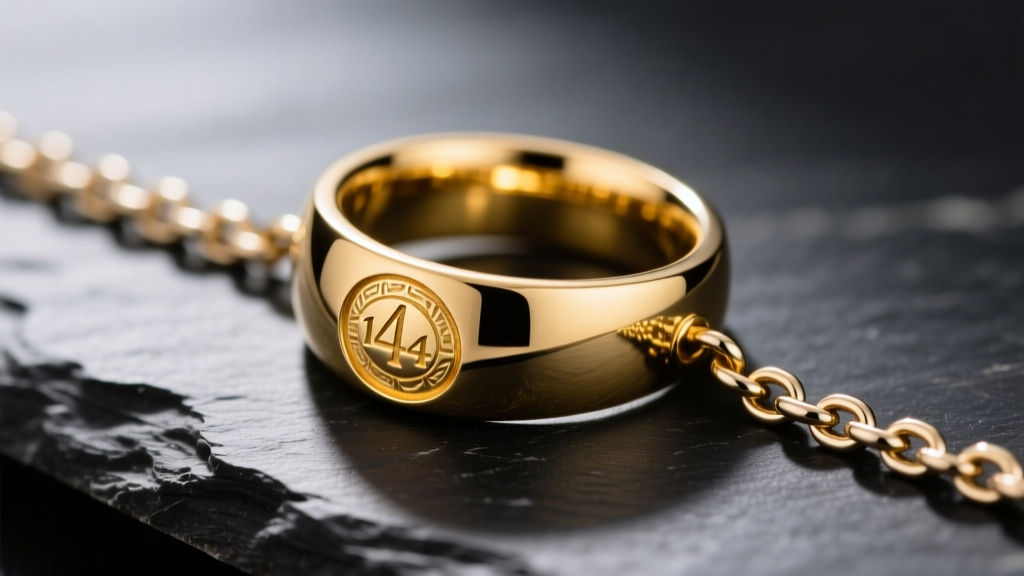
The Cultural and Personal Ring in Necklace Meaning
The practice of suspending a ring from a necklace chain is a tradition that bridges deep emotional symbolism and strict practical necessity. When analyzing the ring in necklace meaning, jewelry historians and cultural anthropologists generally categorize the practice into three distinct motivations: sentimental, occupational, and transitional. Understanding these motivations is the first step for a jeweler or stylist in recommending the correct chain architecture to support the piece.
Sentimental and Mourning Origins
Historically, the ring in necklace meaning is rooted in Victorian mourning jewelry, where a wedding band or hair-woven ring was suspended close to the heart after the loss of a spouse. Today, this translates to wearing a late partner's ring or an heirloom piece that no longer fits the wearer's finger due to arthritis or weight fluctuations. In these cases, the ring is often a heavy, sentimental signet or a vintage band, requiring a chain with high tensile strength and a secure clasp mechanism.
Occupational and Safety Imperatives
For medical professionals, mechanics, and military personnel, the ring in necklace meaning is purely utilitarian. Wearing a ring on the finger in these environments poses severe risks, including degloving injuries or electrical conductivity hazards. Military personnel frequently wear wedding bands on chains alongside dog tags during deployment. This specific use case demands chains that can withstand high-impact environments, sweat exposure, and the constant friction of tactical gear.
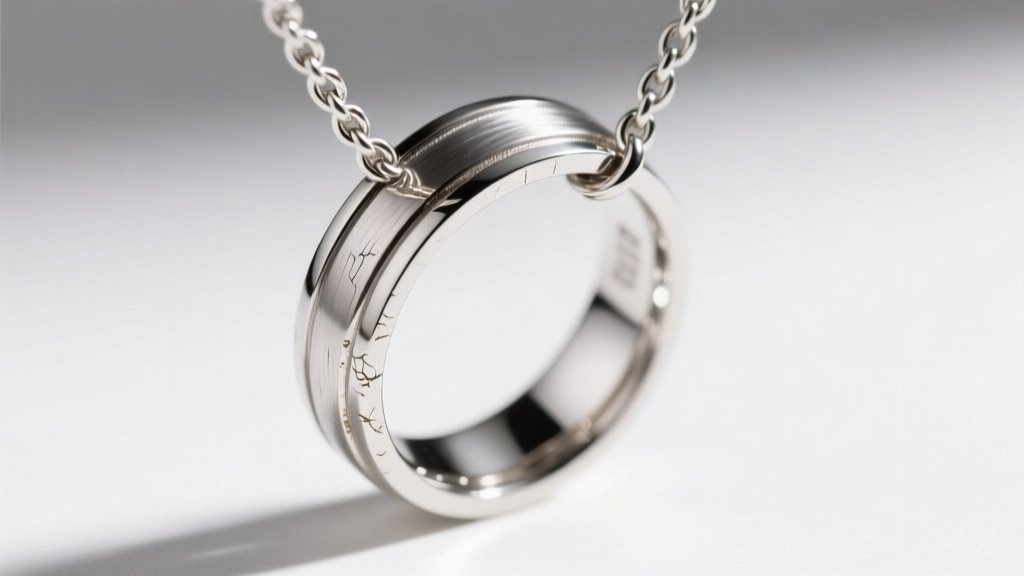
The Metallurgy of Ring and Chain Pairings
From a materials science perspective, pairing a ring with a chain introduces complex metallurgical interactions. The most critical technical consideration is galvanic corrosion, alongside abrasive wear dictated by the Vickers hardness (HV) scale.
Galvanic Corrosion and the Electrolyte Effect
When two dissimilar metals rest against each other in the presence of an electrolyte (human sweat, which is rich in sodium chloride), a galvanic cell is created. According to data published by the Gemological Institute of America (GIA), the less noble metal (the anode) will corrode and degrade. For example, threading a platinum ring (highly cathodic) onto a sterling silver chain (anodic) will cause the silver links to rapidly pit, weaken, and eventually snap at the contact point.
Expert Rule: Always match the metallurgical family of the ring and the chain. If a mixed-metal pairing is unavoidable for aesthetic reasons, use a vulcanized silicone O-ring or a specialized PTFE-coated jewelry bail to physically isolate the two metals.
Abrasive Wear and Vickers Hardness (HV)
Even when metals are identical, friction causes wear. A hardened 14k white gold ring (approx. 135 HV) sliding against an annealed 14k yellow gold chain (approx. 110 HV) will act as a microscopic file. Over 12 to 18 months of daily pendulum motion, the ring's shank will literally saw through the chain's jump rings. To mitigate this, technical jewelers recommend utilizing chains with a higher alloy hardness or applying a rhodium flash to the interior of the ring shank to reduce the coefficient of friction.
Dimensional Engineering: Matching Shank to Chain
The most common point of failure in ring-necklace assemblies is dimensional mismatch. Consumers often focus on the chain's wire gauge (thickness), but the critical metric is the inner link diameter relative to the ring's shank profile.
A standard comfort-fit wedding band has a shank thickness ranging from 1.6mm to 2.2mm. If the inner dimension of the chain link is too tight, the ring will bind, creating acute stress points on the chain links when the necklace is pulled taut. According to structural guidelines from Rio Grande Jewelry Supply, you must maintain a minimum clearance of 0.5mm between the shank thickness and the chain's inner link diameter to allow for fluid pendulum kinetics.
Chain Compatibility Matrix
The following table outlines the technical specifications for pairing common chain weaves with various ring shank profiles.
| Chain Weave | Wire Gauge (mm) | Inner Link Dimension | Max Ring Shank Thickness | Pendulum Weight Limit |
|---|---|---|---|---|
| Box Chain | 1.5mm - 2.5mm | 2.0mm - 3.5mm | Up to 3.0mm | 12g - 18g |
| Wheat Chain | 1.2mm - 2.0mm | 1.8mm - 2.8mm | Up to 2.3mm | 8g - 14g |
| Rope Chain | 2.0mm - 4.0mm | 2.5mm - 5.0mm | Up to 4.5mm | 15g - 25g |
| Snake Chain | 1.5mm - 3.0mm | N/A (Solid tube) | Not Recommended | Under 5g (High Kink Risk) |
Structural Integrity: Clasp and Link Failure Modes
When a ring is suspended on a chain, it acts as a concentrated pendulum weight. As the wearer walks or moves, the ring swings, generating lateral torque that is transferred directly to the weakest points of the necklace: the clasp and the terminal jump rings.
Clasp Mechanics Under Pendulum Torque
Standard spring-ring clasps are engineered for lightweight pendants (under 3 grams). When subjected to the 6-10 gram pendulum swing of a gold or platinum wedding band, the internal tension spring of a spring-ring clasp will fatigue, leading to catastrophic failure and loss of the ring.
Technical Solution: Always upgrade the assembly to a forged lobster clasp or a parrot clasp. Furthermore, the jump ring connecting the clasp to the chain must be soldered closed. An unsoldered, open jump ring will slowly twist open under the repetitive torsional stress of the swinging ring.
The Danger of Snake and Herringbone Chains
While visually appealing, snake and herringbone chains are structurally unsuited for ring pendants. These weaves rely on a continuous, flush link structure. The concentrated point-load of a ring shank resting on a snake chain creates a fulcrum effect. When the necklace bends at this exact point, the internal mesh fractures, resulting in a permanent, irreparable kink. For heavy ring pendants, articulated weaves like the Box or Cuban link are mandatory to distribute kinetic energy across multiple moving joints.
Expert Framework for Sizing and Assembly
To ensure the longevity of a ring-on-necklace assembly, follow this precise four-step technical framework:
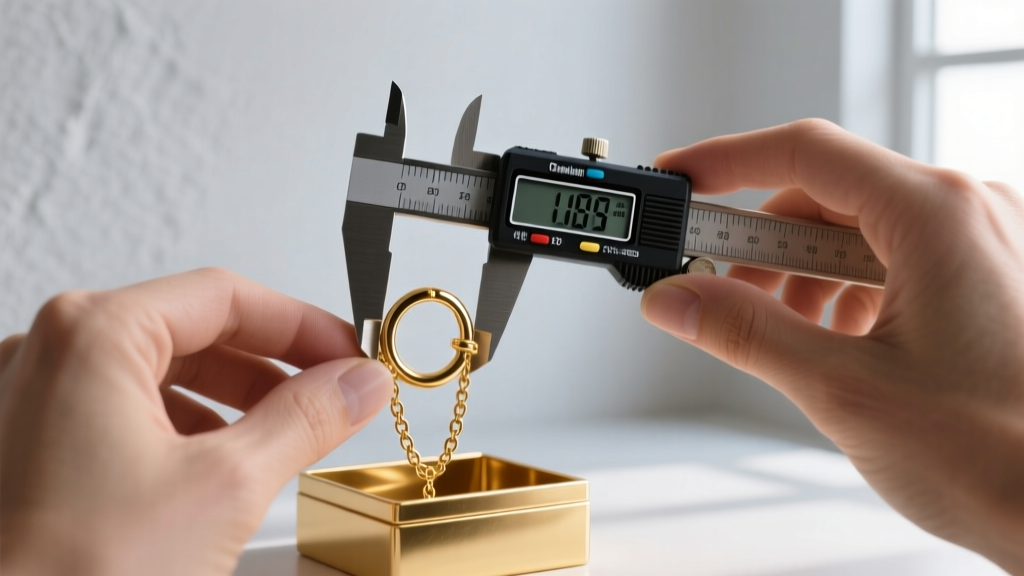
- Caliper Measurement: Use digital calipers to measure the exact thickness and width of the ring's shank at its thickest point (usually the bottom or the setting's gallery).
- Clearance Selection: Select a chain weave where the inner link diameter exceeds the shank thickness by at least 0.5mm to prevent binding and abrasive sawing.
- Metallurgical Alignment: Verify the karat and alloy family of both pieces. If pairing a titanium ring with a gold chain, install a PTFE isolation bail to prevent galvanic degradation.
- Clasp Reinforcement: Remove the factory spring-ring clasp. Solder a heavy-duty lobster clasp to a reinforced, soldered jump ring to withstand the pendulum torque of the ring's specific gram weight.
Ultimately, understanding the true ring in necklace meaning requires looking past the romance and addressing the physics. By respecting metallurgical boundaries and dimensional tolerances, you can safely keep your most precious commitments close to your heart without risking structural failure.


