How to Authenticate, Cleanse, and Style a Rose Quartz Necklace
Learn how to authenticate, properly cleanse, and beautifully style your rose quartz necklace with our expert step-by-step gemstone care guide.

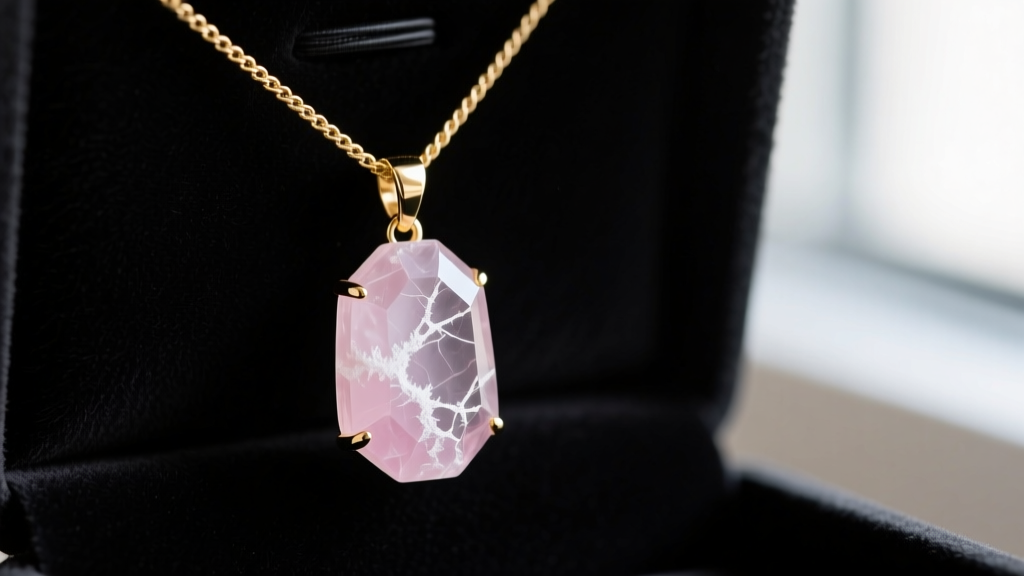
The Ultimate Masterclass: Caring for Your Rose Quartz Necklace
A rose quartz necklace is more than just a beautiful accessory; it is a timeless piece of mineral history revered for its soothing blush hues and associations with unconditional love. However, the market is currently saturated with glass imitations, dyed stones, and synthetic alternatives. Furthermore, because rose quartz is a macrocrystalline variety of silicon dioxide (SiO2) with specific physical vulnerabilities, improper care can lead to irreversible color fading or structural damage.
Whether you have just purchased a delicate 14k gold rose quartz pendant or inherited a vintage beaded strand, this comprehensive step-by-step guide will teach you how to authenticate your stone, safely cleanse it without causing thermal shock, and style it using professional layering frameworks.
Step 1: Authenticating Your Rose Quartz Necklace
Before you begin any cleansing or styling routines, you must verify that your stone is genuine. According to the Gemological Institute of America (GIA), natural quartz has a specific gravity of 2.65 and a refractive index of 1.54 to 1.55. While you may not have a gemological refractometer at home, you can perform three highly reliable field tests to spot fakes.
The Temperature and Weight Test
Genuine rose quartz has a higher thermal conductivity and density than glass or plastic. When you first pick up the pendant, it should feel noticeably cold to the touch and take several seconds to warm up against your skin. Glass, by contrast, will warm up almost instantly. Additionally, a solid rose quartz cabochon will feel surprisingly heavy for its size compared to a resin or glass imitation.
The Visual Inclusion Inspection
Examine the stone under a bright LED light or natural sunlight. Natural rose quartz is rarely perfectly clear. It typically exhibits a cloudy translucency, microscopic white striations, or tiny rutile needle inclusions. If your stone is perfectly transparent, uniformly bright pink, and contains perfectly spherical bubbles, you are likely looking at dyed glass.
| Feature | Natural Rose Quartz | Glass Imitation | Dyed Quartz |
|---|---|---|---|
| Clarity | Cloudy, translucent | Highly transparent | Fractured with concentrated color |
| Inclusions | White veining, rutile needles | Round air bubbles | Dye pooling in cracks |
| Temperature | Cold, slow to warm | Room temp, warms fast | Cold, slow to warm |
| Color Distribution | Soft, even, pale blush | Neon or uniform bright pink | Uneven, dark in crevices |
Step 2: Safe Cleansing Methods for Rose Quartz
Once authenticated, your necklace needs to be cleared of physical dirt, skin oils, and environmental debris. Rose quartz ranks at a 7 on the Mohs hardness scale, making it relatively durable, but it is highly susceptible to thermal shock and chemical erosion.
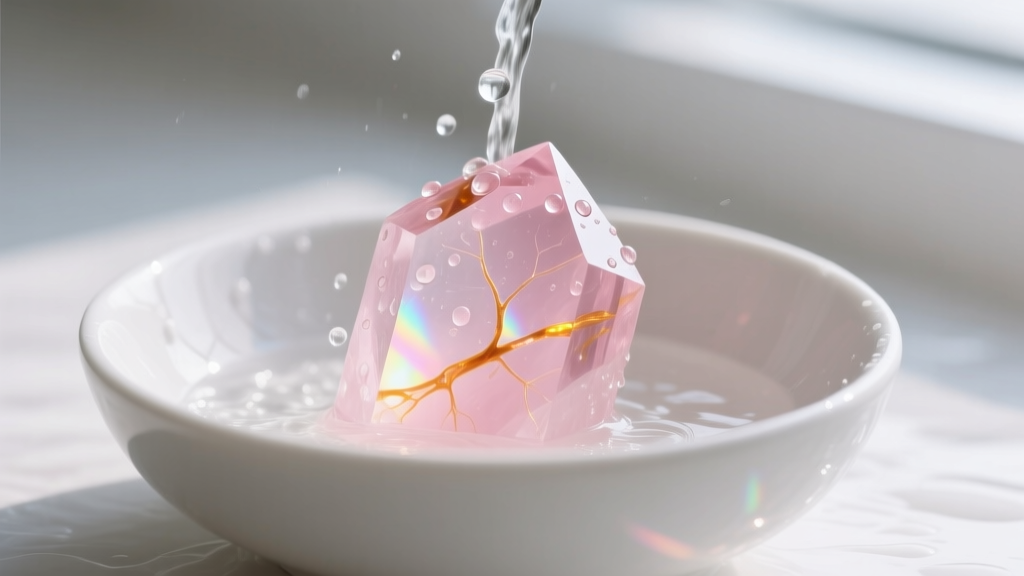
The Lukewarm Water Rinse (Step-by-Step)
- Prepare the Solution: Fill a bowl with lukewarm (never hot) distilled water. Add a single drop of pH-neutral, fragrance-free dish soap.
- Soak Briefly: Submerge the rose quartz pendant for no more than 3 to 5 minutes. Prolonged soaking can degrade the adhesive used in certain bezel settings or damage the chain if it is plated.
- Gentle Agitation: Use a baby-soft toothbrush to lightly sweep away debris from the back of the stone and the chain links. Do not scrub the face of the cabochon, as hard bristles can leave micro-scratches on polished surfaces.
- Rinse and Dry: Rinse thoroughly under a gentle stream of lukewarm water. Pat dry immediately with a lint-free microfiber cloth to prevent water spots.
Critical Warning: Never place a rose quartz necklace in an ultrasonic jewelry cleaner. The high-frequency vibrations can easily shatter the stone along its natural internal fracture lines or microscopic inclusions.
Step 3: Charging and Protecting the Crystal's Color
In the realm of crystal care, "charging" refers to both the metaphysical practice of resetting the stone's energy and the physical necessity of protecting its color centers. Data from Mindat.org indicates that the pink coloration in rose quartz is often caused by trace amounts of titanium, manganese, or microscopic dumortierite fibers.
The UV Fading Phenomenon
Unlike amethyst or citrine, which are heat-treated to enhance their colors, rose quartz is highly photosensitive. Prolonged exposure to direct, harsh ultraviolet (UV) sunlight will cause the pink color centers to break down, resulting in a bleached, chalky white appearance. This process is irreversible.
The Moonlight and Selenite Method
To safely "charge" your necklace without risking UV damage, utilize the moonlight method. Place your dried necklace on a windowsill during a full moon. Alternatively, rest the pendant on a raw selenite charging plate overnight. Selenite (a variety of gypsum) is a self-cleansing mineral that will not scratch your quartz, provided the plate is smooth and free of jagged edges.
Step 4: Styling Your Rose Quartz Necklace for Every Occasion
Styling a rose quartz necklace requires balancing its soft, romantic color with the right metals and complementary necklines. Because the stone carries visual weight, the chain length and metal tone will dictate the overall aesthetic.
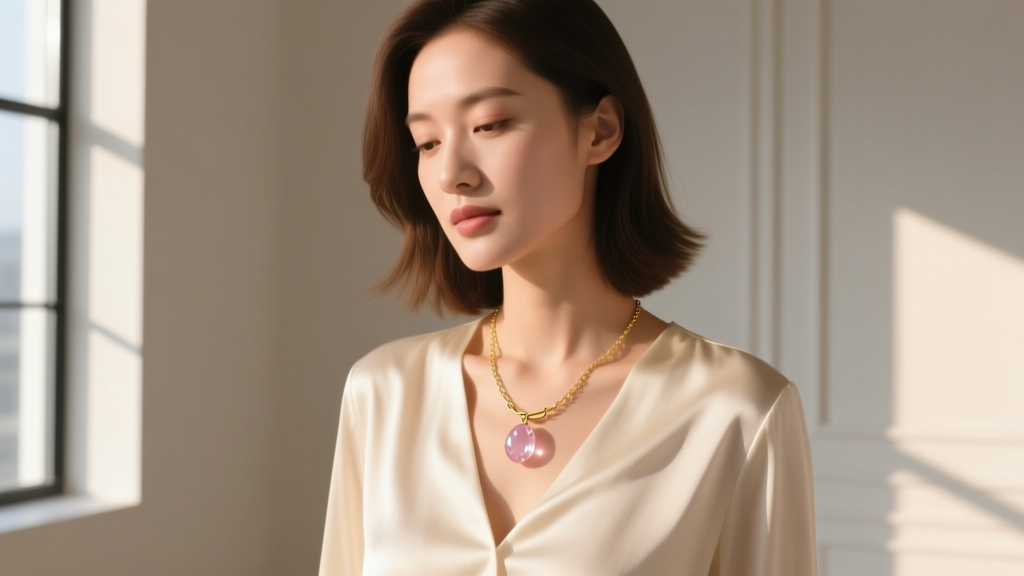
Metal Pairing Framework
- Rose Gold: Creates a monochromatic, ultra-romantic look. Best for weddings, date nights, and soft pastel outfits.
- Yellow Gold (14k or 18k): Provides a warm, vintage contrast that enhances the blush tones of the stone. Ideal for bohemian or earth-toned wardrobes.
- White Gold / Sterling Silver: Offers a crisp, modern contrast. The cool metal makes the pink stone pop, making it perfect for professional or minimalist aesthetics.
The 2-4-6 Layering Rule
If you want to layer your rose quartz pendant with other chains, follow the industry-standard 2-4-6 inch drop rule to prevent tangling and ensure each piece is visible.
- Layer 1 (16 inches): A delicate choker or snake chain that sits at the base of the throat.
- Layer 2 (18 to 20 inches): Your primary rose quartz pendant, resting on the collarbone.
- Layer 3 (22 to 24 inches): A longer, heavier chain (like a paperclip or rope chain) featuring a smaller, complementary charm or a simple gold bar.
Troubleshooting Common Rose Quartz Issues
Even with meticulous care, you may encounter a few common issues with your necklace over time. Here is how to troubleshoot them like a professional jeweler.
Issue: The Stone Looks Cloudy or Dull
Solution: This is usually caused by a buildup of lotions, perfumes, and natural skin oils. Create a paste using baking soda and a few drops of water. Gently rub the paste onto the back (unpolished side) of the stone with your finger, then rinse. Avoid baking soda on the polished front, as it is mildly abrasive and can dull the mirror finish over time.
Issue: The Chain Keeps Tangling with the Pendant
Solution: This happens when the bail (the loop connecting the stone to the chain) is too large for the chain links, allowing the pendant to slide completely through and knot. Have a jeweler solder a small jump ring inside the bail to reduce its diameter, or switch to a chain with wider links, such as a cable or box chain.
Issue: The Pink Color is Fading
Solution: If your stone has already faded due to sun exposure, it cannot be chemically restored. However, you can repurpose the stone. Have a lapidary artist re-cut the faded stone into a smaller, faceted gem, which often reveals deeper, untouched color from the core of the original rough material, giving your beloved necklace a second life.


