How to Authenticate a FAS 925 Italy Necklace Step-by-Step
Learn how to authenticate a FAS 925 Italy necklace with our step-by-step guide. Verify hallmarks, test silver purity, and spot counterfeit chains easily.

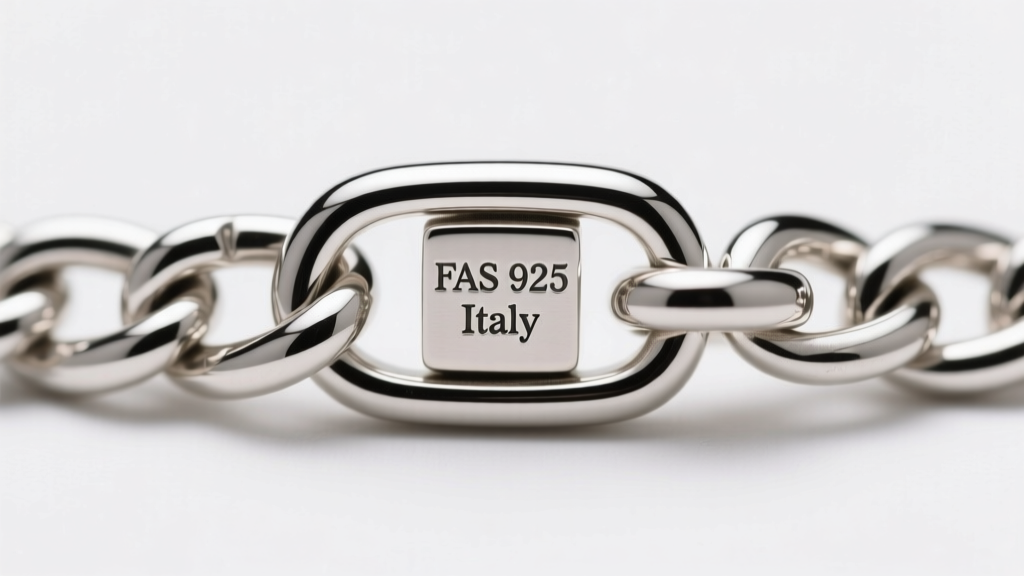
The Anatomy of the "FAS 925 Italy" Stamp
Finding a vintage or pre-owned necklace stamped with a combination of "FAS", "925", and "Italy" can be both thrilling and confusing for jewelry collectors. To properly authenticate a FAS 925 Italy necklace, you first need to understand what this specific triad of hallmarks actually means. The "925" denotes that the alloy is sterling silver, composed of 92.5% pure silver and 7.5% copper or other base metals for structural integrity. The "Italy" stamp indicates the country of origin for the chain's manufacturing, a nation globally revered for its superior chain-making machinery and finishing techniques.
But what about the "FAS"? Historically, FAS was a registered trademark for F.A.S., a prominent US-based jewelry importer and manufacturer that frequently sourced high-quality chains from Italian artisans while occasionally utilizing manufacturing hubs in Thailand for specific cast components. When you see all three marks clustered near the clasp or on the soldered jump ring, you are likely looking at a piece of imported Italian sterling silver distributed by this specific entity. However, as of 2026, the secondary market is flooded with laser-etched counterfeits attempting to mimic these exact stamps to inflate the value of base-metal chains. Follow this step-by-step forensic guide to verify your piece.
Step 1: Visual Hallmark Inspection and Loupe Analysis
The first step in authentication requires zero chemicals, just magnification. Counterfeiters often use shallow laser etching to replicate hallmarks, whereas genuine Italian manufacturers traditionally use hardened steel dies to stamp the metal.
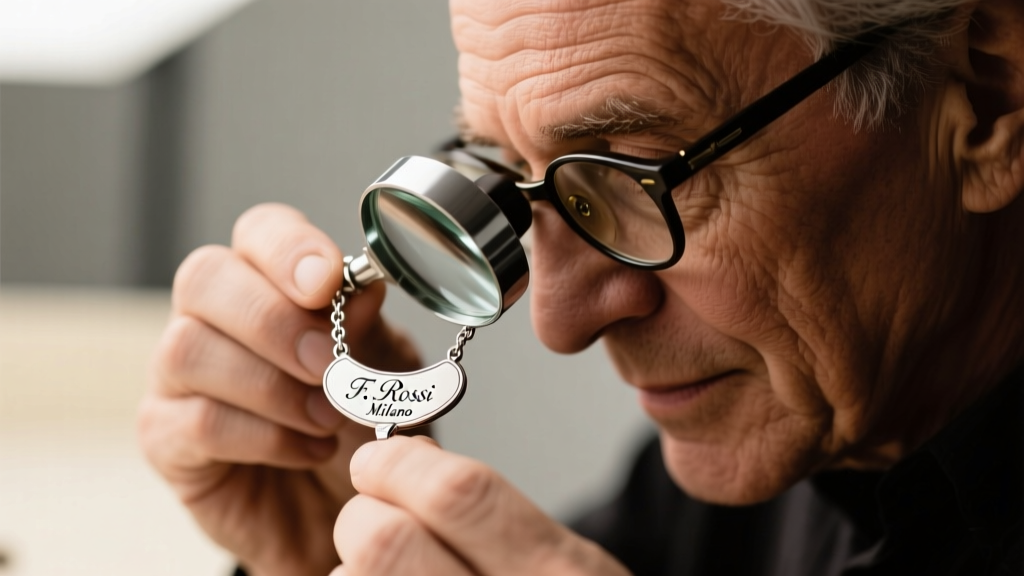
What to look for under a 10x or 30x Jeweler's Loupe:
- Displacement vs. Etching: A genuine mechanical stamp displaces the metal. Look closely at the edges of the "925" and "Italy" letters. You should see a slight raised ridge or "lip" of silver around the perimeter of the indentation. Laser-etched fakes will appear perfectly flat and uniform under magnification.
- Font Consistency: Italian assay stamps typically feature a distinct, blocky, sans-serif font. The "FAS" mark, if original, often features a slightly stylized, bold serif or enclosed block lettering depending on the decade of production.
- Placement Logic: Genuine stamps are applied before the final polishing and rhodium-plating stages. If the stamp looks suspiciously bright and un-tarnished while the rest of the chain in the crevices is heavily oxidized, the stamp may have been fraudulently added post-manufacture.
Step 2: Non-Destructive Physical Testing
Before resorting to acids, utilize the physical properties of silver to weed out the most common fakes, which are usually made of copper-nickel alloys or brass.
The N52 Neodymium Magnet Test
Silver is paramagnetic, meaning it exhibits no noticeable magnetic attraction. Take a high-grade N52 Neodymium magnet and dangle the necklace from the clasp. If the chain snaps to the magnet or exhibits a strong pull, the core is ferromagnetic (likely steel or iron), and the piece is a fake. Note: The internal steel spring inside the lobster claw or springring clasp will attract the magnet. This is normal and does not mean the chain itself is fake. Test the links in the middle of the chain.
The Ice Cube Thermal Conductivity Test
Silver possesses the highest thermal conductivity of any common metal. Place an ice cube directly on the thickest part of the chain links. A genuine FAS 925 Italy sterling silver chain will melt the ice noticeably faster than a stainless steel or brass counterfeit, and the silver itself will become freezing cold to the touch almost instantly.
Step 3: Destructive Acid Testing for Purity Verification
If the piece passes the visual and magnetic tests, the final definitive step is verifying the exact silver purity using Schwerter's solution (silver testing acid). This test requires making a microscopic scratch on the metal to bypass any potential silver plating.
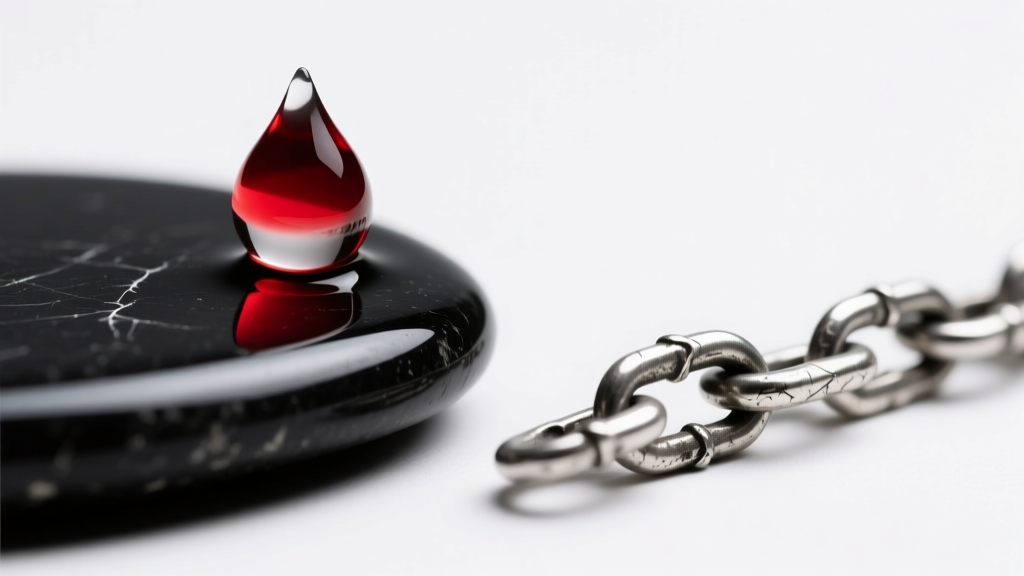
- Prep the Stone: Obtain a black silicate testing stone. Find an inconspicuous link near the clasp of your FAS necklace.
- Create a Scratch: Rub the link firmly back and forth on the stone 10 to 15 times to leave a visible metallic streak. You must penetrate the top layer to test the core metal.
- Apply the Acid: Place a single drop of standard .925 silver testing acid (a mixture of potassium dichromate and nitric acid) onto the streak.
- Read the Reaction:
- Deep Blood Red: The metal is .925 sterling silver or higher. Your FAS 925 Italy necklace is authentic.
- Brown or Dark Red: The metal is likely .800 silver (common in older European coins, but not standard for Italian jewelry chains).
- Green: The core metal is brass or copper. The necklace is heavily silver-plated and counterfeit.
Always neutralize the acid immediately with a baking soda and water paste to prevent damage to the stone and surrounding surfaces. For comprehensive guidelines on precious metal marking standards, refer to the FTC Jewelry Guides, which strictly regulate how these stamps can be legally applied in the United States.
Identifying Counterfeit Failure Modes
When evaluating vintage or estate jewelry, knowing the common failure modes of counterfeiters can save you from costly mistakes. Below is a diagnostic comparison chart to help you quickly identify red flags.
| Diagnostic Feature | Genuine FAS 925 Italy Chain | Common Counterfeit Chain |
|---|---|---|
| Clasp Spring Mechanism | Smooth retraction; internal steel spring is magnetized, exterior is not. | Stiff retraction; entire clasp body may be magnetic (cheap steel alloy). |
| Link Soldering | Laser or micro-torch soldered jump rings; seamless, clean joints. | Visible, sloppy blobs of silver-colored solder or completely unsoldered open rings. |
| Weight & Density | Specific gravity of ~10.49; feels dense and substantial for its size. | Specific gravity of ~8.4 (brass); feels suspiciously light or hollow. |
| Tarnish Pattern | Even, dark brown/black sulfur tarnish that polishes off easily. | Flaking, peeling, or green/black oxidation that reveals a yellowish base metal underneath. |
"When purchasing vintage Italian chains, always verify that the 'Italy' stamp is accompanied by a valid maker's mark or purity guarantee. A standalone 'Italy' stamp without a registered silversmith polygon or company mark is a primary indicator of modern mass-produced tourist jewelry." — Guidelines adapted from the Gemological Institute of America (GIA).
Step 4: Long-Term Care for Italian Sterling Silver
Once you have successfully authenticated your FAS 925 Italy necklace, proper maintenance is critical to preserving its value and luster. Italian chains are often finished with a micro-layer of rhodium or an anti-tarnish e-coating. Aggressive polishing can strip this protective layer.
Best Practices for 2026 and Beyond:
- Use a Pacific Silvercloth: Avoid liquid dip cleaners, which contain harsh thiourea chemicals that can pit the silver and leave a white, chalky residue in the chain links. Instead, store the necklace wrapped in a treated Pacific Silvercloth, which actively absorbs hydrogen sulfide from the air.
- The Aluminum Foil Bath: For heavy, stubborn tarnish in hard-to-reach chain crevices, use an electrolytic reaction. Line a glass bowl with aluminum foil (shiny side up), add boiling water, a tablespoon of baking soda, and a tablespoon of non-iodized salt. Submerge the necklace for exactly 3 minutes. The sulfur will transfer from the silver to the aluminum foil without removing any base metal.
- Ultrasonic Caution: While ultrasonic cleaners are excellent for diamond pendants, avoid using them on oxidized or intentionally antiqued Italian silver chains, as the high-frequency cavitation will strip the dark patina from the recessed areas, ruining the designer's intended contrast.
By combining meticulous visual inspection with foundational metallurgical testing, you can confidently authenticate, wear, and preserve your FAS 925 Italy necklace for decades. Always consult a certified gemologist or a reputable member of Jewelers of America if you remain uncertain about a high-value estate piece.


