How to Authenticate and Layer a 4 Leaf Clover Necklace
Learn how to authenticate, layer, and care for a 4 leaf clover necklace. Expert tips on hallmarks, stone porosity, and styling lengths.

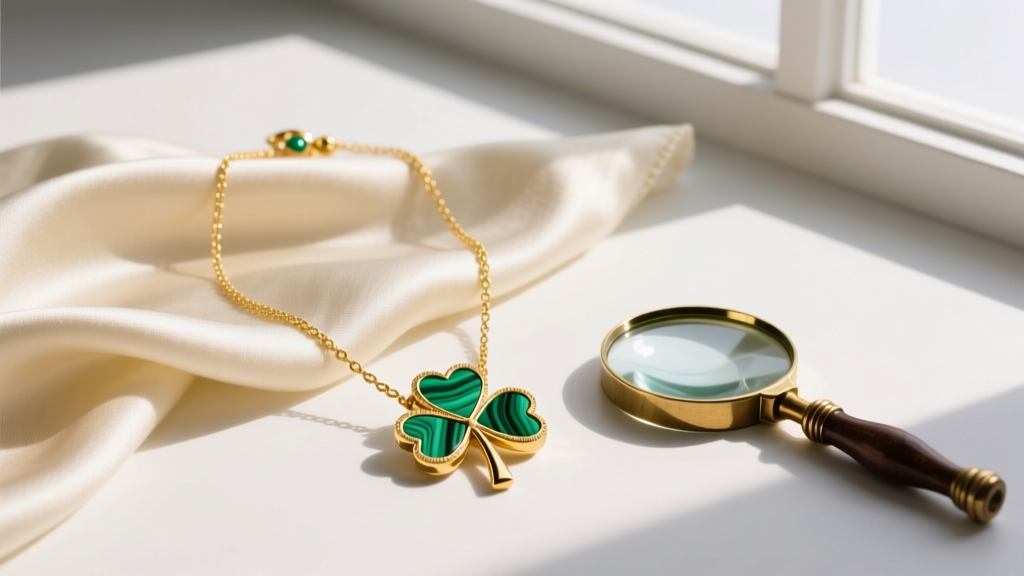
The 4 leaf clover necklace has transcended its status as a mere good luck charm to become one of the most recognizable and highly collected motifs in fine jewelry. Whether you are investing in a heritage piece from a legendary Parisian maison or exploring contemporary interpretations of the quatrefoil design, understanding the anatomy, authentication markers, and styling mechanics of these pendants is essential. In this comprehensive guide, we break down the exact material grades, hallmark specifics, and layering frameworks you need to master in 2026.
Decoding the Materials: Hard vs. Porous Stones
Before purchasing or layering a 4 leaf clover necklace, you must understand the gemological properties of the inlay materials. The motif is typically framed in 18k gold (750 purity) and set with a variety of hard and ornamental stones. According to the GIA Gem Encyclopedia, the Mohs hardness scale dictates how a stone will withstand daily friction, skin oils, and accidental impacts.
- Malachite & Lapis Lazuli (Mohs 3.5 - 5.5): Highly porous and sensitive to acids, perfumes, and even natural skin pH. These stones require meticulous care and should not be worn during exercise or showering.
- Mother of Pearl (Mohs 2.5 - 4.5): Composed of nacre, this organic material is prone to scratching and can lose its luster if exposed to harsh chemicals or prolonged UV light.
- Carnelian & Onyx (Mohs 6.5 - 7): Chalcedony variants that offer excellent durability for everyday wear. Black onyx used in high-end clover motifs is often dyed to achieve a uniform, mirror-like depth, which is an accepted industry practice when disclosed.
- Diamond Pave: Often set in the 'Sweet' or 'Magic' variations, featuring VS clarity and F-G color stones set flush into the 18k gold bezel.
Step-by-Step Authentication Guide for Vintage Motifs
The secondary market for vintage and pre-owned 4 leaf clover necklaces is saturated with high-quality counterfeits. To verify authenticity, you must look beyond the general shape and inspect the micro-craftsmanship and hallmarking standards mandated by French assay offices.
Step 1: Inspect the Milgrain Beading
The iconic gold beaded border (milgrain) surrounding the stone is a primary tell. On an authentic piece, each gold bead is individually hand-applied or precisely cast with perfect spherical uniformity. Counterfeits often feature stamped or machine-pressed borders where the beads look flattened, merged, or irregularly spaced.
Step 2: Verify the Stone Inlay Flushness
Run your fingernail gently across the surface where the stone meets the gold bezel. Authentic pieces feature a perfectly flush transition with zero visible adhesive. If you see epoxy residue, gaps, or a stone that sits slightly recessed (creating a 'lip' where dirt accumulates), the piece is likely a replica or has undergone unverified third-party repair.
Step 3: Decode the Hallmarks and Serial Numbers
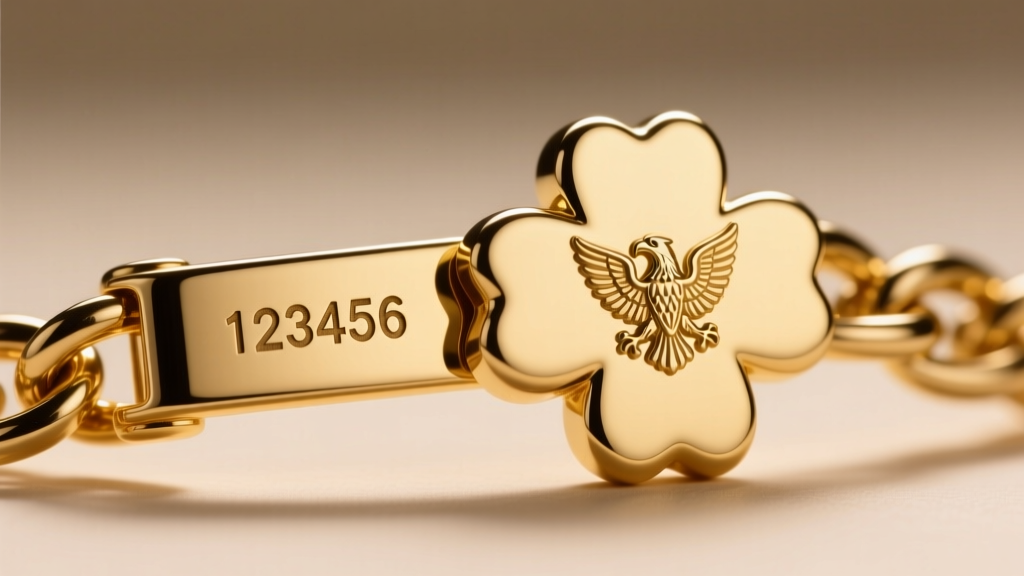
Authentic French 18k gold pieces must bear the Eagle Head hallmark, usually stamped discreetly on the clasp or the jump ring. Furthermore, modern heritage pieces feature a unique alphanumeric serial number (typically two letters, four digits, and one letter, such as JE1234X) laser-engraved on the clasp. As outlined in the FTC Jewelry Guides, proper hallmarking is legally required for precious metal purity claims, making these micro-stamps vital for verification.
The Layering Framework: Proportions and Lengths
Styling a 4 leaf clover necklace in 2026 is all about intentional asymmetry and mixing scales. The most common mistake is layering pendants of the exact same size, which creates visual clutter. Below is a structural guide to the three primary pendant sizes and how to layer them effectively.
| Motif Scale | Approx. Diameter | Ideal Chain Length | Best Layering Partner |
|---|---|---|---|
| Sweet | 9mm | 16 inches (Choker/Princess) | Delicate 1.0mm cable chain with a single 2mm diamond solitaire. |
| Vintage | 15mm | 18 - 20 inches | Chunky 3.5mm gold paperclip chain or a strand of 6mm lapis lazuli beads. |
| Magic | 22mm+ | 24 - 30 inches (Opera) | Worn solo as a statement piece, or doubled using a silicone O-ring clasp. |
Pro-Tip: The Metal Mixing Rule
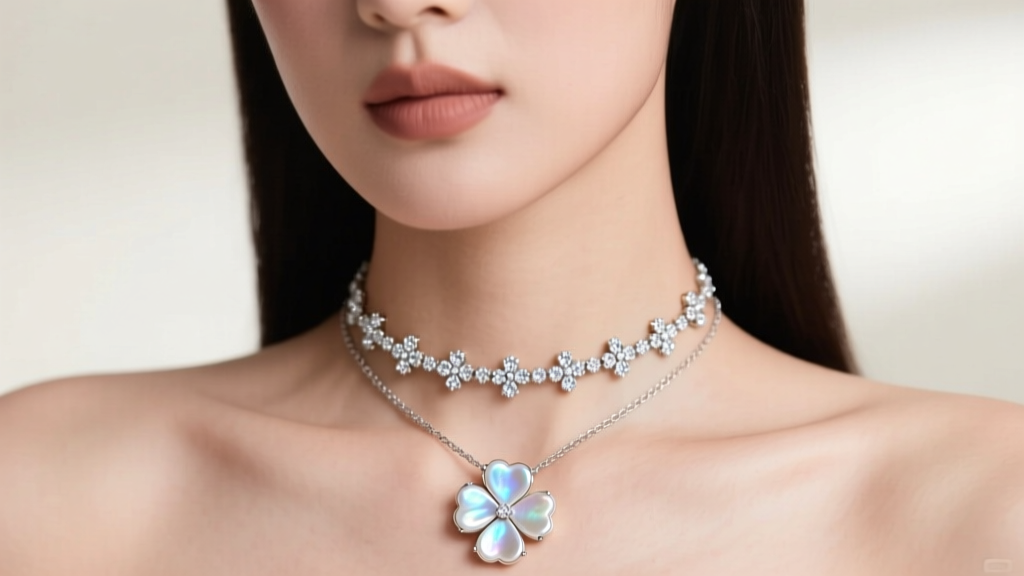
While 18k yellow gold remains the most historically significant metal for the 4 leaf clover necklace, contemporary styling embraces mixed metals. If layering a yellow gold Vintage motif, introduce a white gold or platinum chain with a geometric pendant (like a baguette-cut diamond bar) to provide structural contrast to the organic curves of the clover.
Troubleshooting and Material-Specific Maintenance
Even the finest jewelry requires targeted maintenance. The failure modes of a 4 leaf clover necklace usually stem from improper cleaning techniques rather than structural defects.
Why You Must Avoid Ultrasonic Cleaners
Never place a malachite, onyx, or mother of pearl clover pendant in an ultrasonic cleaner. The high-frequency vibrations can cause micro-fractures in banded stones like malachite, while the heat and chemical baths can strip the dye from black onyx or dissolve the nacre layers of MOP. Instead, use a dry, untreated microfiber cloth to gently buff the gold bezel and wipe the stone surface after every wear to remove acidic skin oils.
Fixing Chain Kinks and Clasp Tension
The standard cable chains used for these necklaces (usually 1.2mm to 1.5mm thick) are prone to kinking if stored improperly. If your chain develops a stubborn kink, lay it flat on a glass surface, apply a single drop of baby oil to the kinked link, and use two fine-point tweezers to gently massage the link back into alignment. Additionally, if the lobster clasp loses its 'snap' tension over time, a jeweler can easily replace the internal spring mechanism for a nominal fee, ensuring your investment remains secure.
Final Thoughts on the Quatrefoil Legacy
Mastering the nuances of the 4 leaf clover necklace elevates your jewelry collection from simple adornment to curated curation. By understanding the Mohs hardness of your chosen inlay, rigorously checking French assay hallmarks, and applying mathematical precision to your layering lengths, you ensure that this iconic symbol of luck remains a flawless staple in your wardrobe for decades to come.


