How to Authenticate and Restore a Lavalier Necklace Vintage Find
Learn how to authenticate, restore, and style a lavalier necklace vintage find. Expert steps for testing metals, identifying hallmarks, and safe cleaning.

What Defines a True Vintage Lavalier Necklace?
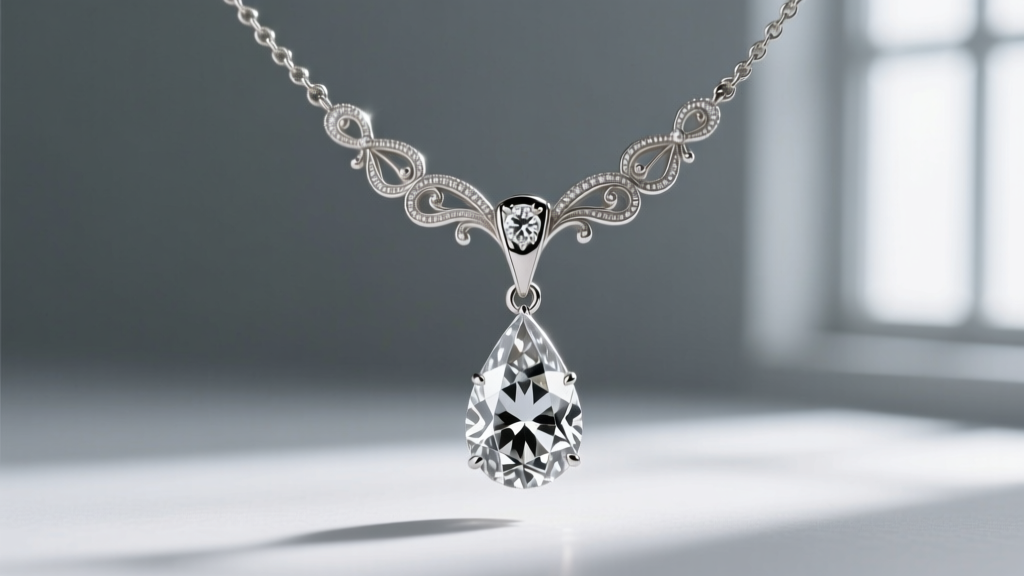
The lavalier necklace (or lavalière) is a historically rich jewelry silhouette characterized by a central pendant motif that suspends a secondary drop element, typically a briolette, pear-shaped, or teardrop gemstone. Named after the Duchesse de La Vallière, a mistress of King Louis XIV, the style saw massive resurgences during the Edwardian era (1901–1910) and the Art Deco period (1920s–1930s). In the 2026 estate jewelry market, authenticating a lavalier necklace vintage piece requires a keen eye for historical manufacturing techniques, as reproductions frequently flood online auction sites.
Unlike standard pendant necklaces, a true vintage lavalier features an articulated drop. This means the bottom stone is connected via a tiny, articulated jump ring or a delicate bezel hinge, allowing it to move independently and catch the light. Understanding the anatomy of these pieces is your first step toward successful authentication and restoration.
Step-by-Step Authentication Guide
Verifying the age and origin of your piece requires moving beyond superficial visual checks. You must examine the metallurgy, the gemology, and the micro-mechanics of the jewelry.
1. Inspect the Hallmarks and Maker's Marks
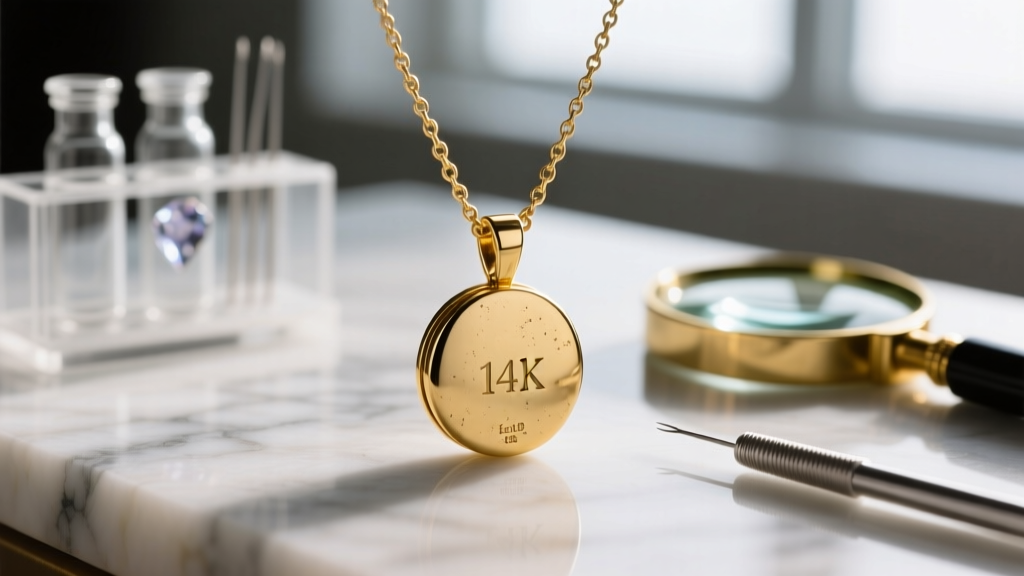
Turn the clasp and the pendant bail over using a 10x triplet loupe. Authentic Edwardian and Art Deco pieces will often bear specific purity stamps. Look for "Plat", "950", "14K", or "18K". According to Lang's Antique Jewelry University, early American platinum pieces were sometimes stamped "Pt900" or "Iridium-Plat" due to the alloying requirements of the era. If the piece is a collegiate or sorority lavalier from the 1920s–1950s, look for maker marks from historic fraternity jewelers like J.F. Newman or Herff Jones.
2. Test the Metal Composition
One of the most reliable indicators of an authentic Edwardian lavalier is the "platinum over gold" construction. Because early 20th-century jewelers lacked torches capable of reaching platinum’s high melting point (1,768°C) for full casting, they soldered thin sheets of platinum over 18k yellow gold bases. If you use an electronic gold tester or a portable XRF scanner—a tool increasingly accessible to serious collectors in 2026—you will detect a platinum surface layer over a high-karat gold core. A solid, homogenous platinum casting often indicates a mid-century or modern reproduction.
3. Examine the Stone Settings and Cuts
The gemological profile of the stones is the ultimate lie detector test. Vintage lavalieres from the 1900s–1920s predominantly feature Old European Cut (OEC) or Old Mine Cut (OMC) diamonds. According to the Gemological Institute of America (GIA), these hand-cut stones possess high crowns, small tables, and most importantly, an open culet (a visible flat facet at the very bottom of the stone). If the central diamond is a modern Round Brilliant with a pointed culet and laser-perfect symmetry, the stone is a replacement, or the entire piece is a modern replica.
Safe Restoration and Cleaning Protocols
Once authenticated, restoring a lavalier necklace vintage piece requires extreme caution. The articulated drop and antique settings are highly vulnerable to modern cleaning mistakes.
The Dangers of Ultrasonic Cleaners
Never place an antique lavalier in an ultrasonic cleaner without a prior gemological assessment. Many early 20th-century pieces feature foil-backed stones, closed-back bezels, or fracture-filled emeralds. The high-frequency vibrations of an ultrasonic machine can shatter the foil backing, instantly turning a vibrant gemstone dull and grey. Furthermore, the vibrations can easily snap the microscopic wire holding the articulated drop element.
Material-Specific Cleaning Matrix
Use the following protocol matrix to safely clean your vintage find based on its specific material composition:
| Material / Stone | Recommended Cleaning Agent | Tools & Technique | Warning / Contraindication |
|---|---|---|---|
| Platinum & OEC Diamonds | Warm water & mild dish soap | Soft baby toothbrush; gentle circular motions | Do not scrub the culet aggressively |
| 14k/18k Yellow Gold | Ammonia-free jewelry dip | Microfiber cloth for final buffing | Avoid abrasive polishing cloths on hallmarks |
| Pearls or Opals (Drop) | Damp, lint-free cloth only | Wipe gently; dry immediately | Never submerge; water dissolves silk threads |
| Enamel (Collegiate) | Dry microfiber or soft brush | Light dusting of the enamel face | Liquids can seep into micro-cracks and lift enamel |
How to Style Your Lavalier Necklace Vintage Piece
Styling a lavalier requires respecting its verticality. The elongated drop naturally draws the eye downward, making it an exceptional tool for elongating the neck and torso.
Neckline Pairing Framework
- Deep V-Necks & Sweetheart Necklines: The ideal canvas. The V-shape of the clothing mirrors the silhouette of the lavalier, creating a cohesive, uninterrupted vertical line.
- Collared Shirts & Blouses: Unbutton the top two buttons of a silk or crisp cotton blouse. Let the lavalier rest against the skin, allowing the drop element to peek through the fabric gap for a subtle, sophisticated look.
- Avoid High Crew Necks: Thick turtlenecks or high crew necks will visually truncate the drop pendant, causing the articulated bail to catch on heavy knit fabrics and potentially bending the antique jump rings.
The Art of Antique Layering
While lavalieres are traditionally statement pieces, modern 2026 styling embraces strategic layering. To layer without tangling, pair your 18-inch vintage lavalier with a 15-inch choker and a 16-inch mid-length chain. Use chains with a maximum thickness of 1.2mm to 1.5mm (such as a delicate cable or wheat chain) to ensure the thicker lavalier remains the undisputed focal point. Always use chains of the same metal color and karat purity to prevent galvanic corrosion where the metals might rub together over time.

Where to Source Authentic Vintage Lavalieres
Finding a genuine lavalier necklace vintage piece requires looking beyond standard mall jewelers. Focus your search on reputable estate jewelry dealers, specialized antique auction houses, and vetted online platforms like 1stDibs or Ruby Lane. When purchasing from secondary markets like Etsy or eBay, always demand high-resolution macro photos of the clasp hallmarks, the back of the settings (to check for closed vs. open backs), and the culet of the central stone. Request a return policy that allows you to take the piece to an independent, GIA-certified gemologist for verification.
Final Thoughts on Preserving Antique Jewelry
Owning a vintage lavalier is an exercise in historical stewardship. These pieces have survived over a century of changing fashions, wars, and economic shifts. By employing rigorous authentication techniques, utilizing material-safe cleaning protocols, and styling the piece with an understanding of its architectural silhouette, you ensure that this elegant artifact remains intact for the next generation of jewelry enthusiasts.


