How to Authenticate and Style a Blue Cameo Necklace
Learn how to authenticate, value, and style a blue cameo necklace. Our step-by-step guide covers agate vs. shell, carving marks, and modern pairings.

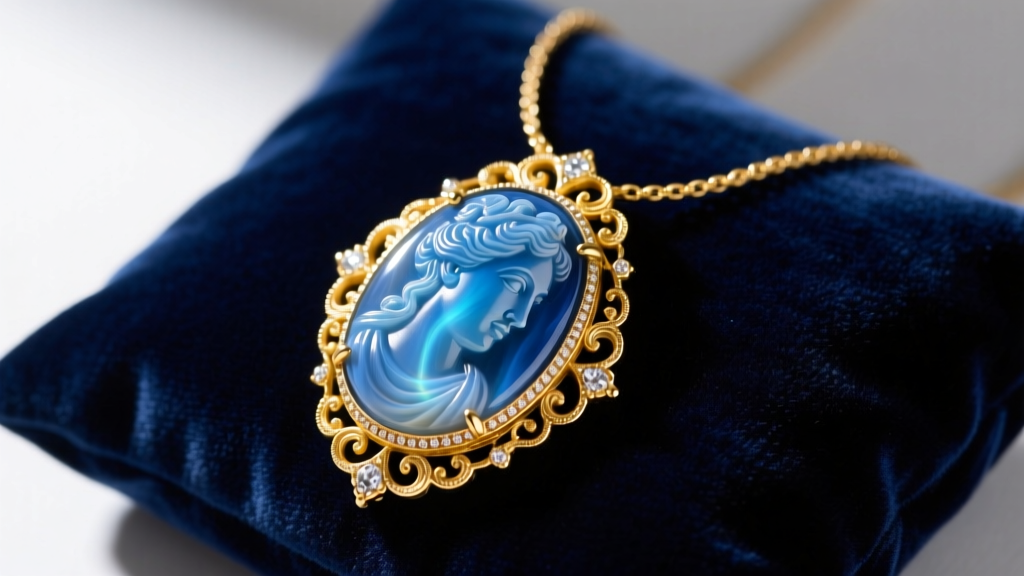
The cameo is one of the most enduring motifs in jewelry history, traditionally carved in white against a contrasting dark background. However, the blue cameo necklace occupies a unique, highly coveted space in the collector's market. Because naturally occurring blue banding in agate or shell is exceptionally rare, the vast majority of blue cameos on the market are either dyed, carved from alternative materials, or crafted from glass paste. Understanding how to identify, authenticate, and style these striking pieces is essential for any serious jewelry enthusiast.
In this comprehensive guide, we will walk you through the exact gemological steps to authenticate your blue cameo necklace, break down the material science behind the carving, and provide actionable styling frameworks to integrate this vintage silhouette into a modern 2026 wardrobe.
The Material Science: Why Blue Cameos Are an Anomaly
Before attempting to authenticate a piece, you must understand the baseline materials. Historically, cameos were carved from sardonyx (a banded agate) or marine shells like the helmet shell (Cassis madagascariensis). Neither of these materials naturally presents with a vibrant, uniform blue hue. Therefore, a blue cameo necklace typically falls into one of three categories:
- Dyed Agate: Cryptocrystalline quartz that has been chemically treated and dyed to achieve a deep cobalt or sapphire background.
- Dyed Shell: Porous calcium carbonate shells that absorb blue dyes, often used in mid-century souvenir or mass-market jewelry.
- Glass Paste: Molded or carved lead glass, popularized in the Georgian and Victorian eras to mimic rare gemstones.
According to the Gemological Institute of America (GIA), detecting dye in cryptocrystalline quartz requires observing color concentration in the stone's microscopic fractures, a crucial step in determining the true value of your necklace.
Step-by-Step Guide: How to Authenticate Your Blue Cameo
Skip the guesswork. Use this three-step gemological triage to determine the exact composition of your blue cameo necklace.
Step 1: The Thermal Conductivity and Weight Test
Pick up the pendant. Agate (quartz) has high thermal conductivity and will feel distinctly cold to the touch, taking several seconds to warm to your skin temperature. Shell, being organic and porous, will feel closer to room temperature almost immediately. Glass will feel cool but lacks the dense, heavy 'pull' of solid agate. If the piece feels unusually light and warms instantly, you are likely holding dyed shell or resin.
Step 2: 10x Loupe Magnification for Tool Marks
Use a 10x triplet jeweler's loupe to examine the transition zones between the raised white figure and the blue background.
- Parallel Striations: If you see fine, parallel scratch marks, the piece was likely hand-carved using traditional bow drills and abrasives.
- Concentric Circles: Curved, overlapping grooves indicate the use of modern high-speed rotary tools, pointing to a 20th-century or contemporary origin.
- Conchoidal Fractures & Bubbles: If the surface looks scooped out with glassy ripples, or if you spot tiny spherical air bubbles trapped under the surface, the cameo is molded glass paste, not carved stone.

Step 3: The Backlight Translucency Check
Hold a strong LED flashlight directly behind the thinnest part of the blue background. Dyed agate will allow light to pass through, revealing a fibrous, cloudy translucency and potential dye concentrations along the crystal boundaries. Shell is completely opaque; no light will penetrate. Glass will transmit light evenly and may reveal internal flow lines from the molding process.
Material Breakdown and Valuation Matrix
Use this reference table to cross-check your findings and estimate the baseline market value of your blue cameo necklace, assuming a standard 14k gold or vermeil setting.
| Material | Mohs Hardness | Translucency | Typical Price Range | Primary Identification Trait |
|---|---|---|---|---|
| Dyed Agate | 6.5 - 7.0 | Translucent | $400 - $3,500+ | Cold to touch; dye pools in fractures under loupe. |
| Dyed Shell | 2.5 - 3.0 | Opaque | $75 - $350 | Warm to touch; visible growth lines on the flat back. |
| Glass Paste | 5.0 - 5.5 | Transparent/Translucent | $150 - $800 | Molded edges; internal air bubbles; conchoidal chipping. |
For deeper historical context on how these materials were utilized in different eras, the Metropolitan Museum of Art's Heilbrunn Timeline of Art History offers an excellent primer on the evolution of cameo carving from antiquity through the 19th-century revivals.
How to Style a Blue Cameo Necklace for Modern Wardrobes
The biggest mistake collectors make is treating a blue cameo necklace as a costume piece. To integrate it into a contemporary 2026 aesthetic, you must leverage color theory and proportional layering.
Color Theory and Contrast
Blue is a receding color, meaning it draws the eye inward and creates depth. To make the white carved figure pop against the blue background, pair the necklace with warm, earthy, or neutral tones. Terracotta, mustard yellow, camel, and deep cream provide the highest visual contrast. Avoid pairing a blue cameo with busy, high-contrast prints (like houndstooth or bold florals), which will visually fracture the intricate carving.
Neckline Matching and Layering
- The Solitaire Statement: Wear a 16-inch or 18-inch blue agate cameo on a simple gold rope chain over a deep V-neck or scoop-neck silk blouse. This frames the face and allows the pendant to rest directly on the skin, maximizing the stone's translucency.
- The Asymmetric Stack: For a modern edge, layer a smaller 20mm blue shell cameo on a 14-inch choker chain with two longer, delicate 20-inch and 22-inch gold satellite chains. The mixed lengths prevent the piece from looking overly matronly.
- Avoid High Collars: Turtlenecks and ruffled Victorian collars compete directly with the cameo's bezel, causing the piece to get lost in fabric folds and risking snagging on delicate prongs.

Step-by-Step Care and Maintenance Routine
Because the majority of blue cameos are chemically altered or organic, they require highly specific care protocols. Standard jewelry cleaning methods will destroy these pieces.
- Never Use Ultrasonic Cleaners: The high-frequency vibrations can shatter dyed agate along microscopic stress fractures caused by the dyeing process. It will also strip the polish from shell.
- Avoid Chemical Exposure: Shell is composed of calcium carbonate, which is highly reactive to acids. Everyday items like perfume, hairspray, and even acidic sweat can etch the surface of a shell cameo, leaving it dull and chalky. Always put your necklace on *after* applying cosmetics.
- The Microfiber Wipe: After wearing, gently wipe the cameo with a slightly damp, lint-free microfiber cloth to remove skin oils. Dry immediately with a soft cotton towel.
- Storage: Store your blue cameo necklace flat in a fabric-lined box. Agate is a 7 on the Mohs scale and will easily scratch softer gemstones or gold settings if tossed loosely into a jewelry dish.
Expert Insight: If your dyed agate cameo begins to look 'washed out' or grayish over decades of wear, it may be experiencing dye fading from prolonged UV exposure. Keep dyed pieces out of direct sunlight when not being worn to preserve the cobalt saturation.
Final Thoughts on Building Your Collection
A blue cameo necklace is more than just a vintage accessory; it is a masterclass in lapidary adaptation and chemical artistry. By mastering the thermal, magnification, and translucency tests, you protect yourself from overpaying for glass paste or misidentified resin. Whether you are drawn to the deep, translucent cobalt of a Victorian dyed agate or the lightweight charm of a mid-century shell carving, applying these rigorous authentication and styling steps ensures your piece will remain a standout element of your jewelry wardrobe for decades to come.


