Step-by-Step Guide to Authenticating a Van Dell Necklace
Learn how to authenticate, date, and safely restore a vintage Van Dell necklace with our step-by-step guide to hallmarks, materials, and cleaning.

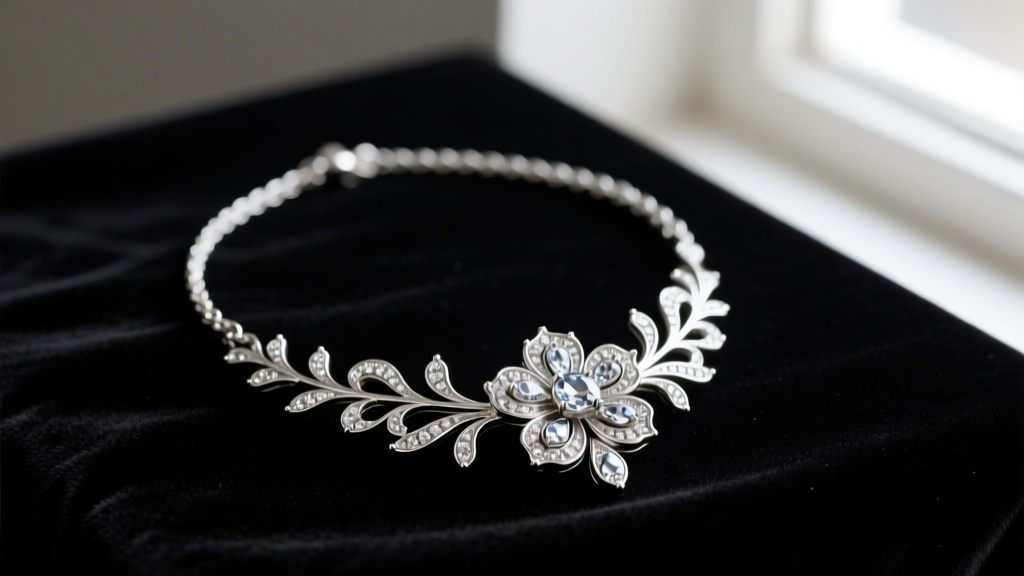
The Legacy of Van Dell: What You Are Looking At
If you have inherited, thrifted, or purchased a vintage Van Dell necklace, you are holding a piece of mid-century American jewelry history. Founded in Providence, Rhode Island—the epicenter of the American costume and semi-fine jewelry manufacturing boom—Van Dell was highly regarded from the 1940s through the 1970s for its intricate filigree work, sterling silver designs, and 1/20 12K gold-filled pieces. Unlike pure costume jewelry brands that relied on base metals and glass, Van Dell occupied the 'bridge' market, utilizing genuine semi-precious stones, marcasite, and high-quality precious metal overlays.
However, the vintage jewelry market in 2026 is flooded with misidentified pieces, Frankenstein assemblies (where parts from different eras are soldered together), and damaged stones caused by improper cleaning. This step-by-step guide will teach you how to authenticate your Van Dell necklace, decode its hallmarks, and restore it without destroying its historical integrity or monetary value.
Step 1: Locating and Decoding Van Dell Hallmarks
The first step in authentication is locating the maker's mark. On a Van Dell necklace, you will typically find the hallmark stamped on the reverse of the pendant bale, the back of the primary clasp, or occasionally on a small soldered tag near the spring ring. You will need a 10x or 20x jeweler's loupe to read these clearly.
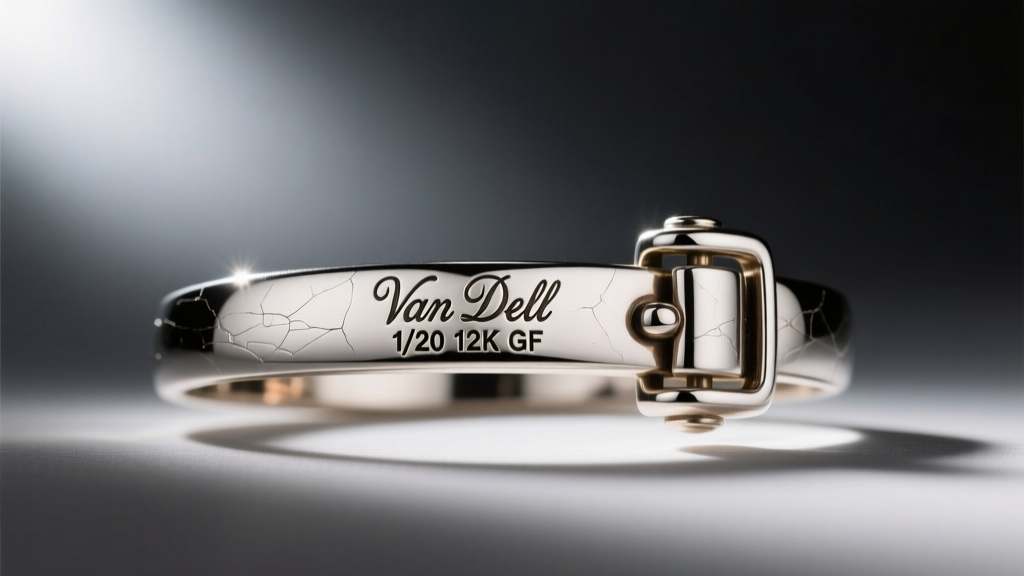
According to the Lang Antiques Antique Jewelry University, understanding the evolution of a maker's stamp is critical for dating a piece. Here is a structural breakdown of the hallmarks you will encounter:
| Hallmark Stamp Variation | Material Composition | Estimated Era & Context |
|---|---|---|
| Van Dell (Block letters) | Sterling Silver or Gold Filled | 1940s – Early 1950s (Pre-Copyright era) |
| Van Dell © | Sterling Silver or Gold Filled | Post-1955 (Following the Copyright Act of 1954) |
| Van Dell 1/20 12K GF | 5% 12K Gold over Brass Core | 1950s – 1970s (Peak gold-filled production) |
| Van Dell Sterling | 92.5% Pure Silver | 1940s – 1970s (Standard silver lines) |
The Copyright Symbol (©) as a Dating Tool
If your necklace features a tiny '©' next to the Van Dell stamp, you can definitively date the design to 1955 or later. The U.S. Copyright Act of 1954 allowed jewelry designs to be copyrighted, and Providence manufacturers quickly adopted the symbol to protect their intricate filigree patterns from being copied by rival firms. If a seller claims a piece with a © symbol is from the 1930s, they are incorrect.
Step 2: Identifying Materials and Gemstones
Van Dell frequently utilized marcasite and carved coral or turquoise. Authenticating these materials requires a keen eye, as modern reproductions often use dyed howlite instead of genuine turquoise, and cut steel instead of real marcasite.
The Marcasite Misconception
What the jewelry industry calls 'marcasite' is actually pyrite (iron sulfide). True marcasite is too brittle and crumbly to be faceted or set into jewelry. As noted by the Gemological Institute of America (GIA), pyrite has a distinct metallic luster and a brassy-yellow undertone when viewed under direct, natural light. If the 'marcasite' stones in your Van Dell necklace appear perfectly uniform, glassy, or have a grayish-blue tint, they are likely modern cut steel or glass imitations.
Understanding 1/20 12K Gold Filled
Do not confuse Van Dell's gold-filled pieces with modern gold plating. A stamp reading '1/20 12K GF' is a legally regulated guarantee that exactly 1/20th (or 5%) of the total weight of the metal in the piece is solid 12-karat gold, mechanically bonded to a brass core under extreme heat and pressure. This layer is hundreds of times thicker than electroplated gold, meaning a well-cared-for Van Dell gold-filled necklace will not flake or expose the base metal, even after 60 years of wear.
Step 3: Safe Cleaning and Restoration Techniques
The most common way collectors destroy the value of a vintage Van Dell necklace is by using commercial 'silver dip' liquids or ultrasonic cleaners. Never use these methods on a piece set with marcasite.
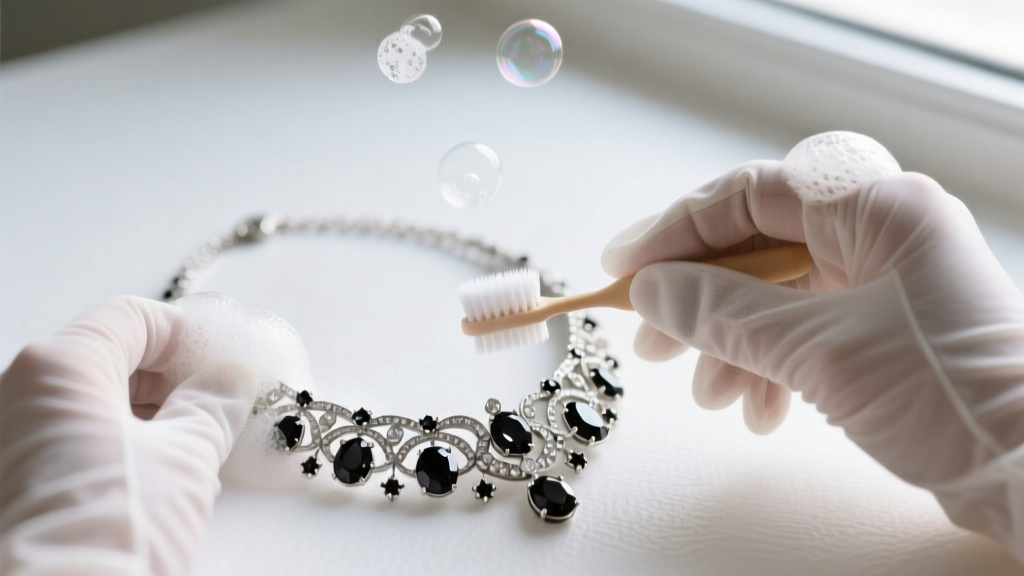
The Chemistry of Marcasite Setting
Unlike diamonds or sapphires that are prong-set, mid-century marcasite stones were typically set using a jeweler's cement, shellac, or early synthetic epoxy resin. Commercial silver dips contain thiourea, a chemical that dissolves tarnish but also breaks down these vintage adhesives. If you dip a Van Dell marcasite necklace, the stones will loosen and fall out within hours. Furthermore, ultrasonic vibrations will shake the brittle pyrite stones right out of their bezels.
Step-by-Step Safe Cleaning Protocol
- Dry Brush: Use a clean, dry, extra-soft baby toothbrush to gently dislodge decades of skin oils, lotion, and dust from the intricate filigree wirework.
- Mild Surfactant Wash: Mix three drops of pH-neutral dish soap (like original Dawn) into a bowl of lukewarm distilled water. Avoid tap water, as chlorine and fluoride can react with the silver and pyrite.
- Gentle Agitation: Dip the soft brush into the solution and lightly brush the metal, avoiding heavy scrubbing directly over the marcasite stones.
- Rinse and Dry: Rinse quickly under a slow stream of distilled water. Immediately pat dry with a microfiber cloth. Use a hair dryer on the 'cool' setting to blow water out of the crevices. Trapped moisture is the primary cause of brass core corrosion in gold-filled items.
Step 4: Valuation and Market Positioning in 2026
The vintage jewelry market has shifted heavily toward authenticated, wearable history. According to recent market data from platforms like Ruby Lane, a standard Van Dell sterling silver floral pendant necklace in good condition typically retails between $85 and $150. However, rare pieces featuring 1/20 12K gold-filled overlays with intact original coral or turquoise cabochons can command $250 to $450, especially if the original presentation box or provenance is included.
When styling your authenticated Van Dell necklace, respect its mid-century proportions. These pendants were designed to sit at the collarbone (typically on 16-inch or 18-inch chains). Layering them with heavy, modern, oversized chains can cause friction that will wear down the gold-filled layer on the back of the pendant. Wear your Van Dell piece as a standalone statement of mid-century Providence craftsmanship, and it will retain its beauty and value for generations to come.


