Average Necklace Chain Length: A Guide by Metal Weight & Drape
Discover how metal density and tensile strength dictate the average necklace chain length. Expert guide to material drape, gauge sizes, and durability.
The Physics of Jewelry: Why Material Dictates Length
When consumers and designers discuss the average necklace chain length, the conversation almost exclusively revolves around aesthetics—specifically, where the pendant will rest on the chest or how the chain frames the neckline. The standard 18-inch princess length or the 24-inch opera length are treated as universal constants. However, from a metallurgical and structural engineering perspective, the physical material of the chain fundamentally dictates what lengths are viable, comfortable, and durable over decades of wear.
A chain is essentially a series of interconnected tension points. The specific gravity (density) of the metal, combined with its tensile strength and yield point, determines how a chain behaves when suspended around the cervical spine. A 24-inch chain made of aerospace-grade titanium will drape and feel entirely different than a 24-inch chain forged from solid platinum. Understanding these material properties is the secret to selecting a chain length that won't cause neck fatigue, stretch out of shape, or suffer catastrophic clasp failure.
Decoding the Average Necklace Chain Length by Metal Type
To truly master necklace layering and pendant pairing, we must break down how different categories of metals behave at extended lengths. According to metallurgical data referenced by Rio Grande's jewelry manufacturing resources, the alloy composition directly impacts the chain's 'drape coefficient'—a measure of how fluidly the links articulate under their own weight.
Lightweight Innovators: Titanium, Niobium, and Aluminum
Because titanium boasts a remarkably low density (4.5 g/cm³) paired with immense tensile strength, it is the undisputed king of extended lengths. If you are designing or purchasing an opera-length (28 to 36 inches) or rope-length (over 36 inches) necklace, lightweight metals are mandatory to prevent cervical strain. A 30-inch titanium cable chain in a 1.2mm gauge will weigh less than 8 grams, allowing it to be worn comfortably all day without the 'drag' associated with heavier precious metals. Furthermore, titanium's resistance to work-hardening means the links won't become brittle and snap when subjected to the constant micro-flexing of a long, swinging chain.
Mid-Weight Standards: Sterling Silver and 14k/18k Gold
The universally recognized average necklace chain length of 18 inches for women and 20 to 22 inches for men exists primarily because of the density of silver and gold. Sterling silver (density ~10.4 g/cm³) and 14k gold (~13 g/cm³) hit the 'Goldilocks zone' of jewelry: heavy enough to drape elegantly and lay flat against the collarbone, but light enough to avoid pulling on the skin.
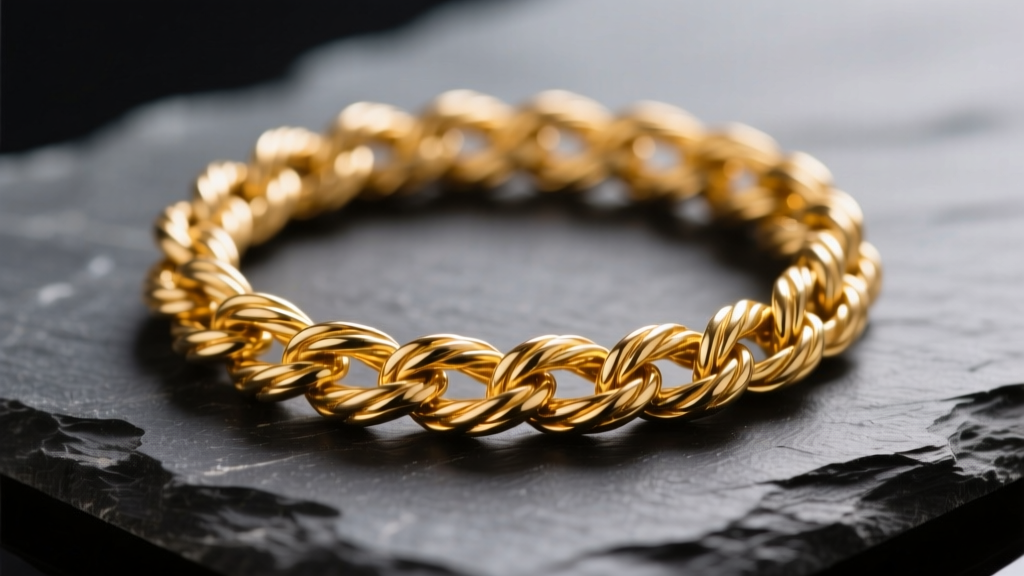
However, sterling silver is highly susceptible to 'metal creep'—the tendency of a metal to slowly deform under constant mechanical stress. If you choose a 24-inch sterling silver box chain in a delicate 0.8mm gauge and attach a heavy gemstone pendant, the silver links will permanently stretch and oval out within six months. For lengths exceeding 20 inches in silver, you must increase the gauge to at least 1.5mm or opt for a structural link style like a Figaro or Cuban curb.
Heavyweight Luxuries: Platinum and Tungsten Carbide
Platinum is extraordinarily dense (21.45 g/cm³)—nearly 60% heavier than 14k gold. A 24-inch solid platinum rope chain can easily exceed 45 grams, creating a pendulum effect that places severe stress on the clasp and the wearer's neck. Therefore, the ideal length for platinum chains is usually capped at 16 to 18 inches. Tungsten carbide presents a different challenge: while highly scratch-resistant, it is incredibly brittle. Long tungsten chains act like a whip; if a 26-inch tungsten chain is snagged, the kinetic energy can shatter the links rather than bending them.

Material Tensile Strength vs. Chain Length Vulnerability
The longer the chain, the more momentum it generates when the wearer moves. This momentum translates into shock loads on the individual links and the solder joints. Below is a structural comparison of common jewelry metals and their maximum recommended lengths for delicate gauges (under 1.0mm).
| Metal / Alloy | Density (g/cm³) | Tensile Strength (MPa) | Max Recommended Length (1.0mm Gauge) | Primary Failure Mode at Extended Lengths |
|---|---|---|---|---|
| Sterling Silver (925) | 10.4 | 280 - 350 | 20 inches | Link stretching (creep) and clasp ring pull-out |
| 14k Yellow Gold | 13.0 | 400 - 550 | 24 inches | Solder joint fatigue from pendulum swinging |
| Platinum (950/50 Ru) | 21.4 | 350 - 450 | 18 inches | Excessive neck fatigue and clasp hardware failure |
| Grade 5 Titanium | 4.4 | 900 - 1000 | 36+ inches | Hardware wear (titanium will wear down softer steel clasps) |
| Tungsten Carbide | 15.6 | 350 - 500 | 22 inches | Brittle fracture / shattering upon sudden impact or snagging |
As noted by the Gemological Institute of America (GIA) in their precious metals education modules, understanding these physical limitations is crucial for jewelers when advising clients on custom bespoke pieces, especially when integrating heavy diamond or sapphire pendants that alter the chain's center of gravity.
How Clasp Hardware Fails at Extended Lengths
A frequent oversight when calculating the average necklace chain length for a specific design is ignoring the clasp. The clasp is the weakest structural link in any necklace. When a chain is 18 inches, it sits relatively flush against the collarbone, limiting movement. When extended to 28 inches, the chain swings freely, generating kinetic shock loads every time the wearer bends over or walks quickly.
"A 5mm spring ring clasp is perfectly adequate for a lightweight 16-inch gold choker. But put that same clasp on a 24-inch chain, and the pendulum effect will eventually warp the spring ring's internal coil, leading to a spontaneous opening and a lost necklace." — Master Bench Jeweler
For any chain exceeding 22 inches, you must upgrade the hardware. Transition from standard spring rings to solid-cast lobster clasps. A 12mm or 15mm lobster clasp features a thicker internal spring and a wider jaw that can withstand the lateral torque generated by long, heavy chains. Furthermore, ensure the jump ring connecting the clasp to the chain is soldered closed; an open jump ring will easily pull apart under the dynamic weight of a 30-inch opera chain.
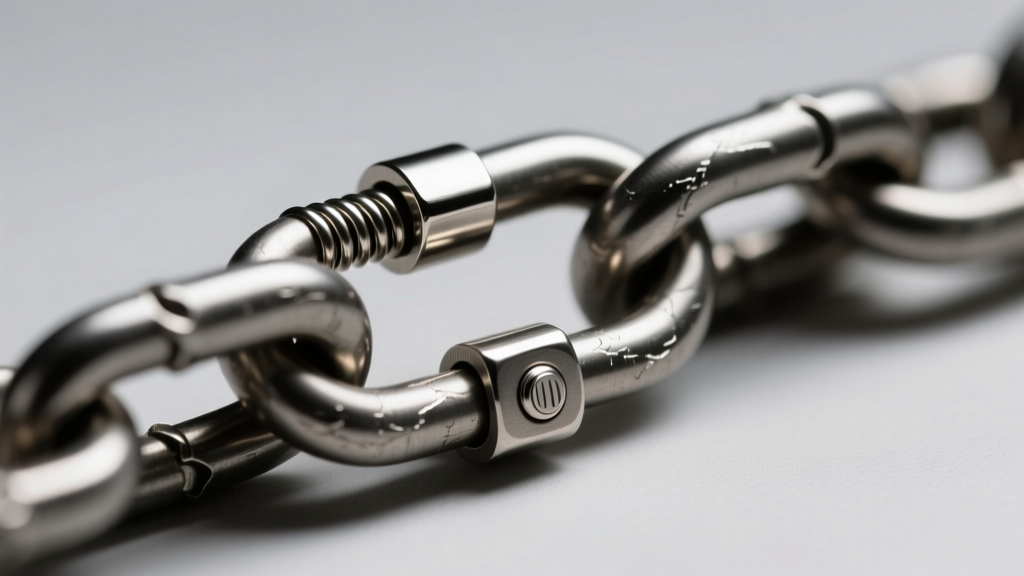
Expert Framework: Matching Material Gauge to Your Target Length
To ensure longevity and structural integrity, use this professional framework when deviating from the standard average necklace chain length of 18 inches. This rule of thumb balances the metal's density with the necessary wire thickness (gauge) to prevent deformation.
- The Baseline (16-18 inches): A 0.8mm to 1.0mm gauge is sufficient for most mid-weight metals (14k gold, sterling silver) when worn at the collarbone, provided the pendant weighs less than 5 grams.
- The Mid-Drop (20-24 inches): For every 4 inches you add past the 18-inch baseline, increase the chain gauge by 0.2mm. A 24-inch sterling silver chain should be at least 1.3mm thick to resist stretching from the increased swing radius.
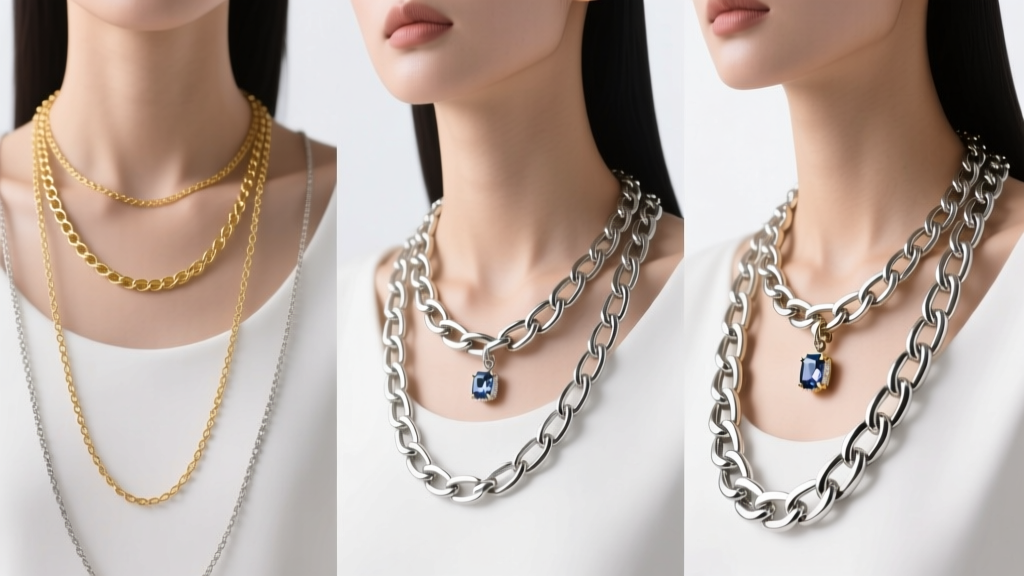
- The Opera/Rope (28-36 inches): At these lengths, the chain will inevitably be caught on door handles or pulled by children/pets. You must prioritize high-tensile metals (Titanium, Stainless Steel) or use a minimum 2.0mm gauge in gold/silver. Alternatively, utilize structural link patterns like the Mariner or Cuban Curb, which distribute lateral stress across multiple interlocking planes rather than relying on single-axis solder joints.
Final Thoughts on Proportions and Wearability
Ultimately, the perfect necklace is a masterclass in physics as much as it is an exercise in style. While the average necklace chain length provides a helpful starting point for retail buyers and fashion enthusiasts, true luxury and longevity come from respecting the raw properties of the metal. By aligning your desired length with the appropriate metal density, gauge thickness, and clasp hardware, you ensure that your necklace doesn't just look spectacular on the day you buy it, but remains a structurally sound heirloom for decades to come.