Avon Gold Chain Necklace Guide: Metallurgy, Hallmarks & Value
An expert technical guide to Avon gold chain necklaces, covering base metal alloys, gold plating micron thickness, hallmarks, and collector valuation.

The Metallurgy of Avon Gold-Tone and Plated Chains
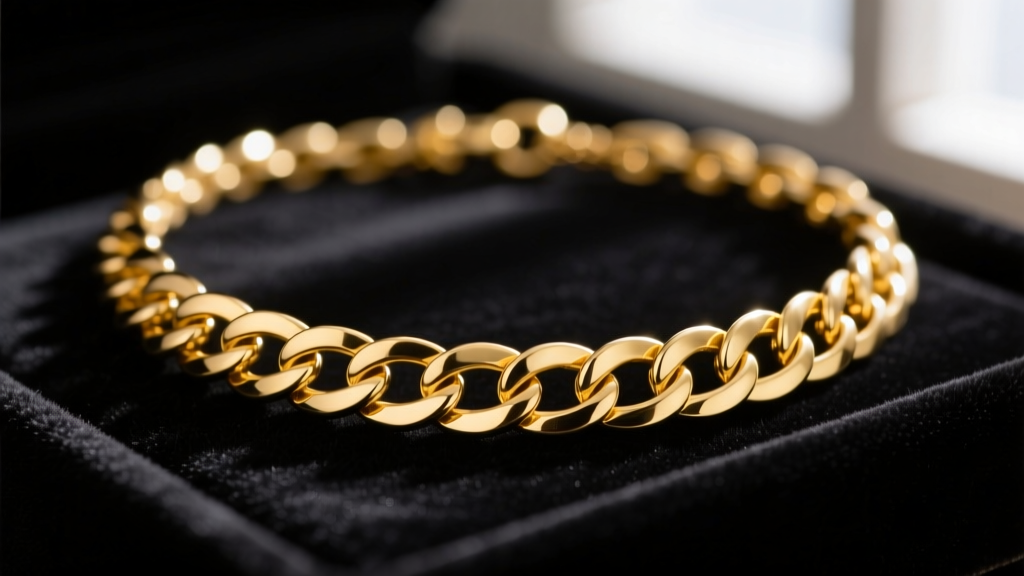
As the vintage jewelry market continues to mature in 2026, collectors and appraisers are looking past the aesthetic appeal of costume jewelry to scrutinize the underlying metallurgy. The Avon gold chain necklace, a staple of late 20th-century fashion, offers a fascinating case study in mass-market electroplating and alloy engineering. Unlike solid gold chains, vintage Avon pieces rely on a complex layering of base metals and micron-thin precious metal baths to achieve their signature luster.
The core of most Avon chains from the 1970s through the 1990s is jeweler's brass, an alloy typically composed of 70% copper and 30% zinc. This specific ratio provides excellent ductility, allowing the wire to be drawn into fine links without snapping. However, zinc is highly reactive and prone to migration. To prevent the zinc from bleeding into the gold layer and causing discoloration, Avon's manufacturing partners utilized a 'strike' layer—usually a micro-thin coating of nickel or palladium—before the piece was submerged in the gold electroplating bath.
According to the Gemological Institute of America (GIA), standard gold electroplating requires a minimum thickness of 0.175 microns to be legally classified as such. While modern fast-fashion jewelry often relies on 'flash plating' (less than 0.05 microns), vintage Avon gold chain necklaces from their premium lines frequently featured heavy gold electroplate ranging from 0.5 to 1.5 microns. This thickness is what allows well-preserved vintage pieces to retain their rich, warm 18k-like hue decades later, despite daily wear.
Decoding Avon Hallmarks and Maker's Marks
Authenticating an Avon gold chain necklace requires a precise understanding of the company's hallmark timeline. Avon's marking conventions evolved significantly as the company expanded its global footprint and navigated changing trademark laws.
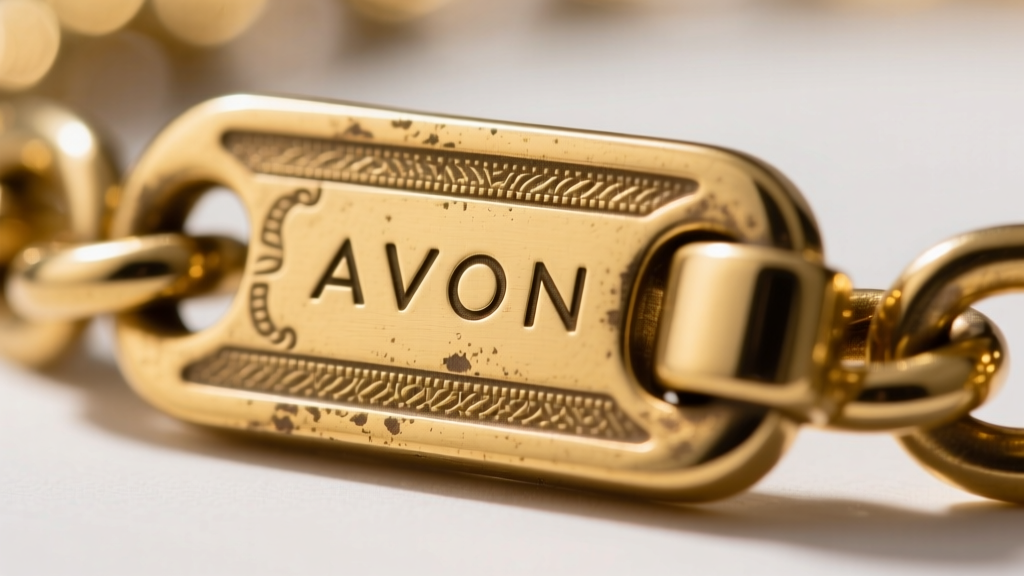
Early pieces from the late 1960s and early 1970s often feature a simple, block-letter 'AVON' stamp, sometimes enclosed in a cartouche or oval outline. By the late 1970s and throughout the 1980s, the hallmark transitioned to include the copyright symbol, stamped as '©AVON'. This addition was a direct legal maneuver to protect their designs from the rampant counterfeiting of the era. Resources like Kovel's Antiques & Collectibles emphasize that the presence of the copyright symbol is a primary indicator of a post-1978 production date.
A critical red flag for appraisers is the presence of karat markings alongside the Avon stamp. Because Avon's vintage chains are costume jewelry, they are not solid gold. If a chain is stamped '14K' and 'AVON', it is almost certainly a modern fabrication, a counterfeit, or a piece where a solid gold clasp was retrofitted onto a plated chain. True vintage Avon chains will only bear the brand mark, and occasionally a patent number or designer signature on larger pendant attachments.
Chain Link Styles and Structural Failure Modes
The structural integrity of an Avon gold chain necklace is heavily dictated by its link architecture. While the brass core provides baseline tensile strength, the mechanical design of the links often dictates the piece's lifespan.
Herringbone Chains
Wildly popular in the 1980s, the herringbone chain consists of flat, parallel links woven in a V-shaped pattern. While visually striking and highly reflective, herringbone chains suffer from a catastrophic failure mode: kinking. Because the links are flattened and tightly packed, any lateral torsion forces the lattice to buckle. Once a herringbone chain kinks, the brass base metal work-hardens at the bend. Attempting to flatten it with pliers will only fracture the gold plating and snap the underlying links. Specialized jewelry rolling mills are required to repair severe kinks, a service that often exceeds the chain's market value.
Snake Chains
Snake chains are constructed from tightly wound, slightly curved rings that form a smooth, flexible tube. The primary failure mode for vintage Avon snake chains is galvanic corrosion initiated by trapped organic matter. The micro-crevices between the wound links easily trap sebum, dead skin cells, and sweat. Over time, the acidic nature of sweat breaches the gold plating, reacting with the copper and zinc in the brass core. This localized corrosion creates 'dead spots' where the chain loses flexibility and eventually snaps under its own weight.
Curb and Rope Chains
Curb and rope chains remain the most structurally sound vintage Avon options. The interlocking, twisted, or oval links allow for multidirectional movement without stressing individual joints. When inspecting these chains, experts focus on the solder points at the clasp jump rings. Vintage Avon frequently used soldered figure-8 safety catches on their fold-over clasps; if the solder has degraded due to polishing or chemical exposure, the clasp will fail under minimal tension.
Market Valuation and Collector Pricing Matrix
The secondary market for vintage Avon jewelry has stabilized, with collectors prioritizing condition, rarity of the link style, and the presence of original packaging. The following matrix outlines current valuation benchmarks for vintage Avon gold chain necklaces in the 2026 market.
| Era / Decade | Chain Style | Condition Grade | Estimated Market Value (USD) |
|---|---|---|---|
| 1970s | Chunky Rope / Chain Link | Excellent (No brass bleed) | $45 - $85 |
| 1980s | Wide Herringbone (10mm+) | Good (Minor surface scratches) | $30 - $60 |
| 1980s | Standard Snake Chain | Fair (Stiff links, clasp wear) | $15 - $25 |
| 1990s | Delicate Curb with Pendant | Excellent (Original box included) | $50 - $110 |
*Note: Valuations assume standard 16 to 18-inch lengths. Choker lengths (14-15 inches) or opera lengths (28+ inches) may command a 20-30% premium due to their scarcity in the vintage market.
Restoration and Tarnish Mitigation Protocols
Preserving the micron-thin gold layer on a vintage Avon chain requires strict adherence to non-abrasive conservation methods. The most common mistake made by amateur collectors is the use of ultrasonic cleaners or commercial silver dips. Ultrasonic cavitation will instantly strip 0.5-micron gold plating from a brass core, while acidic dip cleaners will dissolve the copper-zinc alloy, leaving the chain porous and brittle.
For routine cleaning, use a pH-neutral surfactant (such as a mild, lotion-free dish soap) mixed with distilled water. Gently agitate the chain with a soft-bristled infant toothbrush, rinse thoroughly in distilled water to prevent mineral spotting, and pat dry with a lint-free microfiber cloth. Never rub the chain aggressively; instead, press the cloth against the metal to absorb moisture.
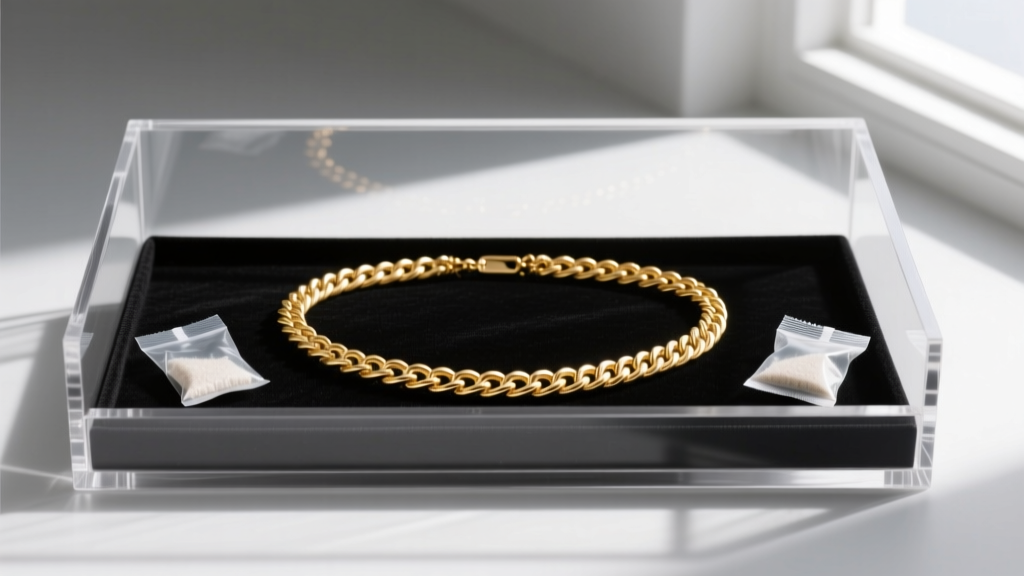
Long-term storage is equally critical. Hydrogen sulfide in the ambient air reacts with the copper in the brass core, causing dark tarnish spots that eventually bloom through the gold plating. Store your Avon gold chain necklaces in airtight acrylic or polyethylene bags alongside 3M Anti-Tarnish strips, which actively absorb sulfides. Maintain the storage environment at a relative humidity (RH) below 45% to halt any latent galvanic corrosion, ensuring your vintage pieces remain structurally and aesthetically pristine for future generations of collectors.


