Avon Gold Necklace Authentication & Metal Composition Guide
An expert technical guide to Avon gold necklace authentication, covering hallmark evolution, plating thickness, base metallurgy, and collector valuation.

The Metallurgy of Vintage Avon Gold Jewelry
When appraising or collecting a vintage avon gold necklace, the untrained eye often mistakes heavy gold electroplate or gold-filled components for solid karat gold. Avon Products, Inc. built a mid-century empire on accessible luxury, utilizing sophisticated electroplating techniques and diverse base metallurgy to mimic fine jewelry. As we navigate the 2026 vintage market, understanding the exact material science behind these pieces is critical for authentication, conservation, and accurate valuation.
Unlike fine jewelers who cast in 14k or 18k solid gold, Avon’s manufacturing partners primarily relied on jeweler’s brass (an alloy typically consisting of 70% copper and 30% zinc) and lead-free pewter for their pendant bodies and chain links. The 'gold' appearance was achieved through electrolytic deposition. According to the Gemological Institute of America (GIA), gold plating thickness can range from a microscopic flash to heavy gold electroplate (HGE), and Avon utilized both depending on the decade and the specific collection tier.
Decoding Avon Hallmarks and Date Marks
Authentication begins with the hallmark. Avon’s marking conventions evolved significantly over the decades, heavily influenced by US copyright law changes in the early 1970s. The Vintage Fashion Guild (VFG) provides extensive databases on these marks, but field-appraising a necklace requires memorizing the following timeline:
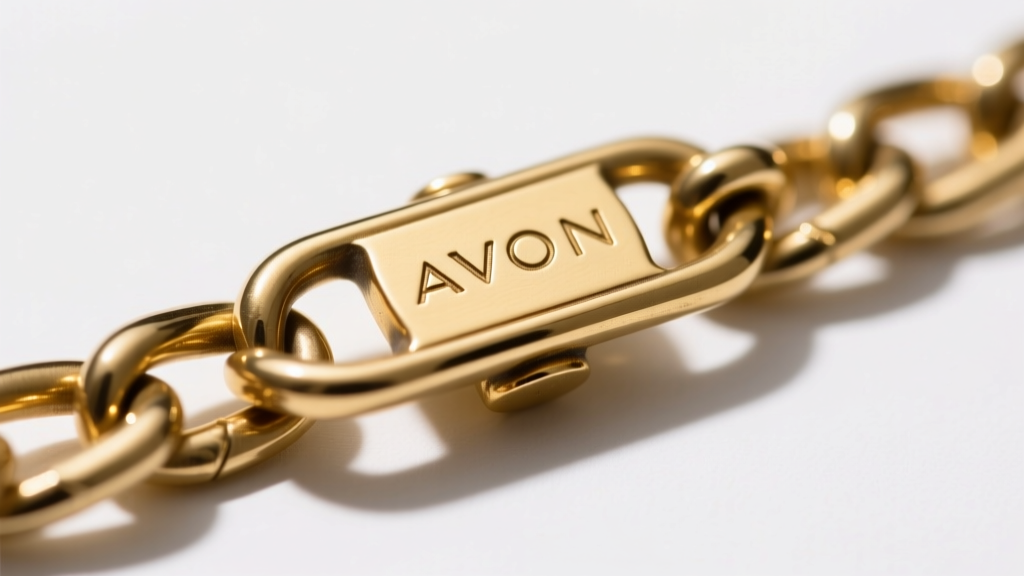
- Pre-1971: Pieces are typically stamped simply with 'AVON' in a sans-serif block font. These early necklaces often feature simpler spring-ring clasps and flash plating.
- 1971–1985: Following the Copyright Act of 1976 (and earlier industry shifts), Avon began stamping pieces with the copyright symbol: '©AVON'. This era represents the brand's golden age of heavy gold electroplate (HGE) and intricate filigree pendant designs.
- 1986–1990s: The hallmark transitioned to a standalone 'A' or an 'A' inside a shield/oval cartouche. Base metals shifted heavily toward cheaper zinc alloys and white metal, resulting in a lighter, less durable finish.
Plating Thickness and Electrochemical Failure Modes
The most common point of failure in a vintage avon gold necklace is the degradation of the gold layer, exposing the base metal to atmospheric oxygen and skin acids. To understand why this happens, we must look at plating thickness and galvanic corrosion.
Flash Plating vs. HGE
Avon’s entry-level fashion necklaces often utilized 'flash' plating, which deposits a mere 0.1 to 0.5 microns of gold. This layer is so thin that it can wear away from the friction of a single clasp mechanism within months of daily wear. Conversely, Avon’s premium lines, particularly in the 1970s and 1980s, utilized Heavy Gold Electroplate (HGE), which mandates a minimum thickness of 2.5 microns of 10k, 12k, or 14k gold. HGE pieces from this era often survive in mint condition today, provided the underlying base metal remains stable.
Dezincification and 'Red Plague'
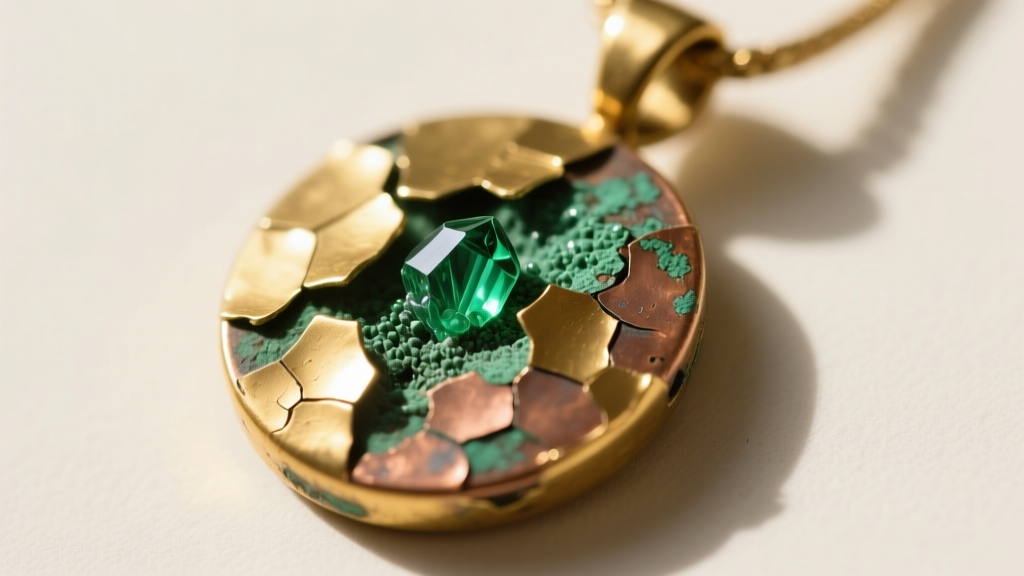
When the brass base metal is exposed to moisture and chlorides (from sweat or improper cleaning), a process called dezincification occurs. The zinc leaches out of the brass alloy, leaving behind a porous, brittle copper structure. This manifests as 'red plague'—a reddish-brown oxidation that bleeds through the gold plating, creating dark spots on the necklace chain or pendant bail. In severe cases, this leads to green verdigris (copper carbonate) buildup around the jump rings and clasp solder joints.
Clasp Mechanics and Hardware Evolution
The hardware on an Avon necklace is a vital diagnostic tool for dating and authentication. The internal mechanics of the clasp often tell a different story than the exterior plating.
The presence of a steel internal spring inside a gold-plated brass clasp is a primary failure point in vintage costume jewelry. As the thin gold layer wears at the friction points, moisture enters the clasp housing, rusting the steel spring and seizing the mechanism permanently.
In the 1960s and 70s, Avon favored the fold-over clasp for heavier pendant necklaces, utilizing a stamped brass housing and a tension-fit latch. By the late 1980s, manufacturing costs drove a shift toward standardized lobster claw clasps with internal steel springs. When inspecting a necklace, always use a 10x jeweler's loupe to examine the clasp's jump ring. Authentic vintage Avon pieces typically feature soldered jump rings on the pendant bail to prevent the heavy pendants from pulling the chain apart, whereas modern reproductions or counterfeit pieces often use unsoldered, split jump rings.

2026 Collector Valuation and Market Data
The market for vintage Avon jewelry has matured. Collectors in 2026 are no longer buying simply for the aesthetic; they are hunting for specific manufacturing eras, rare Trifari-crossover pieces (after Avon acquired Trifari in 1994), and pristine HGE examples. Below is a technical valuation matrix based on current secondary market auction data for mint-condition necklaces.
| Era | Hallmark | Base Metal | Plating Spec | 2026 Mint Value Range |
|---|---|---|---|---|
| 1960s | AVON | Jeweler's Brass | Flash (0.5µm) | $15 – $35 |
| 1970s | ©AVON | Brass / Pewter | HGE (2.5µm+) | $45 – $95 |
| 1980s | ©AVON / A | Zinc Alloy | Gold-Tone / Flash | $20 – $40 |
| 1990s | A (Shield) | Brass | Gold-Filled (1/20 12k) | $60 – $130 |
Note: Pieces featuring semi-precious stone inlays (like carved agate or lapis lazuli) or those belonging to the 'Anne Klein' or 'Louis Feraud' licensed Avon collections command a 200% to 300% premium over the base prices listed above.
Conservation and Professional Restoration Techniques
Preserving the gold layer on an Avon necklace requires strict adherence to conservation-grade protocols. The most common mistake amateur collectors make is utilizing ultrasonic cleaners or harsh chemical dips (like Tarn-X). Ultrasonic cavitation will instantly strip flash-plated gold from a brass base, while chemical thiourea-based dips will dissolve the copper strike layer beneath the gold, causing the finish to blister and peel.
Proper Cleaning Protocol
- Dry Mechanical Cleaning: Use a soft-bristled goat hair brush to remove loose dust and skin cells from the chain links and pendant crevices.
- Mild Surfactant Wash: If degreasing is necessary, use a few drops of pH-neutral conservation soap (such as Orvus WA Paste) in distilled water. Gently agitate with a cotton swab, avoiding prolonged water exposure.
- Micro-Crystalline Wax Sealing: Once completely dry, apply a micro-thin layer of Renaissance Wax using a lint-free microfiber cloth. This museum-grade wax creates an oxygen-impermeable barrier that halts dezincification and prevents skin acids from degrading the HGE layer during wear.
By understanding the precise metallurgy, hallmark evolution, and electrochemical vulnerabilities of these pieces, collectors and appraisers can accurately identify, preserve, and value the enduring legacy of Avon gold jewelry.


