The Titanic Heart of Ocean Necklace: A Value & Pricing Guide
Discover the true value of the Titanic Heart of Ocean necklace. We compare the original Asprey sapphire, movie props, and modern replicas.

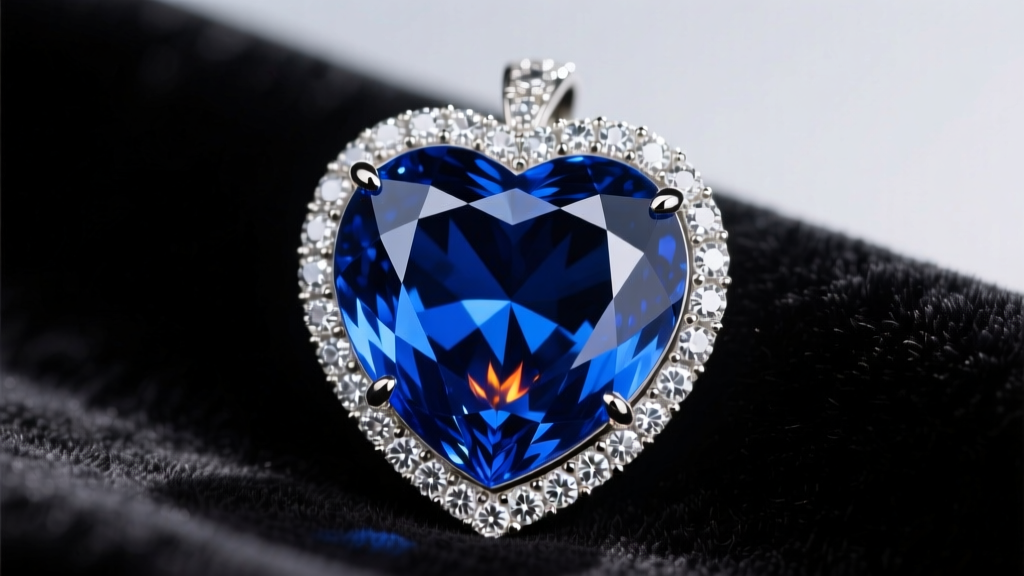
The Cinematic Myth vs. Gemological Reality
The cinematic release of James Cameron’s Titanic in 1997 didn't just break box office records; it ignited a global obsession with a singular piece of jewelry. The "Heart of the Ocean" became the ultimate symbol of tragic romance and high-society luxury. However, as we navigate the secondary jewelry market in 2026, separating Hollywood myth from gemological reality is crucial for any serious collector or enthusiast. When assessing the Titanic Heart of Ocean necklace from a budget and value perspective, buyers are often confronted by a confusing web of movie props, licensed replicas, and high-end homages.
Before opening your wallet, it is essential to understand that the necklace seen in the film was not a real historical antique. It was a custom creation by the prestigious London jeweler Asprey & Garrard. Yet, the exact piece you picture is likely one of several distinct physical iterations, each with a wildly different value proposition, material composition, and resale trajectory.
Breakdown of the Three "Heart of the Ocean" Tiers
To accurately assess value, we must categorize the market into three distinct tiers. Understanding where your budget fits within these tiers is the first step in making an informed purchase.
Tier 1: The Asprey & Garrard Original & The Harry Winston Oscars Piece
The original necklace crafted by Asprey & Garrard for the film's promotional tour featured a staggering 171-carat Ceylon blue sapphire surrounded by 103 diamonds, set in platinum. In 1997, it was valued at $1.4 million. Today, private collectors and Sotheby's fine jewelry archives estimate its value to be well over $3 million to $5 million. It is entirely out of reach for the average consumer and rarely surfaces on the public auction block.
Furthermore, many confuse the movie prop with the piece Celine Dion wore to the 1998 Academy Awards. That was a completely different necklace crafted by Harry Winston, featuring a 15-carat blue diamond valued at roughly $20 million. Neither of these Tier 1 pieces are relevant to the accessible consumer market, but they establish the baseline for the "legend" you are paying a premium to emulate.
Tier 2: The On-Set Prop and the J. Peterman Phenomenon
The actual necklace worn by Kate Winslet during the filming of the water-logged scenes was not made with a real sapphire. To avoid massive insurance premiums and security risks on set, Asprey & Garrard crafted the on-set prop using a blue tanzanite heart and cubic zirconia.
Capitalizing on the film's massive success, the catalog company J. Peterman purchased the rights to sell exact replicas of the movie prop. Originally retailing for $195 in the late 1990s, these necklaces were made with sterling silver and synthetic stones. Today, a pristine, in-box vintage J. Peterman replica holds a niche collector's value, typically fetching between $150 and $350 on secondary markets like eBay or specialized movie memorabilia auction sites. You are paying purely for nostalgia and pop-culture provenance, not intrinsic gemological value.
Tier 3: The 2026 Smart Buyer’s Guide to Lab-Grown Homages
For the modern buyer who desires the aesthetic brilliance and durability of the original design without the seven-figure price tag, Tier 3 is where true value lies. In 2026, advancements in lab-grown gemstone technology allow independent jewelers to create breathtaking homages that rival the original in optical performance and vastly outperform the movie prop in durability.
A high-quality modern homage typically features a lab-grown blue sapphire (created via the Czochralski pull method for superior clarity) set in 14k or 18k white gold, surrounded by a halo of CVD (Chemical Vapor Deposition) lab-grown diamonds. These pieces generally range from $800 to $2,500, offering exceptional cost-per-wear value and genuine heirloom durability.
Value Assessment Matrix: What Are You Actually Paying For?
When evaluating a Titanic Heart of Ocean necklace listing, use this matrix to determine if the seller's asking price aligns with the intrinsic and collectible value of the piece.
| Iteration | Primary Stone | Setting Metal | Original Price | 2026 Market Value | Investment Grade |
|---|---|---|---|---|---|
| Asprey Original | 171ct Ceylon Sapphire | Platinum | $1.4M (1997) | $3M - $5M+ | Yes (Museum Tier) |
| Vintage J. Peterman | Synthetic Spinel/CZ | Sterling Silver | $195 (1998) | $150 - $350 | No (Nostalgia Only) |
| Modern Lab-Grown Homage | Lab Sapphire (15-30ct) | 14k/18k White Gold | $800 - $2,500 | $400 - $1,200 (Resale) | No (Wearable Luxury) |
| Tourist Replicas | Blue Glass/Resin | Plated Base Metal | $20 - $50 | $0 - $10 | No (Costume) |
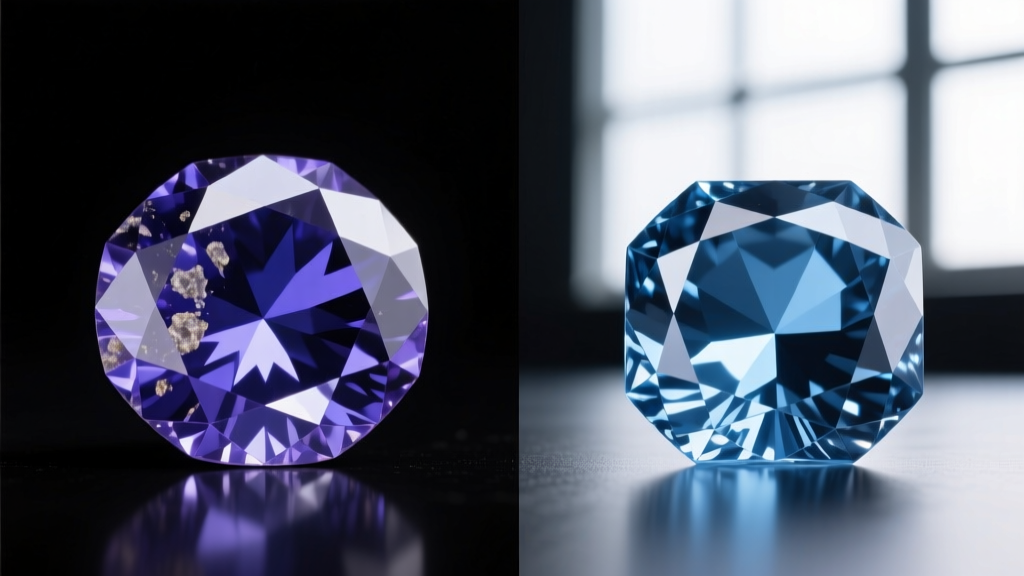
Gemological Showdown: Tanzanite vs. Lab-Grown Sapphire
A common trap for budget-conscious buyers is purchasing a modern replica that uses tanzanite instead of sapphire, under the assumption that a "natural" stone is inherently better than a "lab-grown" one. From a value and wearability standpoint, this is a critical error for a pendant of this size.
According to the Gemological Institute of America (GIA), sapphire (corundum) ranks at a 9 on the Mohs hardness scale, making it exceptionally resistant to scratching and ideal for large, exposed center stones. In contrast, the GIA's tanzanite overview notes that tanzanite (a variety of zoisite) ranks only 6 to 7 on the Mohs scale. Furthermore, tanzanite possesses perfect cleavage, meaning a hard knock against a doorway or table can easily chip or fracture a large tanzanite heart.
Therefore, a lab-grown sapphire homage offers vastly superior long-term value and structural integrity compared to a natural tanzanite replica, despite the latter's "natural" origin.
Authentication & Quality Control Checklist
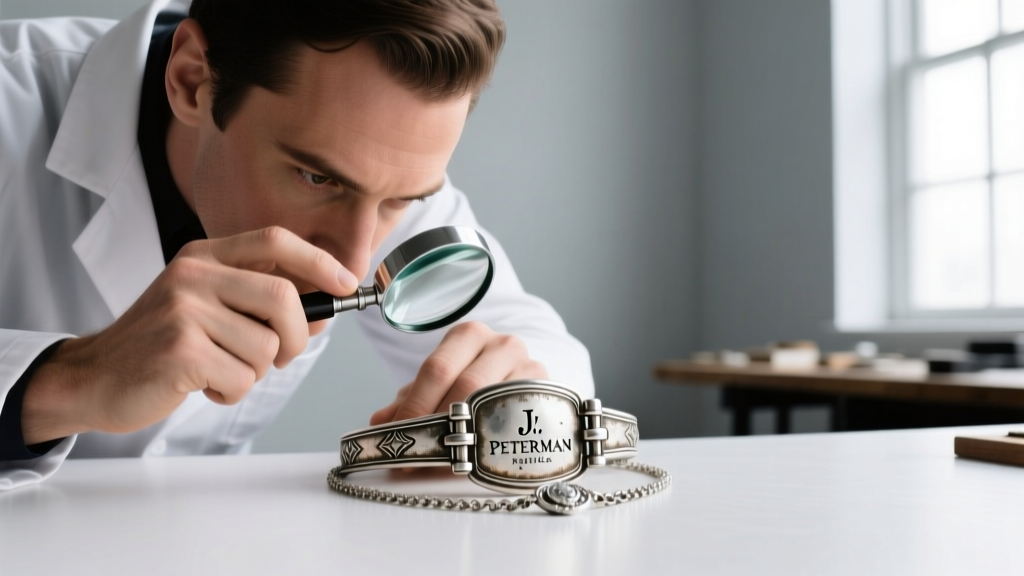
Whether you are hunting for a vintage 1990s movie replica or commissioning a modern lab-grown homage, run the piece through this strict quality control checklist to ensure you are getting what you pay for:
- Hallmark Verification: Use a 10x jeweler's loupe to inspect the clasp and bail. Vintage J. Peterman pieces should bear a ".925" stamp and often the J. Peterman maker's mark. Modern homages should be stamped "14K", "18K", or "750" for gold, or "950" for platinum.
- Prong Integrity: The Heart of the Ocean design relies on a heavy center stone. Check that the prongs securing the halo diamonds are thick, evenly spaced, and flush against the stones. Snagged prongs are a sign of poor casting or heavy wear.
- Stone Refraction: If the seller claims the stone is a natural sapphire but the price is under $10,000 for a piece over 10 carats, it is almost certainly lab-grown, synthetic spinel, or blue glass. Request a handheld spectroscope test or a certificate from a reputable lab like GIA or IGI.
- Chain Proportionality: The original movie prop featured a relatively delicate chain that struggled to support the massive pendant, often causing it to flip backward. A high-value modern homage will feature a reinforced box chain or a wheat chain (minimum 2.5mm width) to properly counterbalance the heavy heart pendant.
The 2026 Verdict: Is It a Sound Investment?
"The value of the Heart of the Ocean lies not in its financial appreciation, but in its unparalleled cultural resonance and the emotional weight it carries for the wearer. Buy it for the romance, but buy it smart by prioritizing gemological durability over pop-culture packaging."
Ultimately, assessing the Titanic Heart of Ocean necklace requires divorcing emotion from economics. Unless you are a high-net-worth collector acquiring the original Asprey piece, you are purchasing a symbol, not an appreciating financial asset. Vintage J. Peterman replicas have peaked in their nostalgia value, while cheap tourist knockoffs are entirely worthless.
For the best intersection of budget, beauty, and longevity in 2026, commissioning or purchasing a modern homage featuring a lab-grown Ceylon sapphire set in solid white gold remains the undisputed champion of value. You secure the breathtaking aesthetic of the original masterpiece, backed by the supreme durability of corundum, at a fraction of a percent of the original's legendary cost.


