The Ultimate Axolotl Necklace Buying Guide: Metals, Chains & Care
Discover how to choose the perfect axolotl necklace. Compare metal grades, chain types, and enamel finishes in our expert jewelry buying guide.

Why Material Matters in Novelty Pendants
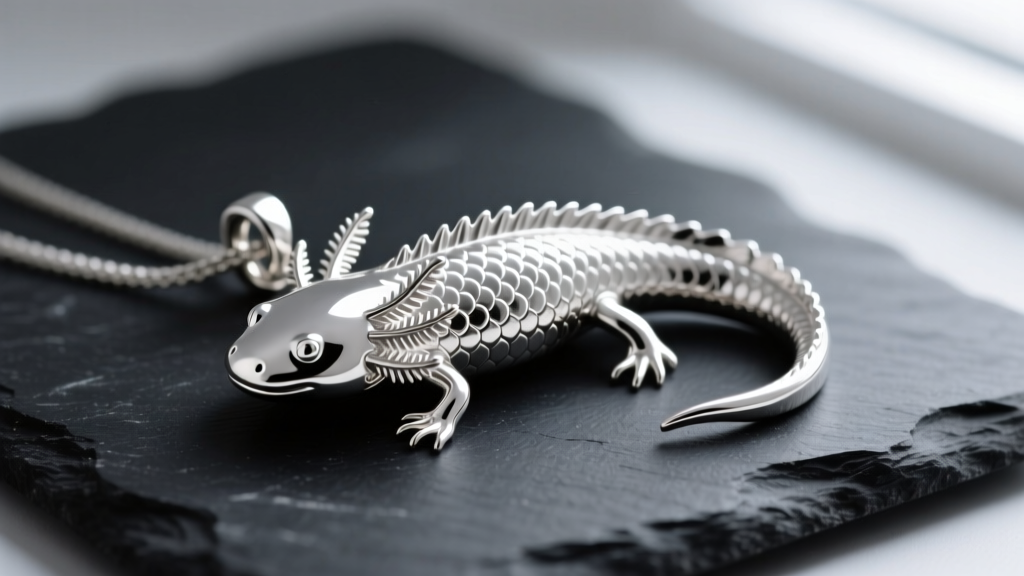
The popularity of amphibian-inspired jewelry has surged, making the axolotl necklace a staple for marine life enthusiasts and quirky fashion lovers alike. However, the novelty jewelry market is notoriously saturated with low-quality, mass-produced pieces that degrade quickly. When shopping for an axolotl pendant, understanding the metallurgy and craftsmanship is the difference between buying a cherished heirloom and a disposable trinket that turns your skin green.
Cheap novelty pendants are frequently cast from zinc alloy or 'Tibetan silver'—a misleading trade term for a base metal blend containing high levels of nickel and lead. These porous metals oxidize rapidly, lose their detail, and are a primary culprit behind contact dermatitis. To ensure your axolotl necklace survives daily wear, you must look for specific precious metal grades and high-quality plating standards.
Precious Metals vs. Base Alloys
For a durable, hypoallergenic piece, 925 Sterling Silver is the baseline standard. Comprising 92.5% pure silver and 7.5% copper, it offers excellent tensile strength and captures the fine, feathery details of axolotl gills during the casting process. For a warmer tone, look for Gold Vermeil rather than standard gold-plated brass. According to the Federal Trade Commission Jewelry Guides, true vermeil must feature a sterling silver base coated with at least 10k gold (though 14k or 18k is preferred) that is a minimum of 2.5 microns thick. Standard gold plating is often a mere 0.5 microns over brass, which will wear off within months of friction against the collarbone.
Expert Insight: Always check the hallmark on the bail of the pendant. A legitimate sterling silver axolotl necklace will be stamped with '925'. If the stamp reads 'Tibetan Silver', 'Alloy', or has no mark at all, avoid the purchase.
Enamel and Resin Finishes: What Survives Daily Wear?
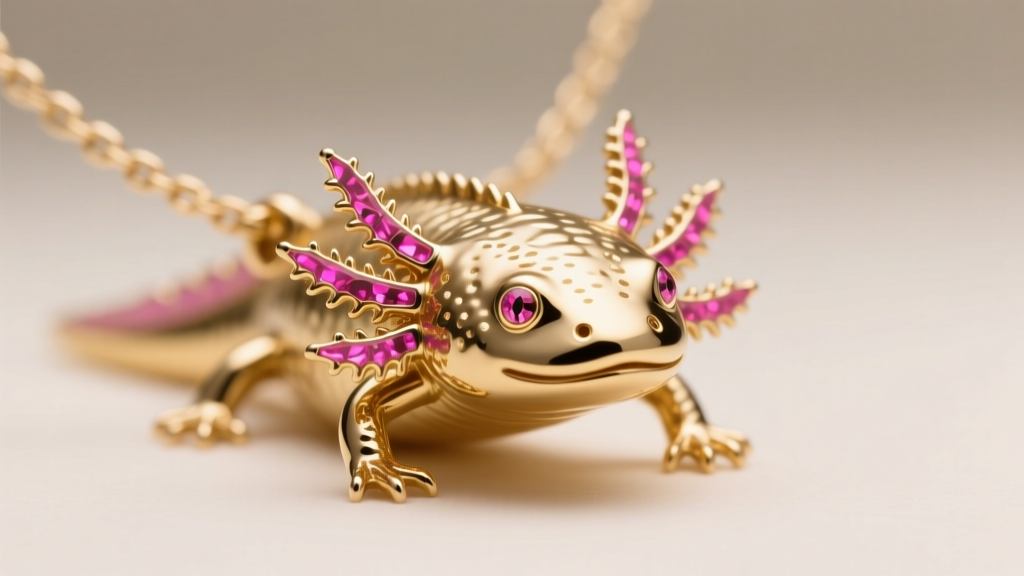
Axolotls are famous for their vibrant pink, leucistic, or golden hues. To replicate these colors, jewelers use either enamel or resin. The material choice drastically impacts the pendant's longevity and resistance to UV fading.
| Finish Type | Composition | Durability | UV Resistance | Best For |
|---|---|---|---|---|
| Cold Enamel (Epoxy Resin) | Synthetic polymers | Low (scratches easily) | Poor (yellows over time) | Budget pieces under $30 |
| Vitreous Enamel | Fused powdered glass | High (shatter-resistant) | Excellent (never fades) | Premium pieces $80+ |
| Solid Metal (No Color) | Silver or Gold | Very High | N/A | Minimalist, textured designs |
While cold enamel is cheaper and allows for complex gradients, it is essentially hardened plastic. It will scratch against zippers and degrade with prolonged sun exposure. Vitreous enamel, however, is kiln-fired glass fused to the metal. As noted in the Rio Grande Metals Guide, vitreous enamel creates a permanent, glass-like bond that retains its vibrant pink or coral hues indefinitely. The only failure mode for vitreous enamel is blunt force trauma—dropping the pendant onto a hard tile floor can cause the glass to chip.
Selecting the Right Chain for Pendant Weight
A common failure point in novelty necklaces is the chain. Axolotl pendants, especially semi-3D or fully 3D cast designs, are denser than flat stamped charms. A fully cast sterling silver axolotl pendant measuring 25mm can weigh between 6 and 12 grams. Pairing a heavy pendant with a delicate 0.8mm cable chain is a recipe for a snapped necklace.
Chain Styles and Tensile Strength
- Box Chain (1.2mm - 1.5mm): The optimal choice for 3D axolotl pendants. The square links distribute weight evenly and can comfortably support up to 15 grams without stretching. It also lays flat against the chest, preventing the pendant from flipping backward.
- Rolo Chain (1.5mm): Featuring uniform round links, the rolo chain is incredibly robust and offers a vintage aesthetic that pairs beautifully with oxidized silver axolotl designs.
- Cable Chain (0.9mm): Only suitable for lightweight, flat-profile axolotl charms weighing under 4 grams. Anything heavier will cause the oval links to pull apart at the solder joints.
Equally important is the clasp. Avoid spring ring clasps, which have weak internal springs that fail under the pendulum motion of a heavier charm. Always opt for a lobster clasp, which features a secure, spring-loaded lever mechanism designed to hold heavier loads safely.
Sizing and Proportion: Getting the Axolotl Details Right
The anatomy of an axolotl relies heavily on its external gills and wide-set eyes. If a pendant is too small, these defining characteristics turn into an indistinguishable blob of metal. When evaluating product dimensions, use these benchmarks:
- Under 15mm: Too small. The gill details will be lost, and the piece will look like a generic tadpole from a distance.
- 20mm to 30mm (The Sweet Spot): Ideal for everyday wear. This size allows the jeweler to cast distinct, individual gill stalks and texture the body accurately without the pendant feeling cumbersome against the sternum.
- Over 35mm: Best reserved for statement pieces or layering over thick winter garments. Pendants this large require a thicker chain (1.5mm+) and a reinforced, oversized bail to prevent the chain from sawing through the pendant's hanging loop.
Pricing Tiers: What Should You Actually Pay?
Understanding the true cost of materials and labor will protect you from overpaying for dropshipped inventory or underpaying for suspiciously cheap 'solid gold' claims. Here is the realistic pricing landscape for a high-quality axolotl necklace:
Tier 1: The Budget Trap ($10 - $35)
At this price point, you are purchasing zinc alloy or brass with a microscopic flash-plating and cold epoxy resin. These pieces are mass-produced via rubber mold casting, resulting in soft, rounded edges where the axolotl's gills should be sharp. Expect the plating to wear off within three months of daily wear.
Tier 2: The Everyday Standard ($45 - $90)
This is the sweet spot for 925 sterling silver pendants. You can expect crisp, detailed wax-carved or CAD-designed casts, secure lobster clasps, and high-quality cubic zirconia accents if the design includes gemstone eyes. Some pieces in the upper end of this tier may feature basic vitreous enamel.
Tier 3: The Premium Artisan ($100 - $200)
Here you will find heavy 14k or 18k gold vermeil over solid sterling silver, complex multi-layered vitreous enamel work, and ethically sourced gemstone accents. Artisan jewelers often use the lost-wax casting method to ensure microscopic detail in the axolotl's smile and toe pads.
Tier 4: Solid Gold Custom ($350+)
Solid 14k or 18k gold axolotl necklaces are usually made-to-order. Because gold is significantly denser than silver, a 25mm solid gold pendant can weigh over 20 grams, requiring a heavy-duty chain. These are heirloom-grade investments.
Expert Care and Maintenance Tips
Even the highest quality 925 sterling silver axolotl necklace requires specific maintenance to keep the intricate gill crevices free of tarnish and skin oils. Never use commercial 'silver dip' solutions on a pendant that features enamel or oxidized (blackened) detailing. Silver dip is highly acidic and will strip intentional oxidation from the gill textures, leaving the piece looking flat and lifeless. It can also cloud vitreous enamel.
Instead, use a soft-bristled baby toothbrush with a drop of mild dish soap and warm water to gently agitate the crevices. Dry thoroughly with a microfiber cloth. When storing the necklace, keep it in an anti-tarnish flannel pouch with a silica gel packet to control ambient humidity, ensuring your amphibian companion stays vibrant for years to come.


