Is a Baby Amber Teething Necklace Worth It? 2026 Value Guide
Assessing the true value of a baby amber teething necklace in 2026. We analyze pricing, safety risks, Baltic amber authenticity, and pediatric guidelines.

The Pediatric Reality Check: Safety vs. Perceived Value
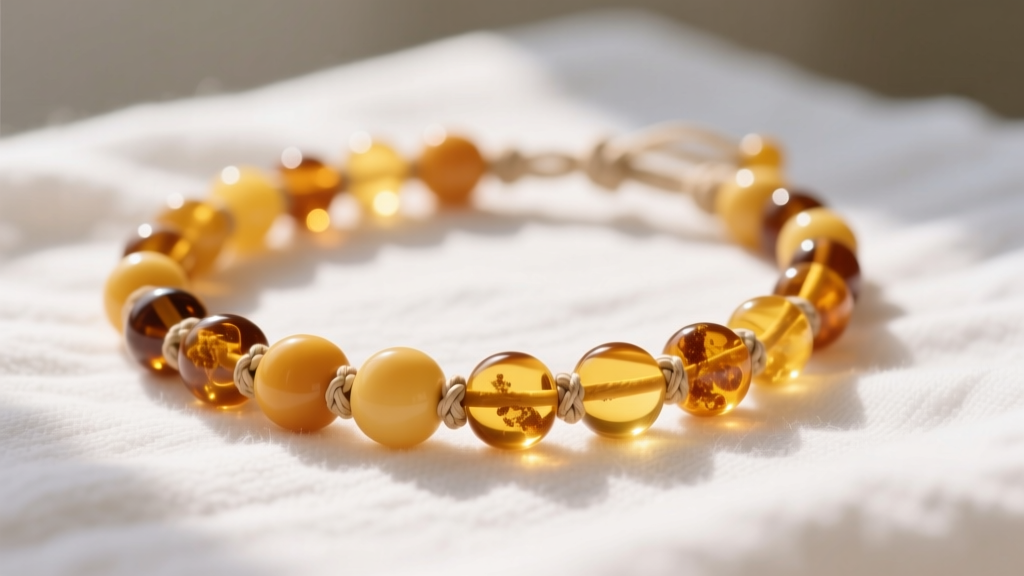
When assessing the budget and value of any infant product, safety is the ultimate baseline. If a product poses a severe risk, its financial value drops to zero, regardless of the materials used. Before diving into the market pricing of a baby amber teething necklace, we must address the elephant in the room: the medical consensus. Both the American Academy of Pediatrics (AAP) and the U.S. Food and Drug Administration (FDA) strongly advise against the use of any teething jewelry. The primary concerns are strangulation hazards if the necklace catches on a crib or playpen, and choking hazards if the beads break off and are ingested.
From a strict value-assessment perspective, parents are often paying a premium for a product that leading health organizations deem fundamentally unsafe. However, the market for these necklaces remains robust, driven by generational traditions and alternative wellness communities. If you are researching this purchase, it is vital to understand what you are actually paying for, the science (or lack thereof) behind the claims, and how to avoid overpaying for counterfeit resins in a largely unregulated market.
Deconstructing the Science: The Succinic Acid Myth
The primary marketing hook—and the justification for the $30 to $60 price tag—of a baby amber teething necklace is the presence of succinic acid. Baltic amber contains roughly 3% to 8% succinic acid by weight. The claim is that when the amber rests against the baby's skin, body heat warms the resin, releasing trace amounts of succinic acid, which is then absorbed transdermally to act as a natural anti-inflammatory and analgesic.
From a materials science perspective, this value proposition falls apart. Succinic acid is a real compound, but its sublimation and melting points are far beyond human body temperature. Amber requires temperatures exceeding 200°C (392°F) to begin releasing its volatile compounds. A baby's body temperature rests around 37°C (98.6°F). At this temperature, the amber remains entirely inert. No succinic acid is released, and none is absorbed by the skin. Therefore, when you pay a premium for 'high-succinic' raw amber, you are paying for a chemical property that is physically impossible to activate via body heat. The Mayo Clinic recommends proven, low-cost alternatives like chilled silicone rings or a clean, damp washcloth, which offer a vastly superior cost-to-benefit ratio with zero strangulation risk.
Authenticity Tiers and Market Pricing Breakdown
If we set aside the medical warnings and evaluate the necklace purely as an aesthetic or cultural accessory, the market is flooded with counterfeits. Understanding the pricing tiers is essential to ensure you are not paying Baltic amber prices for cheap plastic or immature resins.
| Material Type | Average Price Range | Saltwater Test Result | UV Blacklight Test | Value Verdict |
|---|---|---|---|---|
| Glass / Plastic Fakes | $5 - $12 | Sinks (Fails) | No fluorescence | Poor: Overpriced for synthetic materials. |
| Copal (Young Resin) | $15 - $25 | Varies (Often Sinks) | Weak white/yellow glow | Fair: Real resin, but not true fossilized amber. |
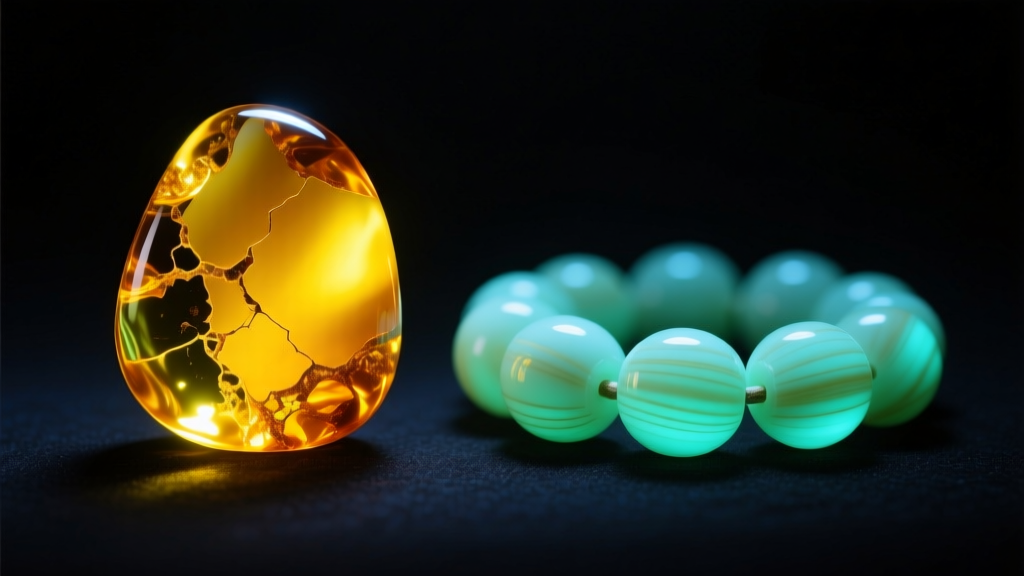
| Genuine Baltic Amber | $30 - $65+ | Floats in saturated saltwater | Bright pale blue/green glow | High (Materially): Authentic fossilized resin. |
How to Verify Your Investment
To ensure you are getting genuine Baltic amber, rely on the International Amber Association (IAA) certification standards. Authentic Baltic amber will float in a saturated saltwater solution (1 part salt to 2 parts water) and will exhibit a distinct pale blue or greenish fluorescence under a UV blacklight. Copal, which is often sold as 'raw amber' but is actually immature tree resin only a few thousand years old (compared to Baltic amber's 44 million years), will often become sticky when rubbed with a solvent like acetone, whereas true amber will not.
Hardware and Construction: Where Cheap Necklaces Fail
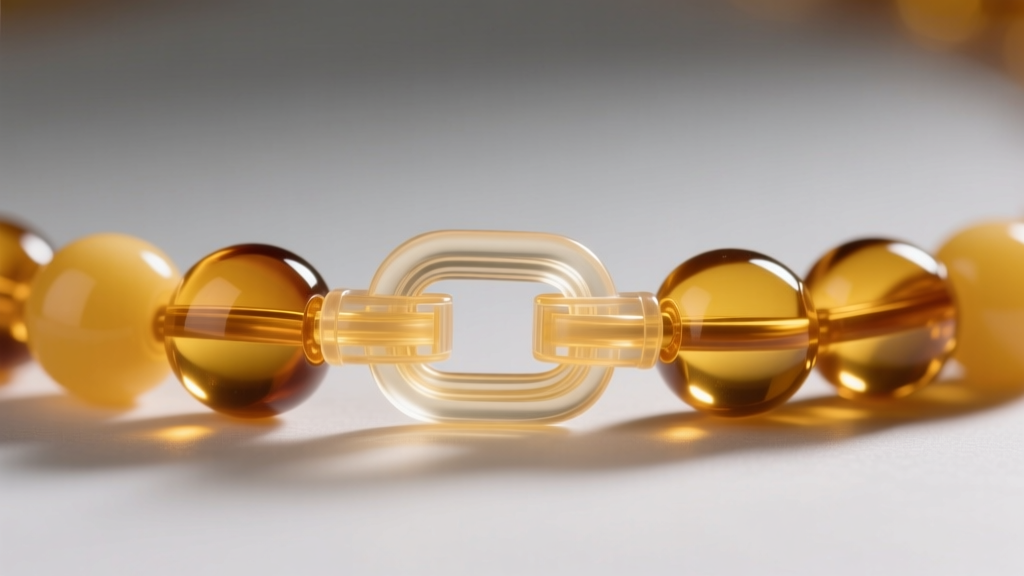
When budgeting for a baby amber teething necklace, the stringing method and clasp hardware are just as critical as the beads themselves. A $15 necklace might feature genuine amber beads, but if it uses cheap, continuous stringing without safety knots, it becomes a severe choking hazard. Here is the structural checklist you must demand for your money:
- Individual Knotting: Every single bead must be separated by a hand-tied knot. If the necklace snaps, a properly knotted strand will only drop one bead. An unknotted or poorly knotted strand will scatter dozens of small beads across the floor, creating an immediate choking risk for crawling infants.
- Breakaway Safety Clasps: The clasp must be a plastic 'pop' or breakaway clasp designed to snap open under 2 to 3 pounds of pressure. Avoid screw-clasps at all costs; a metal screw clasp will not break if the necklace gets caught on furniture, turning a snag into a strangulation hazard.
- Bead Shape and Polish: For infants, 'baroque' or raw, unpolished amber is heavily marketed as having 'more surface area' for succinic acid release (which, as established, is a myth). However, raw amber can have sharp, jagged edges that scratch delicate infant skin. From a comfort and value standpoint, smoothly polished, rounded beads are superior and safer for the baby's skin.
- Strand Length: A proper infant necklace should measure exactly 11 to 12.5 inches. Anything longer increases the risk of the child pulling it over their chin and mouth, leading to both chewing hazards and strangulation risks.
The Verdict: Calculating the True Cost-to-Benefit Ratio
So, is a baby amber teething necklace worth the investment in 2026? From a purely functional and medical standpoint, the value is exceptionally poor. You are spending between $30 and $65 on a scientifically inert object that carries documented safety risks warnings by the FDA and AAP. The perceived 'pain relief' is widely attributed to the placebo effect experienced by the parents, or the simple fact that the baby is simultaneously growing past the peak of their teething pain while wearing the necklace.
However, if you are purchasing the necklace strictly as a traditional, aesthetic keepsake—perhaps for a styled photoshoot under strict, direct adult supervision where the baby is not sleeping or crawling—the financial value depends entirely on authenticity. Paying $45 for certified, hand-knotted, genuine Baltic amber with a proper breakaway clasp is a fair market transaction for a beautiful piece of organic jewelry. Paying $25 for unknotted, UV-dull copal strung with a metal screw clasp is a terrible financial decision and a dangerous one at that.
For parents seeking actual value in teething relief, redirect that $50 budget toward FDA-approved, food-grade silicone teething toys, chilled mesh fruit feeders, and pediatrician-recommended infant pain relievers. These alternatives offer guaranteed, scientifically backed relief at a fraction of the cost, ensuring your budget is spent on efficacy and safety rather than ancient resin myths.


