Baby Gold Necklace Care: Cleaning, Safety & Maintenance
Learn how to safely clean, maintain, and inspect your baby gold necklace. Expert tips on karat grades, clasp safety, and gentle washing techniques.

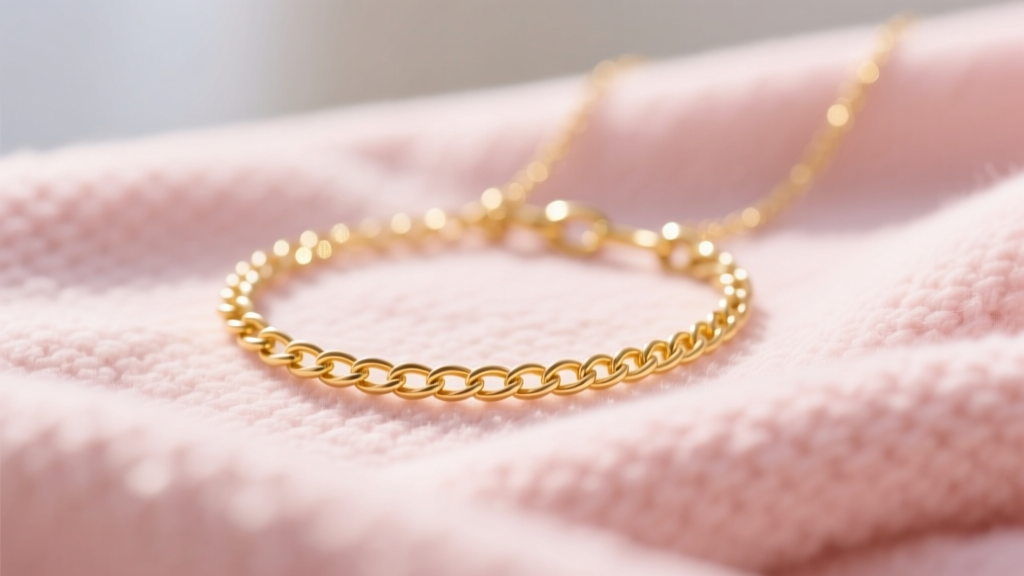
A baby gold necklace is often one of the most cherished pieces of jewelry a child will ever receive. Whether gifted for a baptism, a first birthday, or a cultural celebration, these delicate chains carry immense sentimental value. However, infant jewelry requires a vastly different approach to care and maintenance than adult pieces. Babies have sensitive skin, unpredictable movements, and a natural curiosity that leads them to tug, chew, and soil their accessories.
Proper maintenance of a baby gold necklace is not just about preserving its shine; it is fundamentally about hygiene and physical safety. In this comprehensive guide, we break down the metallurgical realities of infant gold chains, provide a step-by-step cleaning protocol, and outline the critical safety inspections every parent must perform to prevent choking and strangulation hazards.
Understanding Gold Purity and Alloy Durability
When selecting or maintaining a baby gold necklace, understanding the karat weight is crucial for predicting how the chain will hold up to an infant's wear and tear. Gold purity is measured in karats, with 24k being 99.9% pure gold. While 24k gold is hypoallergenic and rich in color, it is far too soft for infant jewelry.
On the Vickers hardness scale (HV), pure 24k gold measures a mere 25 HV. This means a 24k baby chain will easily stretch, warp, or snap if a toddler grabs it. For infant necklaces, the Gemological Institute of America (GIA) and master jewelers generally recommend 14k gold (58.5% pure gold). The alloy metals mixed into 14k gold—typically copper, silver, and zinc—increase the tensile strength and hardness to approximately 130 HV. This provides the necessary durability to resist stretching while remaining gentle on sensitive skin. 18k gold (75% pure) is an acceptable alternative for special occasions but requires much more frequent inspection for stress fractures.
The Safe Cleaning Protocol for Infant Gold Chains
Babies are prone to sweating, spitting up, and accumulating dead skin cells and lotion residue in the crevices of their jewelry. Because infant immune systems are still developing, keeping the necklace hygienic is paramount. However, harsh chemicals must be strictly avoided, as residual toxins can cause contact dermatitis on a baby's delicate neck.
Step-by-Step Gentle Wash
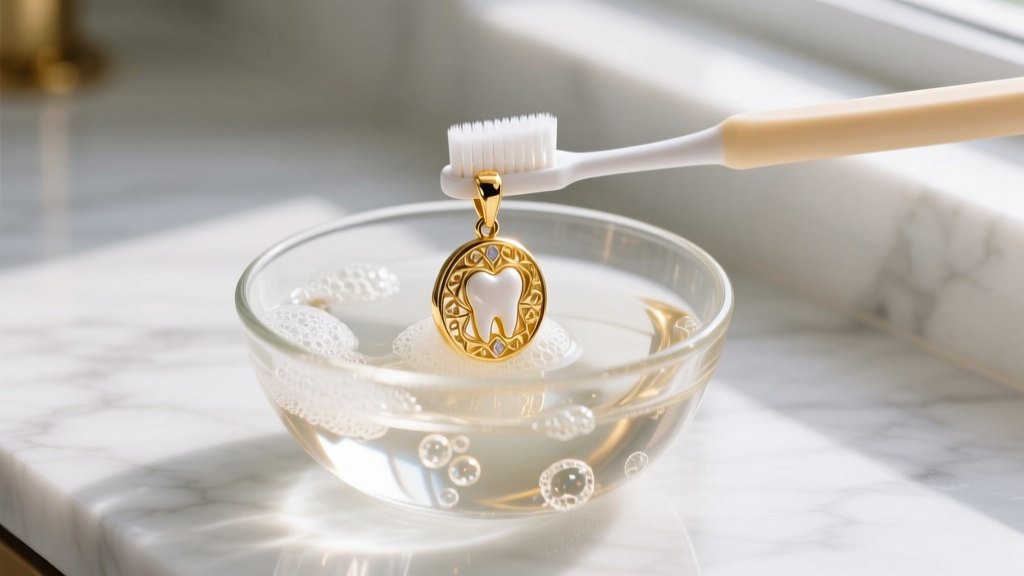
- Prepare the Solution: Mix three to four drops of phosphate-free, dye-free dish soap (such as original Dawn or a dedicated baby bottle soap) into a bowl of lukewarm distilled water. Avoid tap water, as chlorine and hard water minerals can leave a dull film on the gold alloys.
- Soak Briefly: Submerge the baby gold necklace in the solution for exactly 3 to 5 minutes. This loosens sebum and lotion buildup without degrading the metal.
- Agitate Gently: Using an extra-soft baby toothbrush (never an adult toothbrush, as the bristles are too stiff and will cause micro-scratches), gently brush the chain links and the pendant bail. Pay special attention to the clasp mechanism where grime accumulates.
- Rinse Thoroughly: Rinse the necklace under a gentle stream of lukewarm distilled water. Ensure the drain is securely plugged or use a mesh strainer to prevent accidental loss.
- Dry Completely: Pat the chain dry with a lint-free microfiber cloth. Allow it to air dry completely on a clean towel before storing or placing it back on the baby to prevent moisture trapping, which can lead to skin irritation.
Critical Warning: Never use ultrasonic jewelry cleaners, chemical dip solutions, or polishing cloths treated with jeweler's rouge on infant jewelry. Ultrasonic vibrations can weaken the microscopic solder points on baby chains, and chemical residues are highly toxic if the baby puts the chain in their mouth.
Critical Safety Inspections: Clasps and Chain Links
The most dangerous failure mode of a baby gold necklace is not tarnishing; it is structural failure. A broken chain poses a severe choking hazard, while a poorly designed clasp can scratch the infant's skin or fail to break away in an emergency. According to guidelines from the American Academy of Pediatrics (AAP), infants should not wear jewelry that poses a strangulation or choking risk, making daily inspections mandatory if the necklace is worn.
Clasp Safety Comparison
| Clasp Type | Security Level | Pinch/Snag Risk | Recommendation for Babies |
|---|---|---|---|
| Spring Ring | Low | High (sharp edges) | Avoid completely |
| Lobster Claw | Medium | Medium | Use with caution; check spring tension |
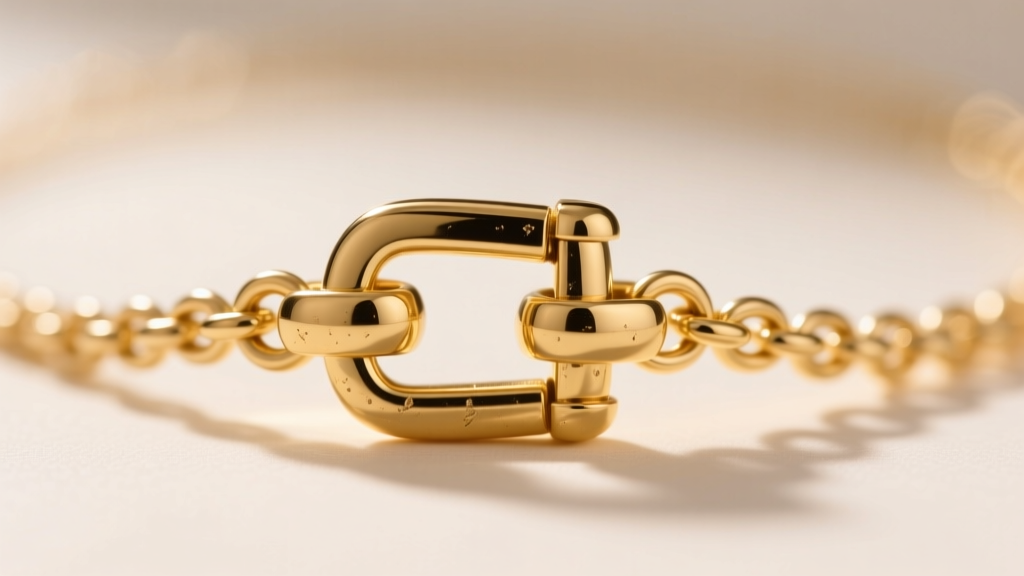
| Safety Barrel | High | Low (smooth edges) | Highly Recommended |
| Magnetic | Low/Medium | Low | Not for infants (choking hazard if detached) |
Chain Link Geometry and Hygiene
The style of the chain dictates both its durability and its hygiene profile. Cable chains and box chains are the best choices for babies. They lie flat, resist kinking, and have open links that are easy to clean. Conversely, snake chains should be strictly avoided for infants. The tightly interlocked bands of a snake chain trap dead skin cells, milk, and sweat, creating a breeding ground for bacteria that is nearly impossible to clean at home. Furthermore, snake chains kink easily when bent, leading to permanent structural damage.
Proper Storage and Daily Wear Guidelines
Even with a high-quality 14k gold chain and a safety barrel clasp, a baby gold necklace should not be worn 24/7. Establishing strict boundaries for when the jewelry is worn will drastically extend its lifespan and ensure the child's safety.
- Sleep Time: Always remove the necklace before the baby sleeps. Tossing and turning can cause the chain to wrap around the infant's neck or fingers, cutting off circulation or posing a strangulation risk.
- Bath Time: Remove the necklace before bathing. Baby shampoos, body washes, and hard water accelerate the buildup of soap scum in the chain links, dulling the gold and harboring bacteria.
- Tummy Time and Play: During active play or tummy time, babies frequently grab at objects near their neck. Remove the chain to prevent forceful yanking that could injure the baby's neck or break the chain's solder rings.
When not in use, store the baby gold necklace in a dedicated, soft-lined anti-tarnish pouch. While pure gold does not tarnish, the copper and silver alloys in 14k and 18k gold can oxidize when exposed to ambient humidity and airborne sulfur. Storing it in an airtight pouch with a small silica gel packet will keep the alloys bright and ready for the next wear.
When to Consult a Professional Jeweler
While home maintenance is sufficient for routine cleaning, certain issues require the expertise of a professional jeweler. If you notice any of the following, stop using the necklace immediately and take it to a reputable bench jeweler:
- Visible Stretching: If the chain links appear elongated or oval-shaped rather than perfectly round, the metal has yielded to stress. A jeweler can assess if the chain needs to be shortened or replaced.
- Clasp Malfunction: If the safety barrel clasp feels loose, or if the internal threading is stripped, it must be replaced. Do not attempt to bend or squeeze the clasp with pliers, as this will work-harden the gold and cause it to snap.
- Micro-Fractures: If the chain breaks, a jeweler must use a laser welder to repair the microscopic links. Traditional torch soldering can melt the surrounding delicate links on a baby chain, ruining the piece. As noted by Jewelers of America, laser welding is the only safe method for repairing fine, lightweight infant chains.
By understanding the specific material properties of gold alloys, adhering to a gentle, chemical-free cleaning routine, and prioritizing clasp safety, you can ensure that a baby gold necklace remains a safe, hygienic, and beautiful heirloom for generations to come.


